
(Sm.) Baker
Description
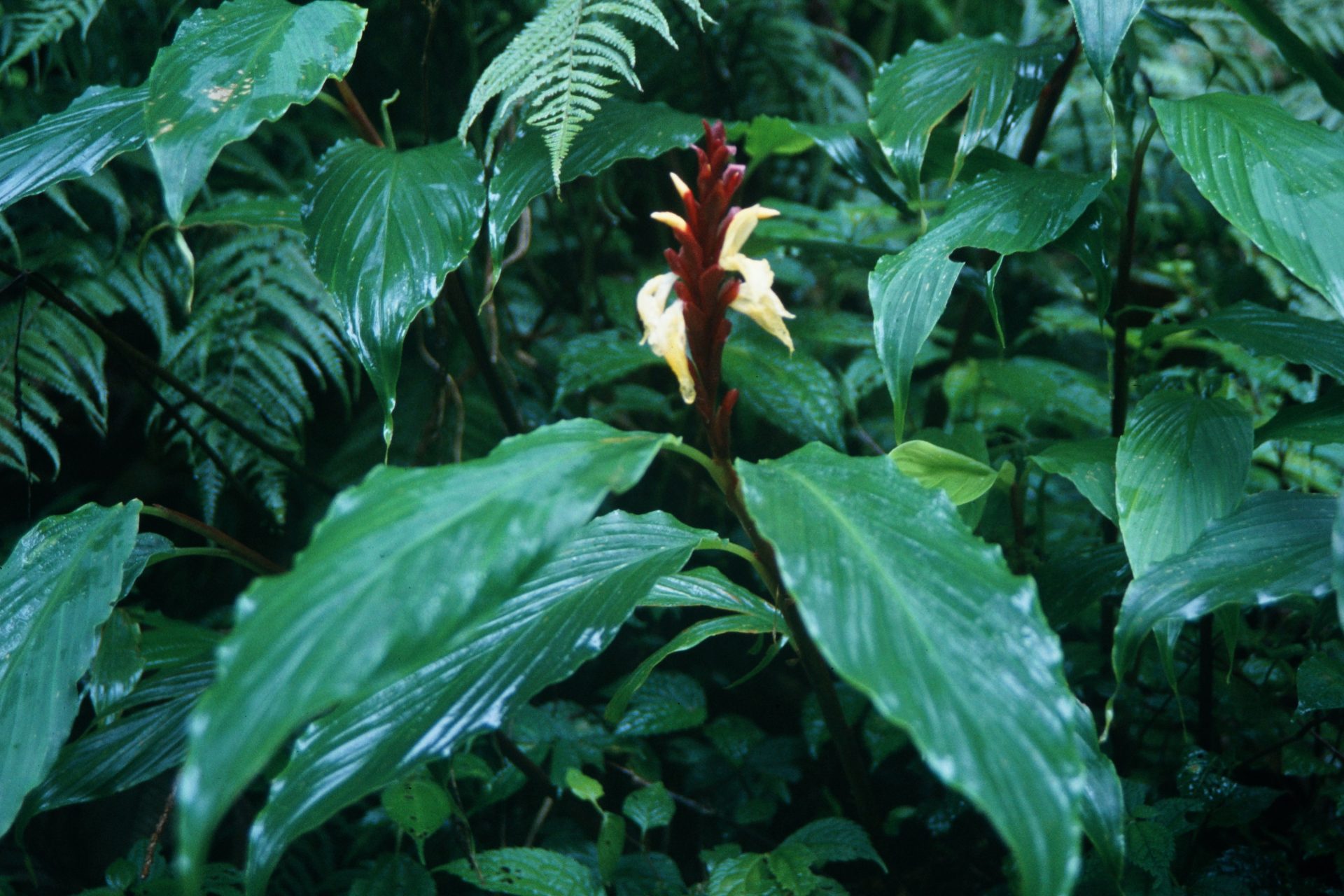
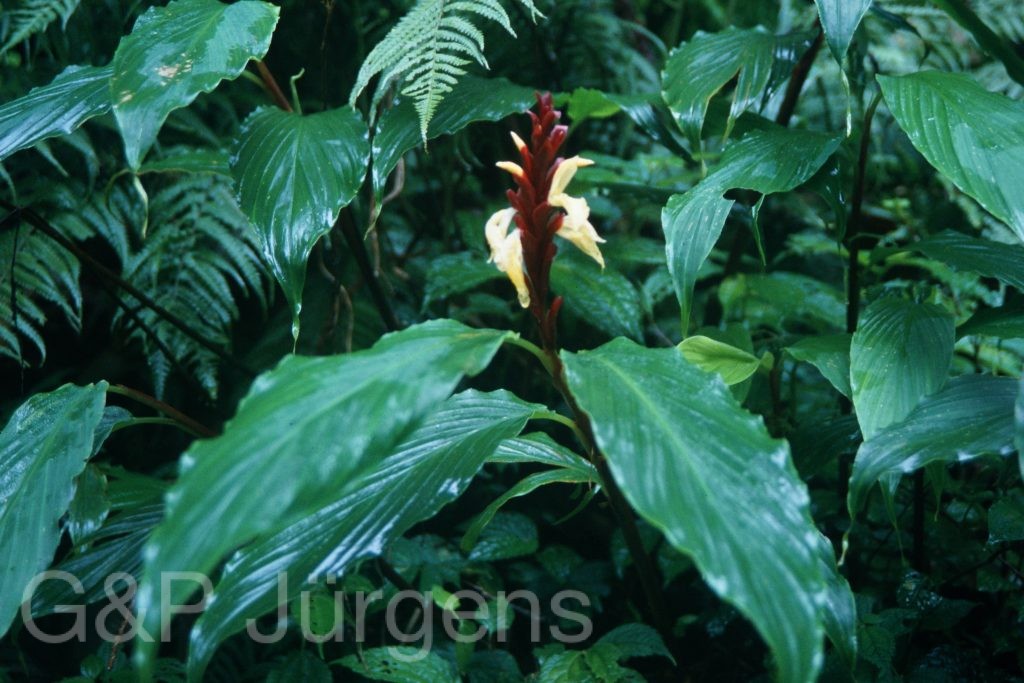
Cautleya spicata is a robust Himalayan ginger distributed through India, Nepal, China and Bhutan, with GBIF recording some 226 occurrences along the southern slopes of the range and into Myanmar. It grows in moist, shaded temperate forest, on humus-rich banks, mossy boulders and stream gullies, occasionally epiphytic but more often terrestrial in deep leaf litter. The photographed plant was found in Sikkim above Yoksam at about 2650 m in August, at the height of the monsoon flowering season; the species characteristically occupies the cool, humid 1800-3000 m belt of the eastern and central Himalaya.
The plant arises from a stout, horizontal rhizome to form leafy shoots reaching about 60-100 cm, taller and more substantial than its slender relative C. gracilis. The distichous leaves are oblong-lanceolate, acuminate and sheathing at the base, green above and often paler beneath. The inflorescence is an erect terminal spike with conspicuous, persistent red or maroon bracts subtending the bright yellow flowers; each flower has a slender corolla tube, a hooded dorsal segment, petaloid lateral staminodes, a deflexed bilobed labellum, and a single fertile stamen. The fruit is a capsule bearing arillate seeds.
Cautleya spicata is closely related to C. gracilis within a small Himalayan genus allied to Roscoea, distinguished by its larger stature, conspicuous coloured bracts and predominantly terrestrial habit. The contrasting red bracts and yellow flowers signal to long-tongued bee pollinators. It is widely cultivated as a hardy ornamental ginger, contributing extralimital GBIF records. Locally frequent and not threatened, it nonetheless depends on intact, humid montane forest for its core populations.
Author: (Sm.) Baker · Sources: POWO (Kew), GBIF, Flora of China, Flora of Bhutan, Zingiberaceae of the Indian Subcontinent (Sabu)