
Sm.
Description
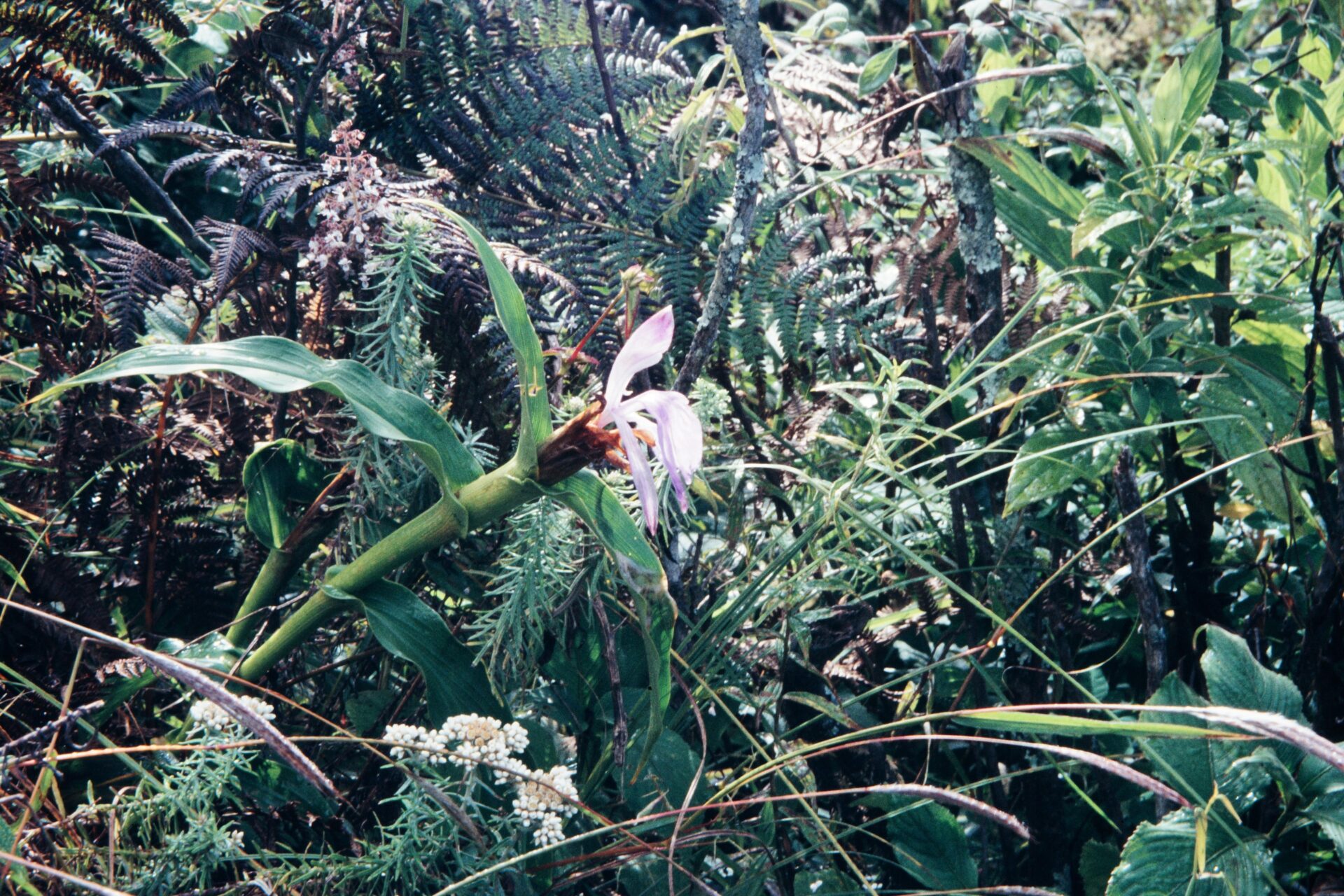
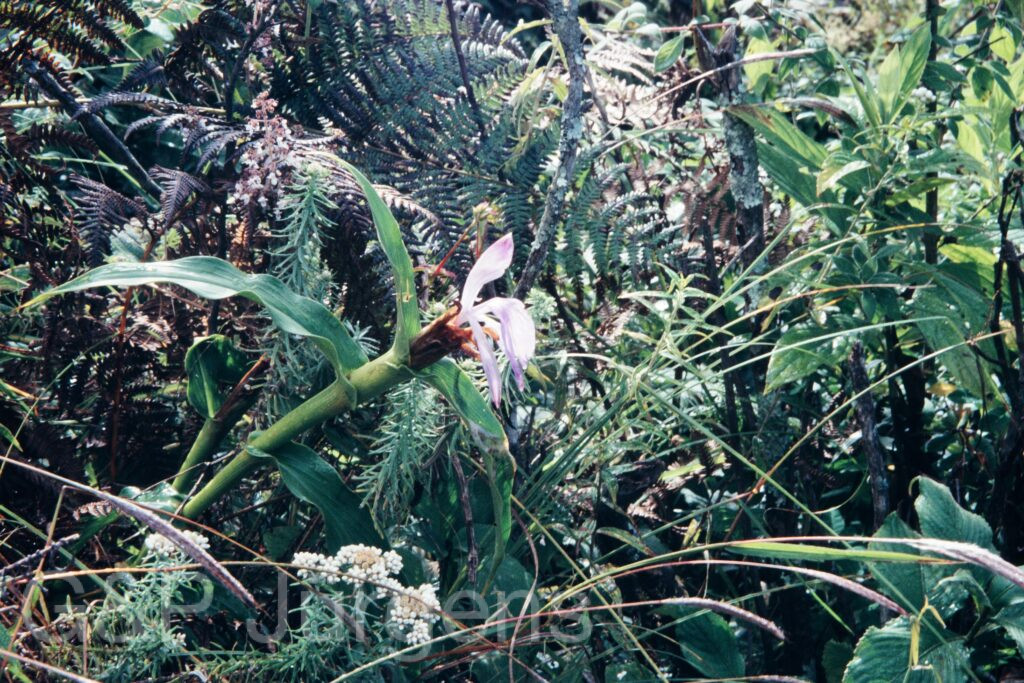
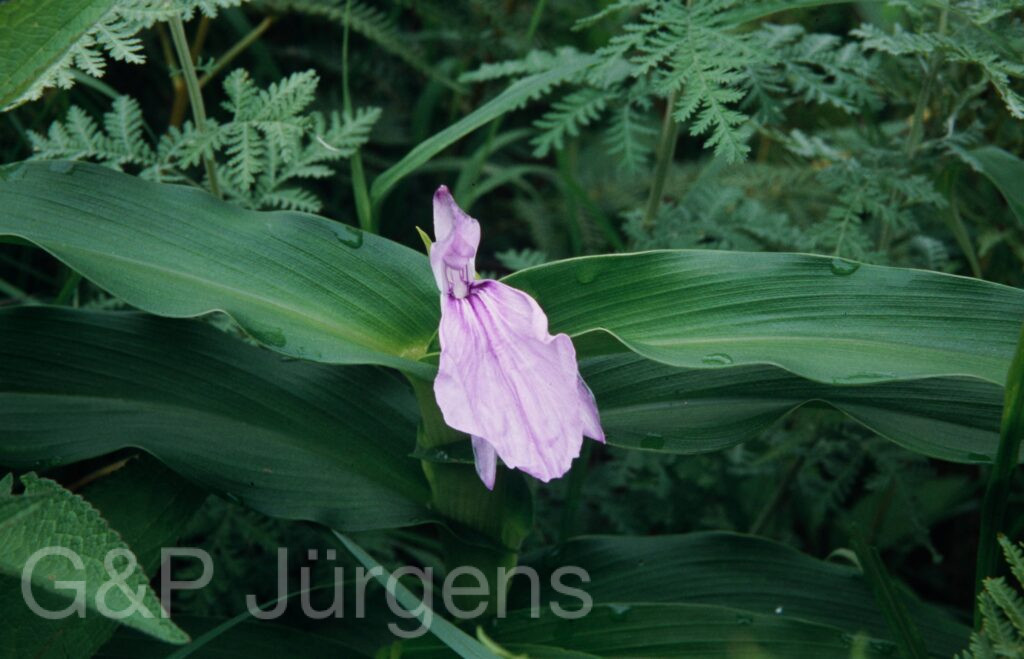
Roscoea purpurea is a tuberous-rooted ginger of the Himalaya, ranging through Nepal, northern India, Bhutan and adjacent China, with peripheral records (KR, MY, US, ZZ) reflecting horticultural cultivation, as it is widely grown as a hardy ornamental. Of nearly 400 georeferenced records, the densest concentration falls in the central and eastern Nepalese hills. It grows on open grassy slopes, in forest clearings, on banks and among shrubs in the upper temperate and subalpine belt. The photographed plants from south of the Rupien La at 3200 m in October and from Sepka at 2760 m in July illustrate its broad altitudinal span and its summer-to-autumn flowering, timed to the monsoon when the rootstock is in active growth.
It is a deciduous perennial herb arising from a cluster of fleshy, fascicled root tubers and a short rhizome. The pseudostem is formed by the overlapping leaf sheaths and bears several lanceolate to oblong, distichous leaves that are smooth and often with a sheathing, ligulate base. The showy flowers emerge from the leaf axils or a short terminal spike; each is enclosed by a green bract and has a slender corolla tube. The perianth is strongly zygomorphic, typically purple to lilac, with a hooded dorsal corolla lobe, narrow lateral lobes, and a large, conspicuously bilobed, deflexed labellum that serves as the pollinator platform. A single fertile stamen with a spurred connective and an inferior ovary produce an elongate capsule.
Roscoea is remarkable within the otherwise tropical Zingiberaceae for its adaptation to cold, seasonally dry montane climates, the genus disjunct between the Himalaya and the mountains of south-west China. R. purpurea is the type-associated and most variable Himalayan species, encompassing several named colour and form variants, and is pollinated chiefly by long-tongued bees and, in some populations, by long-proboscid flies. It remains locally common and is not considered threatened.
Author: Sm. · Sources: POWO (Kew), GBIF, Flora of China Vol. 24, Flora of Bhutan Vol. 3, Flora of Nepal, Cowley's The Genus Roscoea (Kew)