
C.B.Clarke
Description
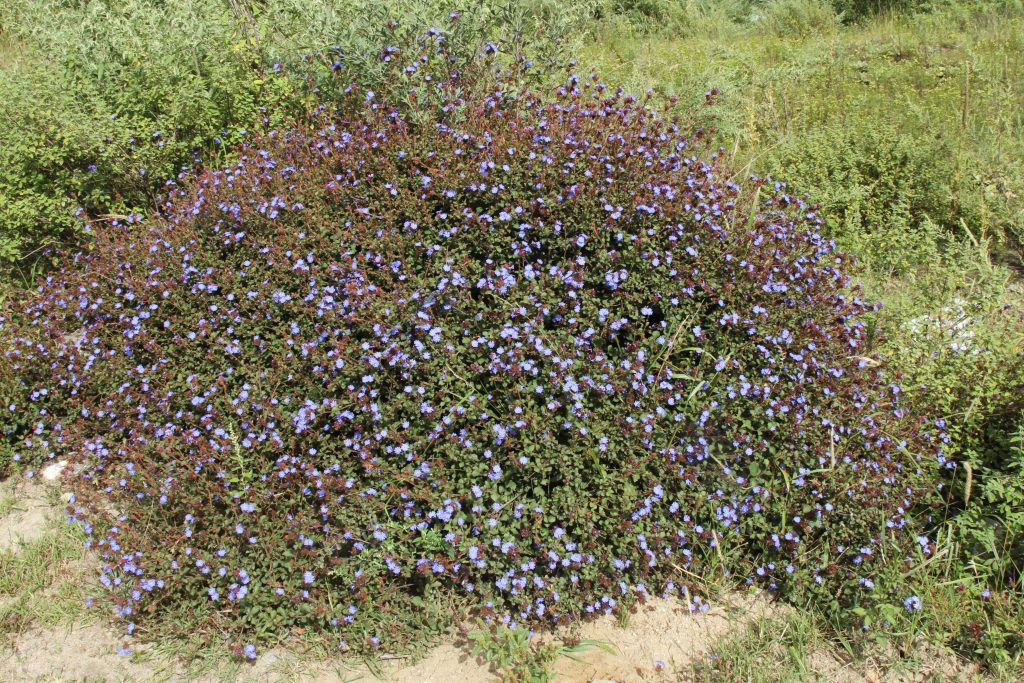
Ceratostigma griffithii is a shrub of the dry inner valleys of the eastern Himalaya and southwestern China, recorded from China, Bhutan, India and Myanmar, with cultivated and naturalised occurrences in the United States, Canada, Spain and Korea; GBIF holds about 163 georeferenced records. It grows on dry, sunny, stony slopes, rocky banks, scrub and the margins of cultivation in the rain-shadowed montane valleys, tolerating drought and strong insolation. The photographed plant from the Paro Chu valley in Bhutan at 2400 m in September is characteristic of these semi-arid inner-Himalayan habitats, where it flowers in late summer and autumn on open hillsides.
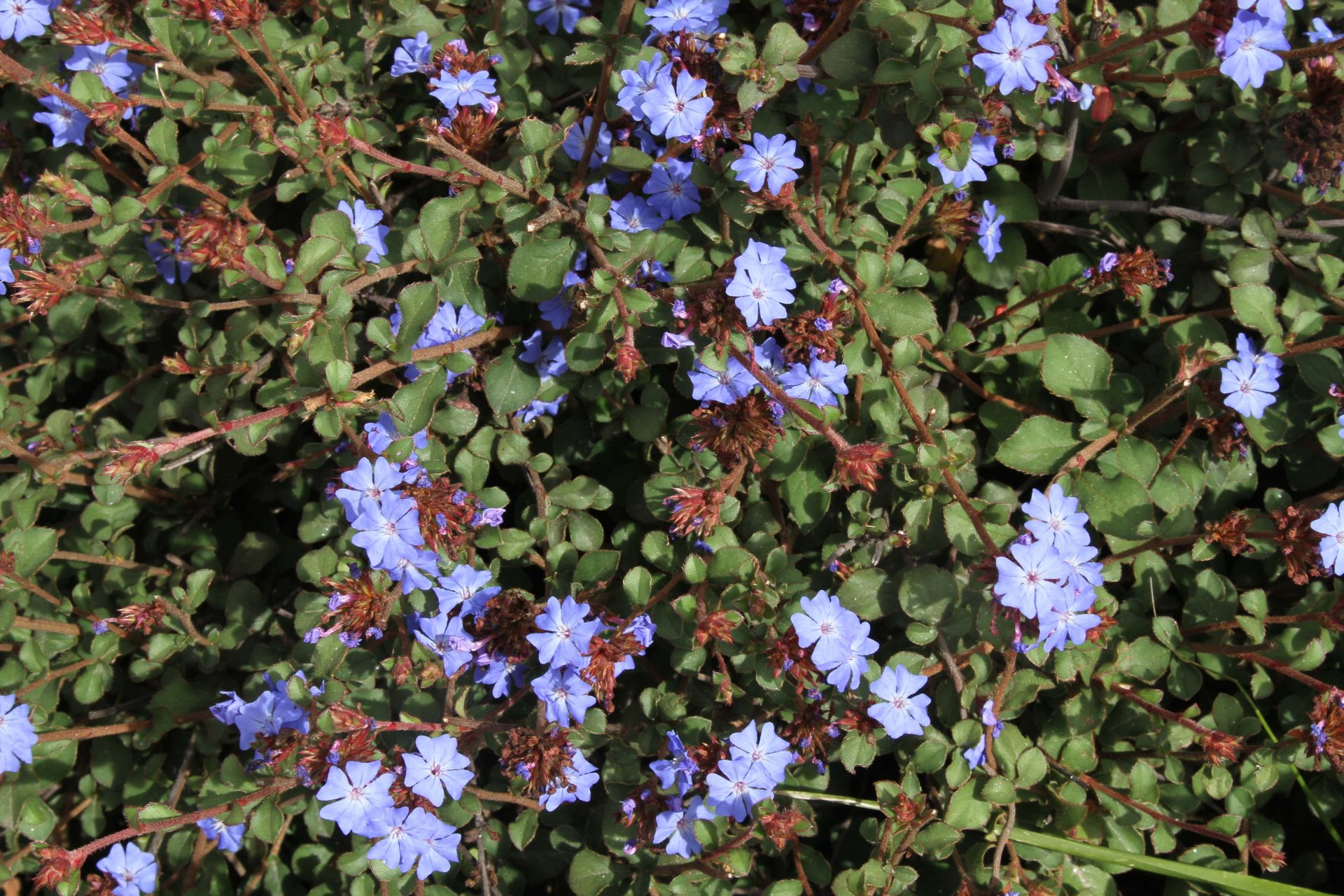
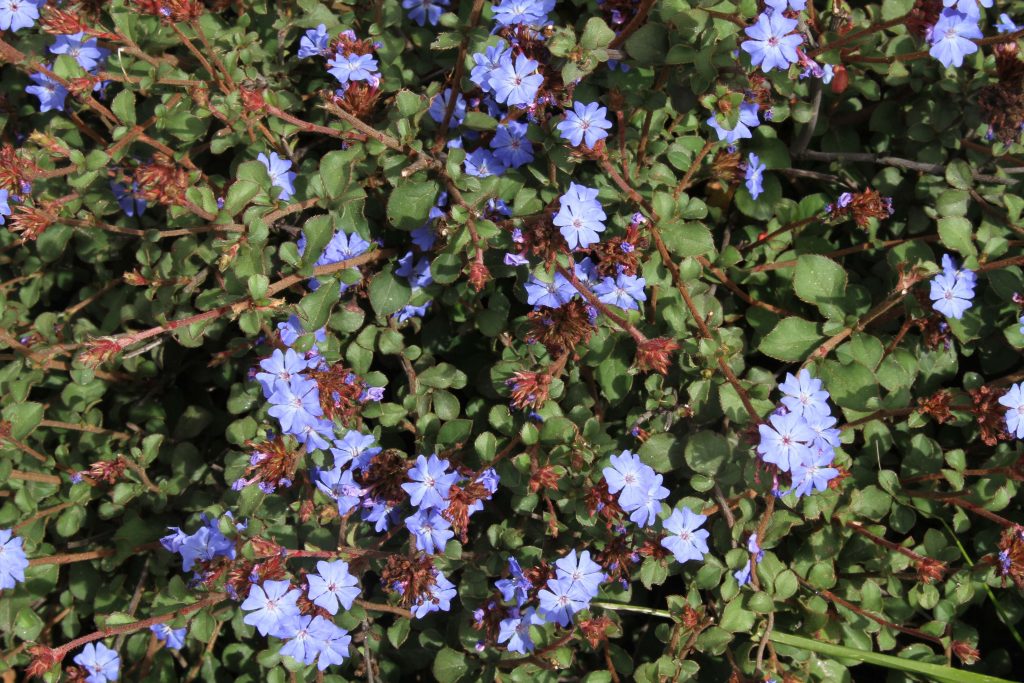
It is a low, much-branched, semi-evergreen shrub up to about 1 m, with stiff, reddish-tinged twiggy branches that turn bronze-red in autumn. The leaves are small, alternate, obovate to spathulate, entire, bristle-margined and somewhat leathery, often colouring red before falling. The flowers are clustered in dense terminal and lateral heads subtended by bristly bracts; each flower has a tubular, glandular-ribbed calyx and a slender salverform corolla with five spreading lobes of brilliant deep blue. There are five stamens and a five-branched style with stigmatic surfaces along the inner side; the fruit is a small membranous capsule enclosed in the persistent calyx, whose stiff bristles aid epizoochorous dispersal.
The genus Ceratostigma, described by Bunge, comprises a few Asian and African shrubs and subshrubs of Plumbaginaceae noted for their intense blue flowers and autumn foliage, the type collection of this species made by Griffith and named by C.B. Clarke. The bright corollas attract butterflies and bees, and the bristle-armed calyces cling to passing animals. Valued in horticulture for autumn colour, the wild plant is locally common in its dry-valley niche and not considered threatened.
Author: C.B.Clarke · Sources: POWO (Kew), GBIF, Flora of China Vol. 15, Flora of Bhutan Vol. 2, Flora of Nepal, A Revision of the Genus Ceratostigma (Plumbaginaceae)