Tag:

Montane (1500-2500 m)

Petr.

Bhutan2015 459
Bh15-549
Bhutan2014 204
Bhutan Trashyangtse 2100m, May

Description

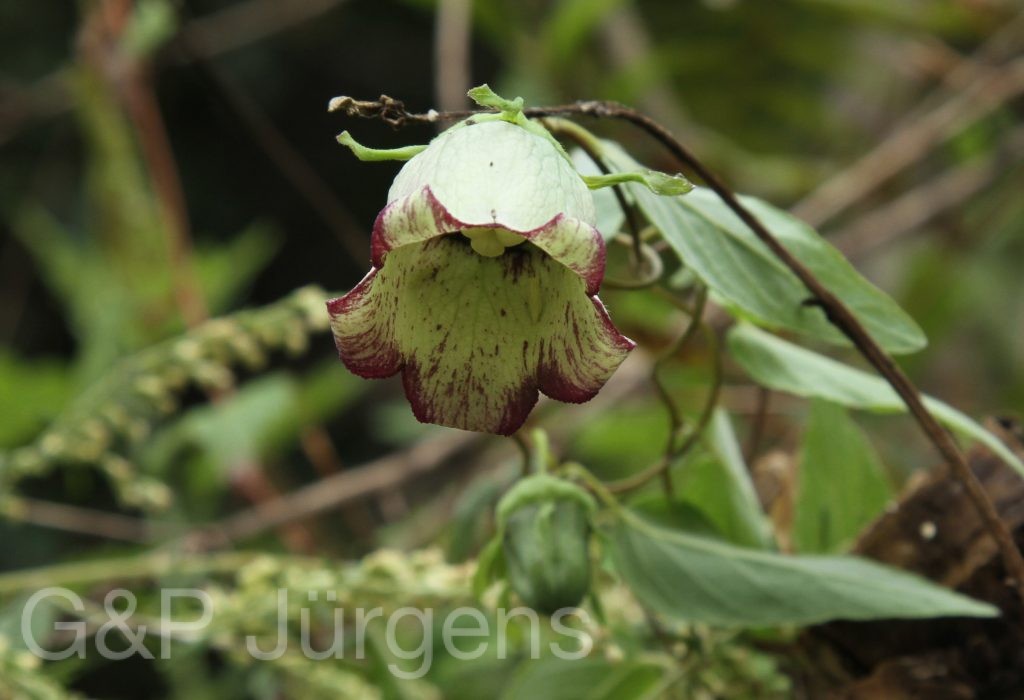
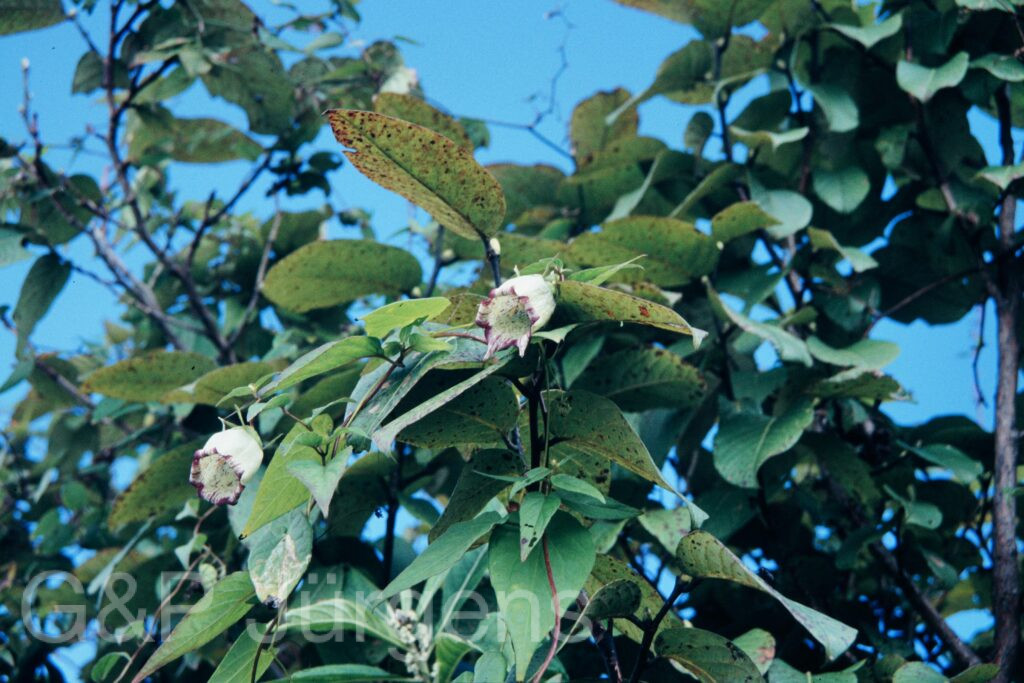
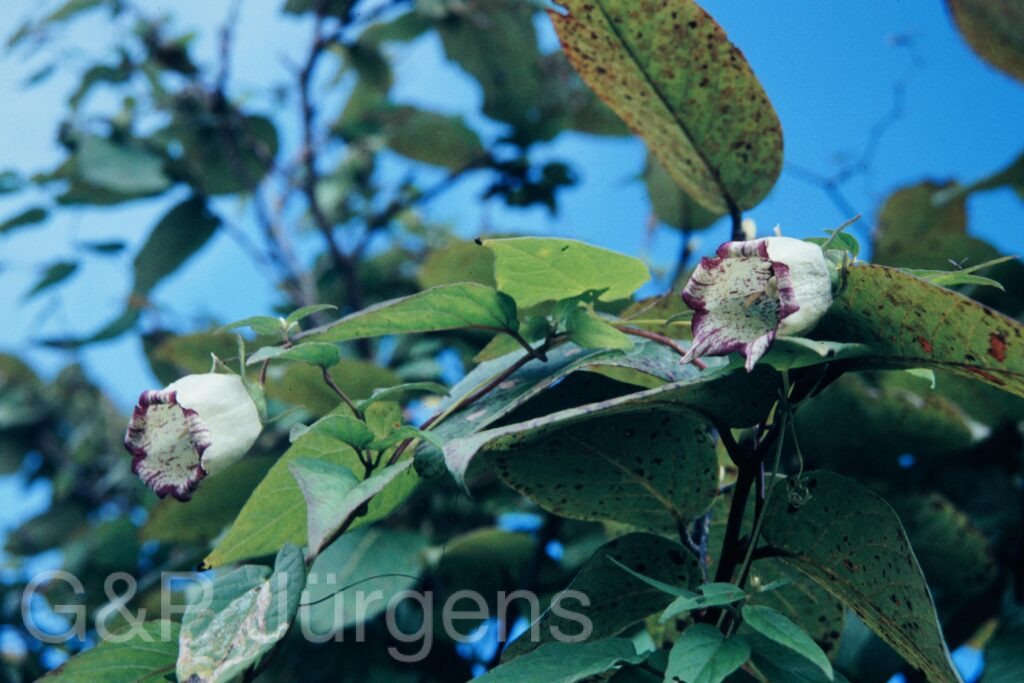
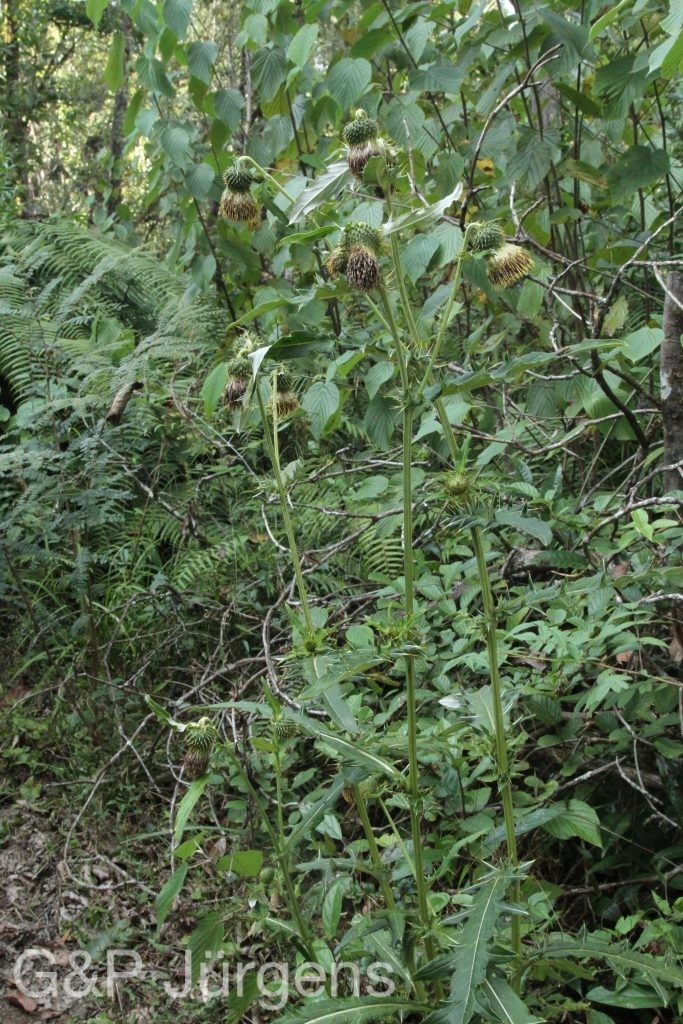
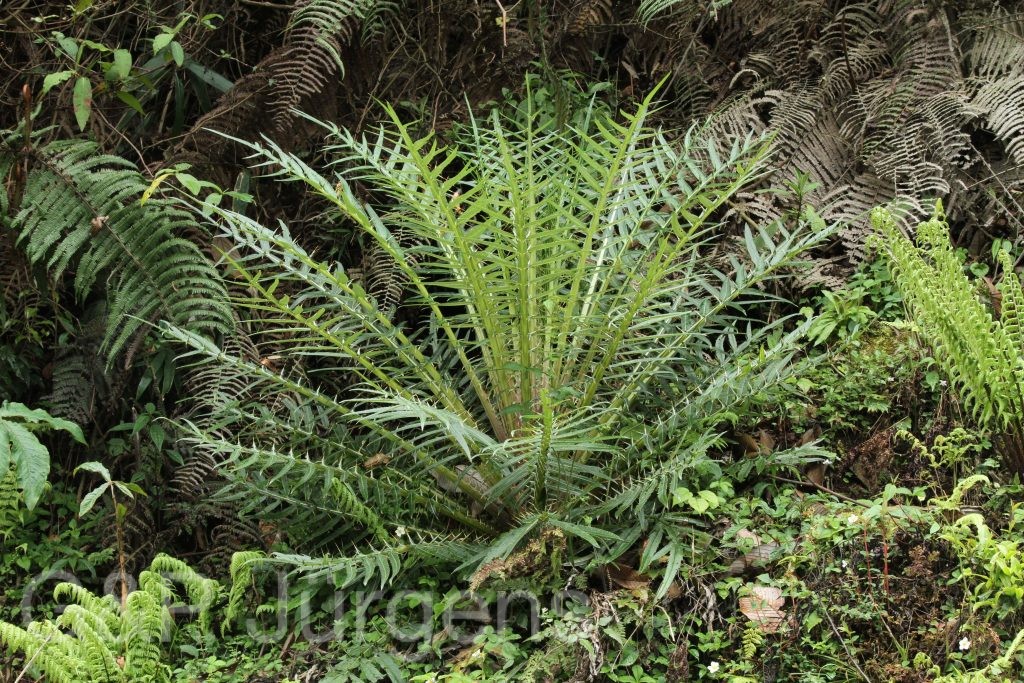
Cirsium interpositum is a Himalayan and East Asian thistle recorded from China, Turkey, India and Korea, with 55 georeferenced occurrences. Under the GBIF backbone the name is treated as a SYNONYM, with Cirsium interpositum itself given as the accepted name in this dataset, reflecting unsettled circumscription within the genus; it is closely allied to the C. lipskyi complex referenced in the source record. It grows on grassy montane slopes, in open scrub, forest margins and disturbed clearings, generally in the temperate zone. It was photographed at Trashyangtse in eastern Bhutan at 2100 m in May, flowering in the cool spring of the mid-montane valleys.

It is an erect spiny perennial herb with a ribbed, often winged and prickly stem arising from a stout rootstock. The alternate leaves are oblong-lanceolate, pinnately lobed and conspicuously armed with marginal spines, green and roughly hairy above and frequently paler or tomentose beneath, the bases decurrent. The flower heads are ovoid to subglobose, solitary or clustered at the stem tips, with an involucre of many imbricate, spine-tipped phyllaries. All florets are tubular (discoid) and purple to reddish-purple, the slender corollas deeply lobed. The fruit is a smooth oblong cypsela crowned by a pappus of long plumose (feathery) bristles, a defining feature of Cirsium.

The genus Cirsium belongs to tribe Cardueae and is distinguished from the closely related Carduus by its plumose rather than barbellate pappus. The taxonomic ambiguity surrounding C. interpositum is typical of the genus, in which hybridisation and variation blur species limits across the Sino-Himalaya. Ecologically it is a plant of open, disturbed montane ground, visited by bees and butterflies. It is not assessed as threatened.

Author: Petr. · Sources: POWO (Kew), GBIF, Flora of China, Flora of Bhutan, Cirsium monograph (Cardueae systematics, Werner & Petrak)
(Franch.) Prain

Bhutan2014 67 ergebnis
Bhutan Tashigang 1500m, May
Bhutan2014 68 ergebnis
Bhutan Tashigang 1500m, May

Description

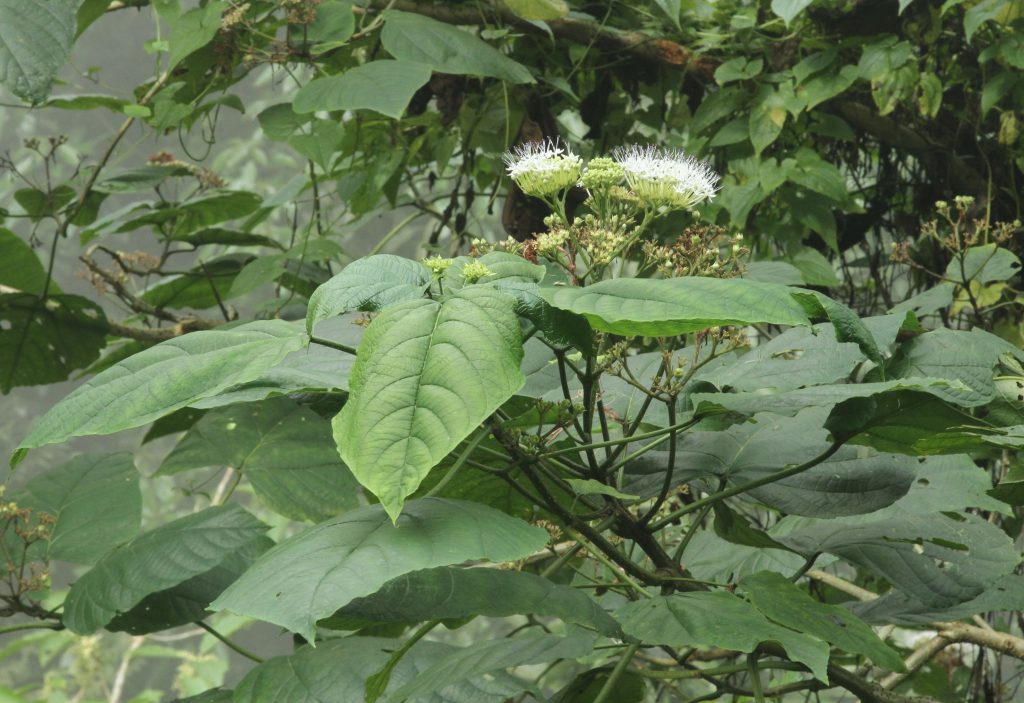
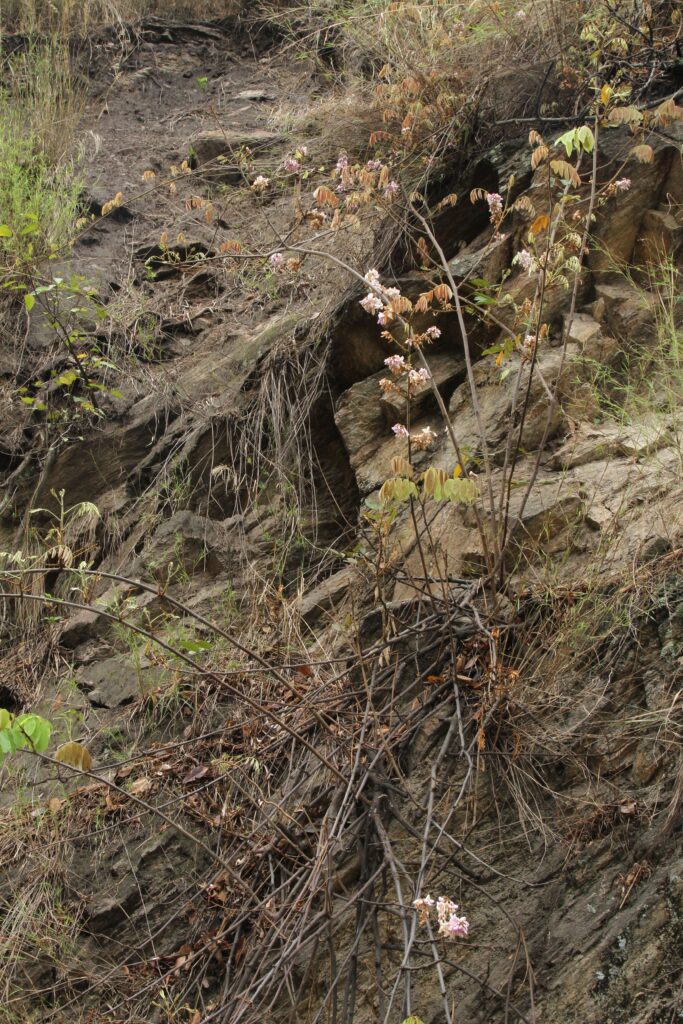
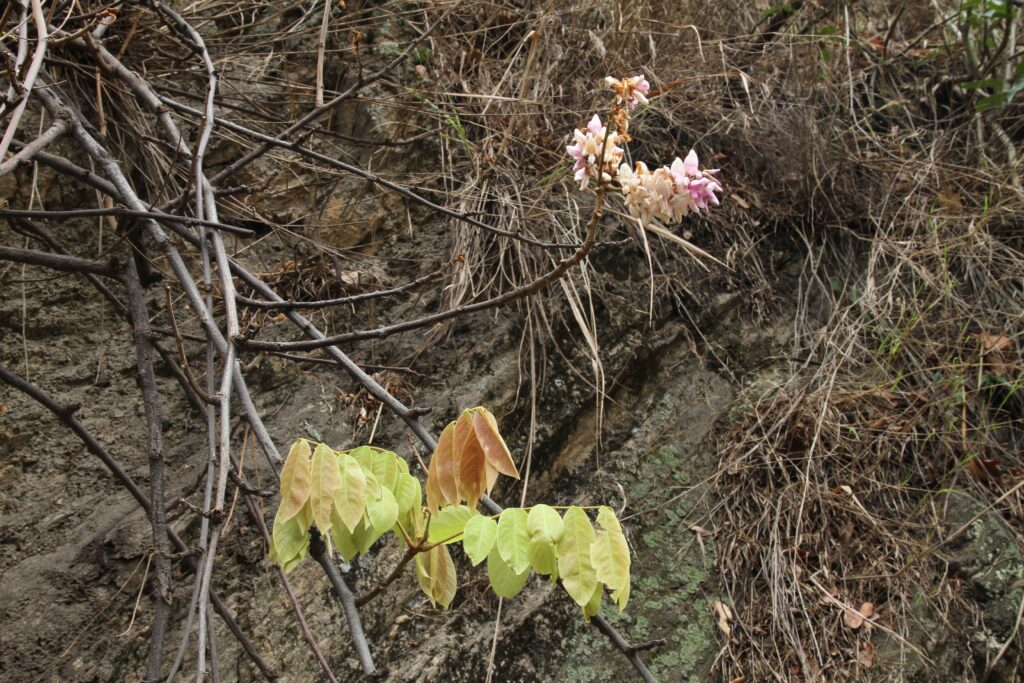
Cladrastis delavayi is a deciduous tree native to southern China (Yunnan, Sichuan, Guizhou, Guangxi) and the eastern Himalayan foothills, with records extending into Bhutan. The species occurs in warm-temperate to subtropical broadleaved forests, forest margins, and river valleys at elevations of 1,000–2,500 m, often growing on calcareous substrates. It has been documented from the Tashigang district in eastern Bhutan at 1,500 m, where it flowers in May before the onset of the summer monsoon, representing the western limit of its distribution in the Himalayan region.
Cladrastis delavayi is a medium-sized tree reaching 8–20 m in height, with a smooth, greyish bark. The leaves are alternate, imparipinnately compound, 15–30 cm long, with 9–13 leaflets that are ovate to elliptic, 4–10 cm long, papery in texture, glabrous above and sparsely pubescent beneath. The inflorescence is a terminal, erect panicle 15–30 cm long, bearing numerous papilionaceous flowers. The flowers are white to pale pink, approximately 1.5–2 cm long, fragrant, with a broadly campanulate calyx. The standard petal is reflexed and suborbicular. The fruit is a linear-oblong, flattened legume 5–10 cm long, indehiscent or tardily dehiscent, containing 1–4 seeds.
Originally described by Franchet as Sophora delavayi from material collected by Delavay in Yunnan and later transferred to Cladrastis by Prain, this species belongs to the small tribe Cladrastideae, which has a notable disjunct distribution between East Asia and eastern North America. With over 570 occurrence records in GBIF, C. delavayi is moderately well collected, though many records originate from cultivated specimens in botanical gardens in Europe, North America, and Japan. The presence of this species in Bhutan underscores the floristic affinity between eastern Bhutan and the Sino-Himalayan phytogeographic region. The tree is valued ornamentally for its attractive flowering and autumn foliage.

Author: (Franch.) Prain · Sources: POWO (Kew), GBIF, Flora of China Vol. 10, Grierson & Long: Flora of Bhutan Vol. 1 (1987), Duley & Vincent: Cladrastis (Leguminosae) Revisited (2003)

DC.

Garw 2005 251 ergebnis
India Garhwal Sitel 1850m, September

Description

Clematis acuminata is a woody climber of the Himalaya and adjacent uplands, recorded by GBIF from China, India, Nepal, Myanmar, Thailand and Bhutan, with around 173 occurrences spread along the southern ranges. It grows in temperate and warm-temperate forest, scrambling through shrubbery, over forest margins and along open hillsides and ravines, typically on well-drained slopes. The photographed plant was found in the Indian Garhwal Himalaya at Sitel around 1850 m, flowering in September as the monsoon wanes; the species generally occupies the 1500-3000 m belt where it climbs vigorously into the canopy of small trees and thickets.

The plant is a perennial liana with slender, ribbed, climbing stems that ascend by means of clasping, twining petioles. The leaves are opposite and pinnately or ternately compound, the leaflets ovate to lanceolate and conspicuously long-acuminate, giving the epithet, with entire or sparingly toothed margins. The flowers are borne in axillary cymes and lack true petals, the showy parts being four spreading, often pale to creamy or pinkish sepals surrounding numerous stamens. The fruit is a head of achenes, each tipped with a long, persistent, plumose style that aids wind dispersal.

Clematis belongs to the Ranunculaceae and is unusual in the family for its lianescent habit and petaloid sepals. The feathery styled achenes are a hallmark of the genus, ensuring effective anemochory across mountainous terrain. Like many relatives, the herbage contains acrid protoanemonin and is locally used in folk medicine. Clematis acuminata is moderately widespread but nowhere abundant; it is not formally assessed, and its forest-margin populations persist where montane woodland and scrub remain intact.

Author: DC. · Sources: POWO (Kew), GBIF, Flora of China, Flora of Bhutan, Clematis monograph (Grey-Wilson)

Roxb. ex DC.

Bhutan2012 1218
Bhutan Gom Kora 1850m, October
Bhutan2012 1216
Bhutan Gom Kora 1850m, October

Description

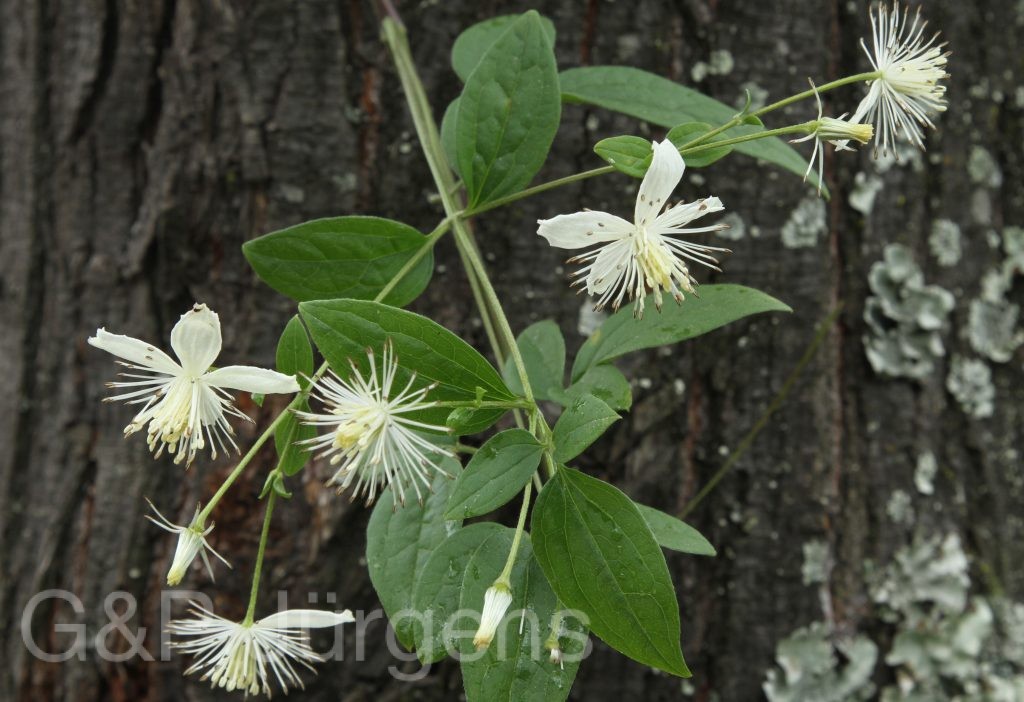
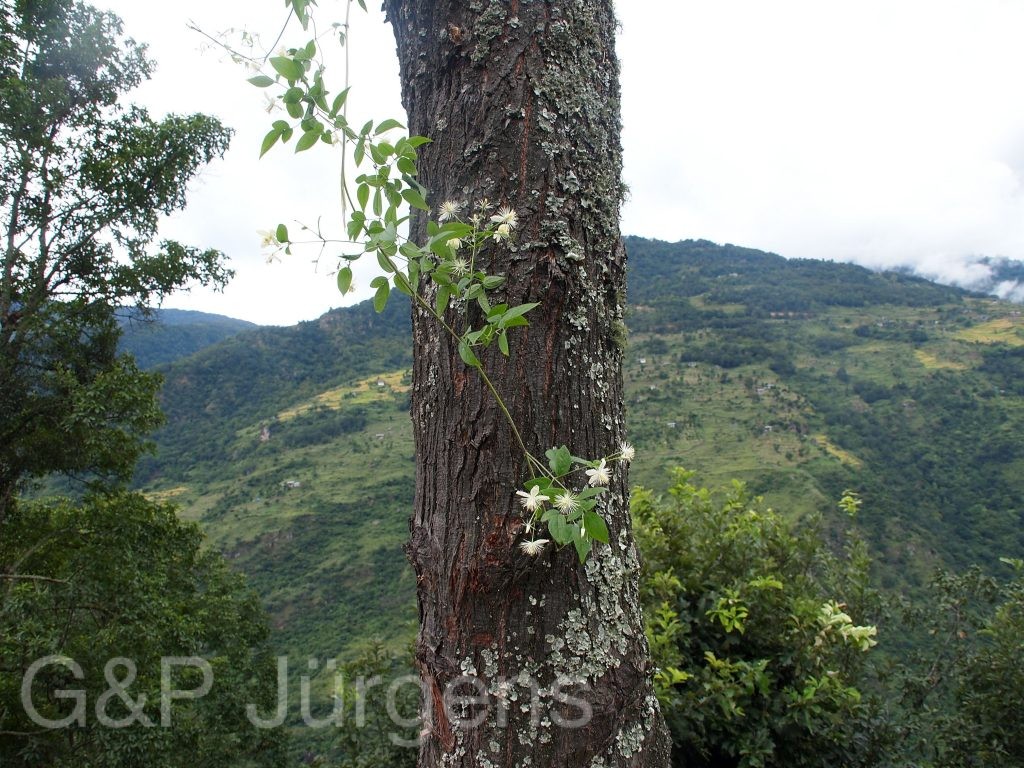
Clematis gouriana is a vigorous climbing vine with a broad tropical-Asian and Himalayan distribution, recorded from China, India, Taiwan, the Philippines, Japan, Indonesia, Nepal, Myanmar, Thailand and many other countries, with a large dataset of around 2207 occurrences. It scrambles over shrubs, hedgerows, forest margins, thickets and roadside vegetation, predominantly in subtropical to warm-temperate hill country. The photographed plant from Gom Kora in eastern Bhutan at 1850 m, flowering in October, exemplifies its autumn blooming in low to mid-elevation forest borders.

It is a woody to semi-woody liana climbing by means of twining, clasping petioles. The leaves are opposite and pinnately compound, usually with three to five ovate, acuminate, entire or toothed leaflets borne on slender stalks. The inflorescences are large, much-branched axillary and terminal panicles of numerous small, fragrant flowers; lacking petals, each flower has four spreading, creamy-white, narrowly oblong sepals and a central tuft of many stamens and carpels. The fruit is an aggregate of compressed, pubescent achenes, each bearing a long, persistent, plumose feathery style that forms silvery seed-heads dispersed by wind.

Clematis gouriana, described by Roxburgh and DC., belongs to a complex of white-flowered, panicle-bearing climbers in section Clematis and is morphologically close to species such as C. grata. Its massed autumn flowering provides abundant late-season nectar for bees and other insects. Widespread, fast-growing and tolerant of disturbance, it can behave almost weedily along forest edges and is of no conservation concern.

Author: Roxb. ex DC. · Sources: POWO (Kew), GBIF, Flora of China (Ranunculaceae), Annotated Checklist of the Flowering Plants of Nepal, Grierson & Long Flora of Bhutan, Johnson's monograph Clematis: The Genus

Lindl.

Nepal 99 978 ergebnis
West-Nepal Dunai 2150m, July

Description

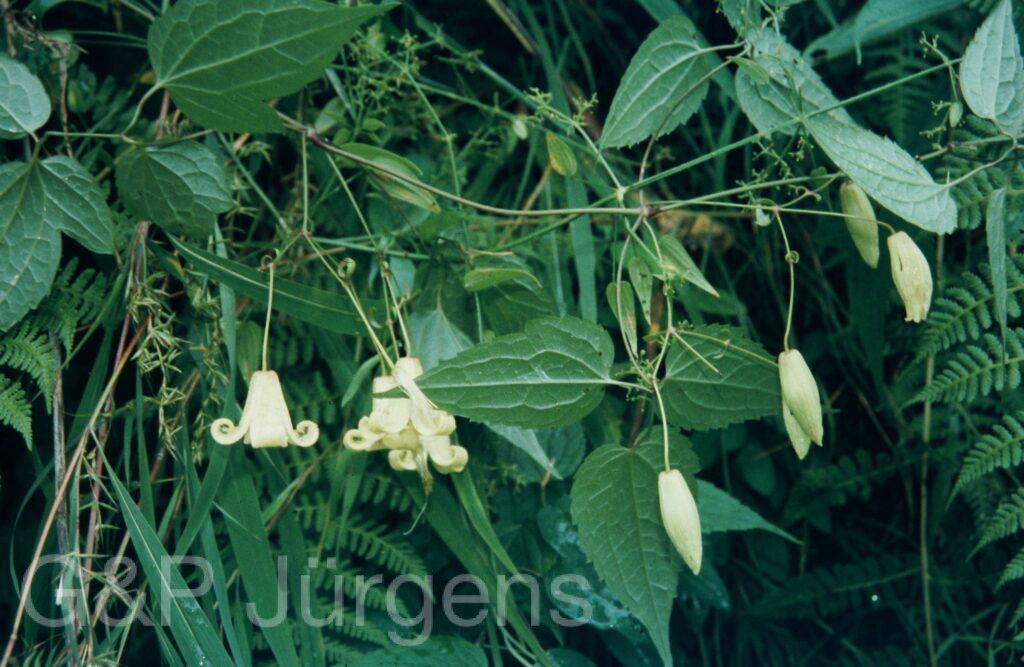
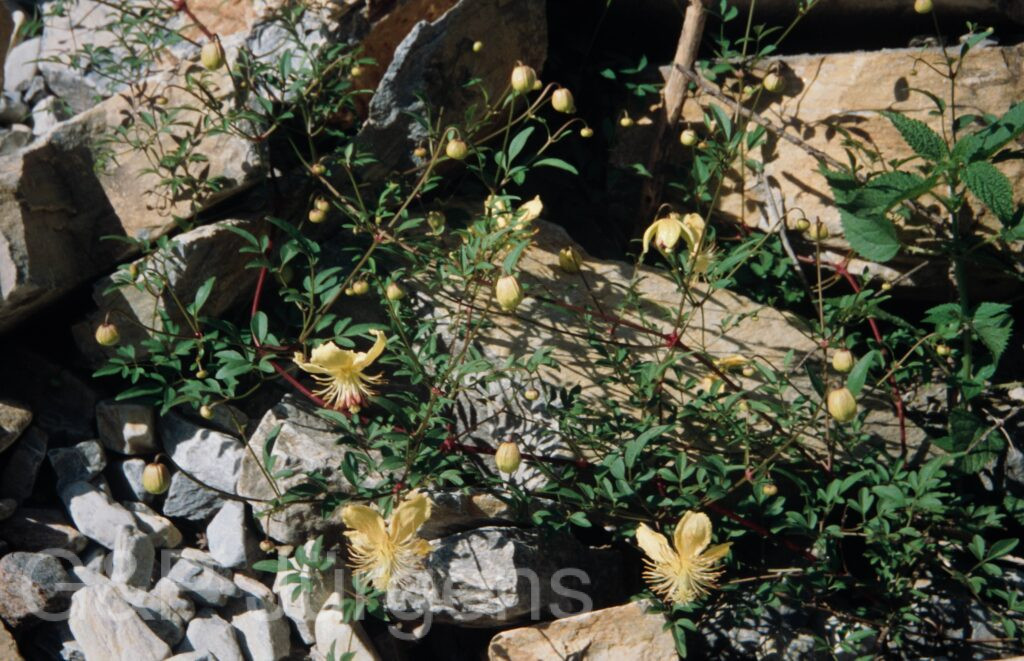
Clematis graveolens Lindl. is a Sino-Himalayan climber of the western and central Himalaya and adjacent Central Asia, with records from Afghanistan, Pakistan, India, Nepal and China; the GBIF dataset of 236 occurrences also reflects scattered cultivated material in Europe and North America. It occupies dry, open hillsides, rocky slopes, scrub margins and stony riverbanks in the temperate and subalpine belt, broadly between 1500 and 3500 m. The photographed plant near Dunai in West Nepal at about 2150 m, flowering in July, typifies its preference for warm, well-drained, sun-baked terrain in the monsoon-sheltered inner valleys.

The species is a woody-based, scrambling perennial climbing by means of twining, sensitive petioles. The leaves are opposite and pinnately to bipinnately compound, the segments narrowly lanceolate to linear, often pinnatifid, glaucous and somewhat fleshy, emitting a strong foetid odour when bruised that gives the plant its epithet. Flowers are solitary or in few-flowered cymes, nodding and broadly campanulate; the four spreading to recurved tepals are yellow to greenish-yellow, thinly tomentose without and glabrescent within. Numerous stamens surround the pubescent carpels. The fruit is a head of compressed achenes, each bearing a long, persistent, plumose style forming the characteristic feathery awn.

Within Clematis the species belongs to section Meclatis (the yellow-flowered, Atragene-allied group typified by C. orientalis and C. tibetana), distinguished by its campanulate yellow flowers and divided, malodorous foliage. It is a hardy xerophyte adapted to the continental, low-rainfall pockets of the western Himalaya, and is used locally in folk medicine as a counter-irritant. Widespread and frequent in disturbed scrub, it is of no conservation concern and has occasionally entered horticulture as a drought-tolerant ornamental.

Author: Lindl. · Sources: POWO (Kew), GBIF, Flora of Pakistan, Flora of China, Annotated Checklist of the Flowering Plants of Nepal, Magnus Johnson — The Genus Clematis

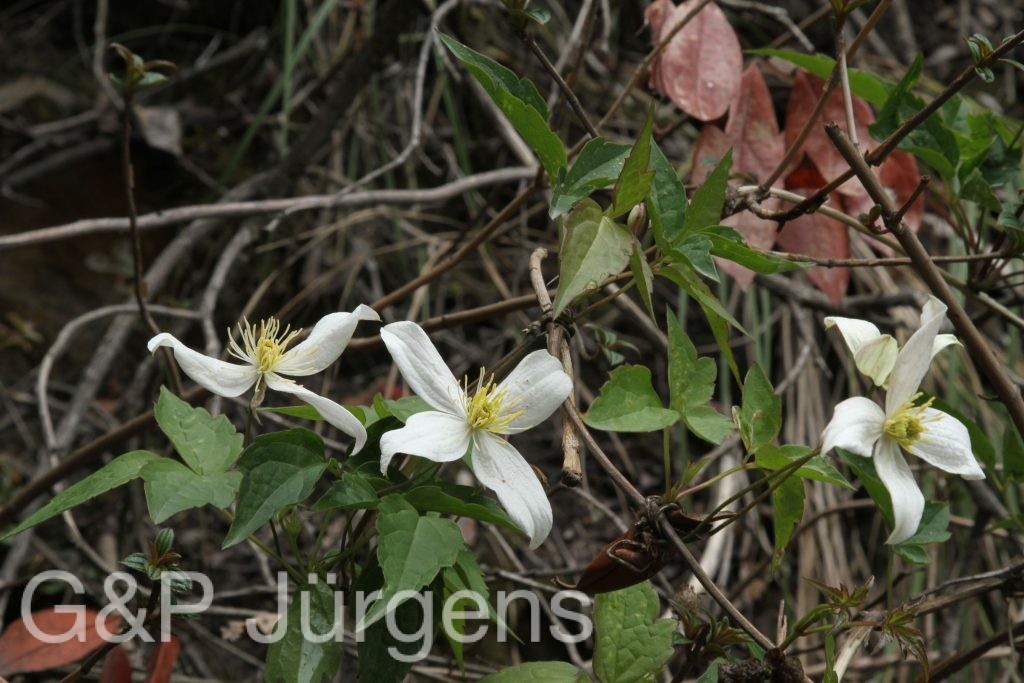
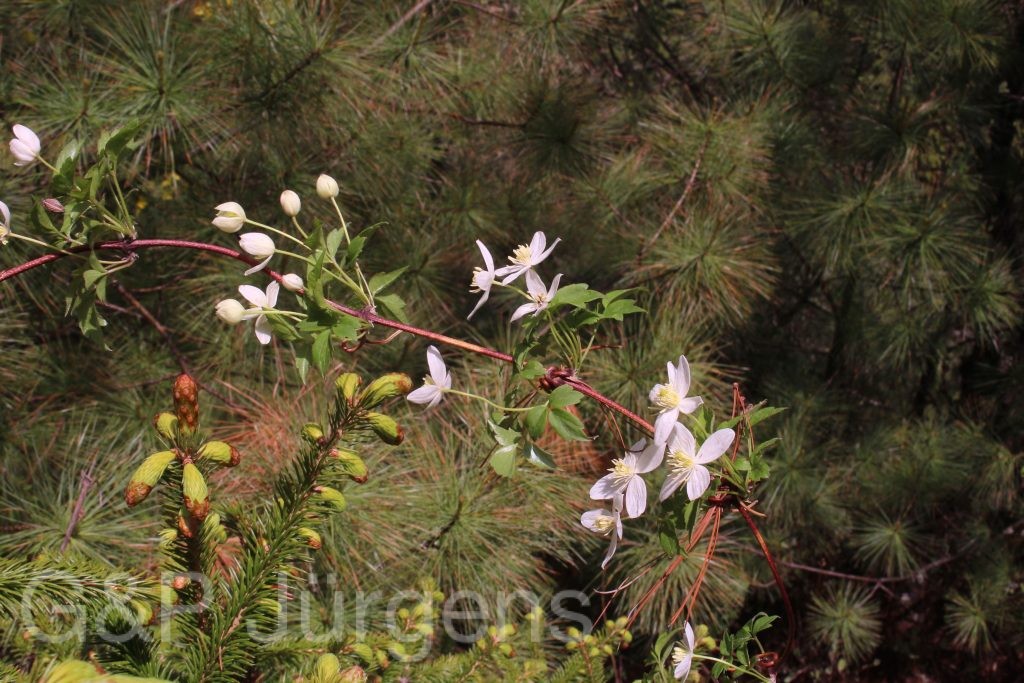
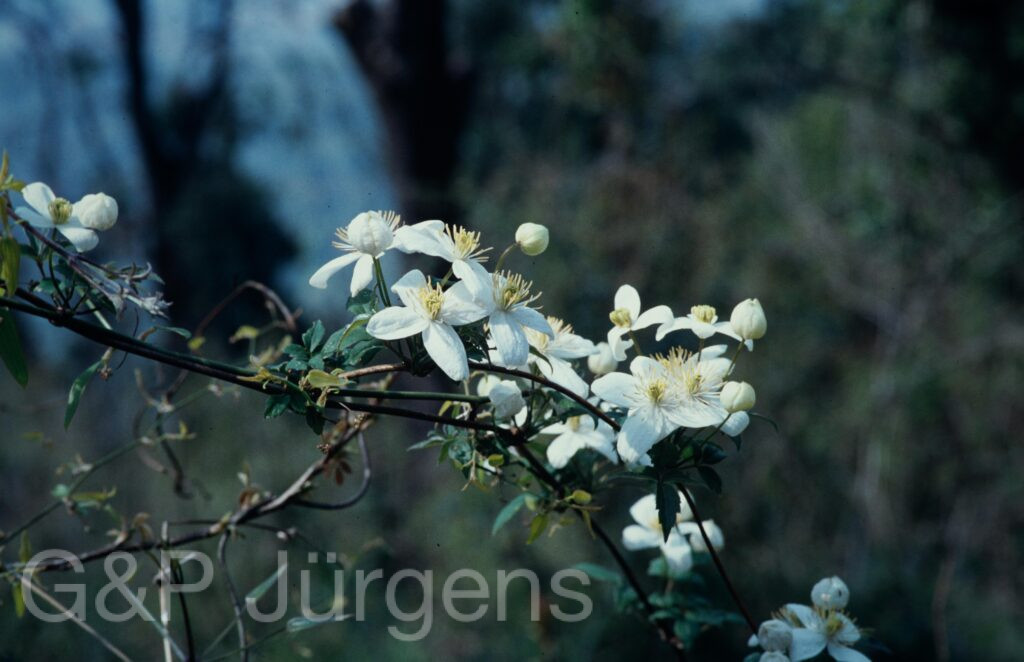
Buch.-Ham. ex DC.

Bhutan2014 36
Bhutan Sandrup 1000m, May
Bhutan2014 971
Bhutan Chele-La 3400m, May
Nepal 1994 66 ergebnis
Ost-Nepal Jaljale Himal 2400m, April

Description

Clematis montana is a widespread Himalayan and Sino-Himalayan climber ranging from Pakistan and Kashmir eastward through Nepal, Bhutan and northern India into central and southwestern China and Myanmar. Reflecting its long history in horticulture, GBIF records exceed 6300 and include numerous cultivated and naturalised occurrences in Britain, continental Europe, North America, New Zealand and Australia alongside its native Asian range. In the wild it grows over an exceptionally broad elevational span, scrambling through forest margins, scrub, hedgerows and over rock from warm temperate valleys to high subalpine slopes. The Bhutanese material imaged at Sandrup (1000 m) and Chele La (3400 m) and the East Nepal population on the Jaljale Himal (2400 m), all flowering April to May, illustrate its vernal, pre-monsoon blooming across this range.

It is a vigorous woody climber with slender, ridged, eventually brown stems and clambering by twining petioles. The leaves are opposite and ternate, the three leaflets ovate to lanceolate, irregularly toothed or lobed and often softly hairy. Flowers are borne singly or in fascicles from the axils of the previous year's growth, each large and showy with four (occasionally more) spreading, petaloid sepals that are white to pink and frequently fragrant; true petals are absent. The numerous stamens have yellow anthers. The fruit is an aggregate of achenes, each tipped by a long, persistent, plumose silky style aiding wind dispersal.

Within Clematis the species belongs to sect. Montanae of spring-flowering, ternate-leaved climbers, and is morphologically variable, with several named varieties and many garden cultivars selected for flower colour and size. It is an early-season nectar source and a robust coloniser of disturbed and edge habitats. It is common and not of conservation concern; its naturalisation beyond Asia underscores its competitive vigour and broad climatic tolerance.

Author: Buch.-Ham. ex DC. · Sources: POWO (Kew), GBIF, Flora of China, Flora of Bhutan, Annotated Checklist of the Flowering Plants of Nepal, Grey-Wilson's Clematis the Genus (monograph)

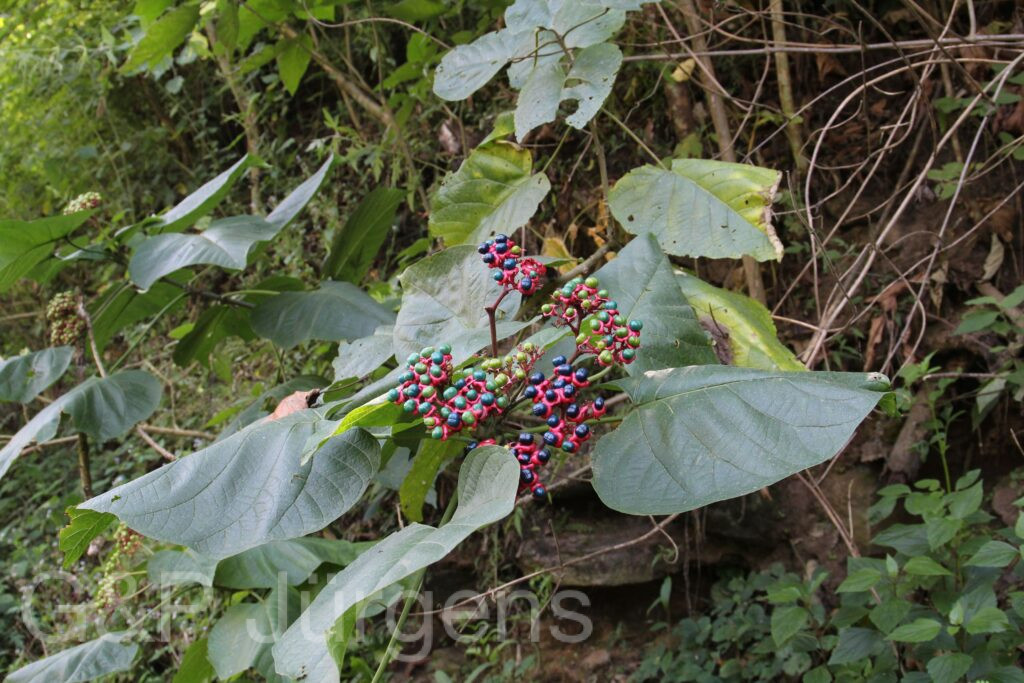
Walp.

Bhutan2015 316
Bhutan Trongsa 1900m, October
Bhutan2012 751
Bhutan Zemgang 1200m, October
Bhutan2012 752
Bhutan Zemgang 1200m, October
Bhutan2015 149 scaled
Bhutan Zhemgang 800m, October

Description

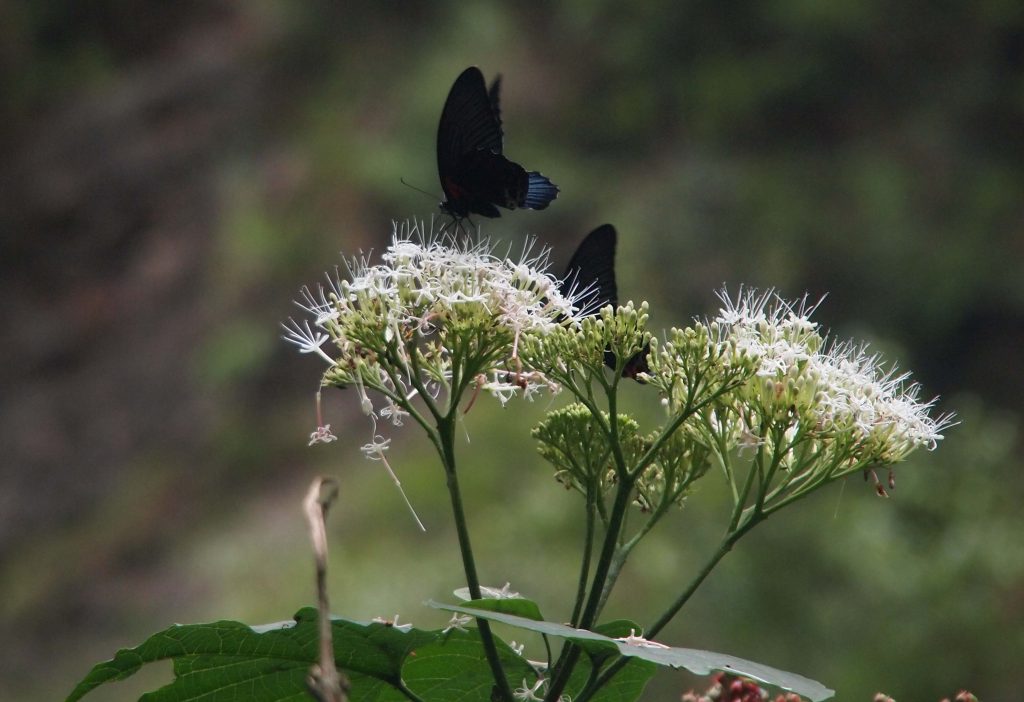
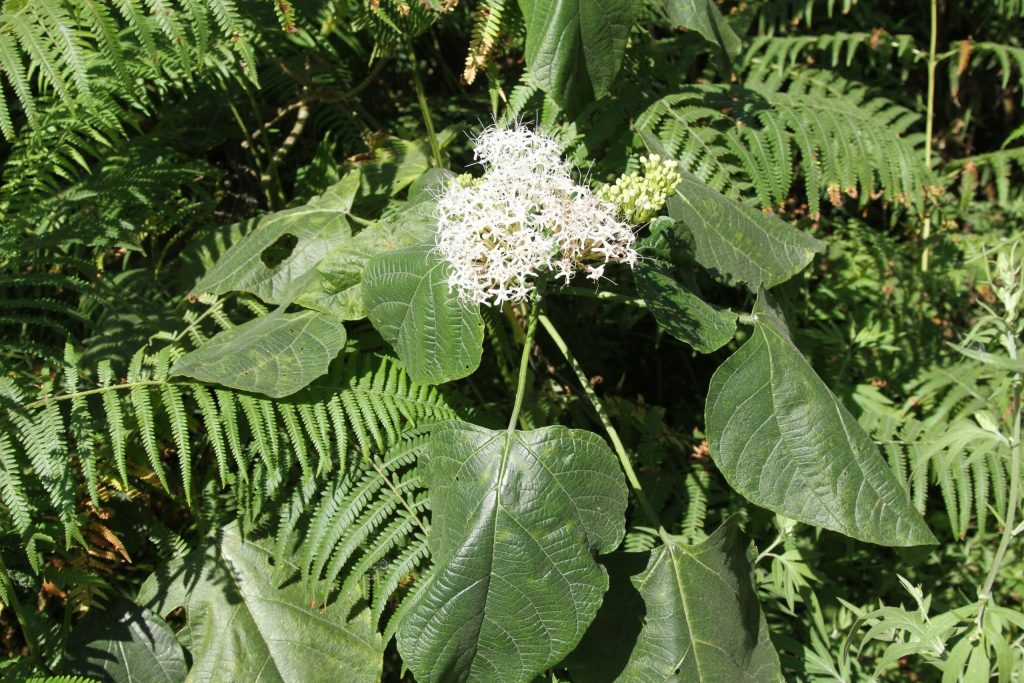
Clerodendrum colebrookianum is a shrub of the Indo-Himalayan and Southeast Asian region, recorded from Nepal, NE India, Bhutan, Bangladesh, Myanmar, southern China and southward through Thailand, Laos, Vietnam, Malaysia and Indonesia; the GBIF dataset (299 occurrences) also includes outlying records. It is a plant of warm-temperate to subtropical broad-leaved forest, forest margins, secondary scrub and disturbed roadsides, frequently following human settlement. In Bhutan it has been collected across a broad altitudinal span, from around 800 m in Zhemgang up to about 1,900 m near Trongsa, with autumn (October) collections capturing it in flower and early fruit.

It is an erect shrub 1–3 m tall with quadrangular, finely pubescent young branchlets. The leaves are opposite, broadly ovate to cordate, 8–20 cm long, acuminate at the apex, entire or shallowly toothed, with a soft indumentum beneath and a strong odour when crushed. The inflorescence is a broad, terminal, flat-topped corymbose cyme; flowers are white, the calyx campanulate and 5-lobed, the corolla with a slender tube and five spreading lobes, and four long-exserted stamens and a bifid style projecting well beyond the limb. The fruit is a fleshy drupe splitting into four pyrenes seated on the persistent, reddening calyx.

Though GBIF flags the name as a synonym, the accepted name is Clerodendrum colebrookianum, here treated as correct. Formerly placed in Verbenaceae, the genus is now referred to Lamiaceae following molecular phylogenetic revision. The species is a well-known leafy vegetable and ethnomedicinal plant across NE India and adjacent regions, valued in folk treatment of hypertension, and is widespread and unthreatened.

Author: Walp. · Sources: POWO (Kew), Flora of China Vol. 17, Flora of Bhutan Vol. 2, GBIF, Harley et al.: Labiatae in The Families and Genera of Vascular Plants (2004)

(Kunth ex Baker) H.Hara

Bhutan2014 578
Bhutan Phobjika 3100m, May
Bhutan2014 827
Bhutan Thimphu 2450m, May

Description

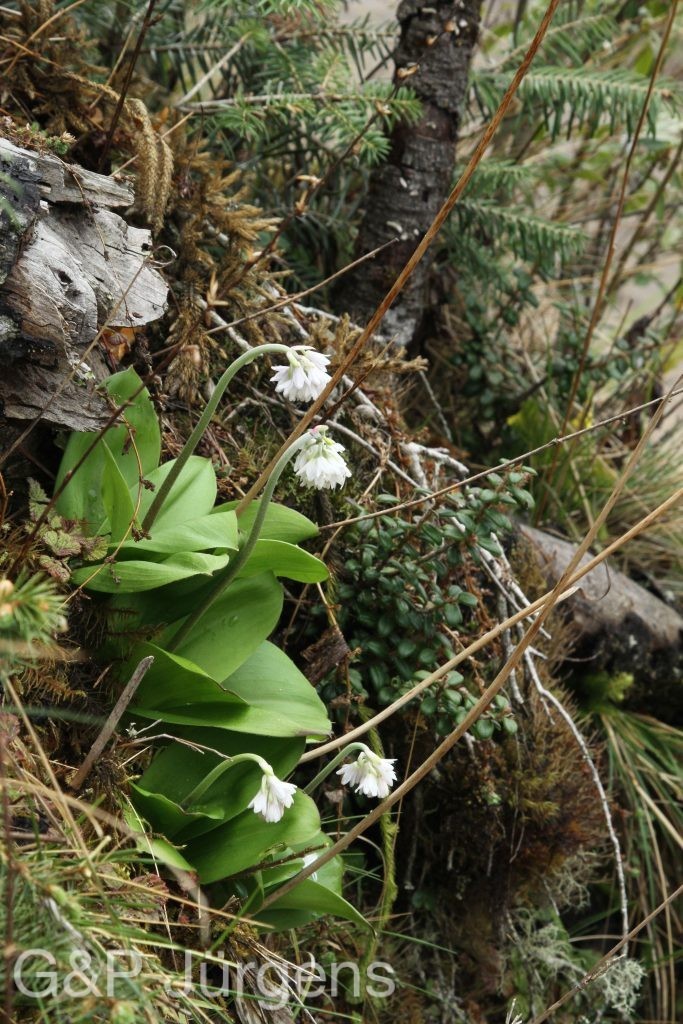
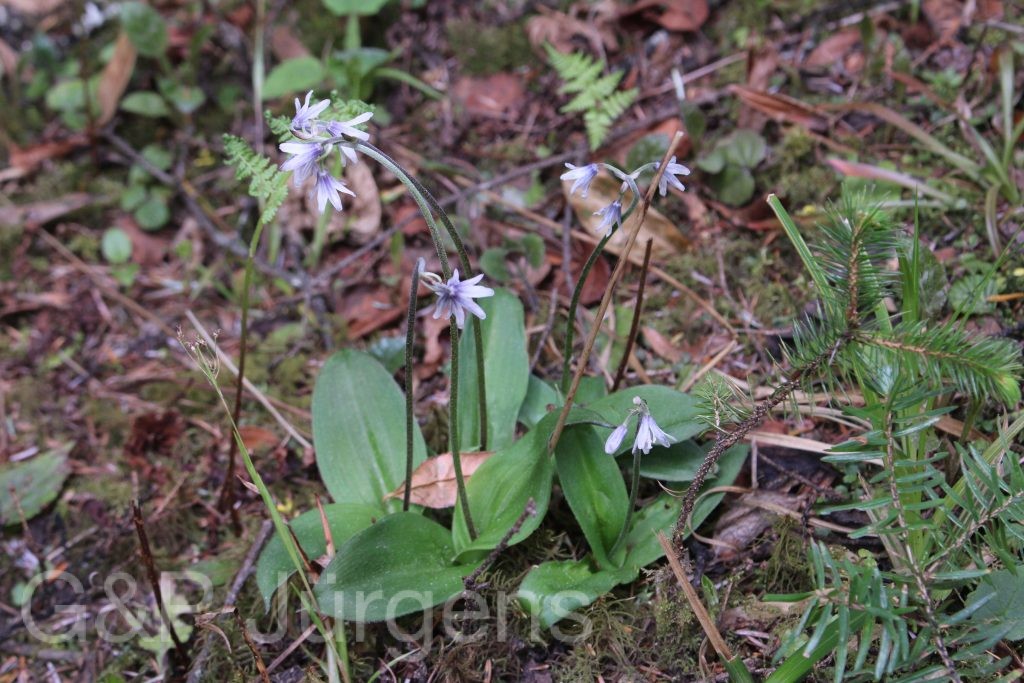
Clintonia udensis var. alpina is a rhizomatous woodland herb of the temperate Himalaya and the mountains of East Asia. GBIF records (around 230 occurrences) span China, India, Nepal, Bhutan, Myanmar, Korea and Japan, the species as a whole forming a classic Sino-Himalayan to East Asian arc. It is a plant of moist, shaded forest floors, growing among mosses beneath fir, hemlock and rhododendron, and along cool stream banks in the upper temperate and subalpine zones. The photographed plants came from Bhutan at Phobjika near 3100 m and above Thimphu at about 2450 m, both flowering in May, consistent with its habit of blooming as the snowmelt recedes.

The plant arises from a slender creeping rhizome and produces a basal rosette of two to five leaves. These are oblong-elliptic to obovate, entire, glabrous and somewhat fleshy, narrowed to a sheathing base. From the centre rises a leafless scape bearing a small umbel-like cluster of nodding, white, campanulate flowers; each has six free, oblong tepals, six stamens with versatile anthers, and a superior ovary topped by a short style. The fruit is a globose berry that ripens from green to a striking blue-black, borne erect on the lengthening pedicels, the contrast of dark fruit and green foliage being characteristic of the genus.

Clintonia is a small Northern Hemisphere genus of the Liliaceae traditionally placed near Medeola, with a disjunct distribution between eastern Asia and North America that makes it a textbook example of the boreal-temperate floristic link. The alpine variety represents the higher-elevation, smaller Himalayan expression of the wide-ranging C. udensis. The species is frequent in suitable forest and is of no conservation concern, its blue berries dispersed by birds.

Author: (Kunth ex Baker) H.Hara · Sources: POWO (Kew), GBIF, Flora of China, Flora of Bhutan, Annotated Checklist of the Flowering Plants of Nepal, Utech's taxonomic studies of Clintonia (Liliaceae)

Hook.f. & Thomson

Description

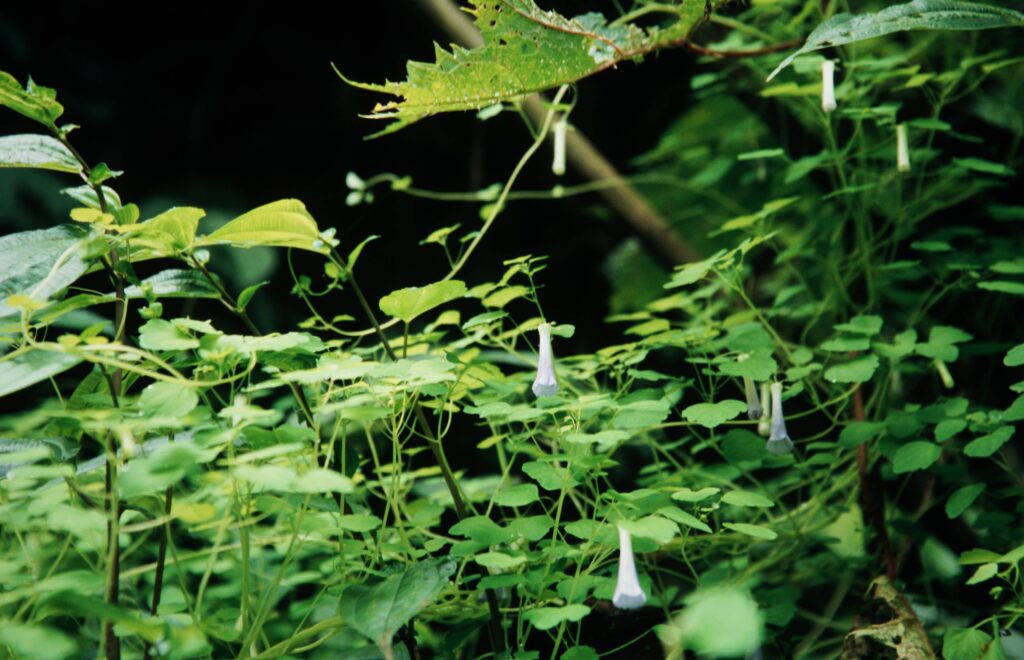
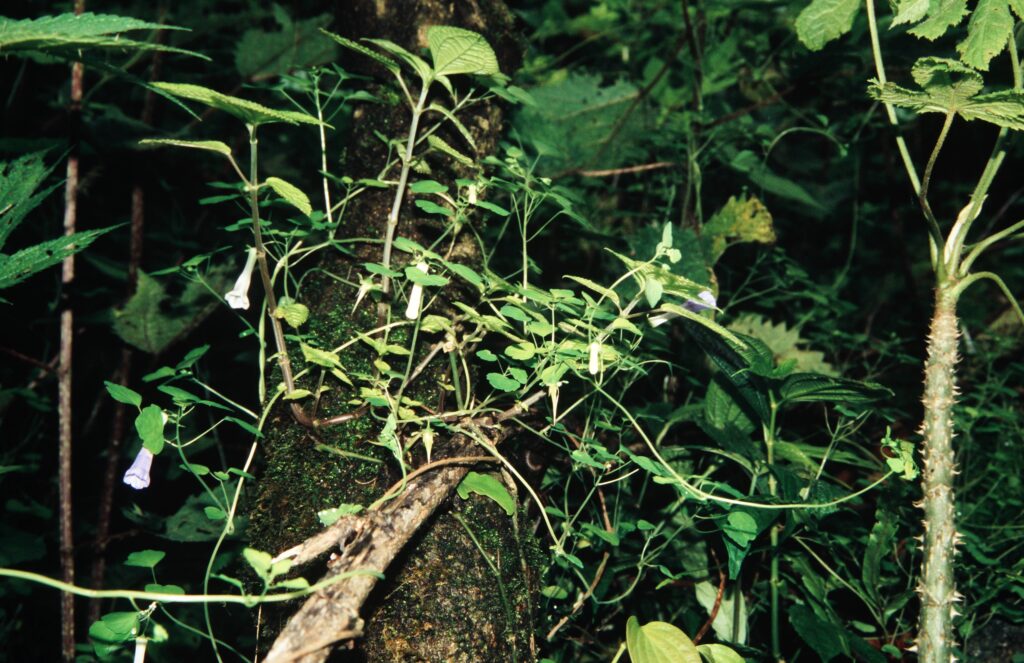
Codonopsis gracilis is a slender twining herb distributed across the eastern Himalaya and into mainland Southeast Asia and southern China. Its range extends from Nepal, Bhutan, and northeastern India (Sikkim, West Bengal, Assam, Meghalaya) through Myanmar and Vietnam to southern China (Yunnan, Sichuan, Guizhou). GBIF records 72 occurrences across these countries. The species grows in margins of subtropical and warm temperate broadleaved forests, thickets, hedgerows, and along streams, at elevations of 1,200–2,800 m. The photograph from Ruigi-Chu in West Bengal at 1,850 m, taken in May, shows the species at a mid-elevation site in the Sikkim-Darjeeling region during the early monsoon flowering period.
The plant is a perennial twining herb arising from a slender, fusiform or cylindrical root. Stems are slender, glabrous or sparsely pubescent, extensively twining through surrounding vegetation, reaching 1–3 m. Leaves are alternate or opposite on lower stems, ovate to broadly ovate, 2–5 cm long, with crenate to serrate margins, sparsely hairy above, paler beneath. Flowers are solitary, axillary, pendulous on slender pedicels. The calyx lobes are five, lanceolate to ovate, spreading. The corolla is broadly campanulate, 15–25 mm long, pale blue to lilac with darker purple veins and markings inside, particularly prominent reticulate venation in the throat. Stamens five, free; the ovary is semi-inferior. The fruit is a broadly conical capsule, dehiscing by apical valves.
Codonopsis gracilis is distinguished from congeners by its relatively small, delicate habit and slender roots, lacking the thick, fleshy taproots prized in traditional medicine that characterize species such as C. pilosula and C. tangshen. The genus Codonopsis comprises approximately 40 species centred on the Sino-Himalayan region, and molecular phylogenetic studies have confirmed its placement within Campanulaceae sensu lato. C. gracilis is not currently considered threatened and remains locally frequent in forest margins across its wide range.

Author: Hook.f. & Thomson · Sources: POWO (Kew), GBIF, Hong & Lammers: Campanulaceae in Flora of China Vol. 19, Grierson & Long: Flora of Bhutan Vol. 2

Wall.

Bhutan2012 1191
Bhutan Tashiyangtse 2000m, October
Bhutan2012 1193
Bhutan Tashiyangtse 2000m, October
Nepal 95 118 P206 ergebnis
Nepal south of Rupina La 3400m October
Nepal 95 119 P207 ergebnis
Nepal south of Rupina La 3400m October

Description

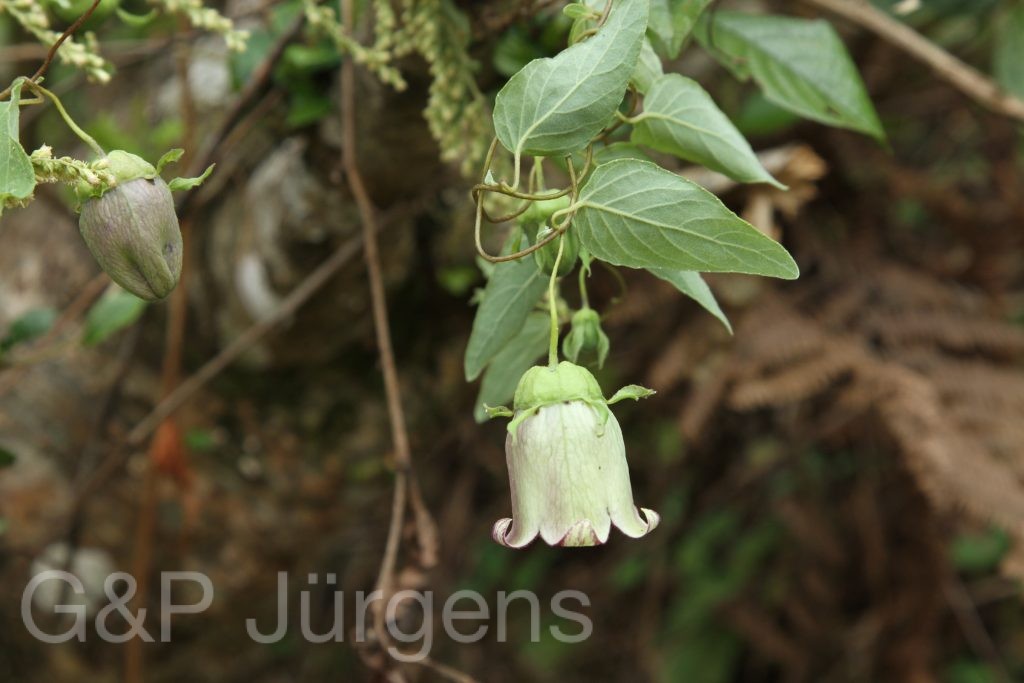
Codonopsis viridis is a Himalayan twining or scrambling perennial distributed along the central and eastern ranges from Nepal through northern India, Sikkim and Bhutan into south-western China, with 162 GBIF records concentrated in this Sino-Himalayan belt. It grows in shrubberies, forest margins, hedgerows and disturbed banks across a wide montane elevation span, from warm-temperate slopes to the subalpine zone. The cited collections illustrate this amplitude: from Tashiyangtse in eastern Bhutan at 2000 m to a higher site south of the Rupina La in Nepal at 3400 m, both flowering in October at the close of the monsoon.

It is a herbaceous climber with slender, twining stems emerging from a tuberous or fleshy rootstock, the foliage and roots emitting the characteristic acrid Codonopsis odour. The leaves are ovate to ovate-lanceolate, alternate or scattered along the stem, thin-textured and entire to obscurely toothed. The flowers are solitary and terminal or borne on slender lateral branches, broadly campanulate to cup-shaped, the corolla greenish to greenish-yellow, often faintly veined or tinged within, with five short spreading lobes. The fruit is a turbinate capsule with a flattened apex, dehiscing to release numerous small seeds.

Codonopsis is a large Asian genus centred on the Himalaya and China, and C. viridis is distinguished within it by its greenish corolla and climbing habit. Like its congeners, it is visited by bees and flies and several species are harvested as substitutes for the tonic root "dang shen". The species is widespread and locally frequent across its range and is not regarded as of conservation concern.

Author: Wall. · Sources: POWO (Kew), GBIF, Flora of China, Flora of Bhutan, Annotated Checklist of the Flowering Plants of Nepal, Lammers monograph of Campanulaceae (Codonopsis)