
Walp.
Description
Clerodendrum colebrookianum is a shrub of the Indo-Himalayan and Southeast Asian region, recorded from Nepal, NE India, Bhutan, Bangladesh, Myanmar, southern China and southward through Thailand, Laos, Vietnam, Malaysia and Indonesia; the GBIF dataset (299 occurrences) also includes outlying records. It is a plant of warm-temperate to subtropical broad-leaved forest, forest margins, secondary scrub and disturbed roadsides, frequently following human settlement. In Bhutan it has been collected across a broad altitudinal span, from around 800 m in Zhemgang up to about 1,900 m near Trongsa, with autumn (October) collections capturing it in flower and early fruit.
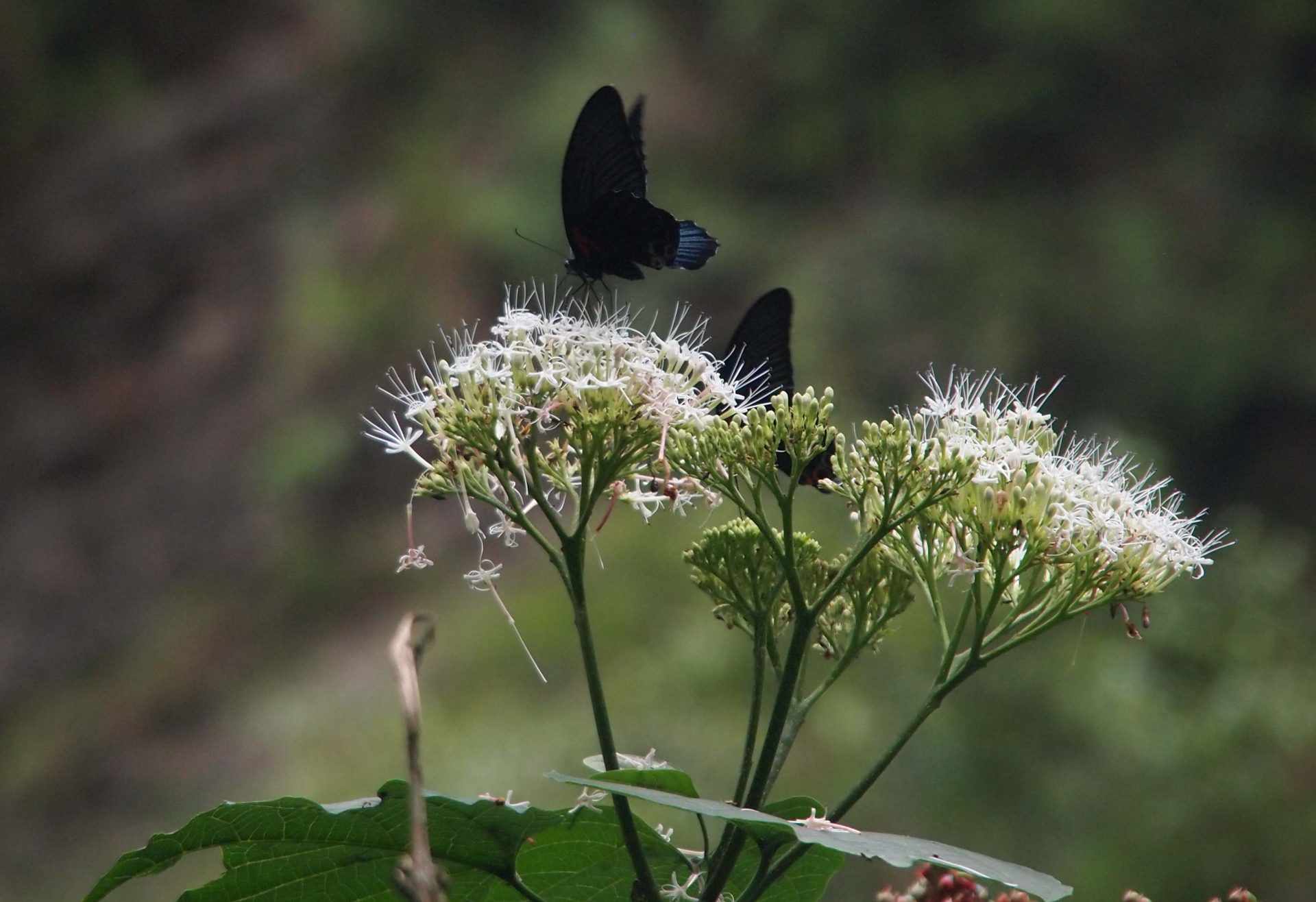
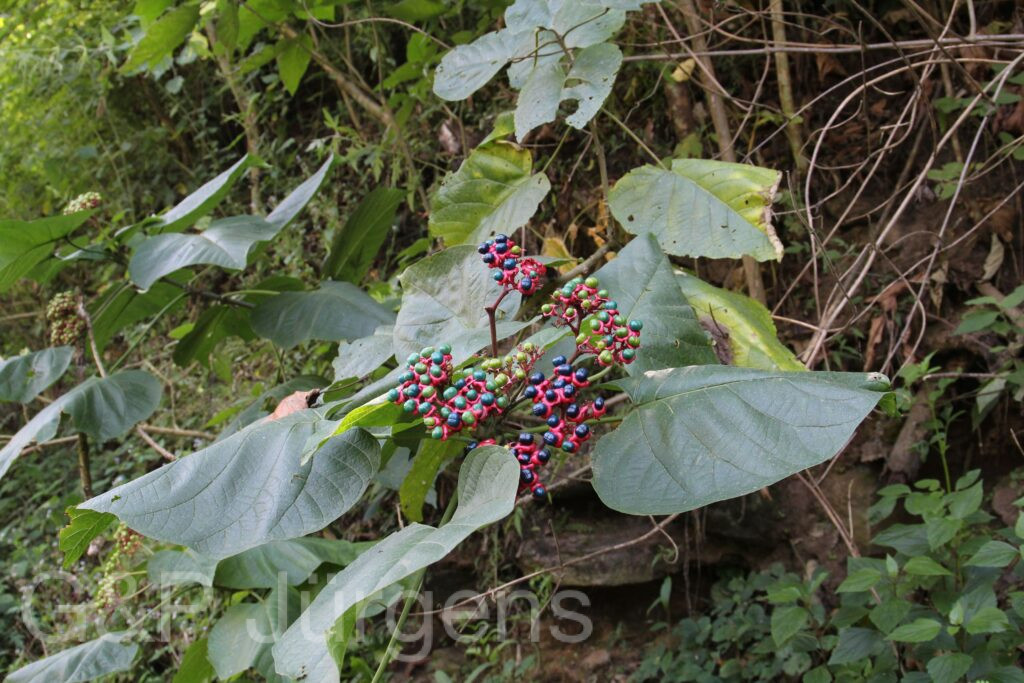
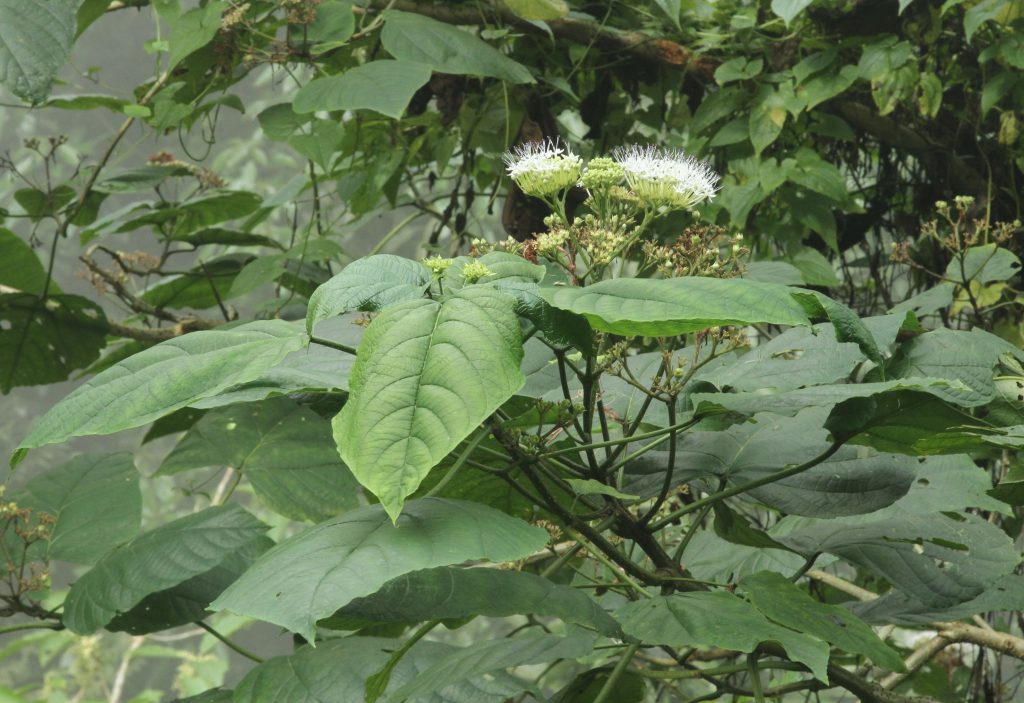
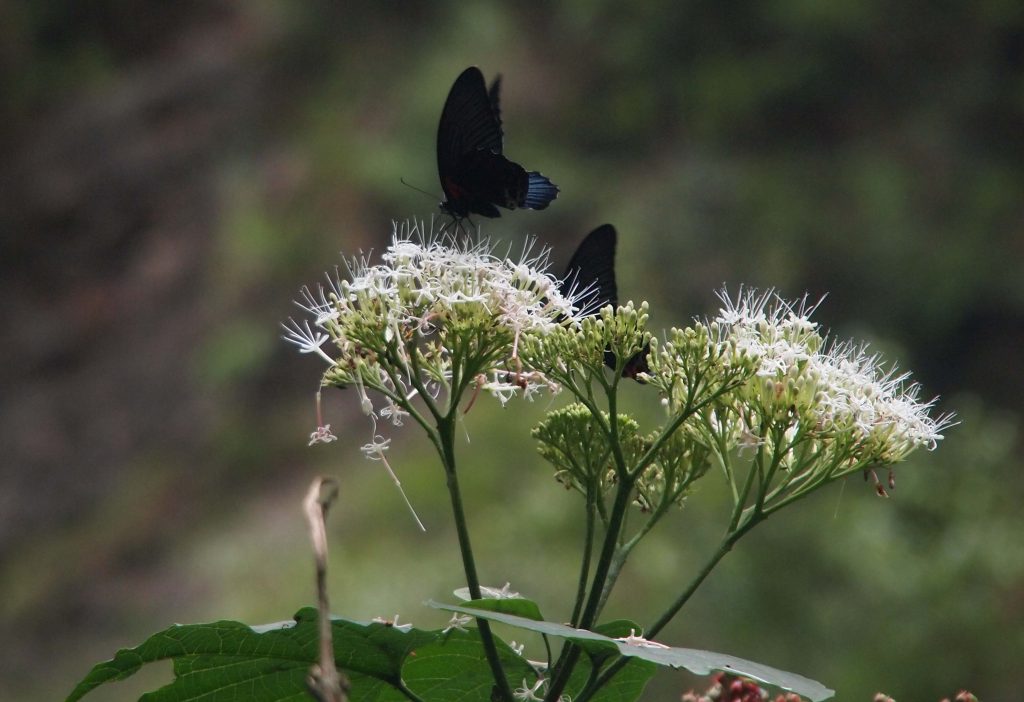
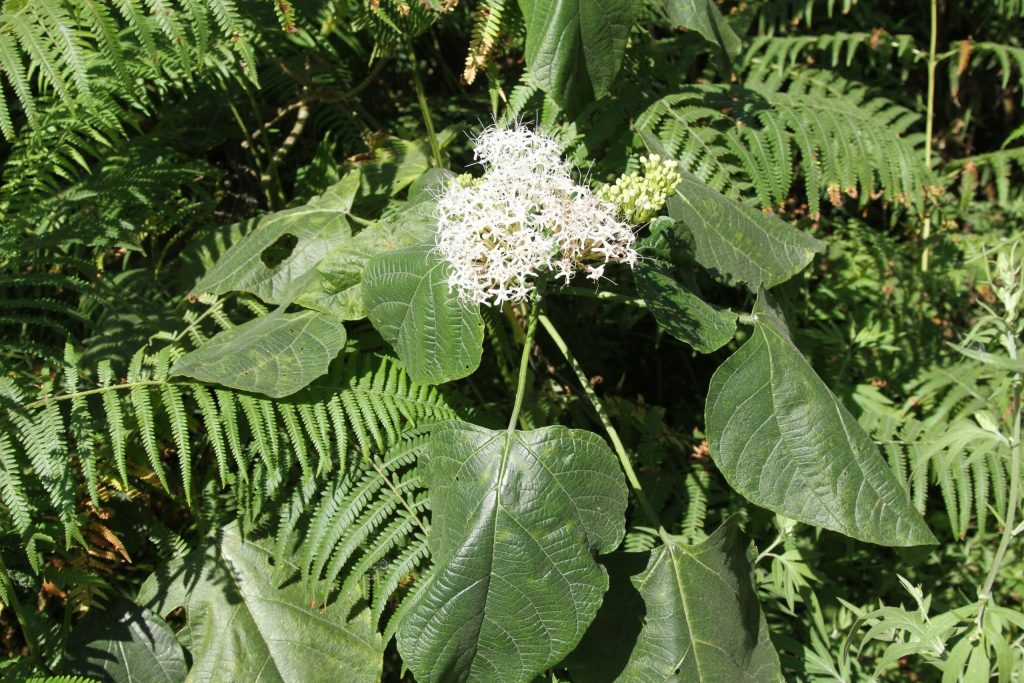
It is an erect shrub 1–3 m tall with quadrangular, finely pubescent young branchlets. The leaves are opposite, broadly ovate to cordate, 8–20 cm long, acuminate at the apex, entire or shallowly toothed, with a soft indumentum beneath and a strong odour when crushed. The inflorescence is a broad, terminal, flat-topped corymbose cyme; flowers are white, the calyx campanulate and 5-lobed, the corolla with a slender tube and five spreading lobes, and four long-exserted stamens and a bifid style projecting well beyond the limb. The fruit is a fleshy drupe splitting into four pyrenes seated on the persistent, reddening calyx.
Though GBIF flags the name as a synonym, the accepted name is Clerodendrum colebrookianum, here treated as correct. Formerly placed in Verbenaceae, the genus is now referred to Lamiaceae following molecular phylogenetic revision. The species is a well-known leafy vegetable and ethnomedicinal plant across NE India and adjacent regions, valued in folk treatment of hypertension, and is widespread and unthreatened.
Author: Walp. · Sources: POWO (Kew), Flora of China Vol. 17, Flora of Bhutan Vol. 2, GBIF, Harley et al.: Labiatae in The Families and Genera of Vascular Plants (2004)