
Petr.
Description
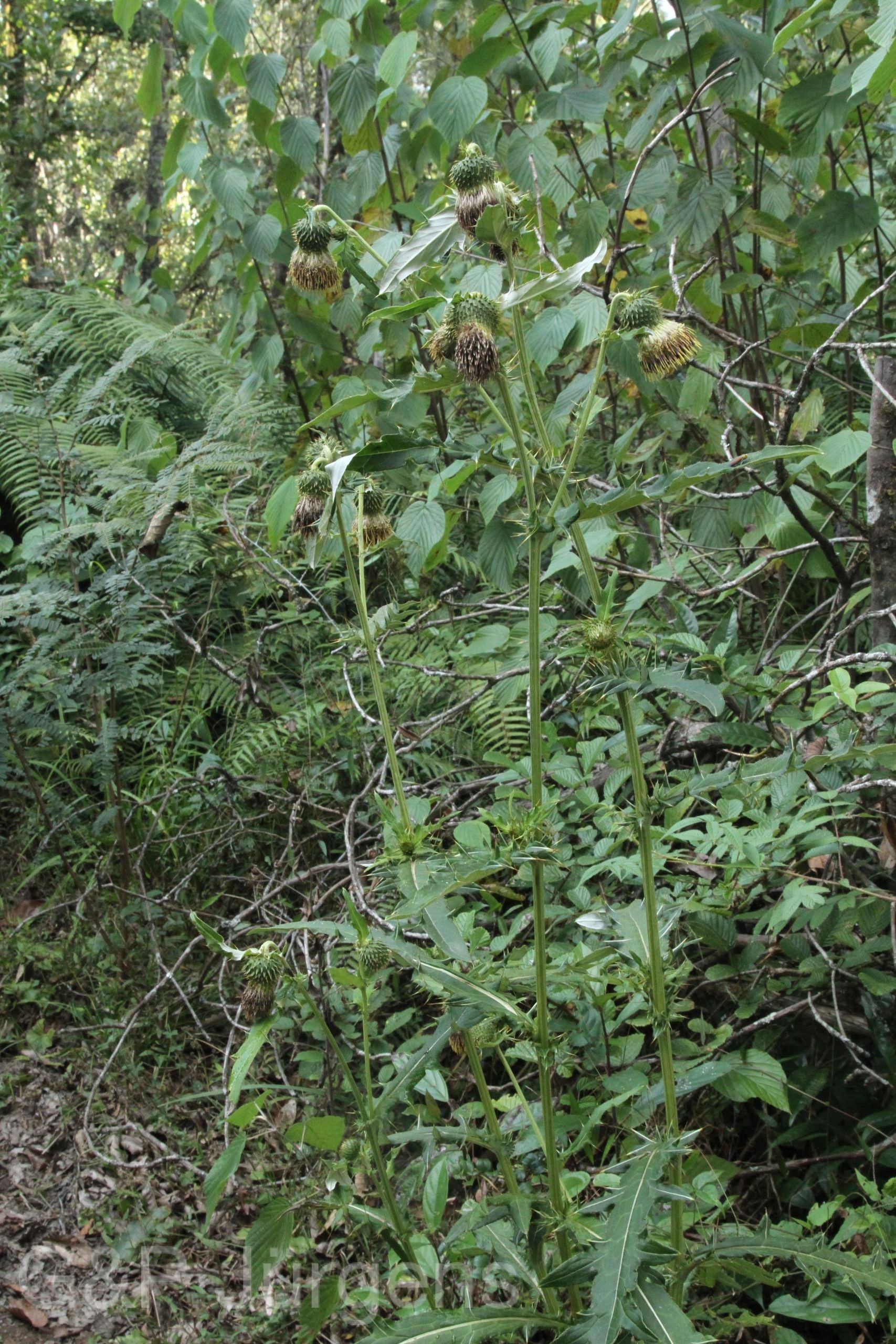
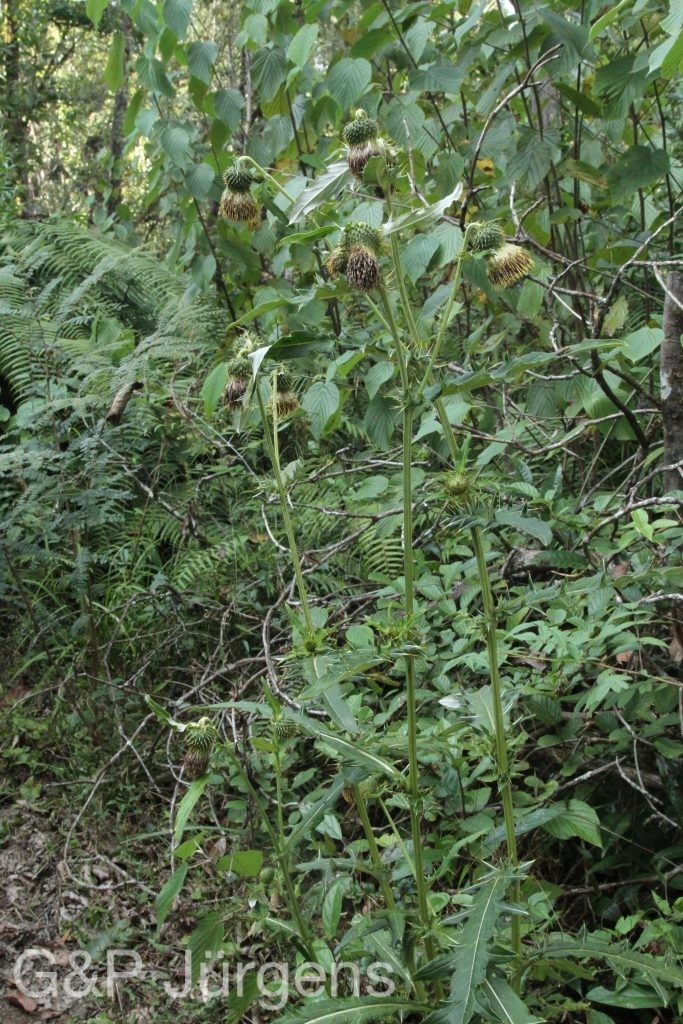
Cirsium interpositum is a Himalayan and East Asian thistle recorded from China, Turkey, India and Korea, with 55 georeferenced occurrences. Under the GBIF backbone the name is treated as a SYNONYM, with Cirsium interpositum itself given as the accepted name in this dataset, reflecting unsettled circumscription within the genus; it is closely allied to the C. lipskyi complex referenced in the source record. It grows on grassy montane slopes, in open scrub, forest margins and disturbed clearings, generally in the temperate zone. It was photographed at Trashyangtse in eastern Bhutan at 2100 m in May, flowering in the cool spring of the mid-montane valleys.
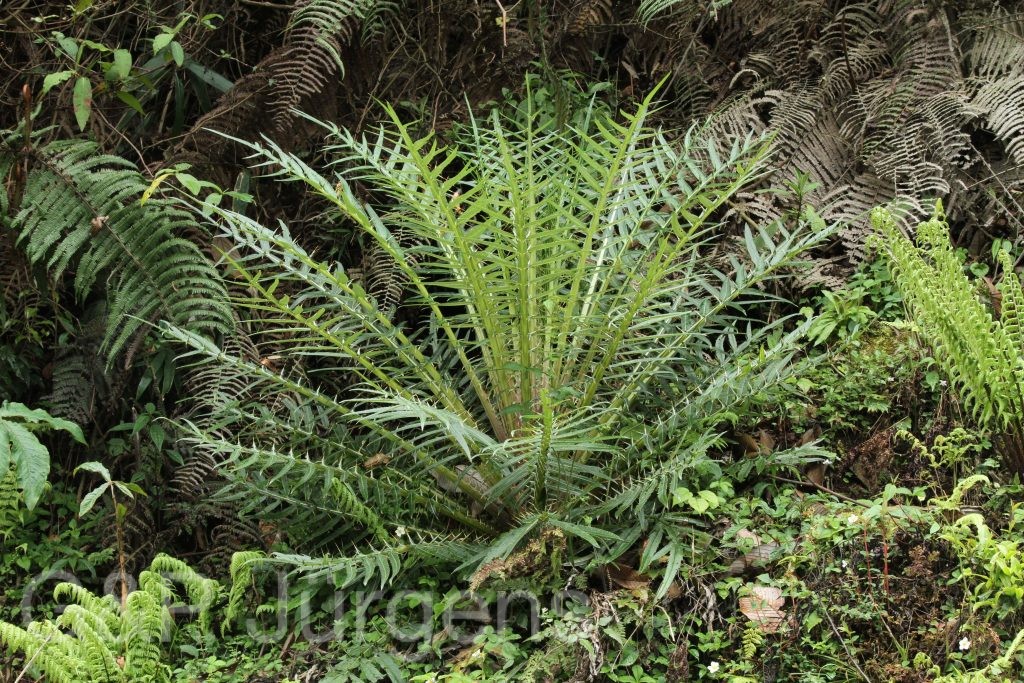
It is an erect spiny perennial herb with a ribbed, often winged and prickly stem arising from a stout rootstock. The alternate leaves are oblong-lanceolate, pinnately lobed and conspicuously armed with marginal spines, green and roughly hairy above and frequently paler or tomentose beneath, the bases decurrent. The flower heads are ovoid to subglobose, solitary or clustered at the stem tips, with an involucre of many imbricate, spine-tipped phyllaries. All florets are tubular (discoid) and purple to reddish-purple, the slender corollas deeply lobed. The fruit is a smooth oblong cypsela crowned by a pappus of long plumose (feathery) bristles, a defining feature of Cirsium.
The genus Cirsium belongs to tribe Cardueae and is distinguished from the closely related Carduus by its plumose rather than barbellate pappus. The taxonomic ambiguity surrounding C. interpositum is typical of the genus, in which hybridisation and variation blur species limits across the Sino-Himalaya. Ecologically it is a plant of open, disturbed montane ground, visited by bees and butterflies. It is not assessed as threatened.
Author: Petr. · Sources: POWO (Kew), GBIF, Flora of China, Flora of Bhutan, Cirsium monograph (Cardueae systematics, Werner & Petrak)