
Wall.
Description
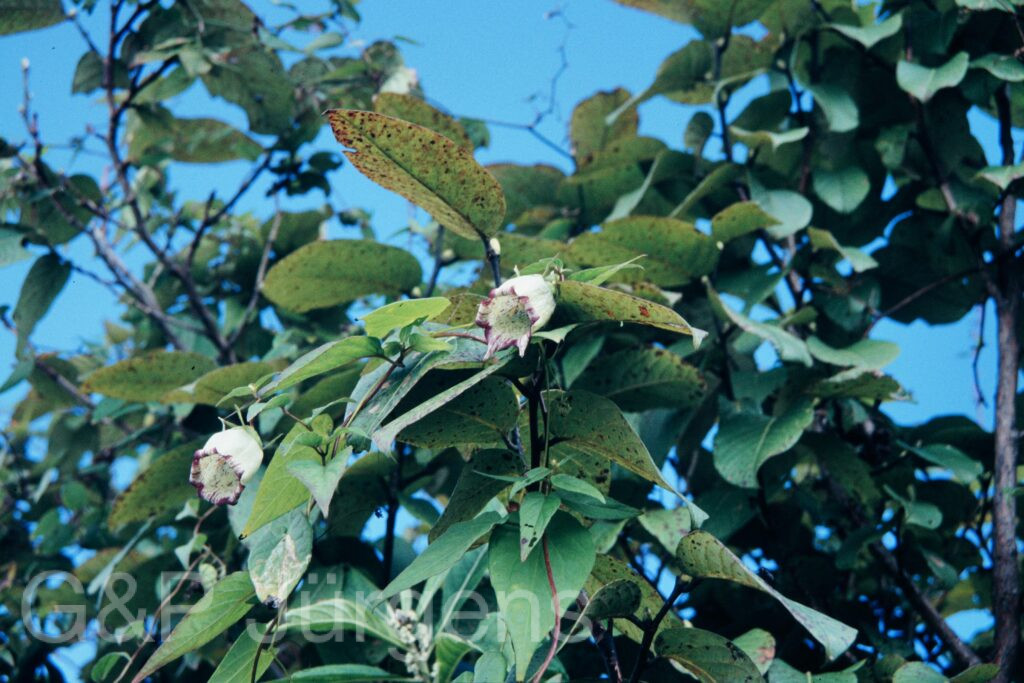
Codonopsis viridis is a Himalayan twining or scrambling perennial distributed along the central and eastern ranges from Nepal through northern India, Sikkim and Bhutan into south-western China, with 162 GBIF records concentrated in this Sino-Himalayan belt. It grows in shrubberies, forest margins, hedgerows and disturbed banks across a wide montane elevation span, from warm-temperate slopes to the subalpine zone. The cited collections illustrate this amplitude: from Tashiyangtse in eastern Bhutan at 2000 m to a higher site south of the Rupina La in Nepal at 3400 m, both flowering in October at the close of the monsoon.
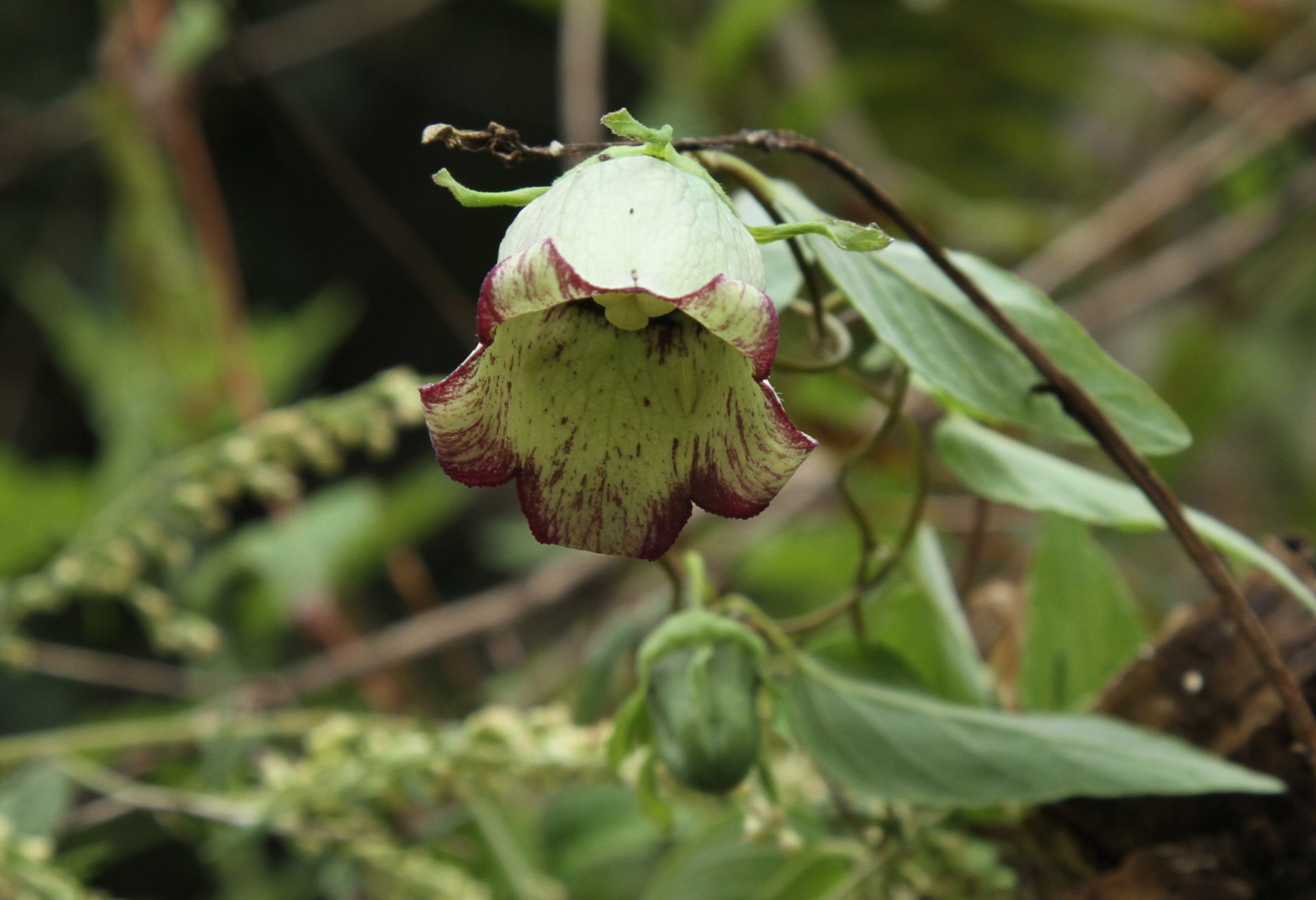
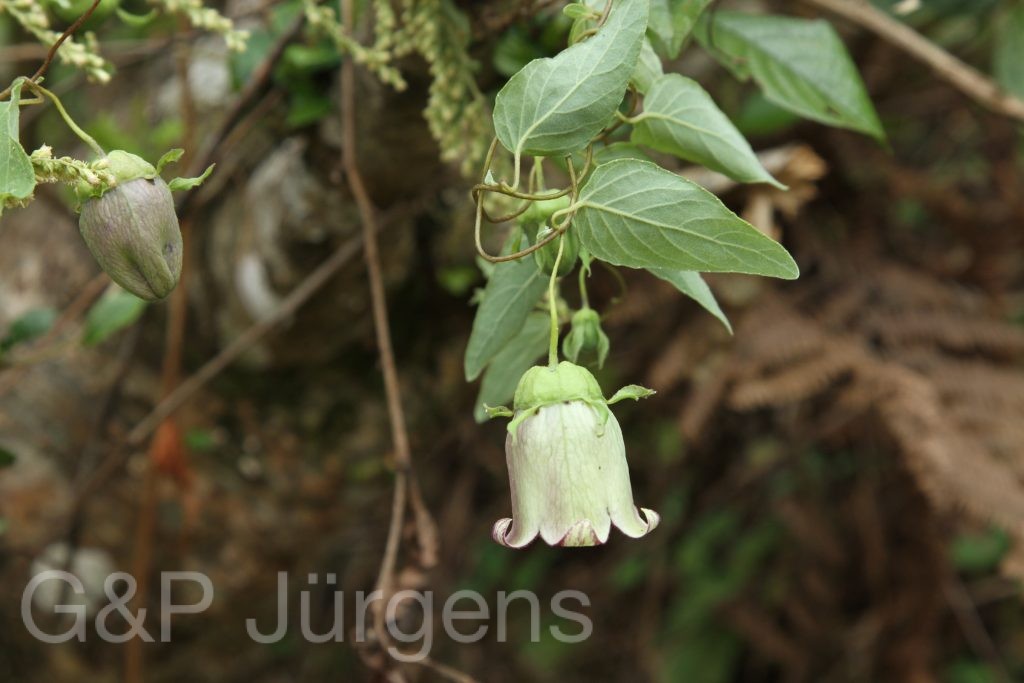
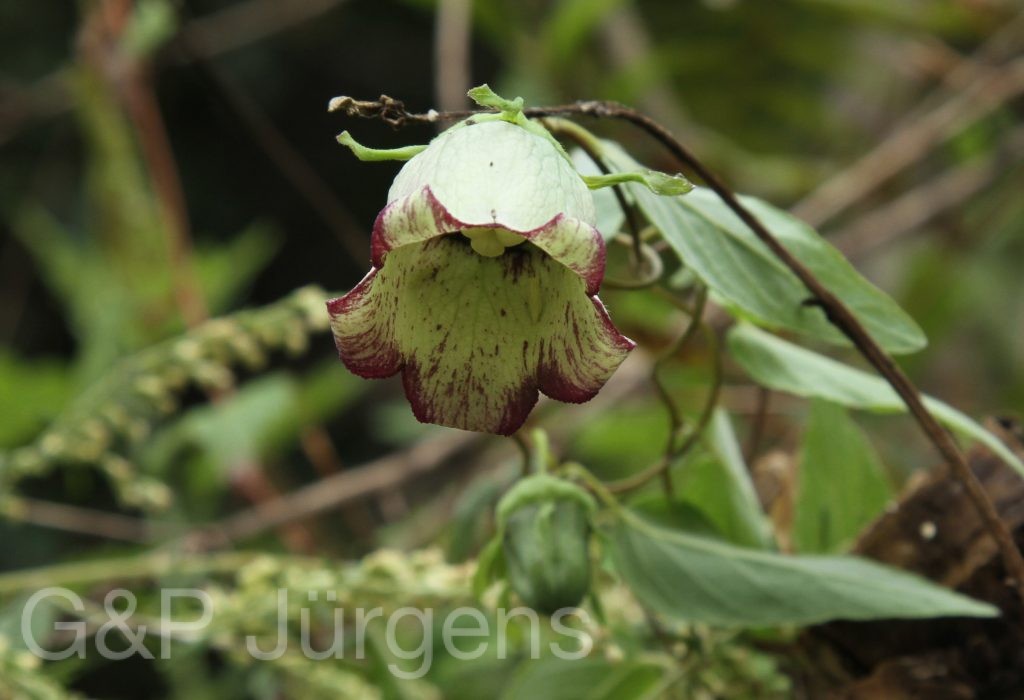
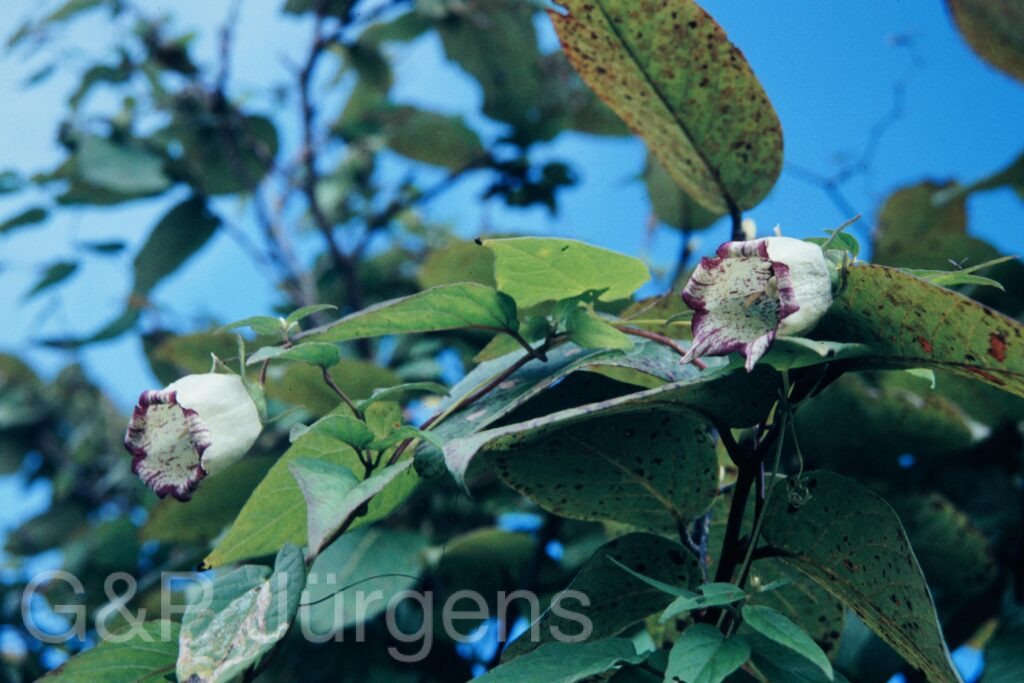
It is a herbaceous climber with slender, twining stems emerging from a tuberous or fleshy rootstock, the foliage and roots emitting the characteristic acrid Codonopsis odour. The leaves are ovate to ovate-lanceolate, alternate or scattered along the stem, thin-textured and entire to obscurely toothed. The flowers are solitary and terminal or borne on slender lateral branches, broadly campanulate to cup-shaped, the corolla greenish to greenish-yellow, often faintly veined or tinged within, with five short spreading lobes. The fruit is a turbinate capsule with a flattened apex, dehiscing to release numerous small seeds.
Codonopsis is a large Asian genus centred on the Himalaya and China, and C. viridis is distinguished within it by its greenish corolla and climbing habit. Like its congeners, it is visited by bees and flies and several species are harvested as substitutes for the tonic root "dang shen". The species is widespread and locally frequent across its range and is not regarded as of conservation concern.
Author: Wall. · Sources: POWO (Kew), GBIF, Flora of China, Flora of Bhutan, Annotated Checklist of the Flowering Plants of Nepal, Lammers monograph of Campanulaceae (Codonopsis)