
Edgew.
Description
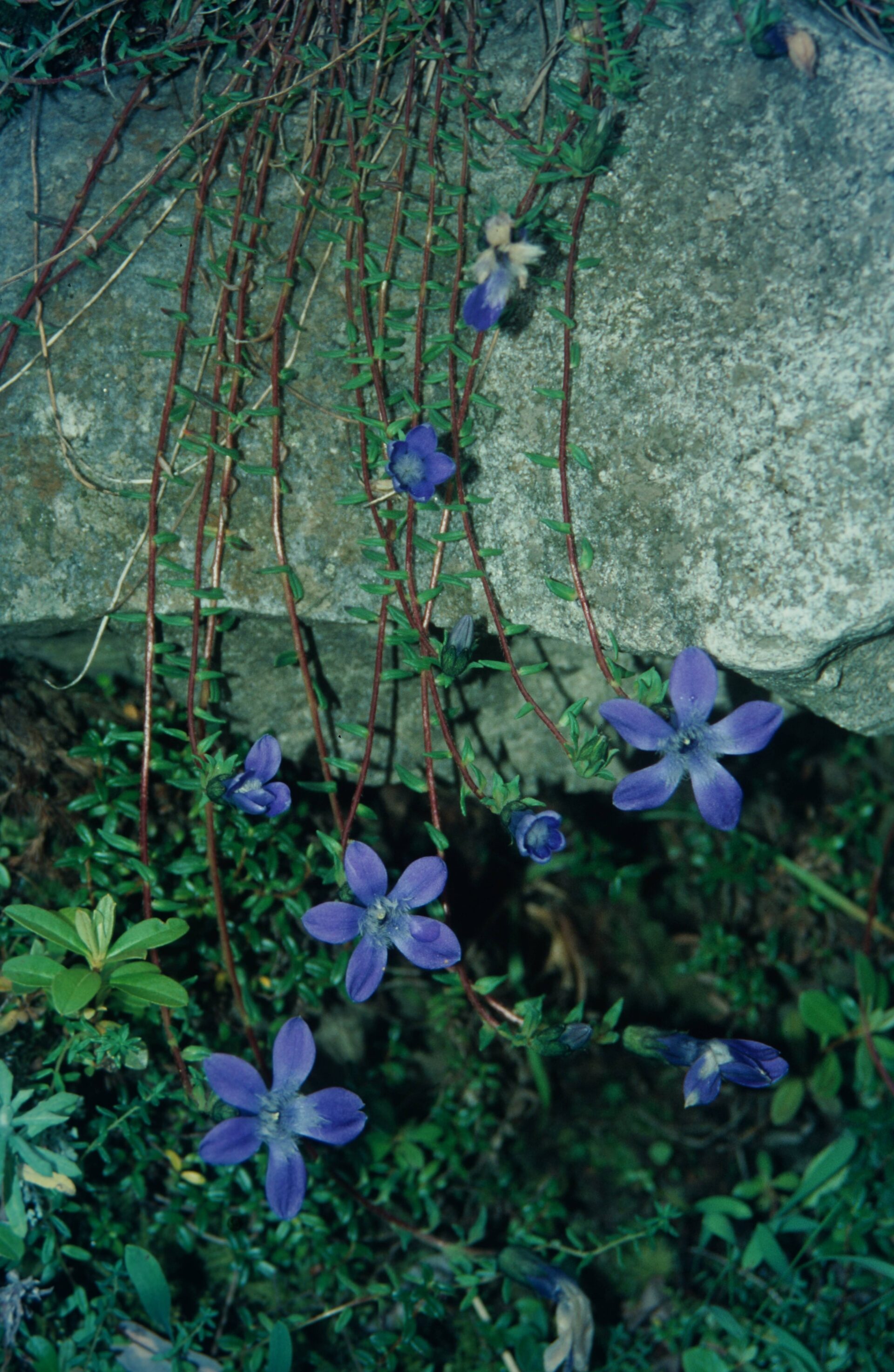
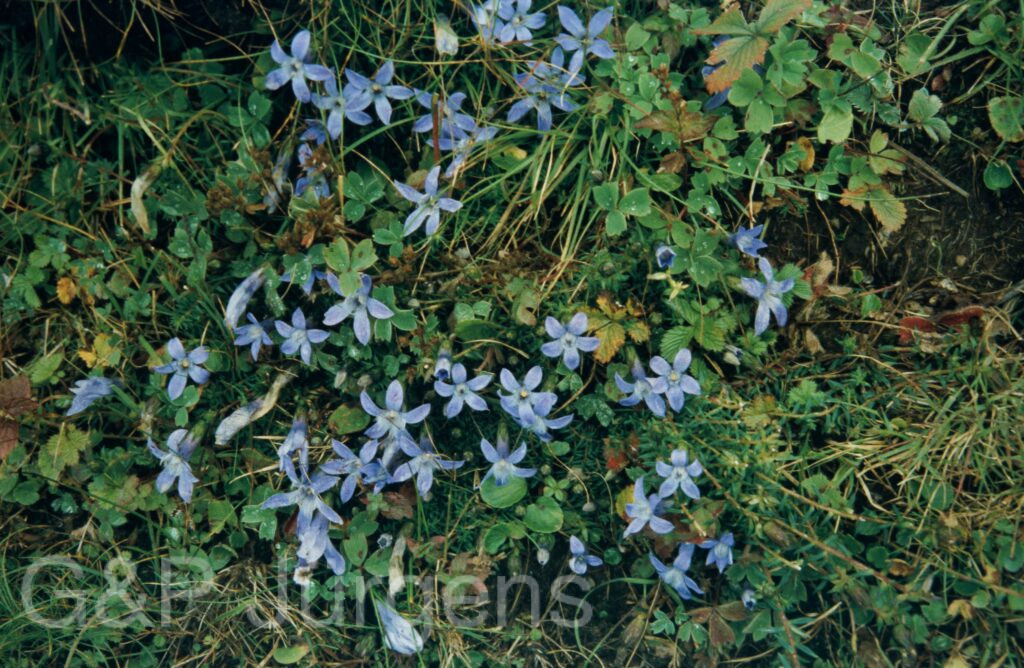
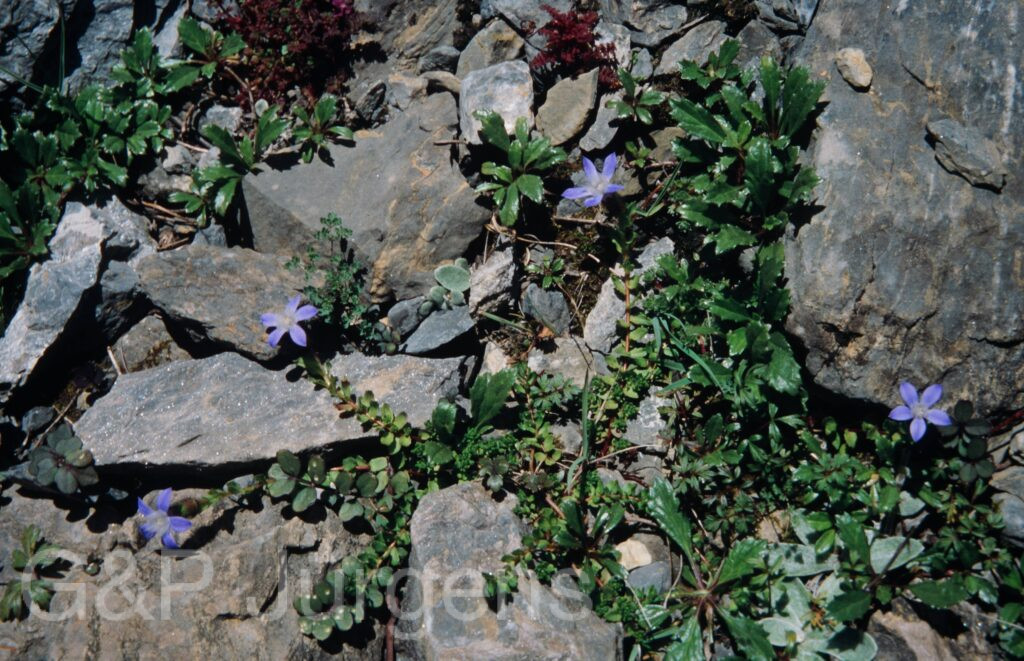
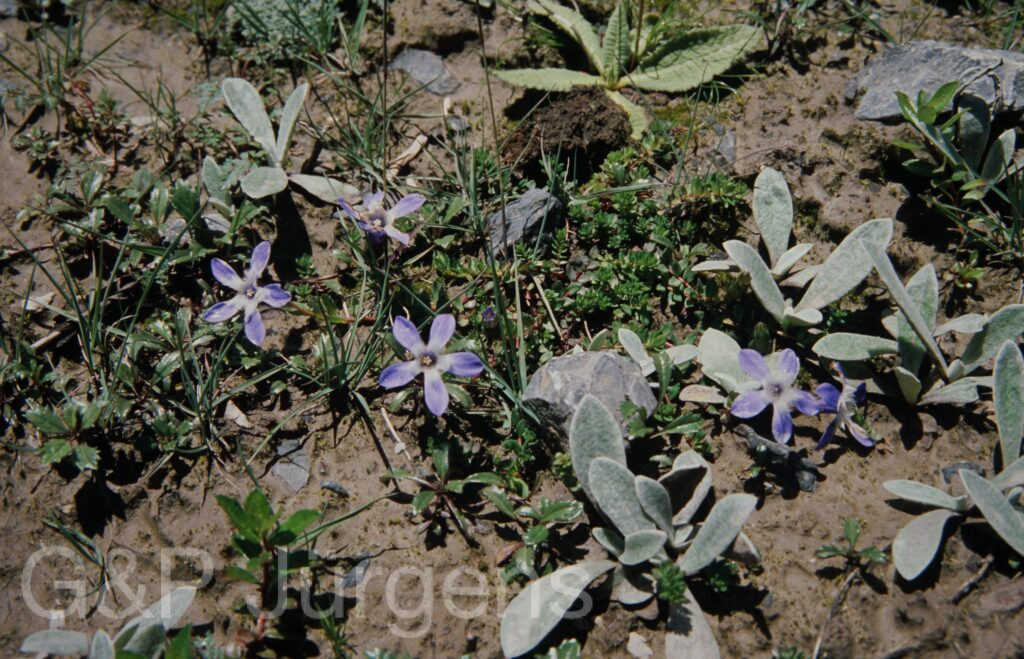
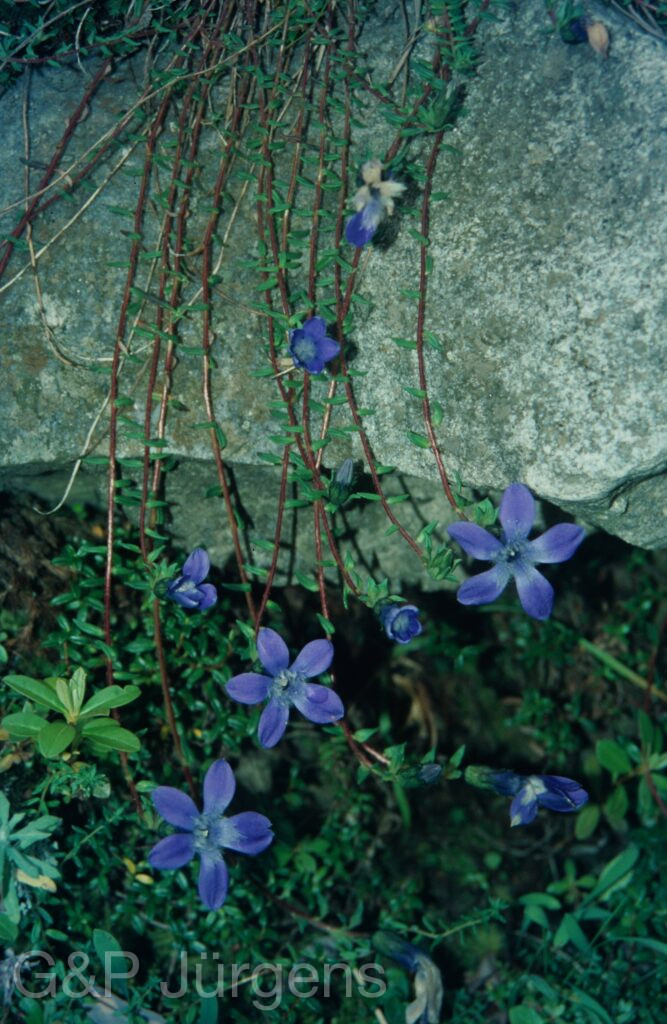
Cyananthus microphyllus is an alpine cushion-forming herb endemic to the Himalaya, documented from Nepal, India and China, with the available occurrence records concentrated along the central and western Himalayan arc. It grows in alpine meadows, on open stony slopes, rock ledges and the gravelly margins of glacial moraines, generally between about 3000 and 4500 m. The images, gathered at Kunol in Garhwal at 3100 m and in the Valley of Flowers at 3150 m in September and at Sanu Bheri in West Nepal at 3850 m in July, capture its late-monsoon flowering in high pastures and rocks where the mats anchor in thin, well-drained soils.
The plant forms low, much-branched, somewhat woody-based mats from a slender taproot. The wiry, prostrate to ascending stems are clothed in numerous small, alternate, ovate to elliptic leaves that are often revolute at the margin and sparsely hairy. The flowers are solitary and terminal, with a campanulate, conspicuously hairy calyx whose tube is shorter than the deeply five-lobed, blue corolla; the corolla throat bears a dense ring of white hairs, a defining feature of the genus. Five stamens alternate with the corolla lobes, and the inferior to half-inferior ovary develops into a capsule that exceeds the persistent calyx and dehisces to release numerous small seeds.
Cyananthus is a small Sino-Himalayan genus of perhaps two dozen species, allied to the bellflowers but distinguished by the bearded corolla throat and largely inferior ovary. Cyananthus microphyllus is recognised among the small-leaved, blue-flowered species by its diminutive, densely leafy mats. Its restricted high-elevation distribution makes it sensitive to climatic shifts and trampling by grazing livestock, and as a late-flowering alpine it provides an important resource for bumblebees and other cold-adapted pollinators.
Author: Edgew. · Sources: POWO (Kew), GBIF, Flora of China, Annotated Checklist of the Flowering Plants of Nepal, Flowers of the Himalaya (Polunin & Stainton), revision of Cyananthus (Campanulaceae)