
Wall.
Description
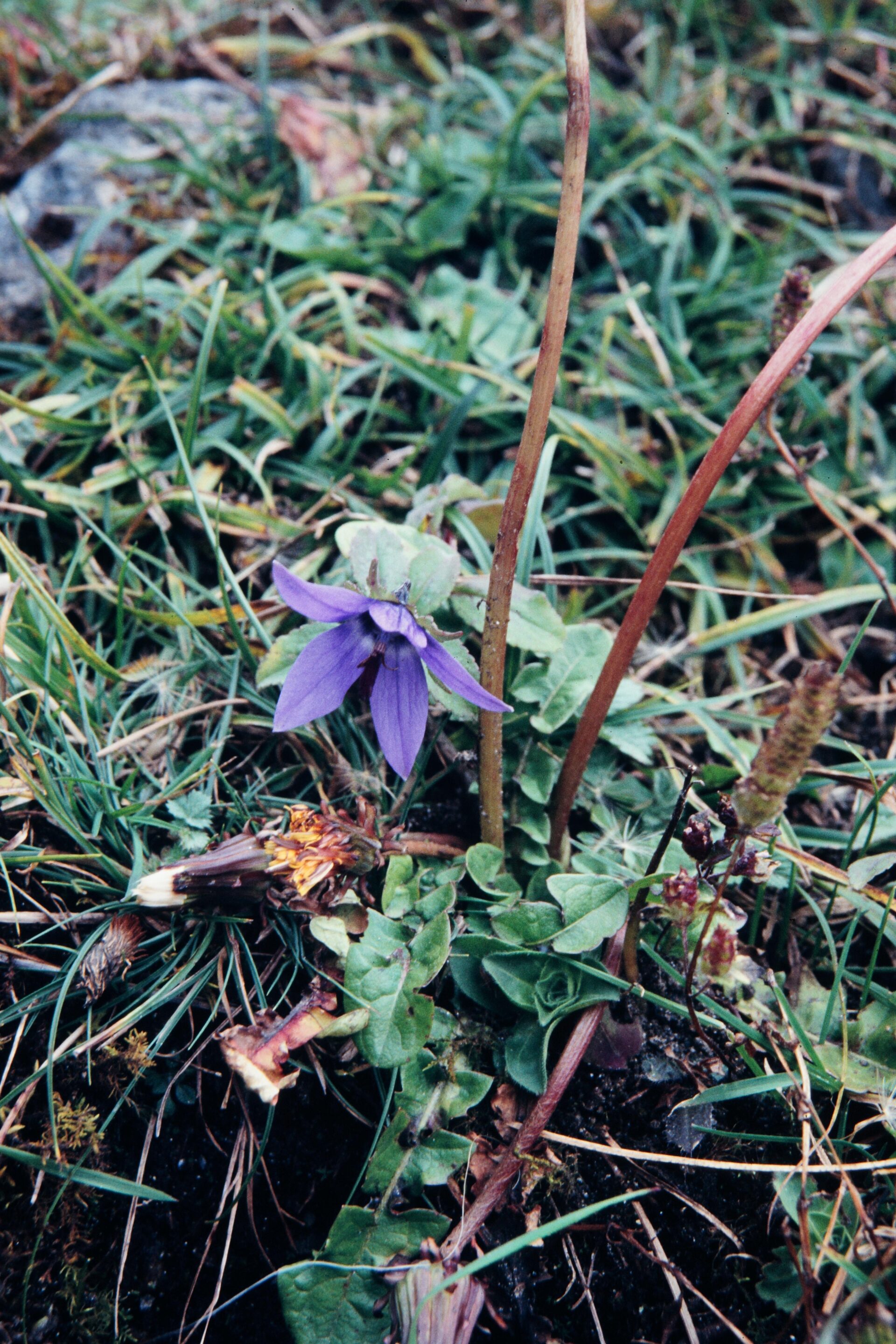
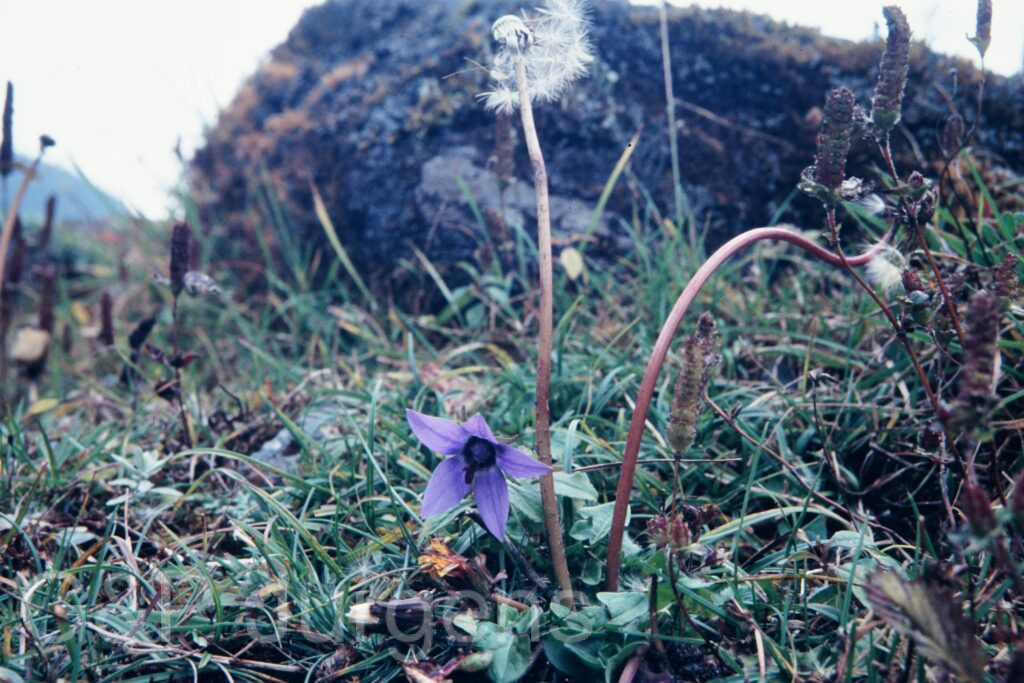
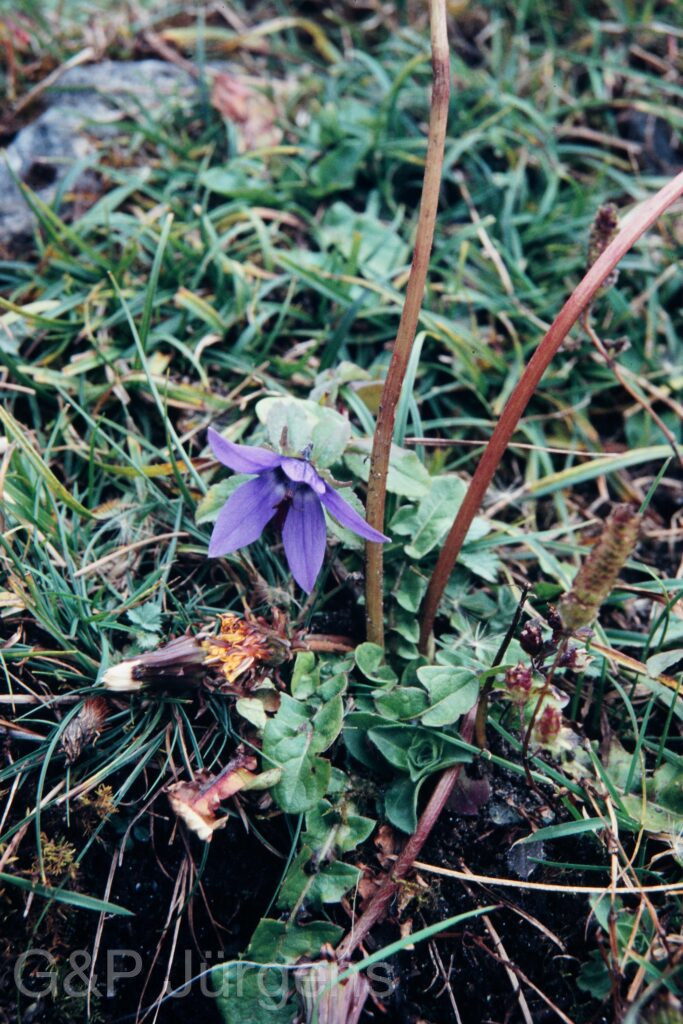
Campanula aristata Wall. is a slender alpine bellflower of the high Himalaya and Tibetan borderlands, ranging across China, India, Nepal, Pakistan and Bhutan, with about 557 occurrences in GBIF. It grows on open stony slopes, alpine turf, rock crevices and gravelly screes, characteristically at high elevations of roughly 3,000-5,000 m. The photographed plant comes from Bahanjyang in Nepal at 3,800 m, recorded in October, consistent with its occupation of the upper alpine zone where flowering and fruiting extend into the late season.
It is a small, slender, erect annual or short-lived perennial herb, typically only a few centimetres to about 20 cm tall, with a basal rosette of linear to oblanceolate leaves and narrow, sessile, entire cauline leaves. The flowers are solitary or few at the stem apex; the calyx is its most distinctive feature, with very long, narrow, awn-like (aristate) lobes that often equal or exceed the corolla, hence the epithet. The corolla is narrowly tubular to campanulate, pale blue to violet, with short erect lobes. The fruit is a capsule dehiscing by basal pores to shed numerous minute seeds.
Campanula (Campanulaceae) is a large, mainly Northern Hemisphere genus, with the Himalayan high-alpine species forming a distinctive group of dwarf, narrow-flowered herbs. C. aristata is readily recognised among them by its conspicuously elongate, bristle-like calyx lobes, an adaptation thought to aid in the wind-exposed alpine setting. Widespread across the Himalayan-Tibetan alpine belt and occupying abundant natural habitat, it is of no conservation concern.
Author: Wall. · Sources: POWO (Kew), GBIF, Flora of China, Flora of Pakistan, Annotated Checklist of the Flowering Plants of Nepal, Hooker Flora of British India, Campanulaceae revisionary studies