
(Nannf.) K.K.Shrestha
Description
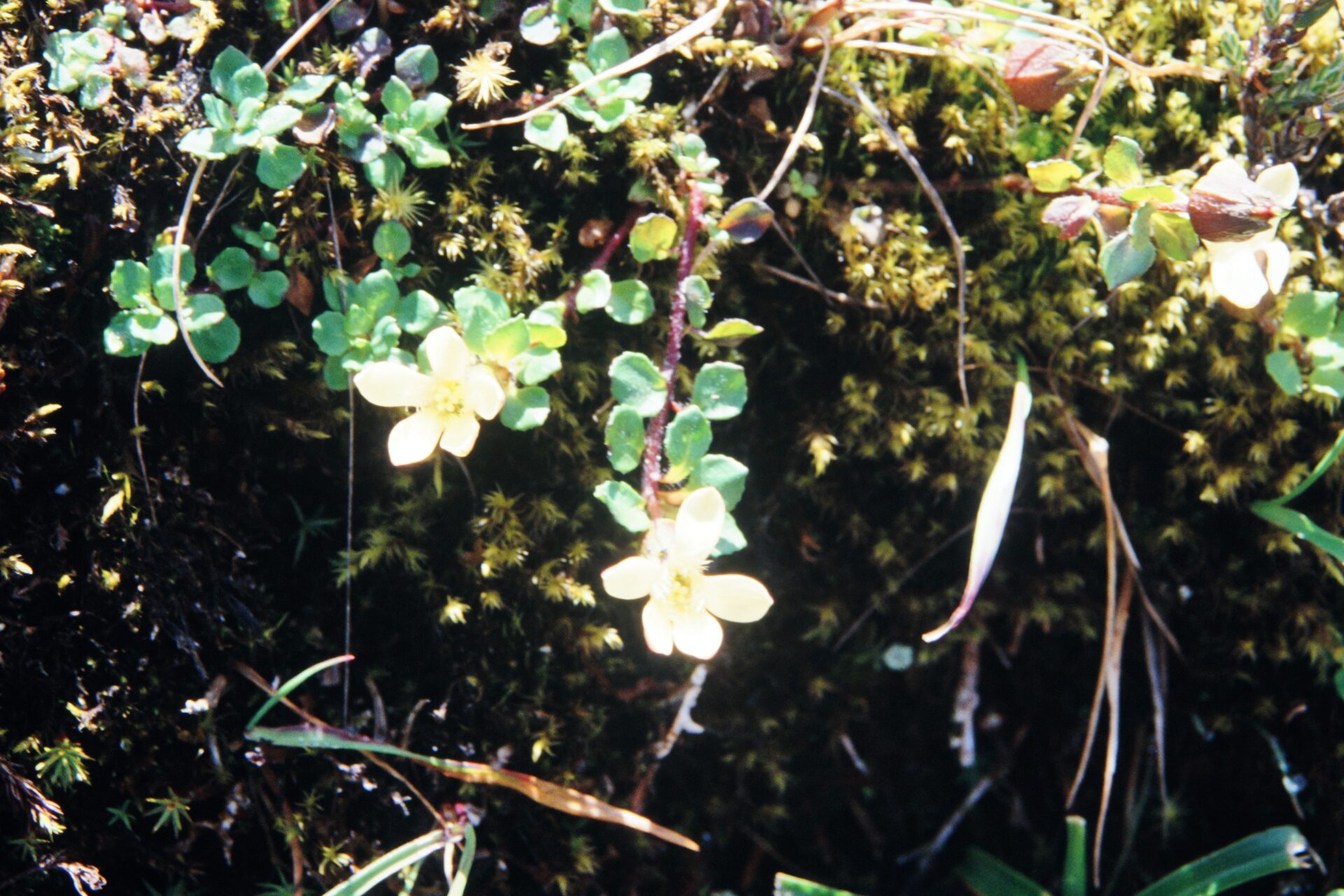
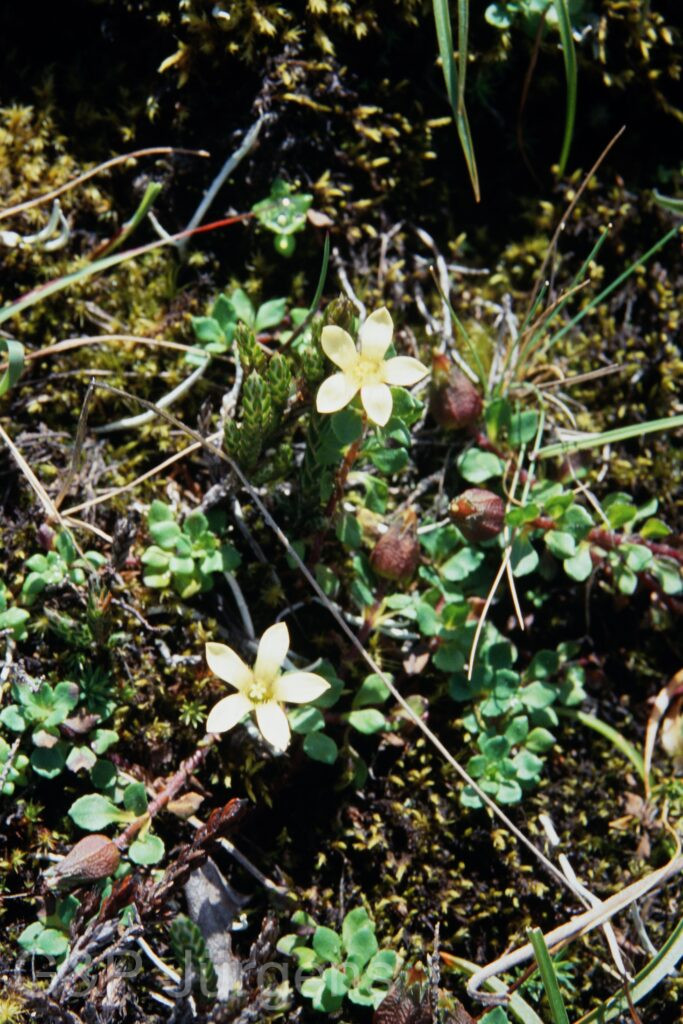
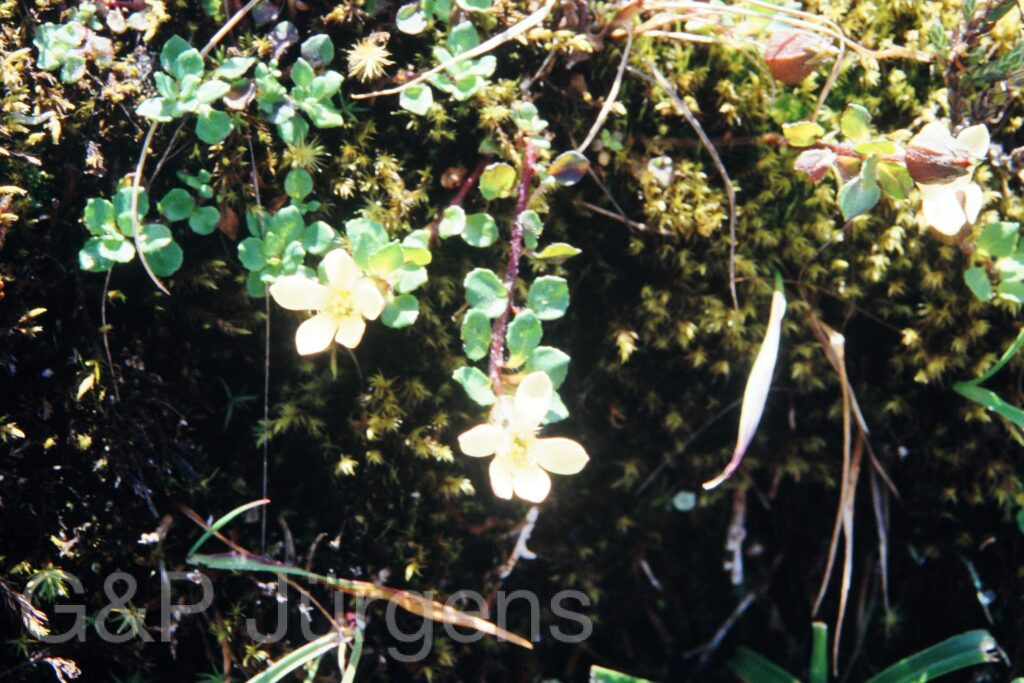
Cyananthus macrocalyx subsp. spathulifolius is a high-alpine perennial of the eastern and central Himalaya and adjacent China, recorded from China, Nepal, Bhutan and India, with GBIF documenting about 56 occurrences for the taxon. It grows on open alpine turf, rocky slopes, stabilised scree and moraine in the alpine zone, commonly between 3500 and 4500 m. The photographed plant was found at Dzongri in Sikkim at about 4000 m in August, flowering late in the monsoon summer when its broad blue corollas appear among low alpine herbage on these exposed high ridges.
The plant is a low, somewhat tufted to prostrate perennial with slender, ascending or trailing stems arising from a stout rootstock and exuding milky latex when broken. The leaves are small, alternate and crowded, with spathulate to obovate blades (the source of the subspecific epithet), the margins entire to few-toothed. The flowers are solitary and terminal, comparatively large for the plant; the calyx is conspicuously inflated and large, as the specific epithet "macrocalyx" indicates, often hairy. The corolla is broadly campanulate, blue to purplish-blue, with five spreading lobes and a bearded throat; there are five stamens and an inferior to half-inferior ovary, maturing into a capsule.
The taxon belongs to Cyananthus (Campanulaceae), a Sino-Himalayan genus distinguished from Campanula by its hypogynous nectary disc and large calyx. Recombined by K.K. Shrestha, this subspecies is a regional variant of the polymorphic C. macrocalyx complex. A specialist of high, well-drained alpine habitats, it is naturally localised but not known to be threatened, though sensitive to grazing and warming-driven contraction of the alpine zone.
Author: (Nannf.) K.K.Shrestha · Sources: POWO (Kew), GBIF, Flora of China, Flora of Nepal, Flora of Bhutan, revision of Cyananthus (Shrestha)