
Wall. ex Benth.
Description
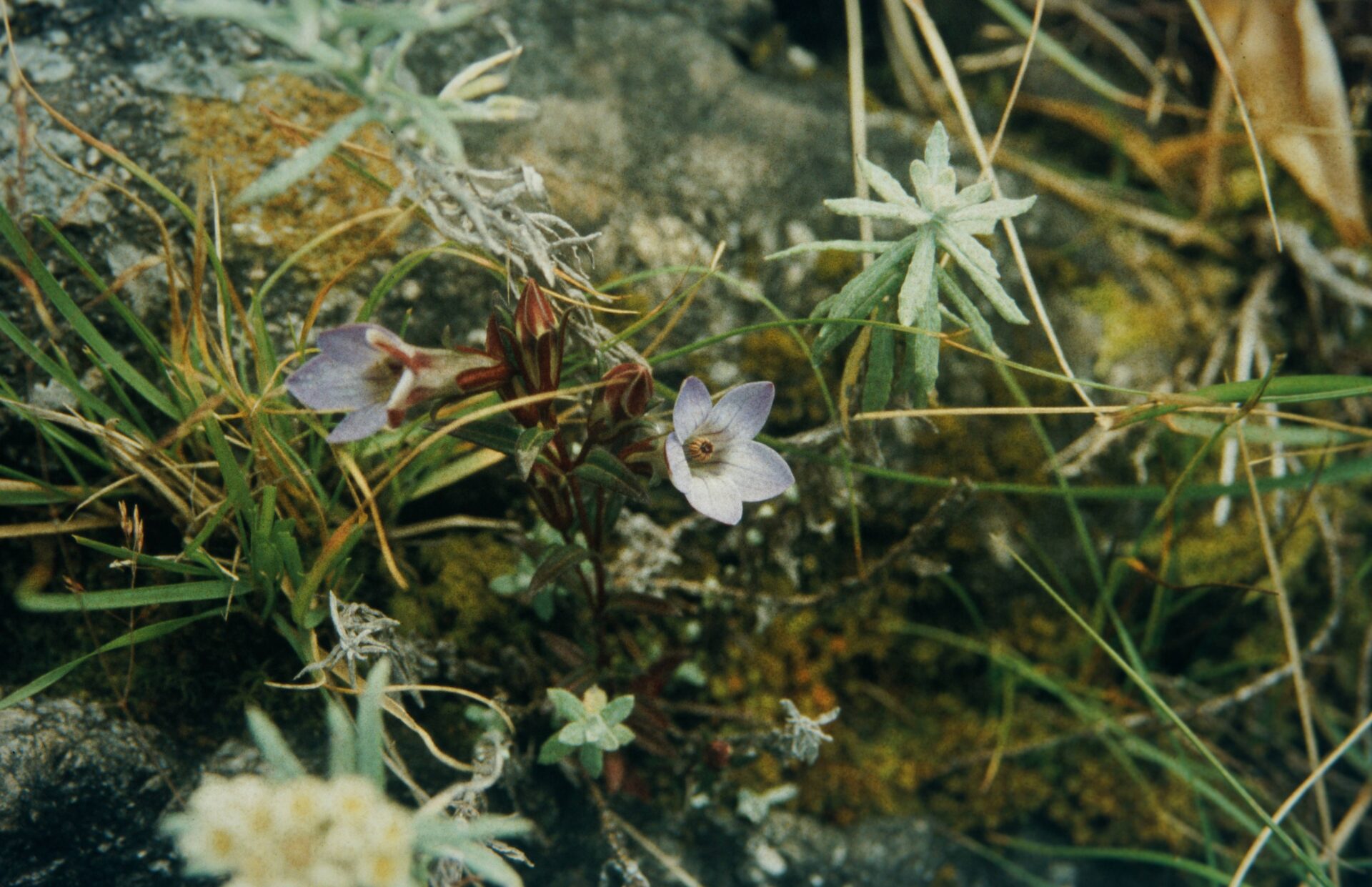
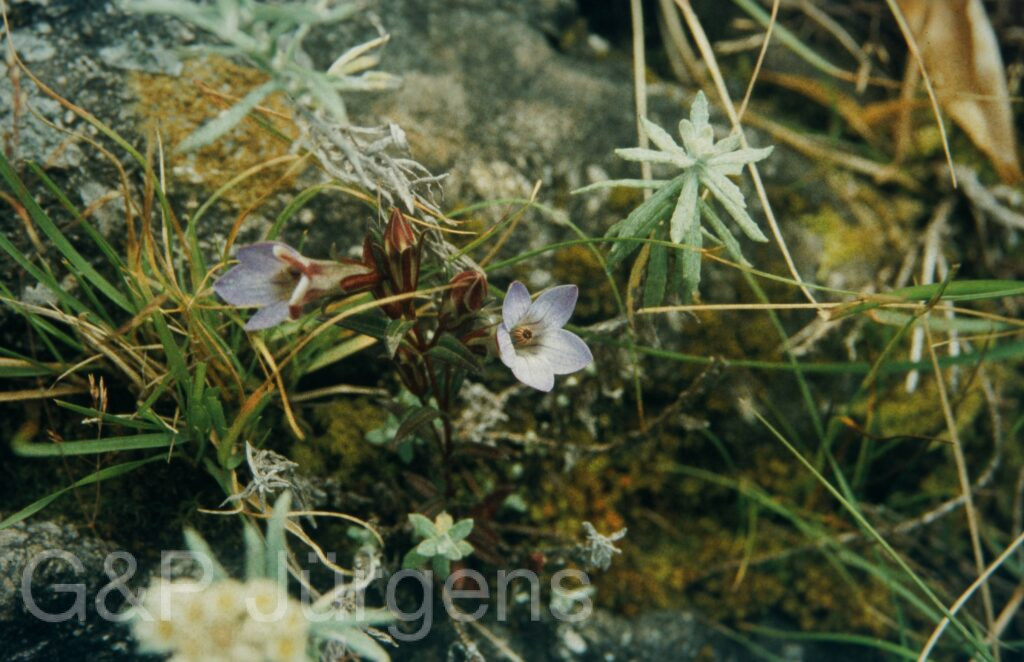
Cyananthus integer is a cushion-forming alpine herb of the western and central Himalaya, recorded by GBIF from India, Nepal and adjacent territories across some 48 occurrences, with an accepted status under its current name. It is a plant of high-altitude open habitats: stony alpine meadows, gravelly slopes, rock crevices and the margins of moraine, typically between about 3300 and 4300 m. The photographed material from Patanati in Garhwal at 3600 m, flowering in September, illustrates both its preferred elevation and its late-season phenology, the blooms opening towards the close of the monsoon when many co-occurring alpines are already in fruit. Like other members of its genus it thrives on the well-drained, sun-exposed turf and screes of the upper alpine zone.
The plant forms low, somewhat trailing to ascending mats from a slender woody rootstock, with numerous prostrate or decumbent stems clothed in small, alternate, entire to shallowly toothed leaves that are often densely arranged toward the stem tips. The solitary, terminal flowers are the conspicuous feature: a broadly funnelform to campanulate corolla, blue to violet-blue, with five spreading lobes and a conspicuous tuft of hairs in the throat. The calyx is tubular and frequently dark-hairy, the stamens five, and the ovary inferior to half-inferior. The fruit is a capsule that releases small seeds, the persistent calyx aiding wind exposure on the open slopes.
Cyananthus is a Sino-Himalayan genus of roughly twenty species centred on the Himalaya and southwest China, distinguished from related Campanulaceae by its throat-bearded, often deeply lobed corolla and its alpine, cushion-forming habit. C. integer sits among the blue-flowered, entire- to weakly toothed-leaved species and is told from relatives by leaf form and indumentum. As a widespread but elevation-restricted alpine it has not been flagged as threatened, though high-mountain plants of this kind are increasingly studied as indicators of climatic shifts in the Himalayan alpine belt.
Author: Wall. ex Benth. · Sources: POWO (Kew), GBIF, Flora of China Vol. 19, Flora of Nepal, Flora of Pakistan, Cyananthus monograph (a revision of the genus by Sykes/Brown)