Tag:

Montane (1500-2500 m)

C.B.Clarke

Bhutan2015 592
Bhutan Mo-Chu 1900m, October
Bhutan2015 594
Bhutan Mo-Chu 1900m, October
Bhutan2012 938 scaled
Bhutan Tumching-La 3200m, October
Bhutan2012 936
Bhutan Tumching-La 3200m, October

Description

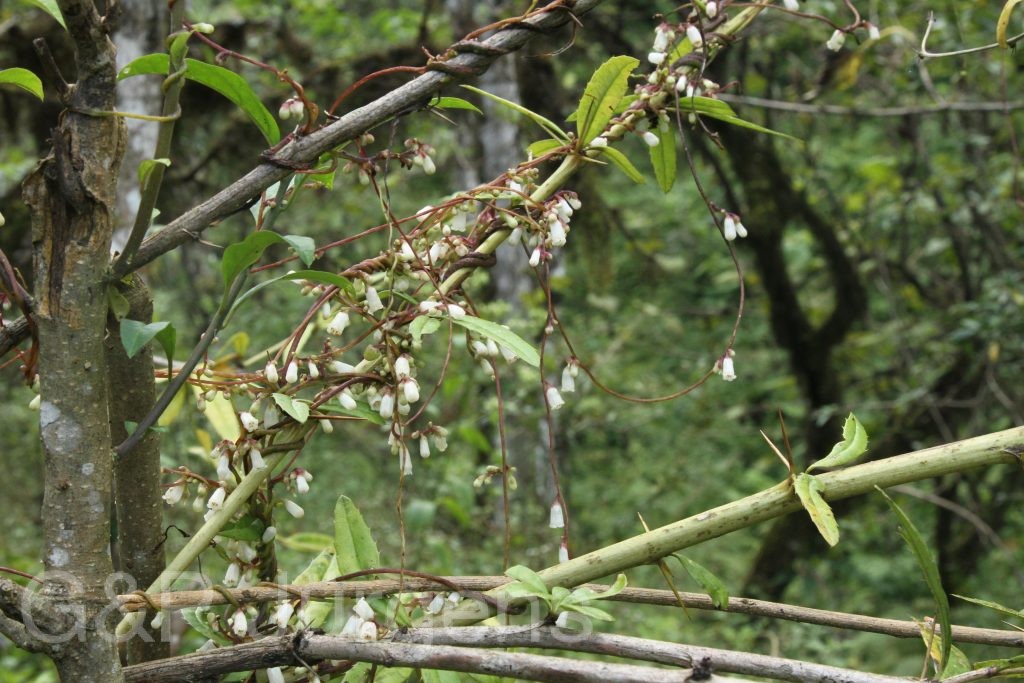
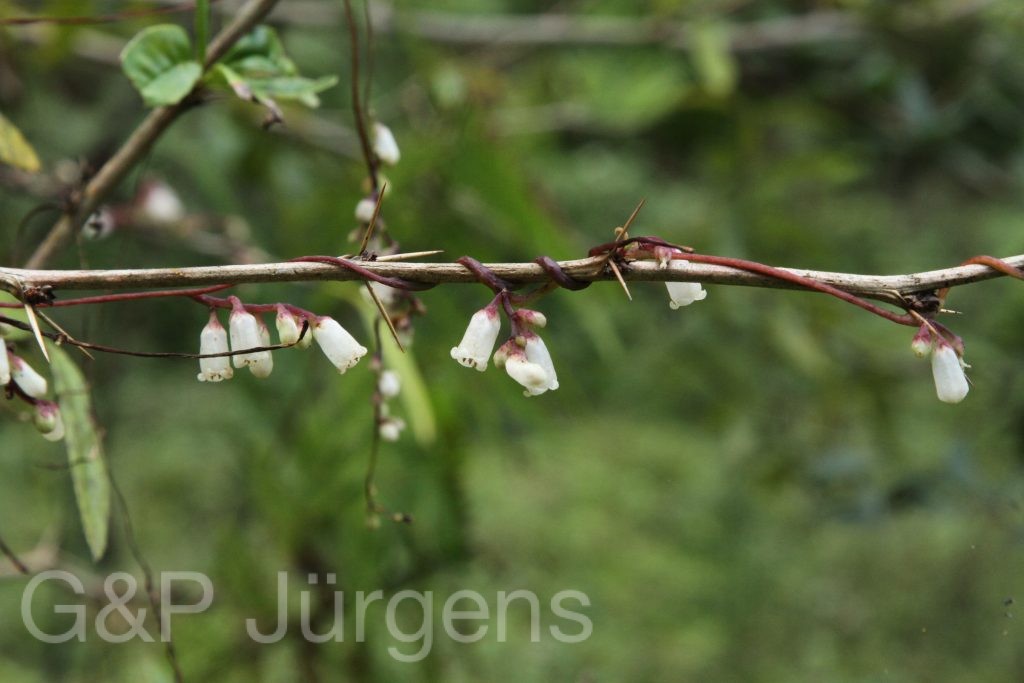
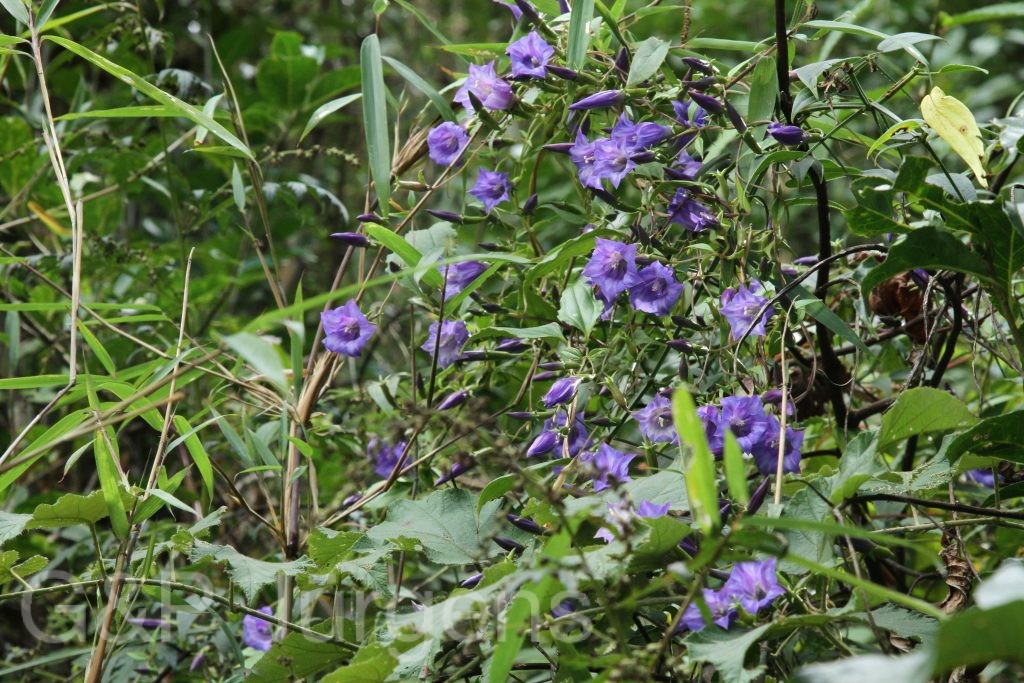
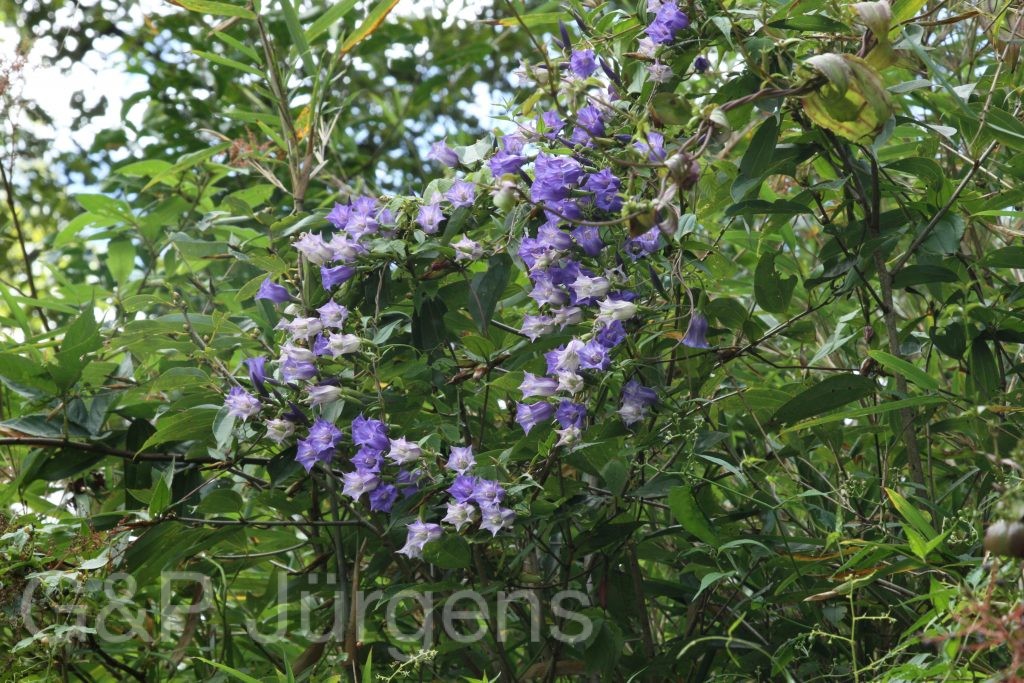
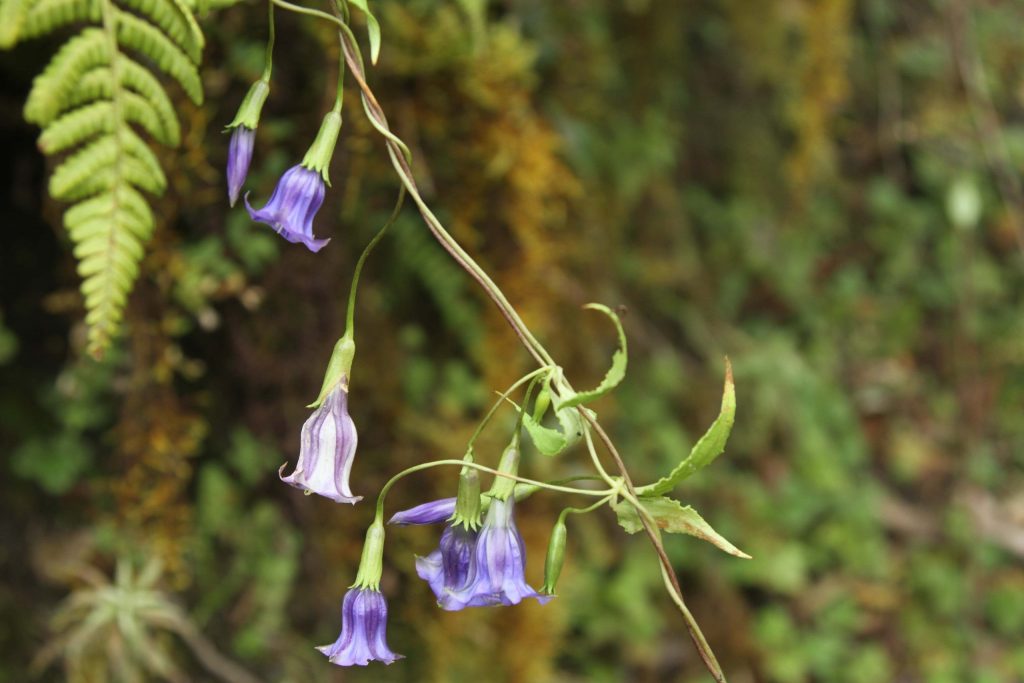
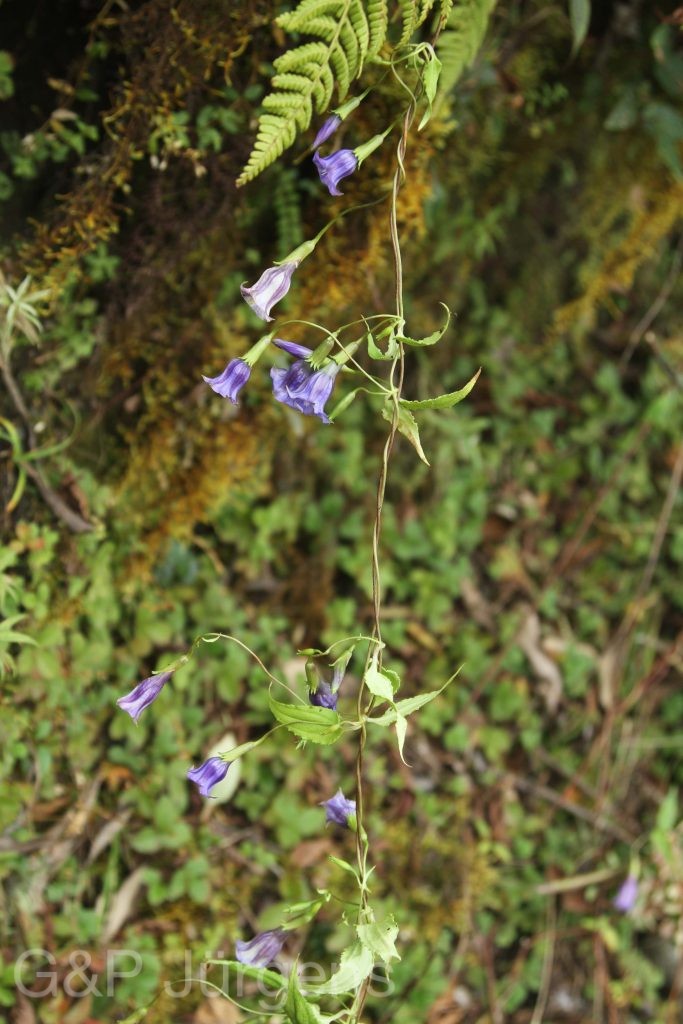
Crawfurdia speciosa C.B.Clarke is a climbing perennial gentian of the eastern and central Himalaya, distributed through Nepal, north-east India, Bhutan, south-west China and into northern Vietnam, with scattered records from Bangladesh and Pakistan. It is a plant of moist, shaded temperate forest, scrambling through shrubs and over the herbaceous understorey along forest margins, stream banks and clearings. The two photographed Bhutanese populations bracket its altitudinal span, from the warm Mo-Chu valley at 1900 m to the cool Tumching-La pass at 3200 m, both flowering in October. This autumn flowering, well after the monsoon, is characteristic of the twining Asian gentians and exploits the late-season window before the onset of winter.

Unlike the familiar erect, rosette-forming gentians, Crawfurdia is a slender, herbaceous, twining climber with weak quadrangular stems and opposite, ovate to ovate-lanceolate leaves tapering to an acuminate tip and bearing prominent palmate-curved venation. The flowers, solitary or few in the upper leaf axils, are showy and pendent; the campanulate to tubular corolla is blue to blue-purple, with short spreading lobes and conspicuous plicate folds (plicae) between them, a hallmark of the gentian family. The fruit is a stalked, flattened capsule that protrudes from the persistent corolla on an elongating gynophore, releasing numerous small, winged, wind-dispersed seeds.

The genus Crawfurdia is closely allied to Gentiana and Tripterospermum, and has at times been merged with them; molecular studies confirm the twining Sino-Himalayan gentians as a distinct lineage. The pendent blue corolla suggests pollination by late-season bees. Though not currently regarded as threatened, its dependence on intact mid- to high-elevation forest makes it sensitive to deforestation across its eastern Himalayan range.

Author: C.B.Clarke · Sources: POWO (Kew), GBIF, Flora of China (Gentianaceae), Flora of Bhutan, Annotated Checklist of the Flowering Plants of Nepal, Gentianaceae: Systematics and Natural History (Struwe & Albert)
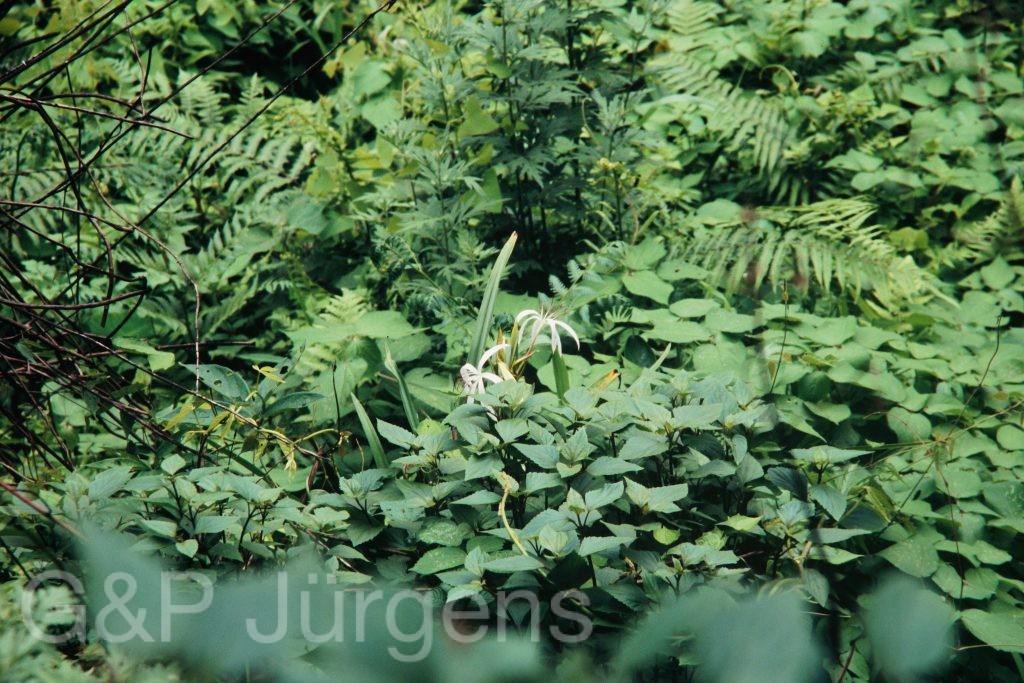
Roxb. ex Ker Gawl.

Bh09 390 G617
Bhutan Mo-Chu, 1500m June

Description

Crinum amoenum is a bulbous herb of the Himalayan foothills and adjacent Southeast Asia, distributed across India, Nepal, Bhutan, Thailand and Myanmar, with about 51 georeferenced occurrences in GBIF. It grows in moist grassland, forest clearings, stream banks and damp open ground in the subtropical lower montane belt, generally below about 1800 m, flowering with the onset of the summer monsoon. The plant illustrated was photographed along the Mo-Chu in Bhutan at about 1500 m in June, a characteristic riverine setting where it favours seasonally moist, humus-rich soils.

The species arises from a large, ovoid, tunicate bulb bearing a distinct neck, from which spring several strap-shaped, channelled leaves with somewhat undulate margins. The leafless flowering scape carries a terminal umbel of a few to several fragrant flowers subtended by membranous spathe bracts. Each flower has a slender, elongate perianth tube opening into six narrow, spreading to recurved tepals that are white, often flushed or striped with rose-pink along the keel, with six declinate stamens bearing versatile anthers and an inferior ovary. The fruit is an irregularly dehiscing capsule containing a few large, fleshy seeds.

Crinum (Amaryllidaceae, subfamily Amaryllidoideae) is a pantropical genus of bulbous geophytes whose tissues contain isoquinoline (crinine-type) alkaloids of pharmacological interest and considerable toxicity. The strongly scented, trumpet-shaped flowers are adapted to pollination by long-tongued moths and other nocturnal visitors, and several species are cultivated as ornamentals. Though not formally assessed as threatened, its lowland riparian and grassland habitats are vulnerable to agricultural conversion, drainage and bulb collection.

Author: Roxb. ex Ker Gawl. · Sources: POWO (Kew), GBIF, Flora of China, Flora of British India, Flora of Bhutan, Nordal Revision of African and Asian Crinum

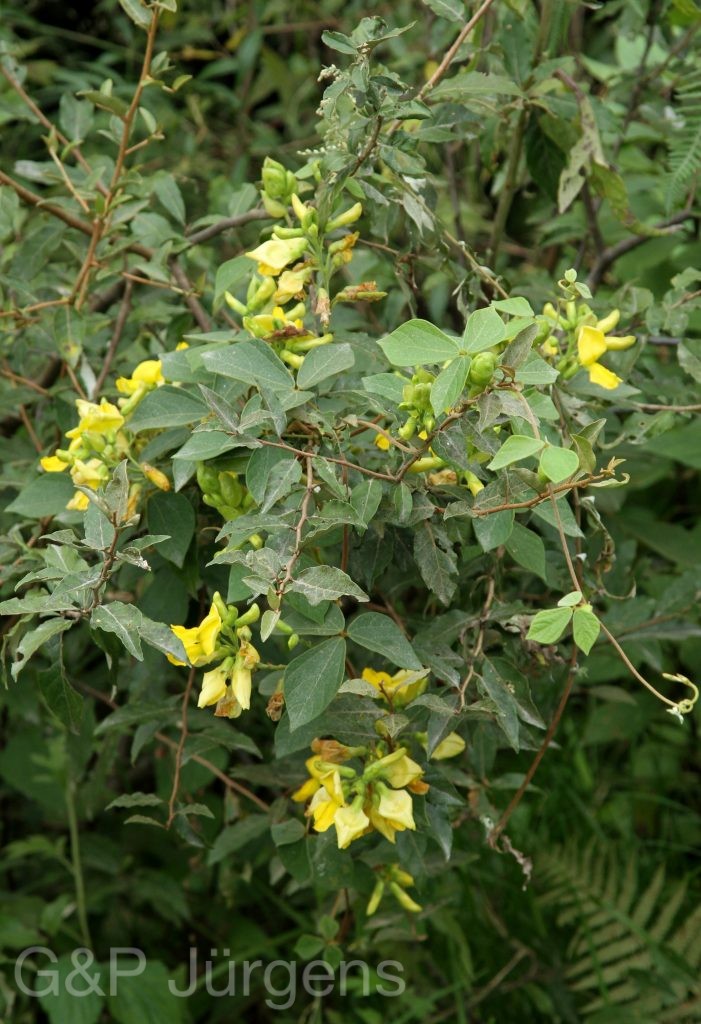
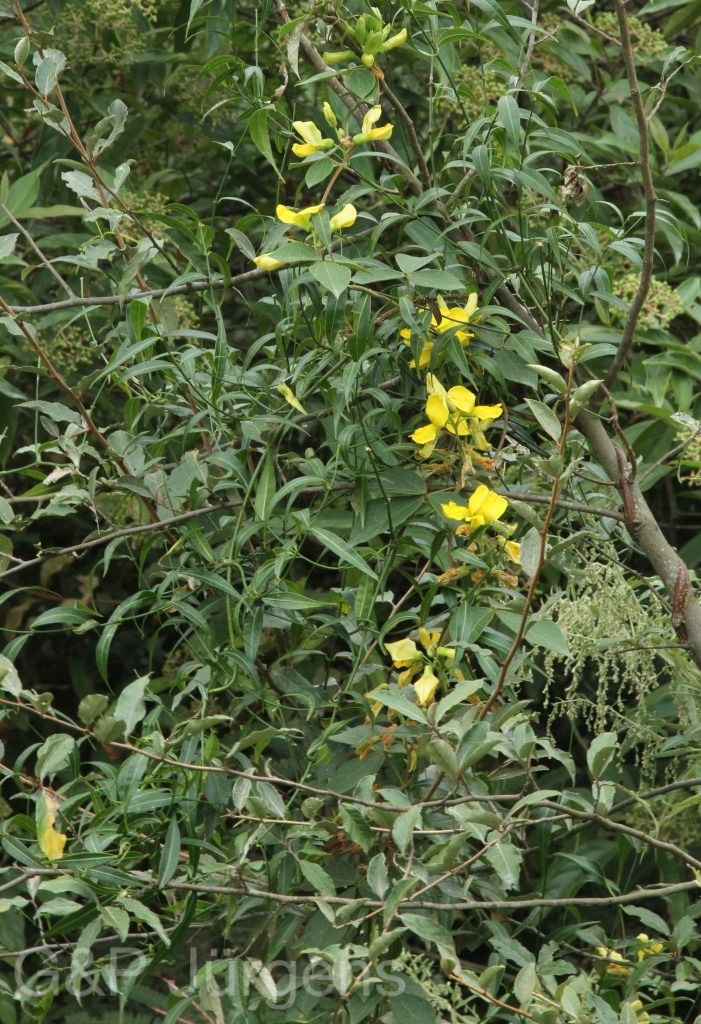
DC.

Bhutan2012 822 Kopie
Bhutan Trongsa 2100m, October
Bhutan2012 823
Bhutan Trongsa 2100m, October

Description

Crotalaria cytisoides is a shrubby rattlepod of the Himalaya and into Southeast Asia. GBIF records it from China, India, Nepal, Myanmar, Thailand, Bhutan, Laos, Malaysia and Indonesia, with further occurrences extending to Madagascar and Uganda, totalling over 400 records. It grows on open hill slopes, scrub, grassy banks, forest margins and roadsides at lower to middle elevations, broadly between 1000 and 2700 m. The plant shown was photographed near Trongsa in central Bhutan at 2100 m in October, flowering in the post-monsoon period along the warm temperate hill zone where this species is a frequent component of disturbed scrub.

It is a much-branched shrub or undershrub with silky-pubescent young branches. The leaves are trifoliolate, the obovate to elliptic leaflets softly hairy beneath, subtended by small stipules. The flowers are borne in terminal and leaf-opposed racemes; the papilionaceous corolla is yellow, sometimes veined or flushed reddish-brown on the standard, with the keel beaked as is typical of the genus. The fruit is an inflated, oblong legume in which the loosened ripe seeds rattle when shaken, the feature giving Crotalaria its English name rattlepod.

Crotalaria is a large pantropical legume genus, and like its relatives it forms root nodules with nitrogen-fixing rhizobia, enriching poor soils and contributing to its success as a coloniser of disturbed ground. Many species, including this one, contain pyrrolizidine alkaloids that deter herbivores and can be toxic to livestock. With its wide distribution, ruderal tendency and abundant seed production, C. cytisoides is common and of no conservation concern across its broad range.

Author: DC. · Sources: POWO (Kew), GBIF, Flora of China, Flora of Bhutan, Annotated Checklist of the Flowering Plants of Nepal, A revision of the genus Crotalaria (Leguminosae)

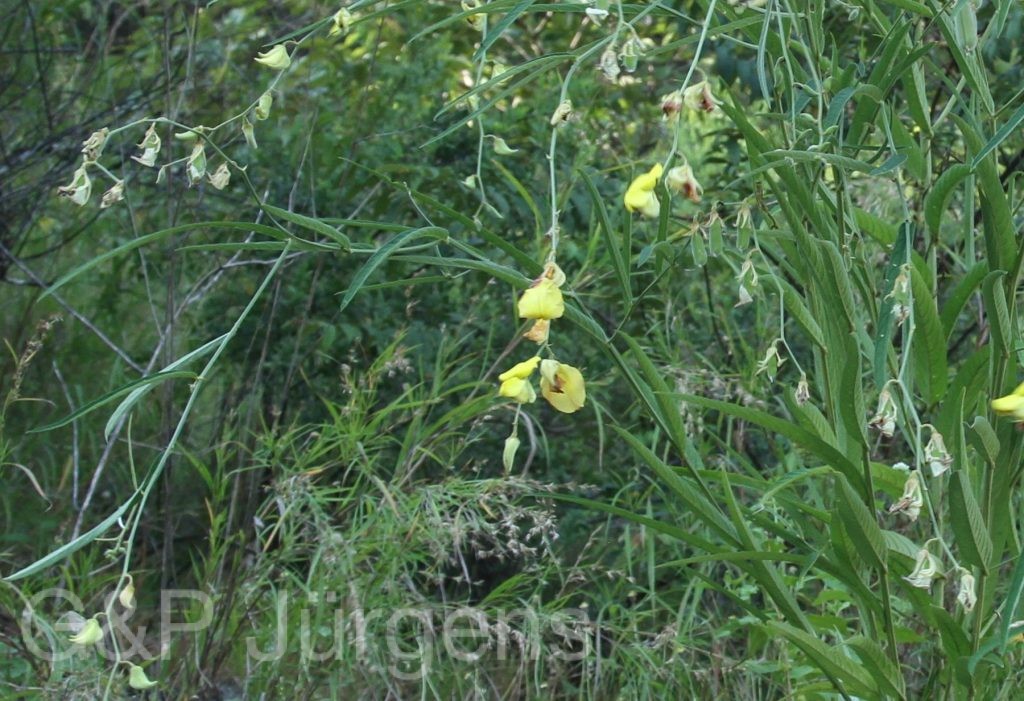
Andrews

Bhutan2012 1148
Bhutan Trashiyangtse 1780m, October

Description

Crotalaria tetragona Andrews is a tall rattlepod widely distributed across tropical and subtropical Asia, native from India, Nepal, Bhutan and Bangladesh through southern China, Myanmar, Thailand, Laos, Vietnam, Cambodia and the Malesian region; GBIF lists about 405 occurrences, with records from Brazil, Jamaica, Colombia and Mauritius indicating introduction and naturalisation. It grows in open grassland, forest margins, scrub and disturbed roadside ground in the warm subtropical and submontane zone, generally below about 2000 m. The photographed plant from Trashiyangtse in eastern Bhutan at around 1780 m, flowering in October, reflects its occurrence in warm, lower-elevation valley habitats.

The species is a robust erect perennial herb or subshrub with conspicuously four-angled, often winged stems, the epithet tetragona alluding to this quadrangular form. The leaves are simple, elliptic to lanceolate and entire. The flowers are borne in long terminal racemes and are large and bright yellow, with the standard frequently veined reddish-brown; the calyx is deeply lobed and the keel beaked in the papilionaceous arrangement. The fruit is a large, inflated, oblong pod that turns blackish and rattles when the loose seeds detach at maturity, giving the genus its common name.

Crotalaria (Fabaceae, subfamily Faboideae, tribe Crotalarieae) is a large pantropical genus of nitrogen-fixing legumes, several used as green manure and fibre plants. C. tetragona is locally common and weedy, of least conservation concern, and like its congeners may contain pyrrolizidine alkaloids rendering it toxic to livestock.

Author: Andrews · Sources: POWO (Kew), GBIF, Flora of China, Flora of Bhutan, Flora of British India, Polhill monograph Crotalaria in Africa and Asia

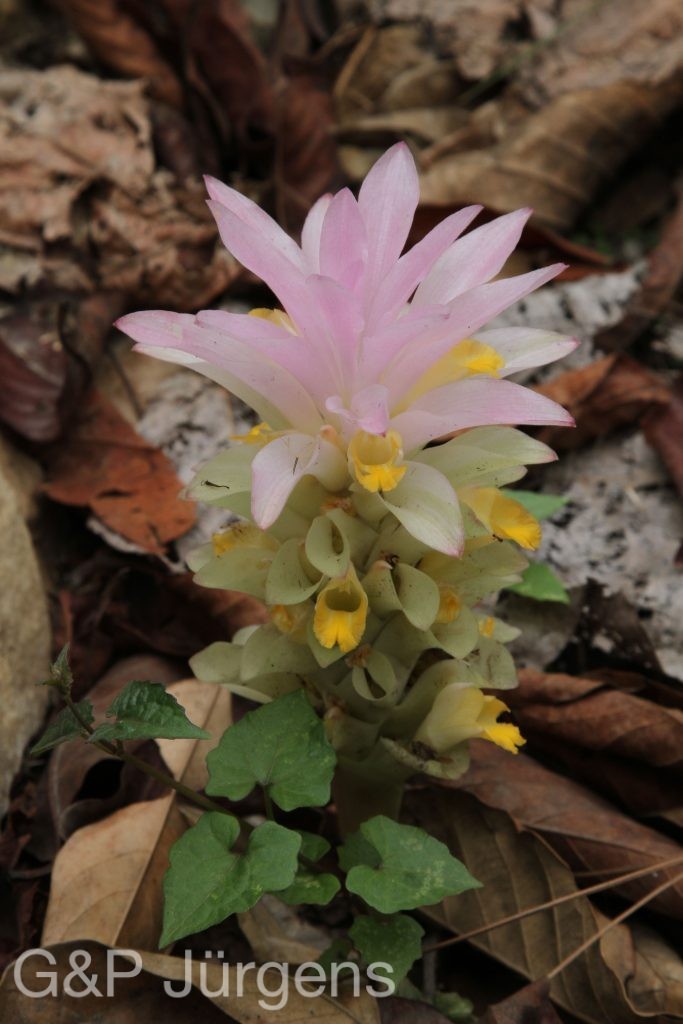
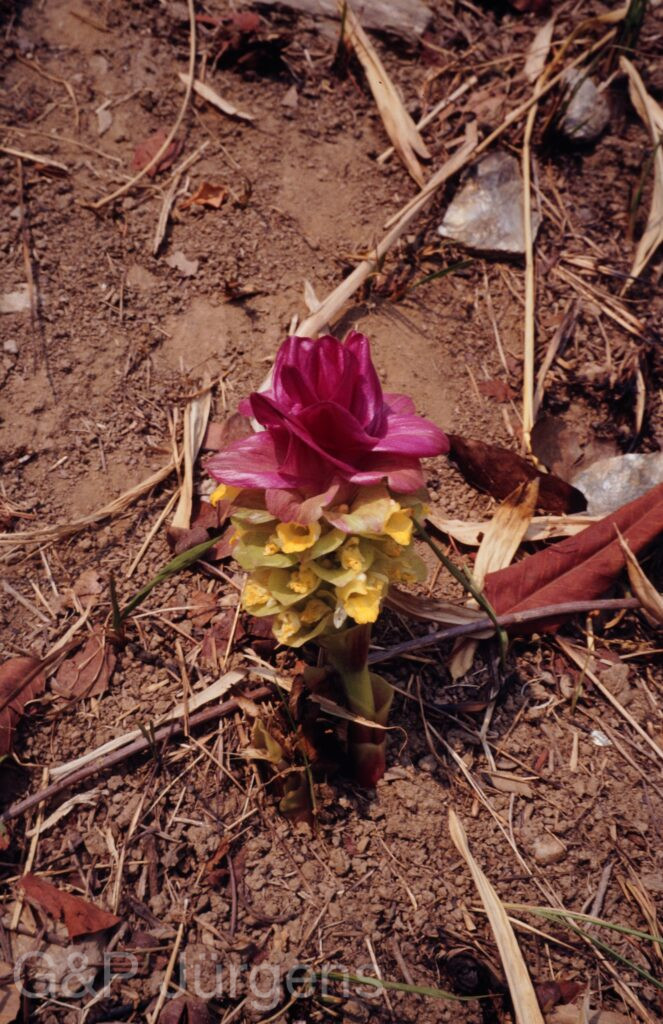
Salisb.

Bhutan2014 285
Bhutan Trithangebe near a farmhouse 800m, May
Nepal1992 189 P276 ergebnis
Nepal Banyang 2100m March 
Nepal1992 190 P277 ergebnis
Nepal Banyang 2100m March 
Nepal 2001 30 ergebnis ergebnis
East-Nepal Korong 1150m, April

Description

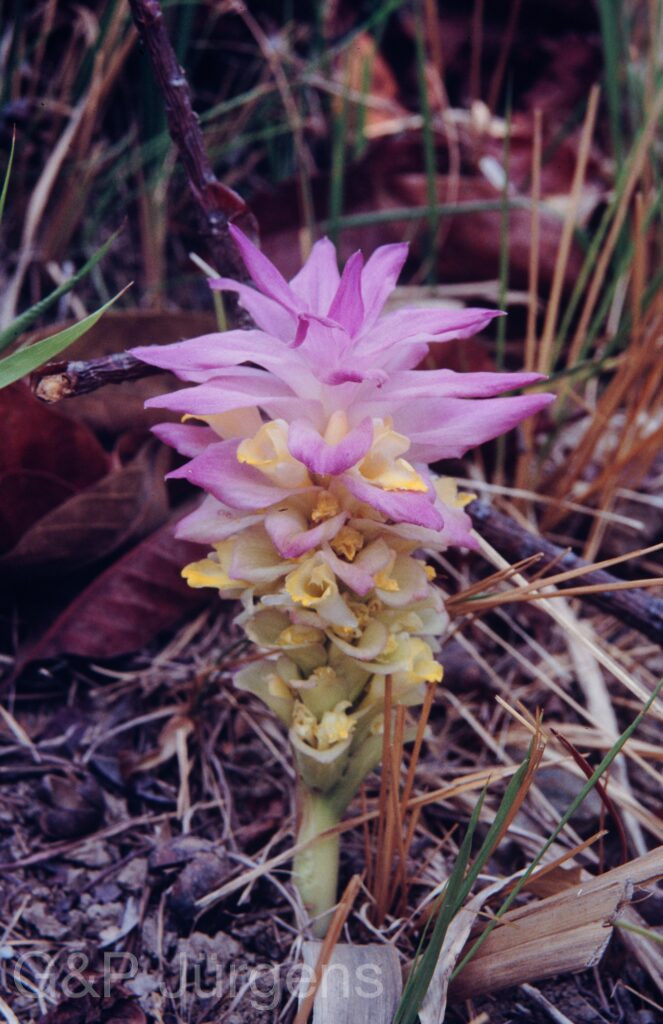
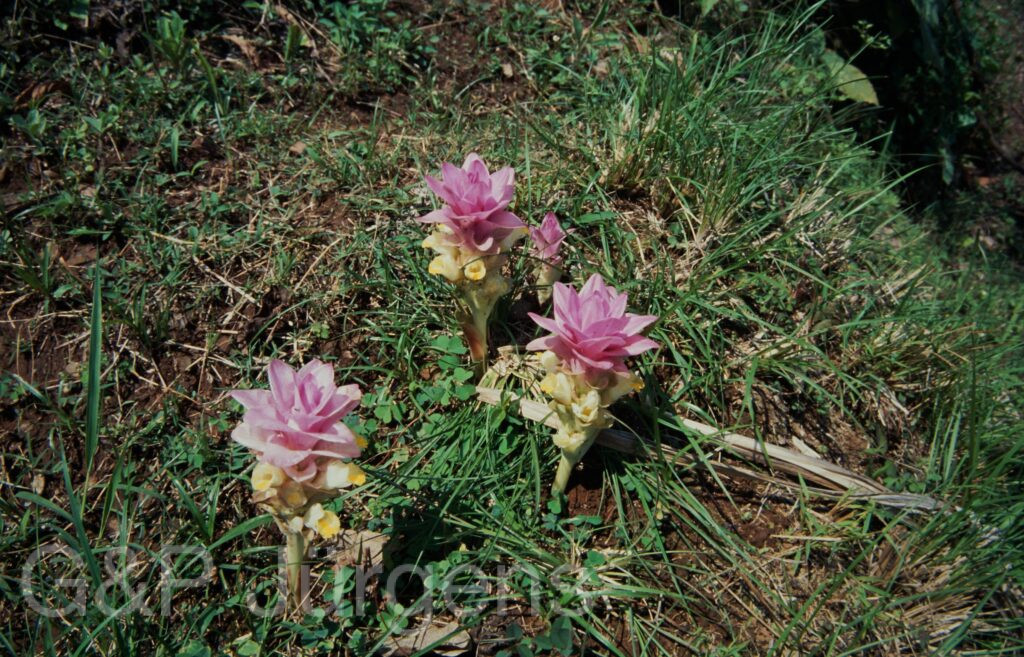
Curcuma aromatica, wild or yellow zedoary, is a South and Southeast Asian rhizomatous herb with a broad distribution documented by 490 GBIF occurrences across China (CN), India (IN), Hong Kong (HK), Bhutan (BT), Sri Lanka (LK), Myanmar (MM), Thailand (TH), Nepal (NP), Vietnam (VN), Bangladesh (BD), Laos (LA), Pakistan (PK), Indonesia (ID), Korea (KR), Malaysia (MY) and Taiwan (TW), with cultivated records in Japan (JP), Colombia (CO) and Britain (GB). It grows in moist deciduous and semi-evergreen forest, scrub and forest margins, often near habitation as a semi-cultivated medicinal plant. The illustrated collections span Bhutan at Trithangebe near a farmhouse at 800 m in May and the Nepalese sites of Banyang at 2100 m in March and Korong in East-Nepal at 1150 m in April.

It is a stout perennial arising from a fleshy, aromatic, internally orange-yellow rhizome bearing sessile and stalked tubers. The pseudostem supports large oblong to oblong-lanceolate leaves, pubescent beneath. The inflorescence appears before or with the leaves as a lateral spike, its lower fertile bracts green and the upper sterile coma bracts tinged pink to rose; the flowers are pale yellow with a tubular calyx, a hooded dorsal corolla lobe and a deflexed, emarginate yellow labellum. Fruit is a capsule, though spread is mainly clonal.

Widely employed in traditional medicine and as a cosmetic and culinary turmeric substitute, C. aromatica is rich in aromatic essential oils and curcuminoids. It is frequently confused with C. zedoaria, from which it differs in floral and rhizome characters. The family is cited verbatim as Zingiberacaea (Zingiberaceae).

Author: Salisb. · Sources: POWO (Kew), GBIF, Flora of China, Flora of Bhutan, Flora of British India, Revision of the genus Curcuma (Skornickova et al.)

Roxb.

Bhutan2015 57
Bhutan Wangdi Phodrang 2000m, October
Bhutan2015 58
Bhutan Wangdi Phodrang 2000m, October

Description

Cuscuta reflexa, the giant or Asiatic dodder, is a parasitic twiner widely distributed across South and Southeast Asia, from Afghanistan, Pakistan, India, Nepal, Bhutan and Sri Lanka through Bangladesh, Myanmar and Thailand to China, with introduced records reaching Britain, Kenya, Mauritius, Iraq, Korea and the United States; its more than 1000 GBIF occurrences reflect both abundance and weediness. It occurs from the plains into the lower mountains, scrambling over shrubs, hedges, trees and crops in open scrub, forest margins, gardens and waste ground. The plant photographed at Wangdue Phodrang in Bhutan at about 2000 m in October sits at the upper part of its range, which extends from near sea level to roughly 3000 m.

It is a leafless, rootless holoparasite whose body consists of slender, much-branched, twining stems that are yellow to orange and essentially without chlorophyll, attaching to the host by intrusive haustoria that tap the vascular tissue. Leaves are reduced to minute scales. The flowers are small, white to creamy, fragrant and bell-shaped, borne in dense lateral racemose or spike-like clusters; the campanulate corolla has five reflexed lobes (the source of the epithet reflexa) and encloses scale-like infrastaminal appendages. The fruit is a globose capsule that opens by a circumscissile lid to release several small seeds.

Though listed here under Convolvulaceae, Cuscuta is frequently segregated into its own family Cuscutaceae; molecular evidence nests the genus firmly within Convolvulaceae, validating the family placement given. C. reflexa is the largest-stemmed Asian dodder and an agriculturally significant parasite that can damage ornamentals, hedges and tree crops, while also being widely employed in traditional medicine. Its broad, partly anthropogenic distribution and its appearance as an introduced weed in distant regions mark it as a successful generalist parasite.

Author: Roxb. · Sources: POWO (Kew), GBIF, Flora of China, Flora of Pakistan, Yuncker monograph of Cuscuta, Stefanovic Convolvulaceae phylogeny

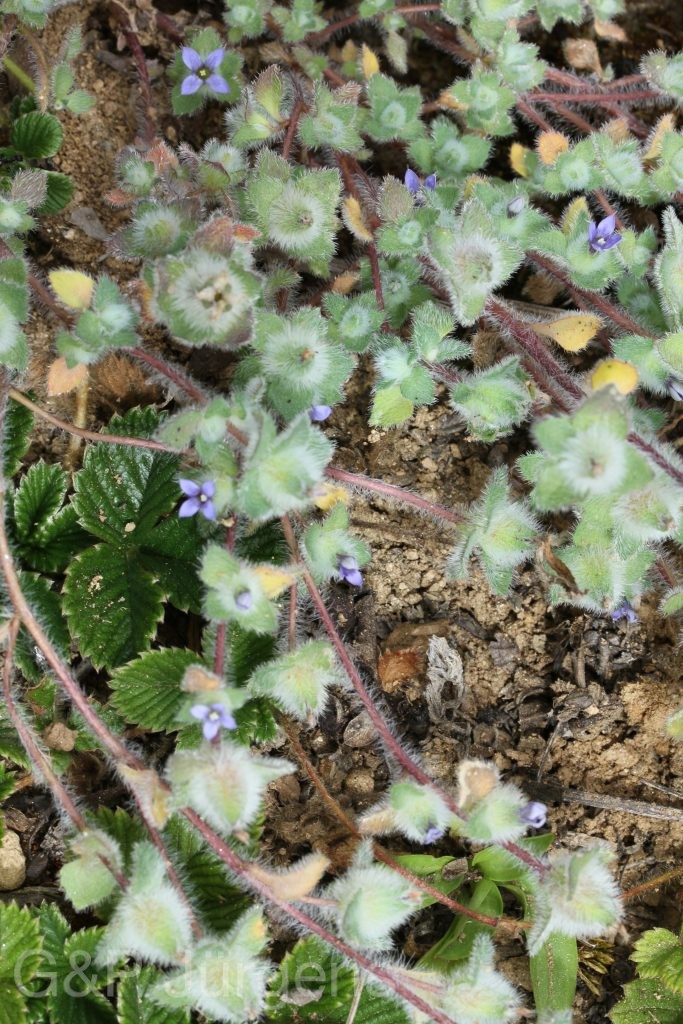
C.B.Clarke

Bhutan2012 881
Bhutan Jakar 2200m, October

Description

Cyananthus hookeri C.B.Clarke is a small Sino-Himalayan herb recorded by GBIF from China, Nepal, India and Bhutan, with 641 occurrences distributed through the higher Himalaya into south-western China. It grows on open slopes, grassy banks, rocky ground and trail margins in the temperate to subalpine zones, typically between about 2200 and 4000 m. The plant photographed at Jakar in central Bhutan, at roughly 2200 m in October, marks the lower end of its altitudinal range and illustrates its late-season flowering, the genus being characteristically autumn-blooming in the eastern Himalaya.

The species is a small, slender annual with prostrate to ascending, often branched stems. The leaves are alternate, small, ovate to obovate or oblanceolate, frequently with a few teeth and short hairs. The flowers are terminal and solitary, with a conspicuously inflated, hairy calyx tube; the corolla is broadly funnel- to bell-shaped, blue to pale blue or sometimes whitish, with the throat closed by a tuft of hairs and the lobes spreading. As in all Cyananthus, the fruit is a capsule that, distinctively for the family, dehisces from the apex downward to shed the numerous small seeds.

Cyananthus is an Asian alpine genus of the Campanulaceae centred on the Himalaya and the Qinghai-Tibetan plateau, distinguished by its apically dehiscent capsules and the bearded corolla throat. Among its members, C. hookeri is one of the smaller, annual species, contrasting with the perennial, larger-flowered relatives of the genus. It is pollinated by alpine insects and is not regarded as threatened, being locally frequent and forming a characteristic component of the late-flowering meadow and slope flora of the central and eastern Himalaya.

Author: C.B.Clarke · Sources: POWO (Kew), GBIF, Flora of China, Flora of Bhutan, Flora of Nepal, Sprague revision of Cyananthus

Moq.

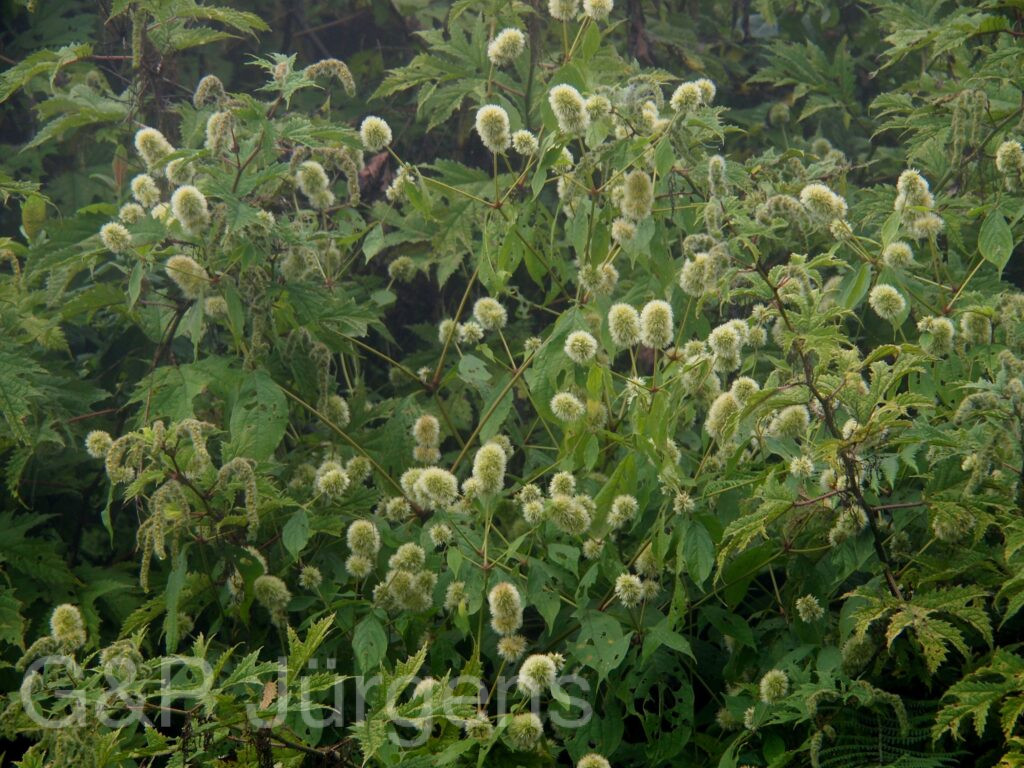
Bhutan2012 836
Bhutan Tongsa 2100m, October

Description

Cyathula capitata Moq. is a robust perennial herb of the amaranth family distributed through the Himalaya and the mountains of southwestern China. GBIF records place it in China, Nepal, India and Bhutan, confirming a Sino-Himalayan range, with an outlying Italian record reflecting cultivated or naturalised material. It grows in forest margins, shrubby clearings, grassy slopes and along trails and streamsides in the temperate zone, generally between about 1,500 and 2,800 m. The plant photographed at Tongsa (Trongsa) in central Bhutan at 2,100 m in October illustrates its late-season fruiting on humid montane slopes.

The species is an erect, branching herb up to 1 m or more tall with angular, pubescent stems swollen at the nodes. The leaves are opposite, broadly elliptic to obovate, acuminate, entire and softly hairy. The small flowers are aggregated into dense, globose, capitate heads borne on long peduncles; each head contains both fertile flowers and sterile flowers modified into hooked, recurved bristles. The membranous tepals subtend a single-seeded utricle, and the indurated hooked bracteoles of the head function in epizoochorous dispersal, attaching to animal fur.

Cyathula is allied to Achyranthes and Pupalia within the Amaranthaceae, distinguished by its globose flower heads with hooked sterile bristles. C. capitata is used in traditional medicine in parts of its range, where the roots serve as a substitute for those of Achyranthes. It is widespread within suitable montane habitat and is not regarded as threatened.

Author: Moq. · Sources: POWO (Kew), GBIF, Flora of China Vol. 5, Flora of Bhutan Vol. 1, Townsend: Amaranthaceae in Flora of Tropical East Africa

Paxton

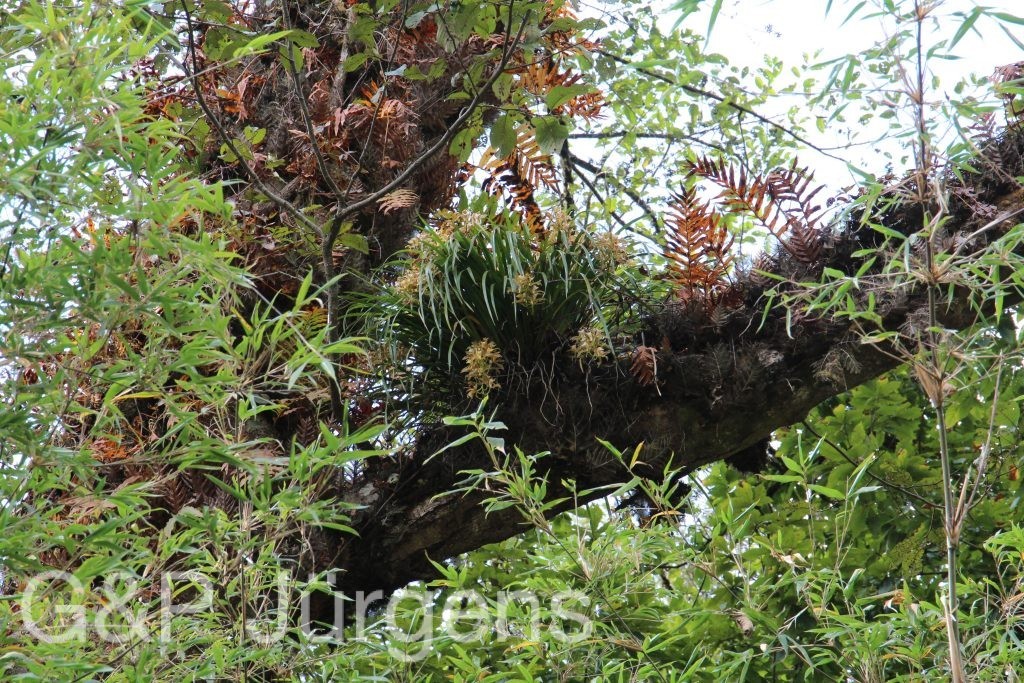
Bhutan2015 603
Bhutan Gasa 2200m, October

Description

Cymbidium devonianum is an epiphytic orchid of the Himalaya and northern Indochina, native to India, Nepal, Bhutan, Myanmar, China, Thailand and Vietnam, with a modest number of wild records reflecting its scattered, localised occurrence. It grows as an epiphyte and occasional lithophyte on mossy branches and rocks in humid, shaded subtropical to warm-temperate broadleaved and oak forest, typically between about 1500 and 2500 m. The plant photographed near Gasa in northern Bhutan at 2200 m in October exemplifies its preference for cool, moss-laden forest where high humidity persists through the year.

The species forms compact clusters of short, ovoid pseudobulbs almost concealed by the leaf bases. The leaves are few, large, broadly elliptic to oblanceolate and leathery, narrowed to a channelled petiole, distinguishing it from the grass-leaved cymbidiums. The inflorescence is a distinctive, dense, pendulous raceme bearing numerous flowers. The sepals and petals are olive-green to dull yellowish, heavily suffused and streaked with reddish-brown to maroon, while the broad labellum is whitish to pink, marked with two deep purple blotches and a short, fleshy callus. The column is stout, the pollinia waxy, and the fruit a pendent capsule.

Classified in Cymbidium subgenus Cymbidium, the species is named for the Duke of Devonshire and is horticulturally esteemed, having contributed to numerous pendulous-spike hybrids. Like all cymbidiums it is listed on CITES Appendix II, and wild populations are vulnerable to over-collection for the ornamental trade and to forest degradation, so that sustainable management and habitat protection across its Himalayan range remain conservation priorities.

Author: Paxton · Sources: POWO (Kew), GBIF, The Orchids of Bhutan (Pearce & Cribb), Flora of China, The Genus Cymbidium (Du Puy & Cribb), CITES Appendices

Lindl.

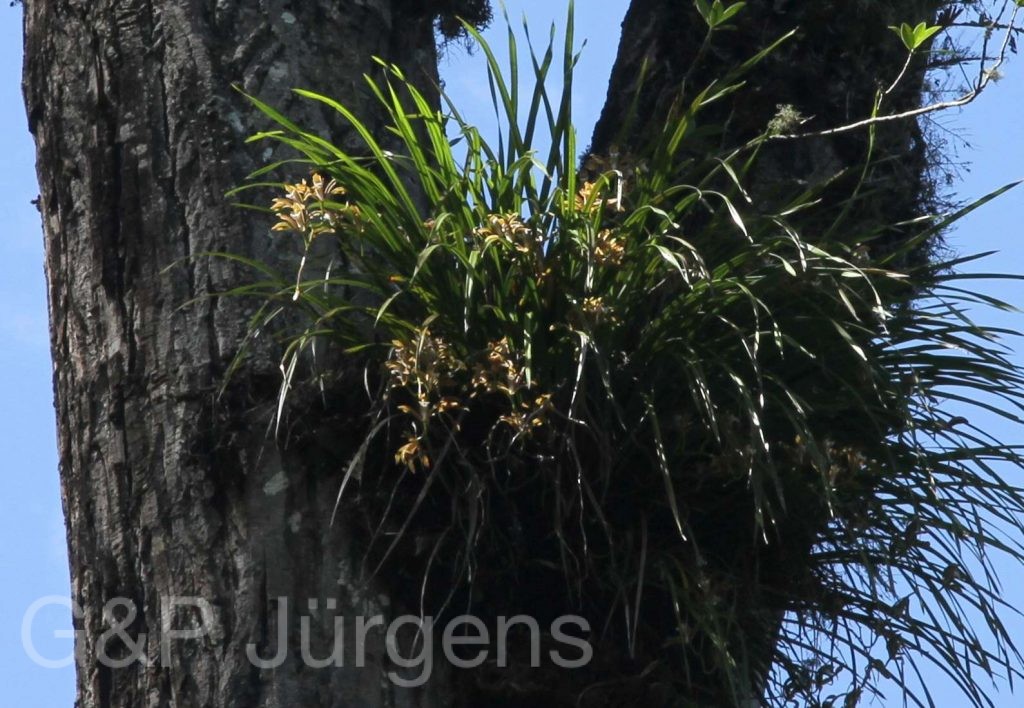
Bhutan2012 1133
Bhutan Trachiyangtse 1780m, October

Description

Cymbidium erythraeum is an epiphytic orchid distributed across the Sino-Himalayan region, native from China and the Himalaya (India, Nepal, Bhutan) into Myanmar and Vietnam, with cultivated material accounting for the Canadian GBIF records; about 116 occurrences are aggregated overall. It is an epiphyte, sometimes lithophytic, of humid evergreen and broad-leaved montane forest, growing on mossy trunks and shaded rock faces generally between roughly 1,400 and 2,800 m. The plant illustrated was photographed at Trashiyangtse (Trachiyangtse) in eastern Bhutan at about 1,780 m in October, the species typically flowering in autumn into winter.

It is a tufted epiphyte with ovoid to fusiform pseudobulbs sheathed by the bases of several distichous, narrowly linear, arching leaves. The inflorescence is a stout, suberect to arching lateral raceme carrying several large, fragrant flowers. The sepals and petals are green to olive, conspicuously veined and overlaid with reddish-brown lines, the petals spreading; the trilobed labellum is whitish to pale yellow, streaked and spotted with red, its disc furnished with two pubescent longitudinal keels and the side lobes erect about the slender column. The fruit is an ellipsoid, dehiscent capsule containing numerous minute seeds.

The species is referred to Cymbidium section Iridorchis, near C. iridioides, from which it differs in its narrower leaves and more strongly red-lined segments. Pollination is by bees, and germination requires mycorrhizal fungi. Prized in horticulture and subject to wild collection, it is, like the whole genus, protected under CITES Appendix II; over-collection and mid-elevation forest loss are the chief pressures.

Author: Lindl. · Sources: POWO (Kew), GBIF, Flora of China, Flora of Bhutan, The Orchids of Bhutan (Pearce & Cribb), Du Puy & Cribb's monograph The Genus Cymbidium