
Moq.
Description
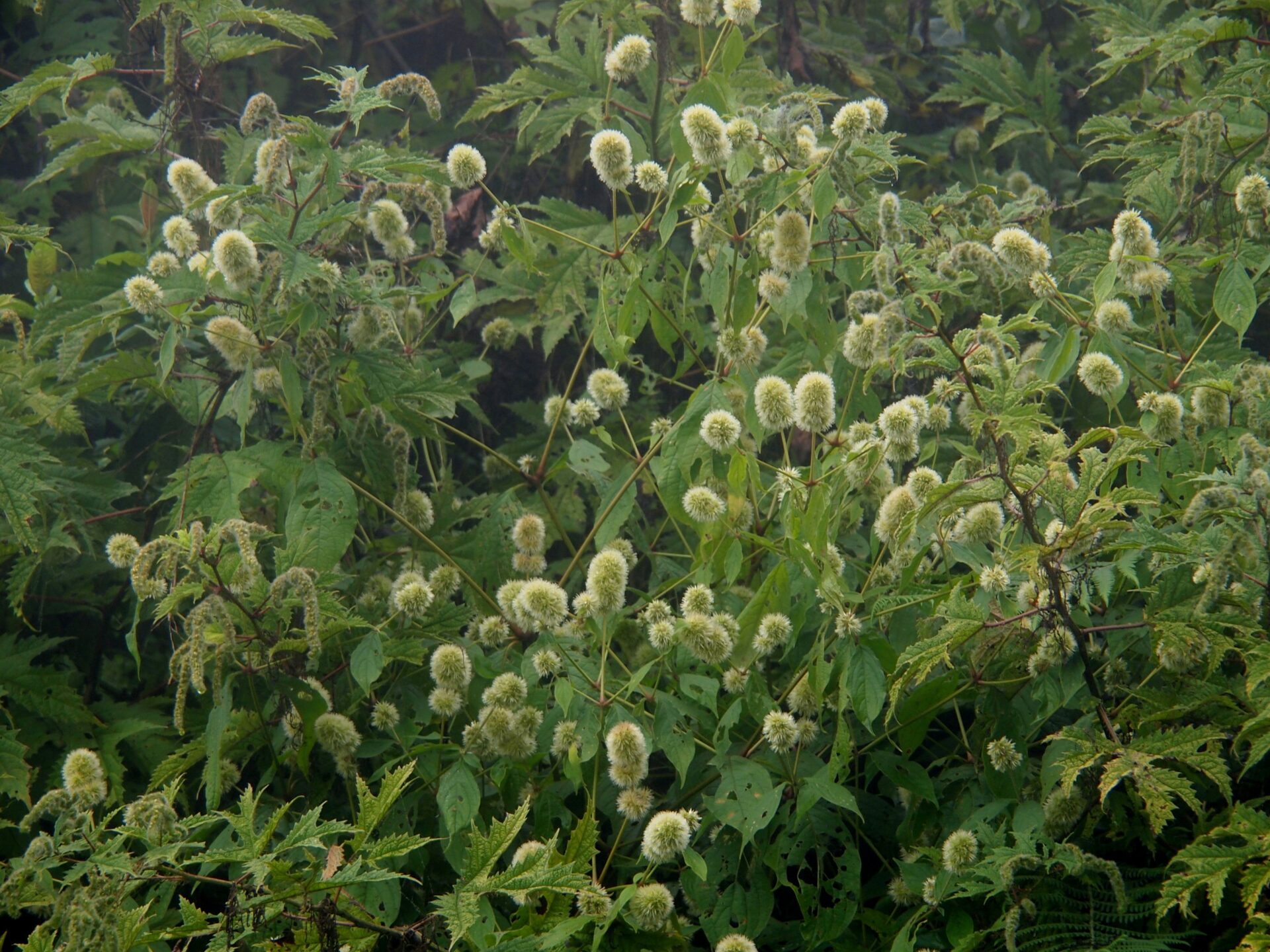
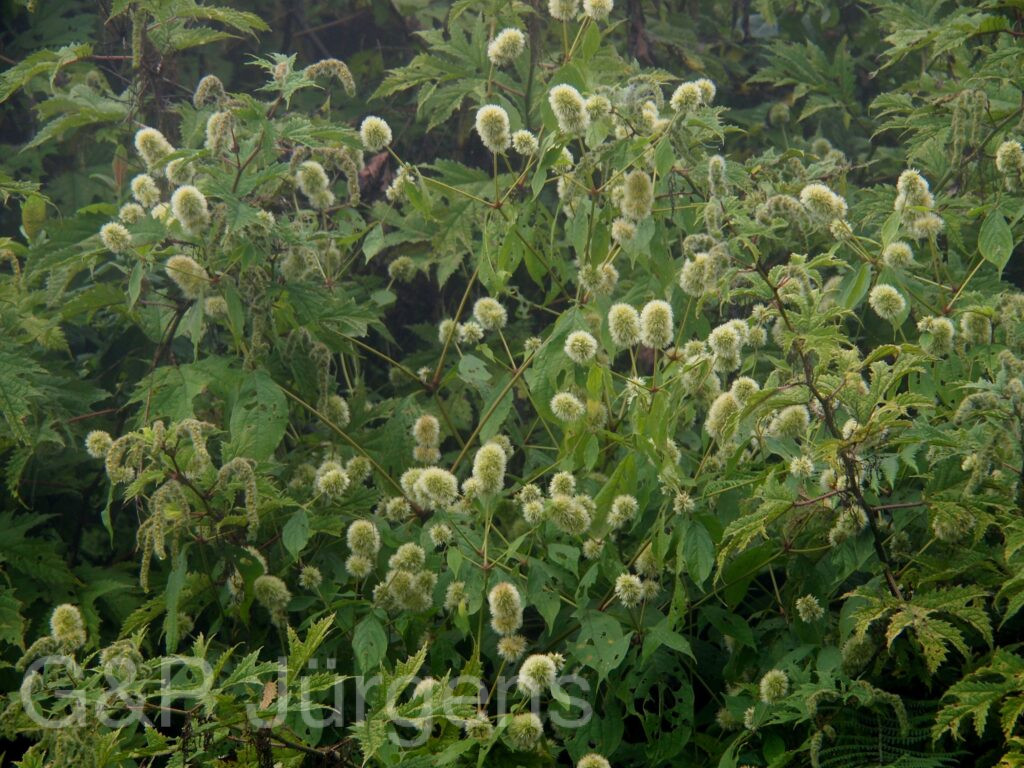
Cyathula capitata Moq. is a robust perennial herb of the amaranth family distributed through the Himalaya and the mountains of southwestern China. GBIF records place it in China, Nepal, India and Bhutan, confirming a Sino-Himalayan range, with an outlying Italian record reflecting cultivated or naturalised material. It grows in forest margins, shrubby clearings, grassy slopes and along trails and streamsides in the temperate zone, generally between about 1,500 and 2,800 m. The plant photographed at Tongsa (Trongsa) in central Bhutan at 2,100 m in October illustrates its late-season fruiting on humid montane slopes.
The species is an erect, branching herb up to 1 m or more tall with angular, pubescent stems swollen at the nodes. The leaves are opposite, broadly elliptic to obovate, acuminate, entire and softly hairy. The small flowers are aggregated into dense, globose, capitate heads borne on long peduncles; each head contains both fertile flowers and sterile flowers modified into hooked, recurved bristles. The membranous tepals subtend a single-seeded utricle, and the indurated hooked bracteoles of the head function in epizoochorous dispersal, attaching to animal fur.
Cyathula is allied to Achyranthes and Pupalia within the Amaranthaceae, distinguished by its globose flower heads with hooked sterile bristles. C. capitata is used in traditional medicine in parts of its range, where the roots serve as a substitute for those of Achyranthes. It is widespread within suitable montane habitat and is not regarded as threatened.
Author: Moq. · Sources: POWO (Kew), GBIF, Flora of China Vol. 5, Flora of Bhutan Vol. 1, Townsend: Amaranthaceae in Flora of Tropical East Africa