
(Wall. ex Cambess.) Hook.
Description
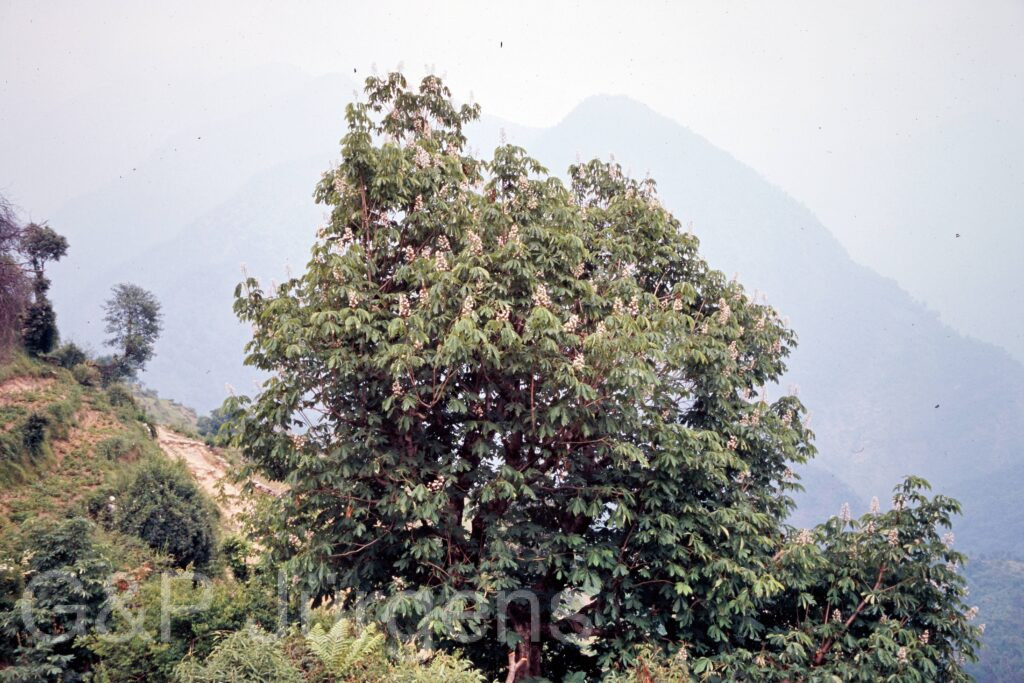
Aesculus indica ((Wall. ex Cambess.) Hook.), the Indian horse-chestnut, is a large deciduous tree endemic to the western and central Himalaya, occurring from Afghanistan and Pakistan through northern India and Nepal to Bhutan. The roughly 1,140 GBIF records, supplemented by numerous cultivated occurrences in Britain, Europe and North America, reflect both its native montane range and its popularity as an ornamental and avenue tree. It is a characteristic component of moist temperate forest, growing along streamsides, in shady ravines and on cool north-facing slopes, generally between 1,200 and 3,000 m, as illustrated by the Nepal record from Godawari at 1,350 m in May and the Garhwal collection from Trijugi Narayan at 2,300 m in June.
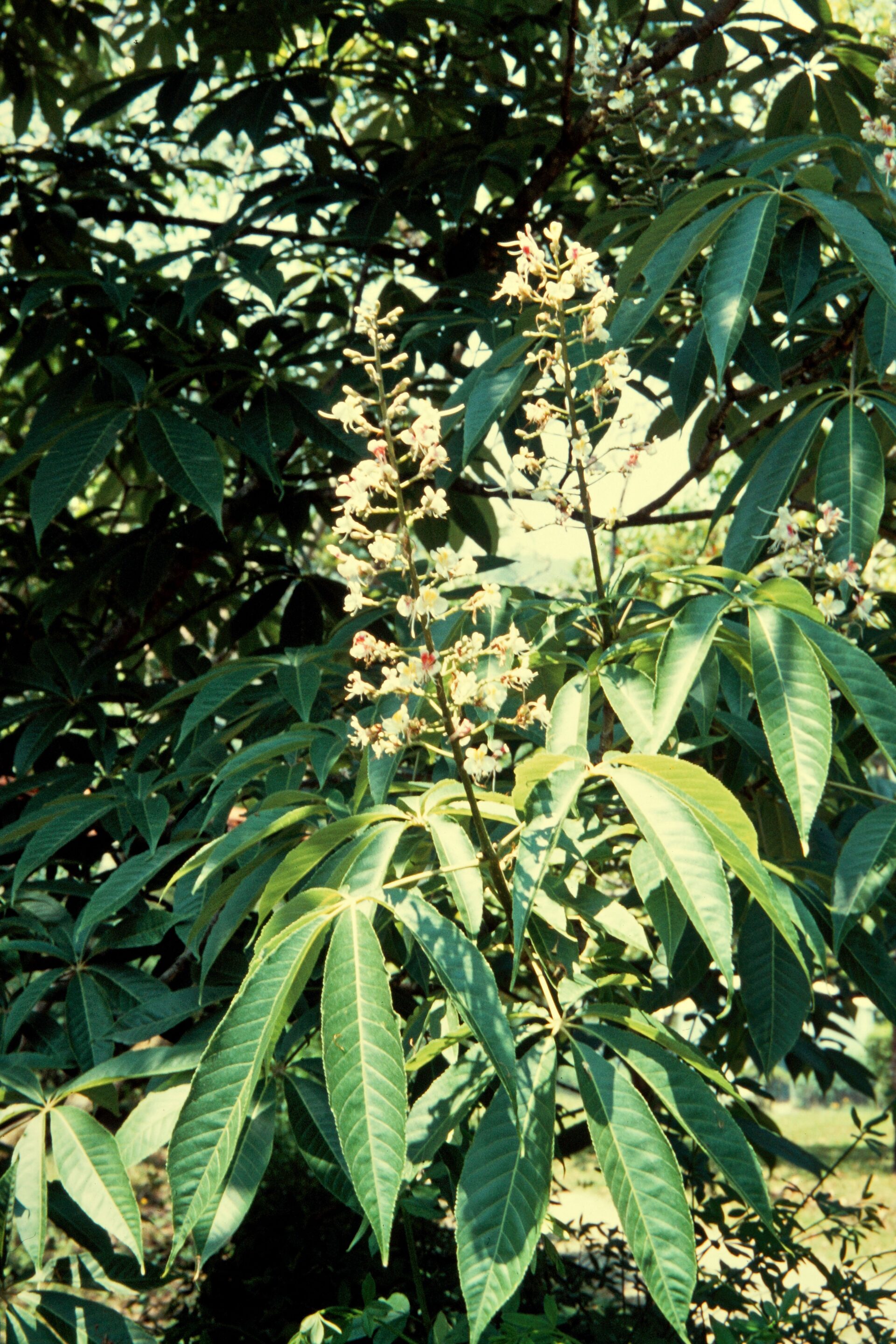
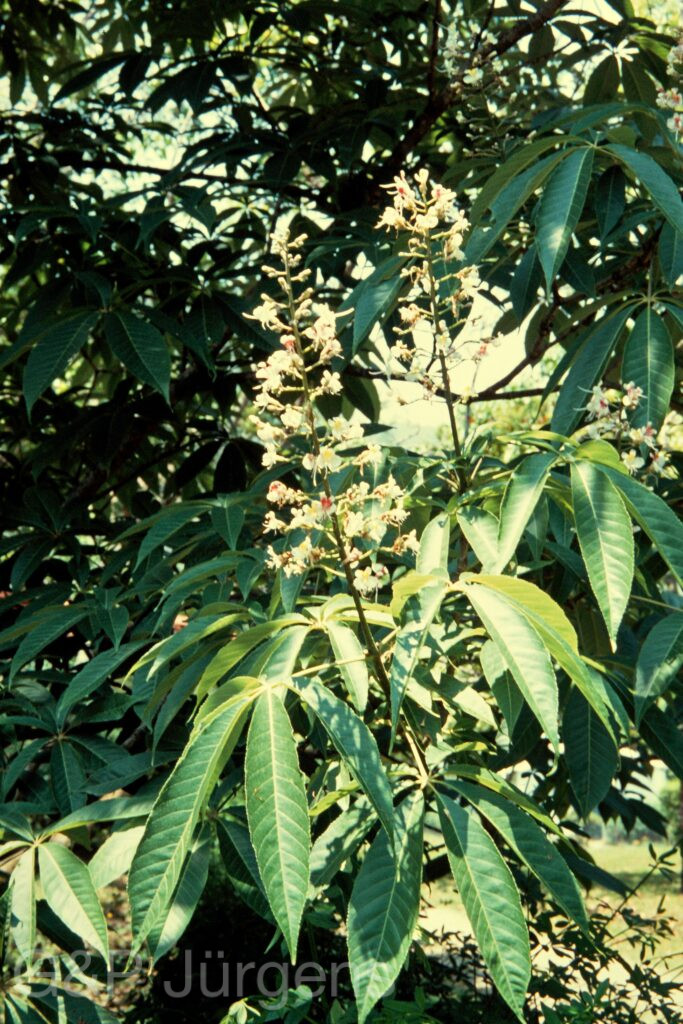
The tree reaches 20–30 m, with a broad rounded crown and smooth greenish-grey bark. The leaves are opposite and palmately compound, with five to nine lanceolate, finely serrate, long-acuminate leaflets that are sessile to shortly stalked and taper to the base. The flowers are borne in large, erect, terminal thyrses (panicles) up to 30 cm long; each flower is white to pinkish with a yellow or red blotch at the base of the petals, the stamens long-exserted. The fruit is a large, rough, pyriform, spineless capsule containing one to three glossy dark-brown seeds ("conkers").
The seeds are rich in bitter saponins and, after laborious leaching to remove toxicity, have traditionally been ground into a flour ("tattwakhar" or "bankhor") used as famine food and livestock fodder in the Himalaya. Distinguished from the European A. hippocastanum by its smooth, unarmed fruit and narrower leaflets, A. indica is widely planted for shade and timber. Though locally heavily exploited, the species remains relatively common within its range.
Author: (Wall. ex Cambess.) Hook. · Sources: POWO (Kew), Flora of Pakistan, GBIF, Flora of China Vol. 12, Hardin: A Revision of the American Hippocastanaceae and the genus Aesculus