
(H.Pearson) Al-Shehbaz & Warwick
Description
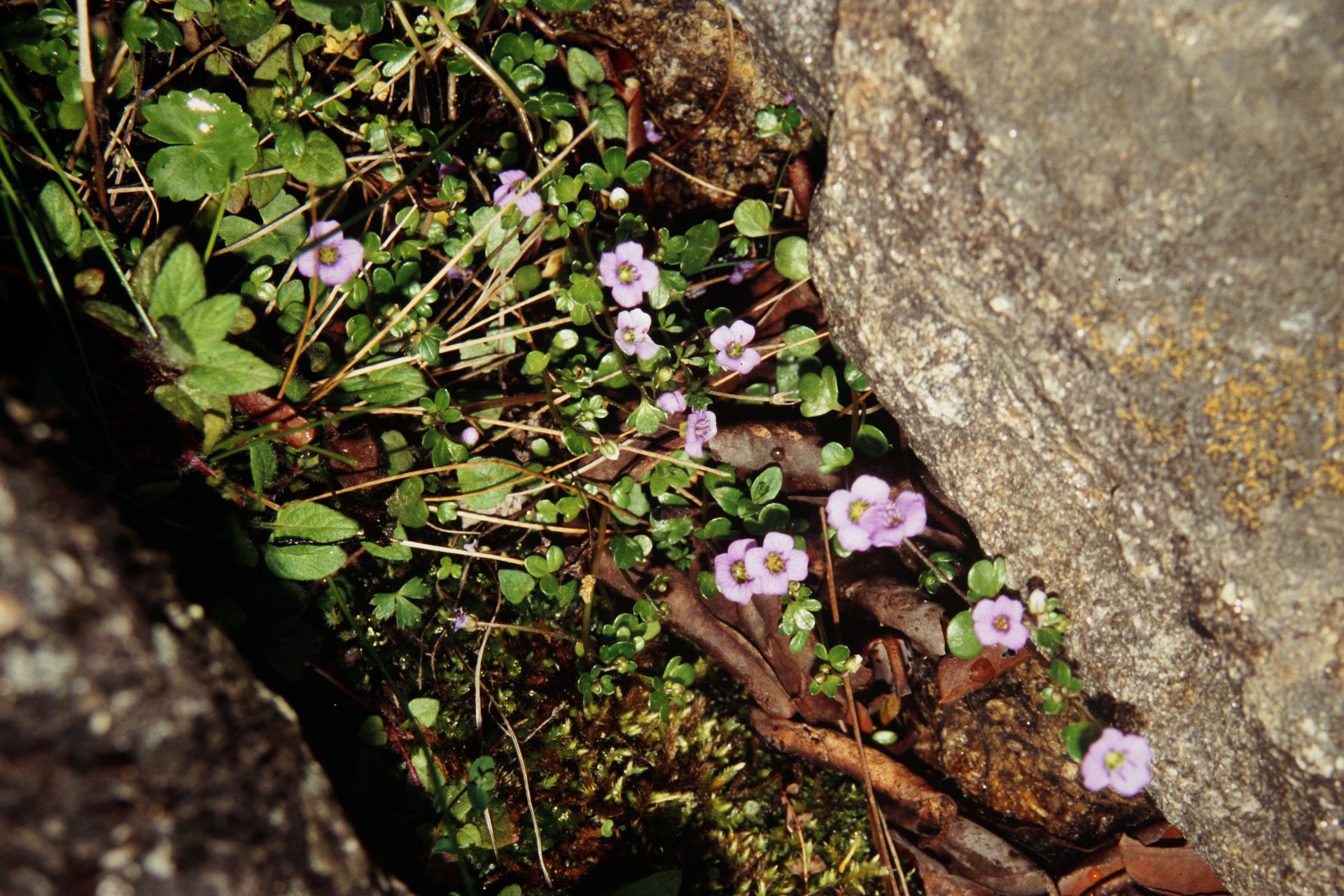
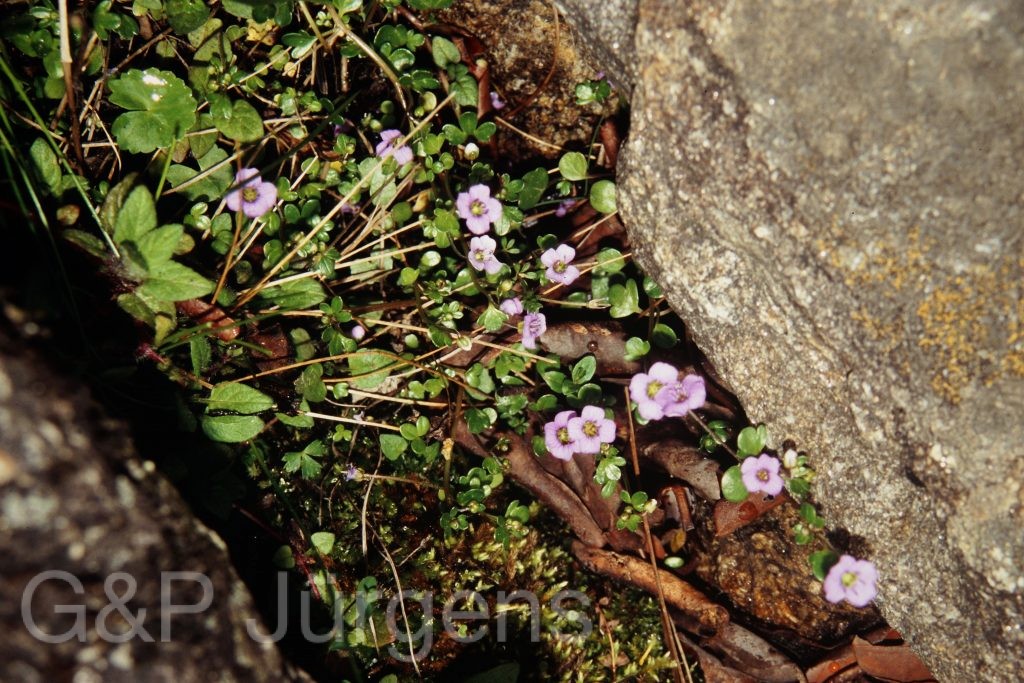
Aphragmus hobsonii is a high-alpine crucifer of the eastern Himalaya and adjacent Tibet, with GBIF records from Nepal, Bhutan and China amounting to roughly 55 occurrences (a Papua New Guinea datum is almost certainly an error). It is a plant of cold, open habitats near the upper limit of vegetation: stony alpine turf, scree margins, moraines and damp gravelly flushes, typically between about 3500 and 4500 m. The specimen depicted at Jangchulakha in Bhutan at 3750 m in June, flowering early in the alpine summer, is characteristic of its occupation of exposed, well-drained high-mountain ground.
It is a small, cushion- or tuft-forming perennial herb arising from a branched caudex topped by a slender taproot. The leaves are mostly basal, entire, oblanceolate to spathulate and narrowed to the base, often forming a dense rosette. The flowers are arranged in a short, congested raceme that scarcely elongates in fruit; the four petals are white to pale lilac, clawed and arranged in the cruciform pattern of the family. The fruit is a short silique or silicula, the seeds in one or two rows, dehiscing by two valves in the typical brassicaceous manner.
Aphragmus is a small genus of cold high-mountain Asia whose generic limits have been revised through molecular study, and the present species was transferred here by Al-Shehbaz and Warwick from earlier placements, reflecting ongoing reassessment of Himalayan crucifer relationships. Its compact, low-growing habit is a clear adaptation to wind exposure, intense radiation and short growing seasons at extreme elevations. Though not formally assessed, its specialised high-alpine niche makes it potentially vulnerable to upslope habitat compression under climate change.
Author: (H.Pearson) Al-Shehbaz & Warwick · Sources: POWO (Kew), GBIF, Flora of China (Brassicaceae), Flora of Bhutan, Annotated Checklist of the Flowering Plants of Nepal, Al-Shehbaz systematic studies in Brassicaceae