Brassicaceae

(W.W.Sm.) H.Hara

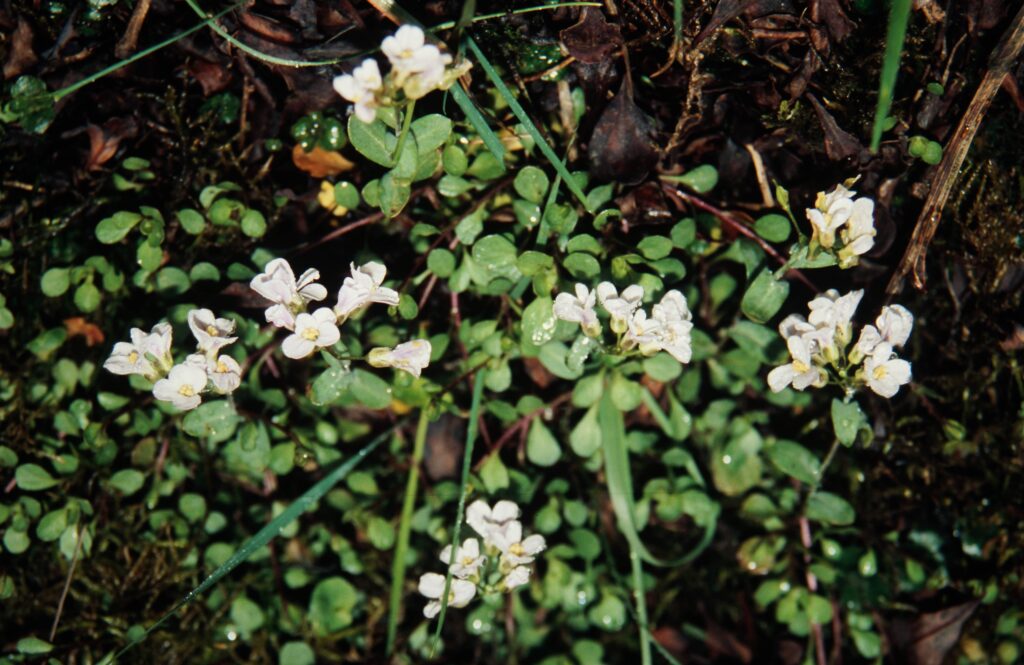
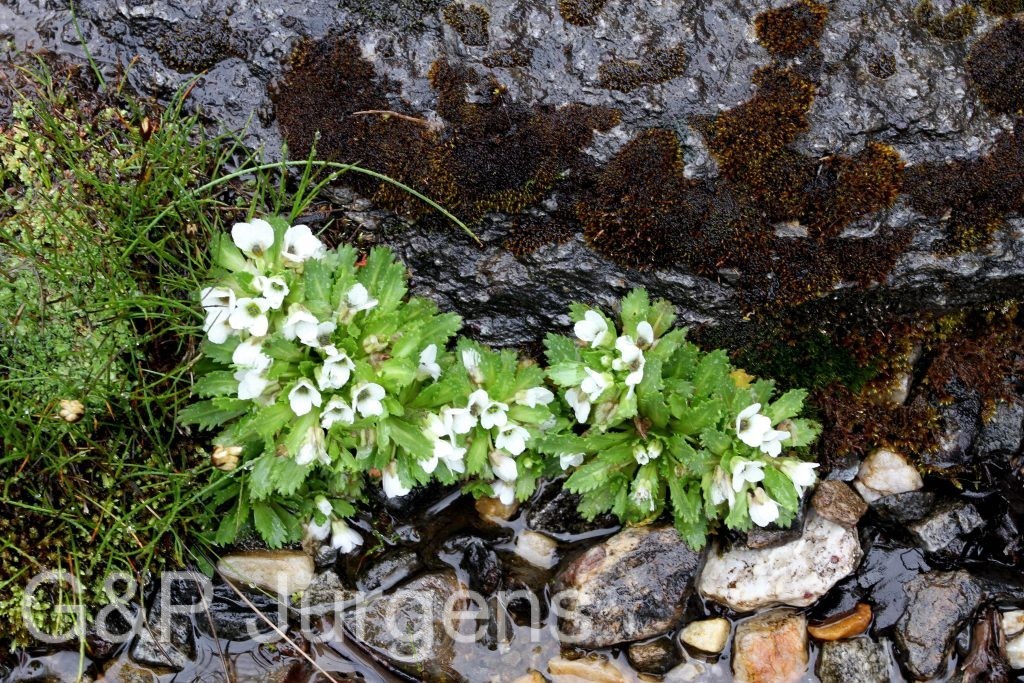
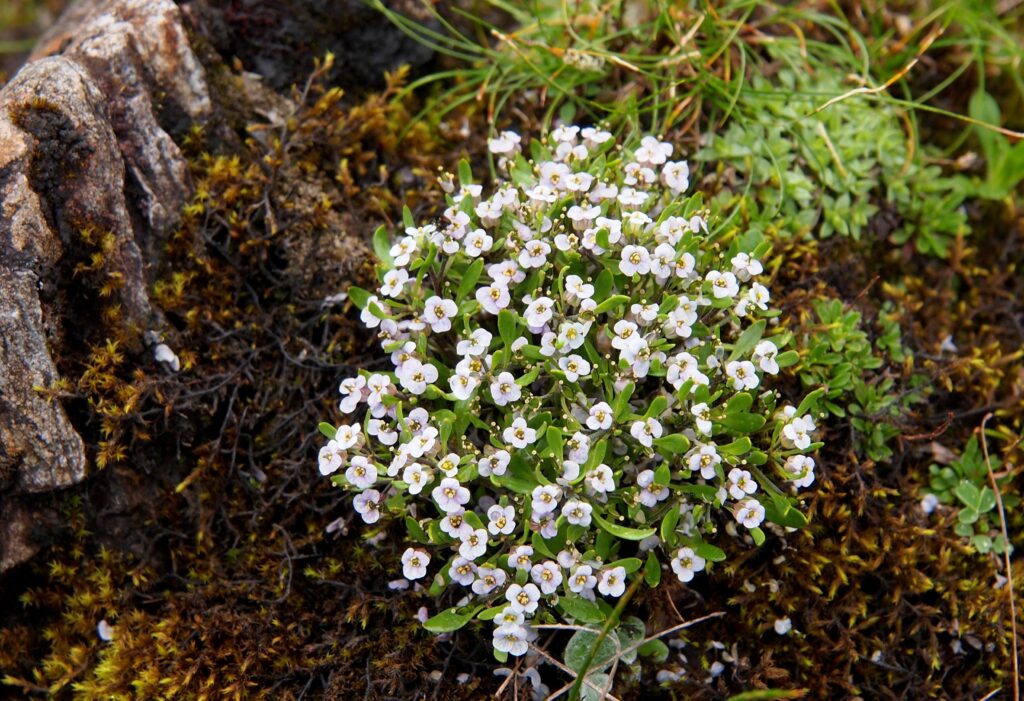
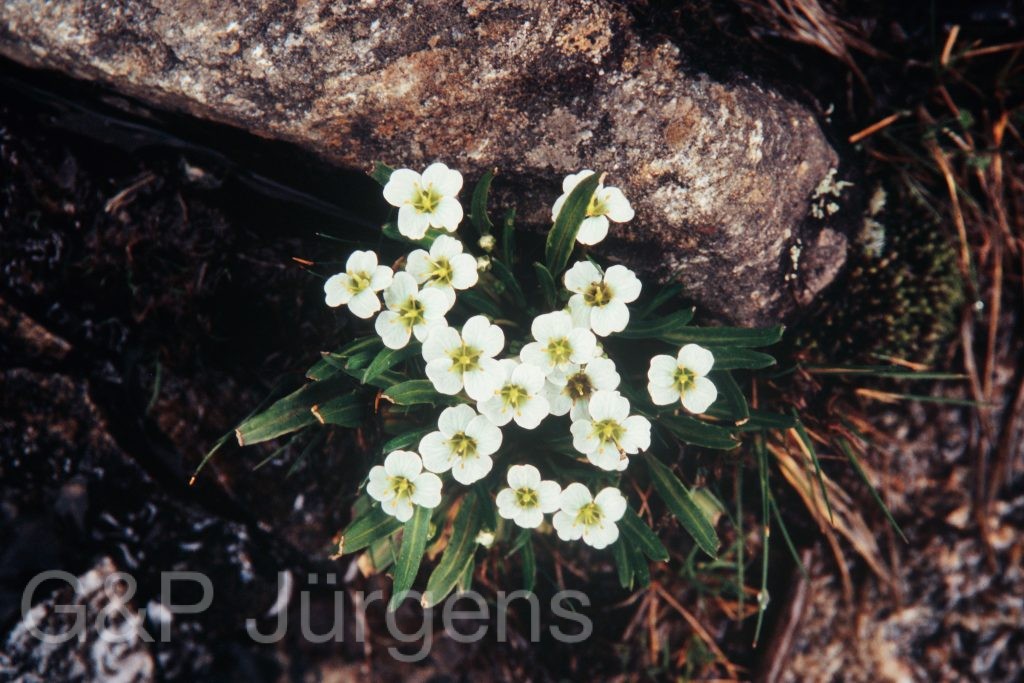
BhutanPG2011 656 ergebnis
Bhutan Thitha-Tso 4360m,July

Description

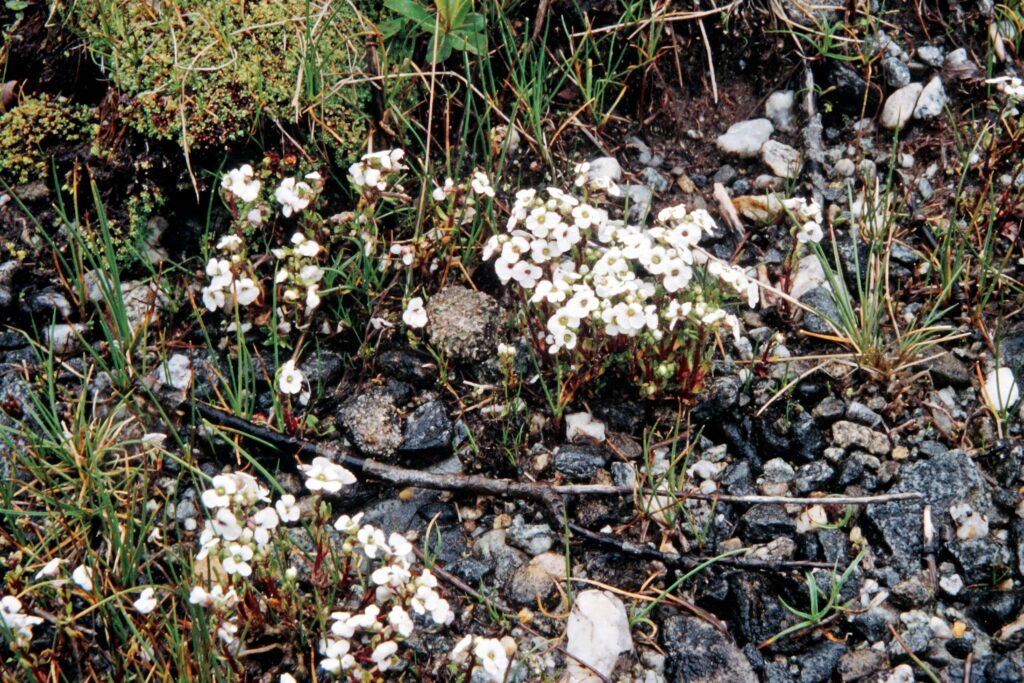
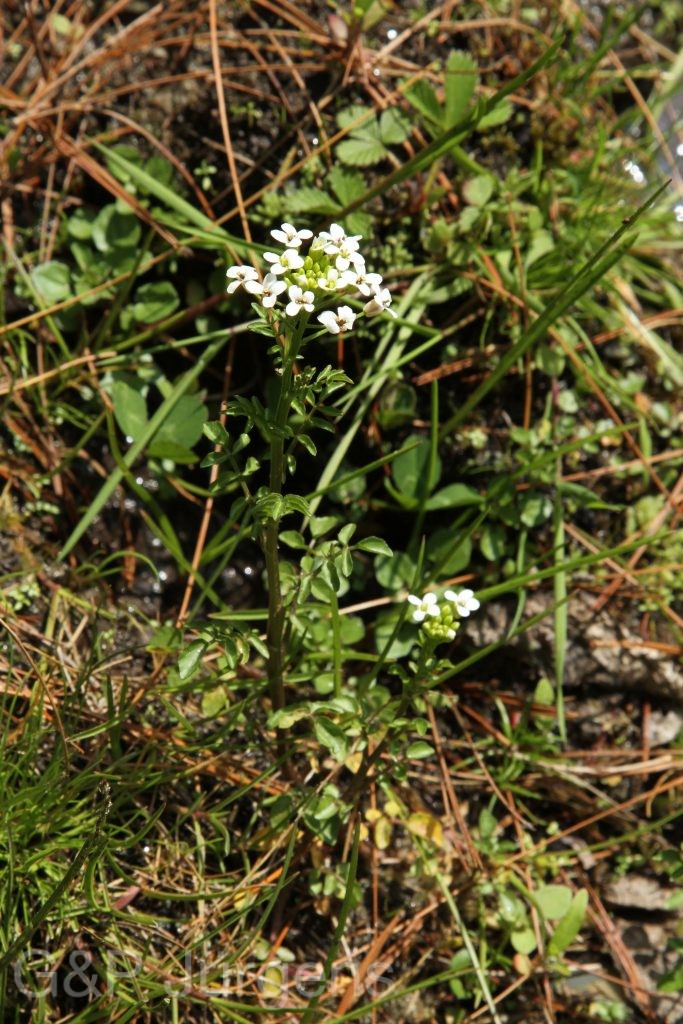
Eutrema heterophyllum is an alpine crucifer of the high mountains of central Asia and the Himalaya, recorded from China, Nepal, Bhutan, Japan, Tajikistan and Kyrgyzstan, with GBIF logging 226 occurrences. It grows on open alpine slopes, damp gravelly flats, screes and the moist margins of glacial lakes and snowmelt rills. The photographed plant comes from Thitha Tso in Bhutan at about 4360 m, flowering in July, a cold, high-elevation lakeside habitat typical of the species' upper-alpine preference.

It is a small, glabrous perennial or biennial herb arising from a slender rootstock, with one or more ascending stems. As the epithet heterophyllum signals, the foliage is variable: basal leaves are often petiolate and entire to lobed, while the cauline leaves differ in shape and become smaller upward. The flowers are borne in a terminal raceme, small, with four white petals in the cruciferous cross arrangement and six tetradynamous stamens. The fruit is a slender, somewhat flattened silique containing the seeds in a single row.

The taxon is accepted, having been transferred to Eutrema by H. Hara from W.W. Smith's original placement. Eutrema, the genus of wasabi, has been substantially recircumscribed by molecular work that drew in numerous small alpine Sino-Himalayan species formerly scattered among other crucifer genera. As a cold-adapted, broadly distributed high-altitude herb it exemplifies the central-Asian alpine element of the Himalayan flora and is unlikely to be threatened, though dependent on intact periglacial habitats.

Author: (W.W.Sm.) H.Hara · Sources: POWO (Kew), GBIF, Flora of China, Flora of Bhutan, Al-Shehbaz's systematic studies of Brassicaceae
Hook.f. & Thomson

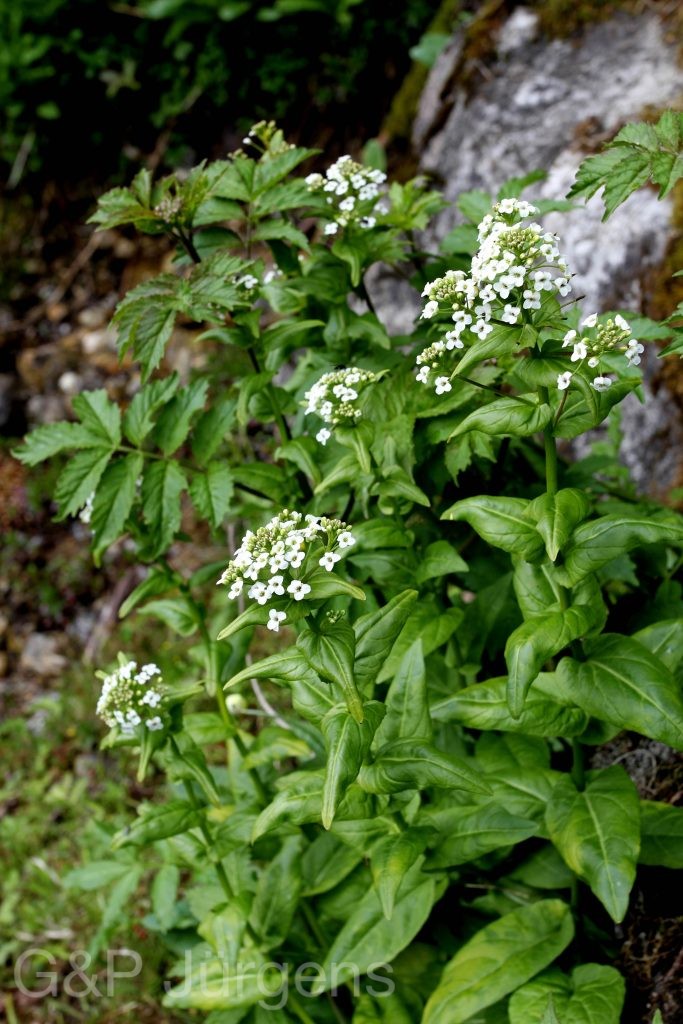
Sikkim2011 248
Sikkim Yumthang 3800m, June

Description

Eutrema himalaicum Hook.f. & Thomson is an alpine crucifer of the high Himalaya and adjacent China, recorded from China, India and Bhutan, with around 249 georeferenced occurrences in GBIF (further scattered records reflect cultivation and herbarium holdings). It occupies moist alpine meadows, streamsides, seepage slopes, gravelly flats and rocky places near snowmelt, generally between about 3500 and 4800 m. The photographed plant was found at Yumthang in Sikkim at about 3800 m in June, in the lush, well-watered subalpine to alpine turf that this small herb favours as the snow recedes.

The plant is a slender annual or short-lived perennial with erect or ascending, often glabrous stems arising from a basal rosette. The leaves are simple, the basal ones petiolate with ovate to deltoid or somewhat hastate blades (recalling the form once distinguished as E. deltoideum), the cauline leaves smaller and shortly stalked to subsessile. The flowers are small and borne in terminal racemes; each has four white petals arranged in the cruciform pattern typical of the family, four free sepals and the tetradynamous stamens of the Brassicaceae. The fruit is a slender silique, the seeds in a single row within each locule.

The genus Eutrema, which includes the cultivated wasabi (E. japonicum), has been substantially recircumscribed by molecular studies, absorbing several formerly segregate Himalayan genera; this accounts for the species' nomenclatural history and the alternate epithet seen on the source page. As a snowbed and seepage specialist it is adapted to short, cool growing seasons. The species is fairly widespread within its alpine band and not of conservation concern, though sensitive to habitat disturbance.

Author: Hook.f. & Thomson · Sources: POWO (Kew), GBIF, Flora of China, Flora of Bhutan, Al-Shehbaz revision of Eutrema and Tribe Eutremeae, Hara Flora of the Eastern Himalaya

(Hook.f. & Thomson) Al-Shehbaz, G.Q.Hao & J.Quan Liu

Bh09 144 P255
Bhutan Al-Shehbaz, 4100m June

Description

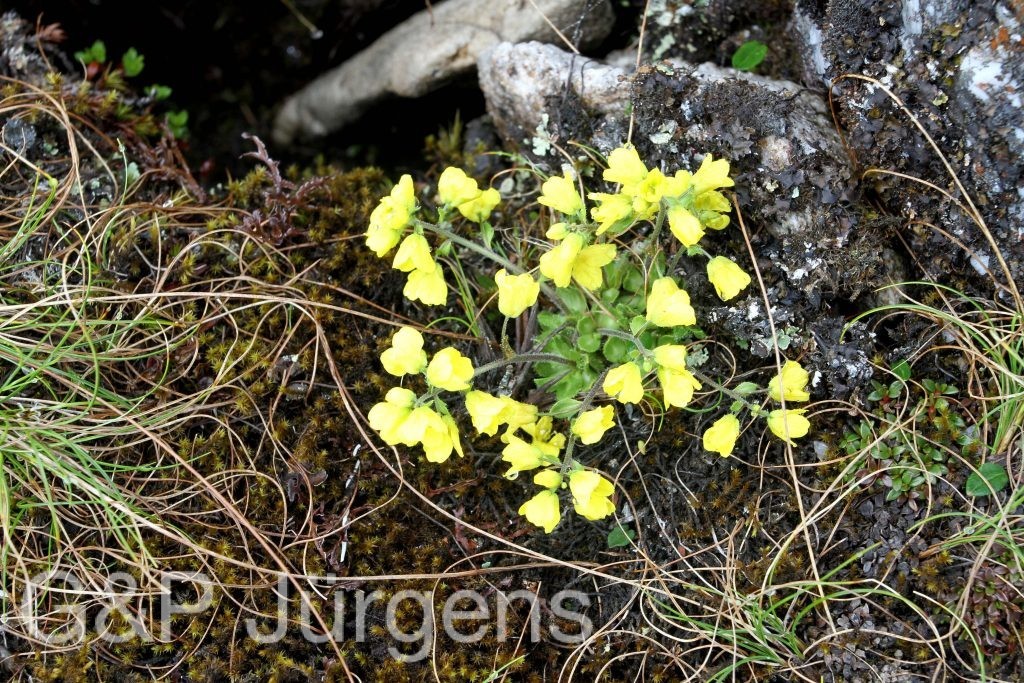
Eutrema scapiflorum (Hook.f. & Thomson) Al-Shehbaz, G.Q.Hao & J.Quan Liu is a dwarf alpine crucifer of the high Sino-Himalaya, recorded from China, India, Nepal, Bhutan and Myanmar. The species is illustrated from Bhutan at approximately 4100 m, flowering in June, consistent with its occurrence in the upper alpine belt. It inhabits open stony slopes, moraines, fellfield, gravelly flushes and the margins of snow-fed rills, generally between 3800 and 5000 m, where it endures intense insolation, freezing nights and a compressed growing season. With around 630 GBIF records it is a genuinely high-elevation specialist, scarce and patchily distributed across its range.

The plant is a small, glabrous, cushion- to rosette-forming perennial arising from a stout caudex and taproot. The basal leaves are crowded, spathulate to oblong-obovate, entire or obscurely toothed, and rather fleshy. As the epithet scapiflorum implies, the white flowers are borne on short, nearly leafless scapes scarcely exceeding the foliage, each flower with four spreading petals and the typical cruciferous tetradynamous androecium. The fruit is a short, oblong to linear silique or silicle, somewhat flattened, dehiscing to release a few seeds in two rows.

The taxon was long placed in the segregate genus Pegaeophyton (as P. scapiflorum), reflected in its original webpage URL, but molecular phylogenetic analyses have shown Pegaeophyton to be nested within Eutrema, prompting the present transfer. It belongs to the tribe Eutremeae, a predominantly Himalayan and Central Asian lineage of cold-adapted mustards. Its restricted high-alpine niche renders it sensitive to upslope vegetation shifts and the retreat of late-lying snow, though no formal conservation assessment has yet been made.

Author: (Hook.f. & Thomson) Al-Shehbaz, G.Q.Hao & J.Quan Liu · Sources: POWO (Kew), GBIF, Flora of China, Flora of Bhutan, Annotated Checklist of the Flowering Plants of Nepal, Al-Shehbaz revisions of Himalayan Brassicaceae

(Jeffrey & W.W.Sm.) Al-Shehbaz & Warwick

Nepal 99 525 ergebnis
Nepal Churt-Khola 3500m, July

Description

Eutrema verticillatum is a high-alpine crucifer of the Sino-Himalayan region, recorded from Nepal and adjacent SW China, with 96 GBIF occurrences indicating a relatively narrow, high-elevation distribution. It occupies open alpine turf, gravelly slopes, moist screes, streamsides and snow-flush ground in the upper alpine zone. The collection from the Churt Khola in Nepal at about 3,500 m in July is consistent with its summer flowering in cold, moist high-mountain habitats, where it grows as a low herb among rock and short alpine vegetation.

It is a glabrous perennial herb arising from a slender rootstock, with one to several erect or ascending stems. The basal and lower cauline leaves are petiolate and entire to slightly toothed, the upper leaves becoming sessile; the specific epithet alludes to a crowded, apparently whorled arrangement of leaves or flowers along the stem. The inflorescence is a terminal raceme of small white to pale flowers with the four petals and tetradynamous stamens typical of the family. The fruit is a silique or short silicula, the valves with a distinct midvein, dehiscing to release the seeds, as is characteristic of Eutrema.

The input family is recorded as "Uncategorized," but the species belongs to Brassicaceae (tribe Eutremeae); the binomial follows the recircumscription of Eutrema by Al-Shehbaz and Warwick, who transferred this taxon (basionym in Smelowskia/Braya) into the genus, and GBIF treats it as accepted. As a narrowly distributed Himalayan high-alpine endemic with few records, it warrants monitoring, though no formal conservation assessment is established.

Author: (Jeffrey & W.W.Sm.) Al-Shehbaz & Warwick · Sources: POWO (Kew), Flora of China Vol. 8, Flora of Nepal, GBIF, Al-Shehbaz & Warwick: Eutrema (Brassicaceae) revision (2005)

(H.Hara) Al-Shehbaz

BhutanPG2011 417
Bhutan Ludlow-Sherriff-Trail Warrtlang-La, 4400m June

Description

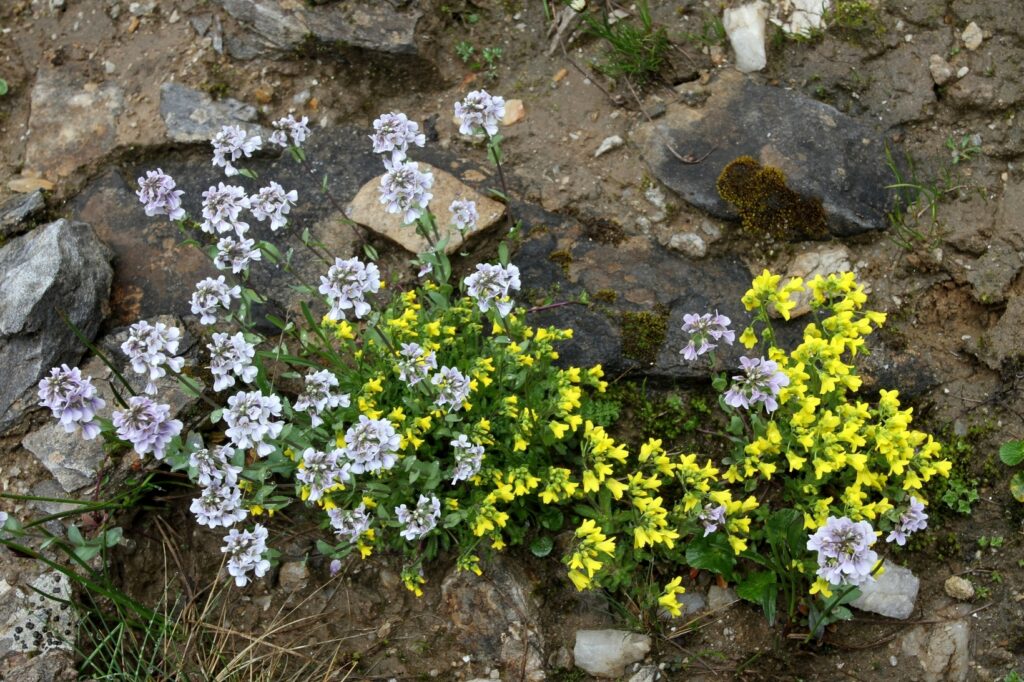
Lepidostemon williamsii is a rare high-alpine crucifer known only from Nepal and Bhutan, and is among the most sparsely documented species in this account, with merely about 12 GBIF records. It is confined to the upper alpine zone, growing on open screes, moraines, gravelly slopes and rock crevices near the limit of vascular plant life. The single cited collection, from the Ludlow-Sherriff-Trail at Warrtlang-La in Bhutan at about 4400 m in June, exemplifies its restriction to cold, exposed, well-drained mineral substrates where snow lies late and the growing season is extremely short.

The plant is a small, often cushion-forming or low tufted perennial herb adapted to severe alpine conditions, with a basal cluster of leaves that are entire to shallowly toothed or lobed. The flowers are typical of the family, with four sepals and four clawed petals arranged in a cross and arrayed in a short, congested raceme. The genus Lepidostemon is diagnosed by its distinctive stamens, whose filaments bear conspicuous scale-like or winged appendages, a feature reflected in the generic name. The fruit is a short silicula or silique characteristic of high-alpine Brassicaceae, splitting to release the seeds.

The species was originally described by H. Hara and transferred to Lepidostemon by Al-Shehbaz, whose revisions have clarified the circumscription of the small Sino-Himalayan genera of Brassicaceae. As a narrow-range endemic occupying a very specialised and harsh high-alpine niche with very few known populations, L. williamsii is inherently vulnerable, and its restricted distribution makes it a priority for monitoring against habitat disturbance and climatic change.

Author: (H.Hara) Al-Shehbaz · Sources: POWO (Kew), GBIF, Flora of Bhutan, Annotated Checklist of the Flowering Plants of Nepal, Al-Shehbaz's revision of Himalayan Brassicaceae

Benth.

Nepal 99 293 ergebnis
West-Nepal Kalmura 4100m, June
Nepal 99 294 ergebnis
West-Nepal Kalmura 4100m, June

Description

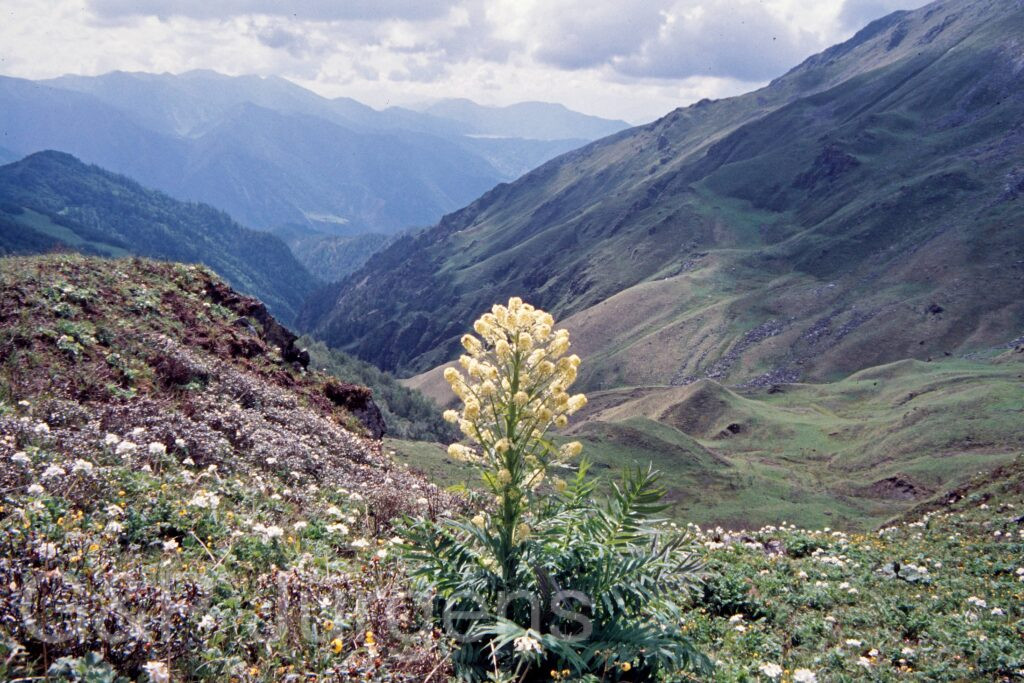
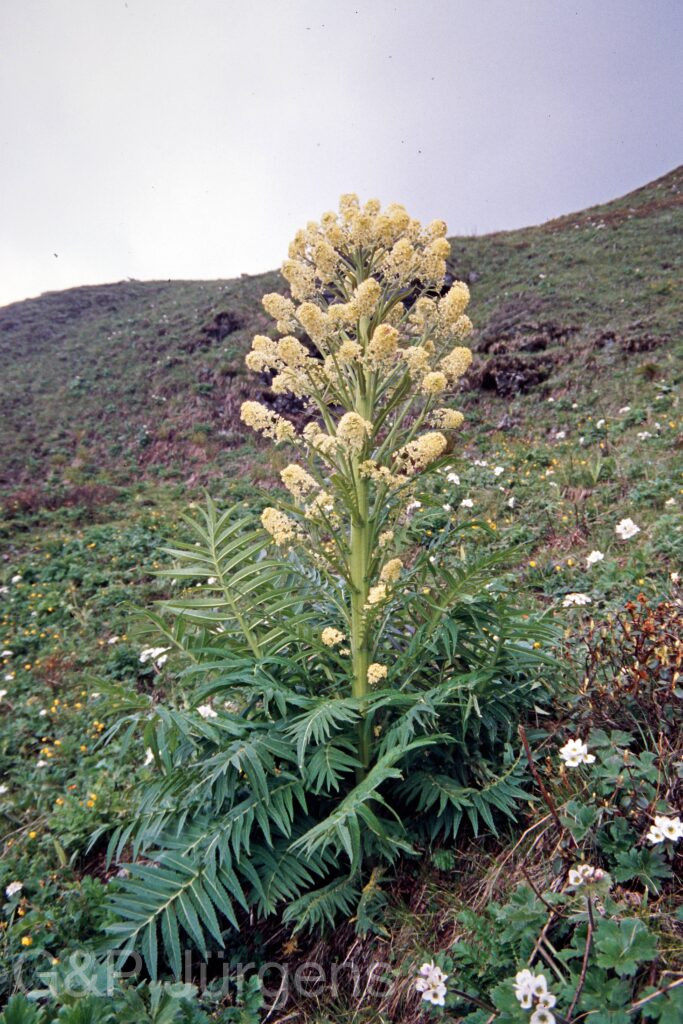
Megacarpaea polyandra Benth. is a robust alpine crucifer of the western and central Himalaya, known from about 99 records in India, Nepal and Pakistan, with scattered extralimital reports. It grows on open grassy and rocky alpine slopes, in subalpine scrub, forest clearings and along the margins of high pastures, generally between about 3000 and 4300 m. The plant photographed at Kalmura in West Nepal at 4100 m in June is typical of its preference for deep, moist, fertile soils on sunny slopes where it can attain a conspicuously large stature for an alpine herb.

The species is a stout perennial herb arising from a thick rootstock, with an erect, branching stem and large, deeply pinnatisect to lyrate leaves with several pairs of toothed lobes. The inflorescence is a broad panicle of many flowers; uniquely among most Brassicaceae the flowers bear numerous stamens (well in excess of the usual six), giving rise to the epithet "polyandra," and the petals are pale yellow to whitish. The fruit is the diagnostic feature: a large, flattened, didymous (two-lobed) silicle with broadly winged, papery valves, each loculus one-seeded, the whole readily wind-dispersed.

Megacarpaea is a small genus of central and high Asia notable for its polyandrous flowers and large winged fruits, features that set it apart within the mustard family and have made it of interest in studies of floral evolution in Brassicaceae. The young shoots and leaves are gathered locally as a potherb in parts of the Himalaya. Although widespread, its showy habit and use as a wild vegetable expose it to collection pressure, and as a narrow-belt alpine endemic it merits monitoring.

Author: Benth. · Sources: POWO (Kew), GBIF, Flora of Pakistan, Flora of Nepal, Hooker's Flora of British India, revision of Megacarpaea and tribe Megacarpaeeae

R.Br.

Bhutan2014 845
Bhutan Thimphu 2500m, May
Bh09 253 G421
Bhutan Phobjika, 2900m June

Description

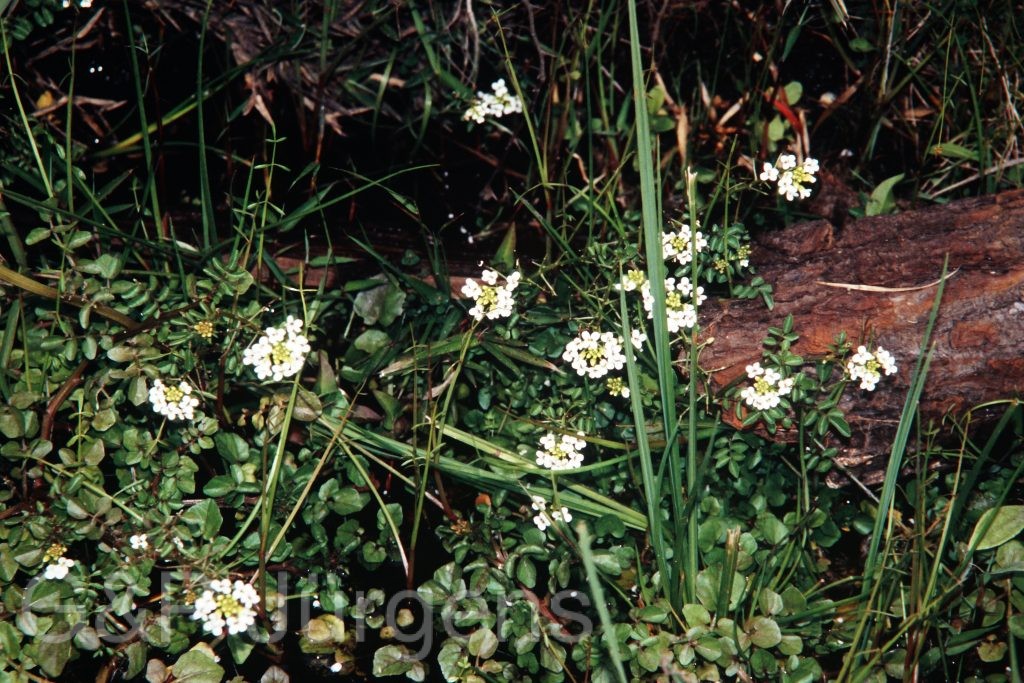
Nasturtium officinale R.Br., the common watercress, is a cosmopolitan aquatic to semi-aquatic perennial native to Europe and western Asia but now naturalised almost worldwide, as the GBIF total of over 150,000 occurrences across the United Kingdom, France, Iberia, central Europe, North and Central America, New Zealand, Australia, Japan and beyond attests. It grows in clean, slow-flowing or still fresh water: streams, ditches, springs, flushes and the muddy margins of ponds, typically on base-rich substrates. In the Himalaya it occurs as an established member of the aquatic flora, the illustrated plants having been recorded at Thimphu in Bhutan at 2500 m in May and at Phobjika at 2900 m in June, where it colonises cool montane watercourses and irrigation channels.

The plant is a glabrous, succulent perennial with hollow, ascending to procumbent stems that root freely at the lower nodes and often float. The leaves are pinnately compound with one to several pairs of ovate to oblong lateral leaflets and a larger, rounded, often cordate terminal leaflet, the margins entire to sinuate. The inflorescence is a terminal raceme of small white flowers, each with four sepals, four clawed white petals arranged in the cruciform pattern typical of the mustard family, and six tetradynamous stamens with yellow anthers. The fruit is a slender, slightly curved cylindrical silique borne on a spreading pedicel, containing two rows of small reticulate seeds in each locule.

Long cultivated as a leaf vegetable for its peppery, vitamin-rich foliage, watercress has been carried far beyond its natural range and is a frequent naturalised escape. It hybridises with the related Nasturtium microphyllum to form the sterile N. × sterile, and the genus is now firmly distinguished from the unrelated garden "nasturtium" (Tropaeolum). Ecologically it is a bioindicator of relatively unpolluted, well-oxygenated water and provides cover and food for aquatic invertebrates. Globally it is of least concern; indeed in some regions it behaves as an aggressive coloniser of waterways rather than a species at risk.

Author: R.Br. · Sources: POWO (Kew), GBIF, Flora of China, Flora Europaea, Brassicaceae of the World (Al-Shehbaz)

(Hook.f. & Thomson) Al-Shehbaz

BhutanPG2011 638
Bhutan Paden-Tso, 4300m July

Description

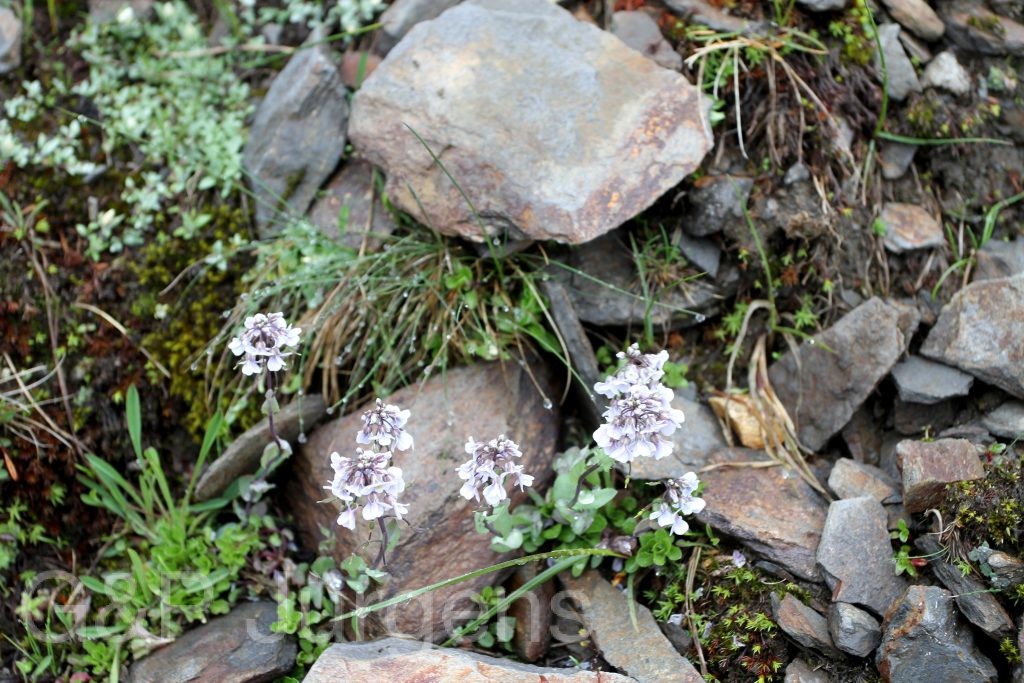
Noccaea andersonii is an alpine crucifer of the Himalaya, documented by GBIF (140 occurrences) from Nepal, India, Bhutan and southern Tibetan China. It is a plant of the upper alpine zone, growing in open stony pastures, scree, moist seepages and the margins of glacial lakes, generally between about 3800 and 4600 m. The cited collection from Paden-Tso in Bhutan at 4300 m in July typifies its preferred habitat: cold, well-drained mineral soils near tarns where it flowers during the brief post-monsoon summer, often associated with cushion plants and short alpine sedge turf.

The species is a low, glabrous, somewhat glaucous perennial herb arising from a slender caudex. Basal leaves are petiolate and form a loose rosette, while the cauline leaves are sessile and clasp the stem with sagittate-amplexicaul bases, a diagnostic feature of the genus. The inflorescence is a corymbose raceme of small flowers with four white to pale lilac petals borne above spreading sepals. The fruit is a flattened, obcordate to broadly elliptic silicle, narrowly winged toward the apex and notched at the tip, containing several smooth seeds in each loculus.

The binomial reflects the modern segregation of Noccaea from the broadly circumscribed Thlaspi, supported by the combination by Al-Shehbaz on molecular and fruit-anatomical grounds, with the perennial habit and amplexicaul leaves distinguishing it from annual Thlaspi proper. Ecologically it is a cold-adapted specialist of frost-churned alpine substrates. It is widespread across suitable habitat and not presently of conservation concern, though restricted to a narrow altitudinal band sensitive to climatic shifts.

Author: (Hook.f. & Thomson) Al-Shehbaz · Sources: POWO (Kew), GBIF, Flora of China Vol. 8, Flora of Bhutan Vol. 1, Flora of Nepal, Al-Shehbaz Brassicaceae systematic studies

(Hook. f. & Thomson) Al-Shehbaz

BhutanPG2011 286
Bhutan Jule-Tso, 4200m June
Sikkim 2006 129 ergebnis
India West-Bengal, Molley 3630m, May

Description

Noccaea cochlearioides (Hook. f. & Thomson) Al-Shehbaz is a high-alpine crucifer of the Himalaya and adjacent Central Asia, recorded from India, Nepal, Pakistan, Bhutan, Afghanistan, southern China and the Russian mountains, with about 93 GBIF occurrences reflecting its restricted, high-elevation niche. It grows on stony alpine slopes, screes, moraines and rock crevices, characteristically between about 3500 and 4800 m. The cited gatherings from Jule-Tso in Bhutan at around 4200 m in June and from Molley in West Bengal at 3630 m in May exemplify its presence in cold, open subnival habitats where the snow-free season is brief.

The species is a small, glabrous, somewhat fleshy perennial herb with a branched caudex bearing rosettes of entire to obscurely toothed, often spathulate basal leaves; the cauline leaves are sessile and amplexicaul with auriculate-sagittate bases. The flowers are arranged in a short corymbose raceme and have four white to pale lilac petals in the typical cruciform arrangement. The fruit is a flattened, obcordate to obovate silicula, narrowly winged and notched at the apex, containing few smooth seeds in each locule.

The taxon was transferred from Thlaspi to the segregate genus Noccaea by Al-Shehbaz in his molecular-based recircumscription of the Thlaspi alliance (Brassicaceae, tribe Coluteocarpeae). Its auriculate cauline leaves and winged, notched silicles are diagnostic. A narrow alpine endemic of restricted range, it is uncommon but not assessed as threatened.

Author: (Hook. f. & Thomson) Al-Shehbaz · Sources: POWO (Kew), GBIF, Flora of Bhutan, Flora of China, Flora of Pakistan, Al-Shehbaz revisions of Thlaspi and allied Brassicaceae

Jafri 

BhutanPG2011 253
Bhutan Jule-Tso, 4000m June

Description

Pycnoplinthopsis bhutanica is a high-alpine crucifer endemic to the eastern Himalaya, recorded from Bhutan, Nepal and India, and one of the rarer plants in this group with only about 33 GBIF occurrences. It is confined to open alpine habitats — stony turf, screes, moraines and rock crevices — at very high elevations, generally around and above 4000 m. The plant photographed at Jule-Tso in Bhutan at about 4000 m in June represents its characteristic setting in cold, well-drained alpine ground near glacial lakes, flowering in early summer as the snow retreats.

The species is a small, cushion- or rosette-forming perennial herb with a stout, often woody taproot crowned by a dense tuft of leaves. The leaves are entire to slightly toothed, somewhat fleshy and crowded, frequently appressed to the ground. The flowers are borne close to the rosette on very short pedicels, with four white to pale lilac or pinkish petals arranged in the cruciform pattern typical of the family and six tetradynamous stamens. The fruit is a short silicula characteristic of the genus, retaining a persistent style and dehiscing to release the seeds.

Pycnoplinthopsis is a small Himalayan genus closely allied to Pycnoplinthus, both being dwarf, cushion-forming high-alpine Brassicaceae adapted to the harsh conditions of the upper alpine and subnival zone. The compact rosette habit, woody rootstock and reduced inflorescence are adaptations to cold, wind exposure and a brief growing season. As a narrow eastern Himalayan endemic of restricted, fragile high-elevation habitats, it is of biogeographic and conservation interest and potentially vulnerable to climate-driven contraction of the alpine zone, although it has not been formally assessed.

Author: Jafri · Sources: POWO (Kew), GBIF, Flora of China, Flora of Bhutan, Annotated Checklist of the Flowering Plants of Nepal, Al-Shehbaz systematics of Brassicaceae