
R.Br.
Description
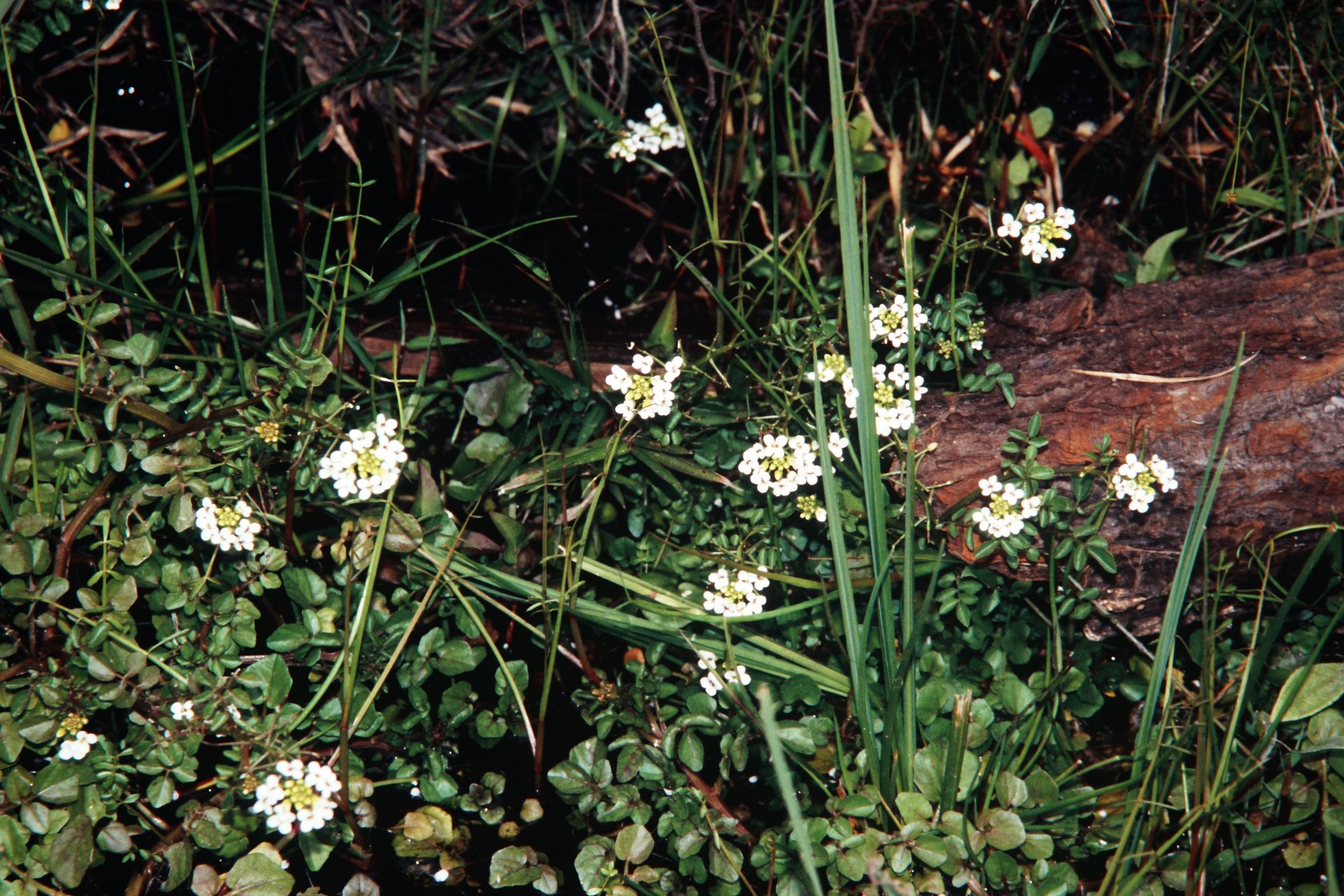
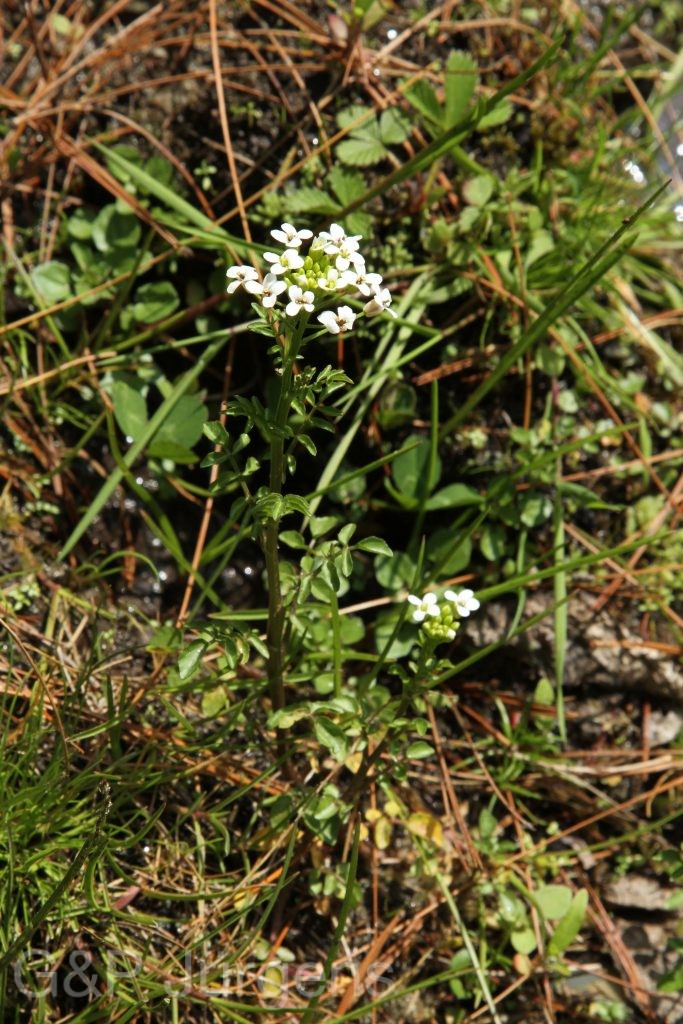
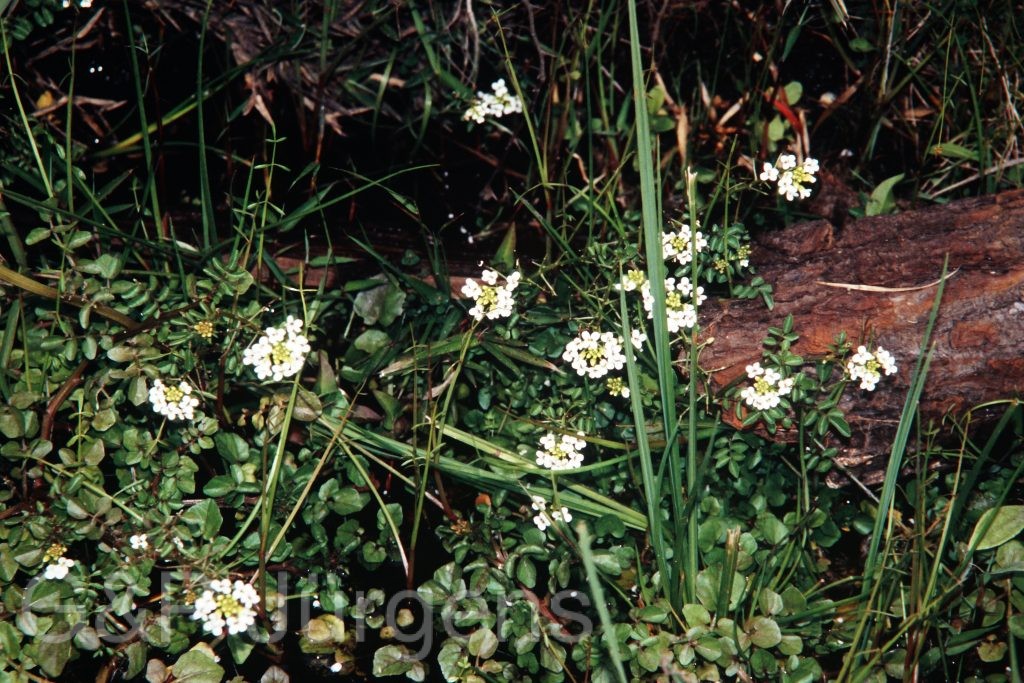
Nasturtium officinale R.Br., the common watercress, is a cosmopolitan aquatic to semi-aquatic perennial native to Europe and western Asia but now naturalised almost worldwide, as the GBIF total of over 150,000 occurrences across the United Kingdom, France, Iberia, central Europe, North and Central America, New Zealand, Australia, Japan and beyond attests. It grows in clean, slow-flowing or still fresh water: streams, ditches, springs, flushes and the muddy margins of ponds, typically on base-rich substrates. In the Himalaya it occurs as an established member of the aquatic flora, the illustrated plants having been recorded at Thimphu in Bhutan at 2500 m in May and at Phobjika at 2900 m in June, where it colonises cool montane watercourses and irrigation channels.
The plant is a glabrous, succulent perennial with hollow, ascending to procumbent stems that root freely at the lower nodes and often float. The leaves are pinnately compound with one to several pairs of ovate to oblong lateral leaflets and a larger, rounded, often cordate terminal leaflet, the margins entire to sinuate. The inflorescence is a terminal raceme of small white flowers, each with four sepals, four clawed white petals arranged in the cruciform pattern typical of the mustard family, and six tetradynamous stamens with yellow anthers. The fruit is a slender, slightly curved cylindrical silique borne on a spreading pedicel, containing two rows of small reticulate seeds in each locule.
Long cultivated as a leaf vegetable for its peppery, vitamin-rich foliage, watercress has been carried far beyond its natural range and is a frequent naturalised escape. It hybridises with the related Nasturtium microphyllum to form the sterile N. × sterile, and the genus is now firmly distinguished from the unrelated garden "nasturtium" (Tropaeolum). Ecologically it is a bioindicator of relatively unpolluted, well-oxygenated water and provides cover and food for aquatic invertebrates. Globally it is of least concern; indeed in some regions it behaves as an aggressive coloniser of waterways rather than a species at risk.
Author: R.Br. · Sources: POWO (Kew), GBIF, Flora of China, Flora Europaea, Brassicaceae of the World (Al-Shehbaz)