H.Hara
Description
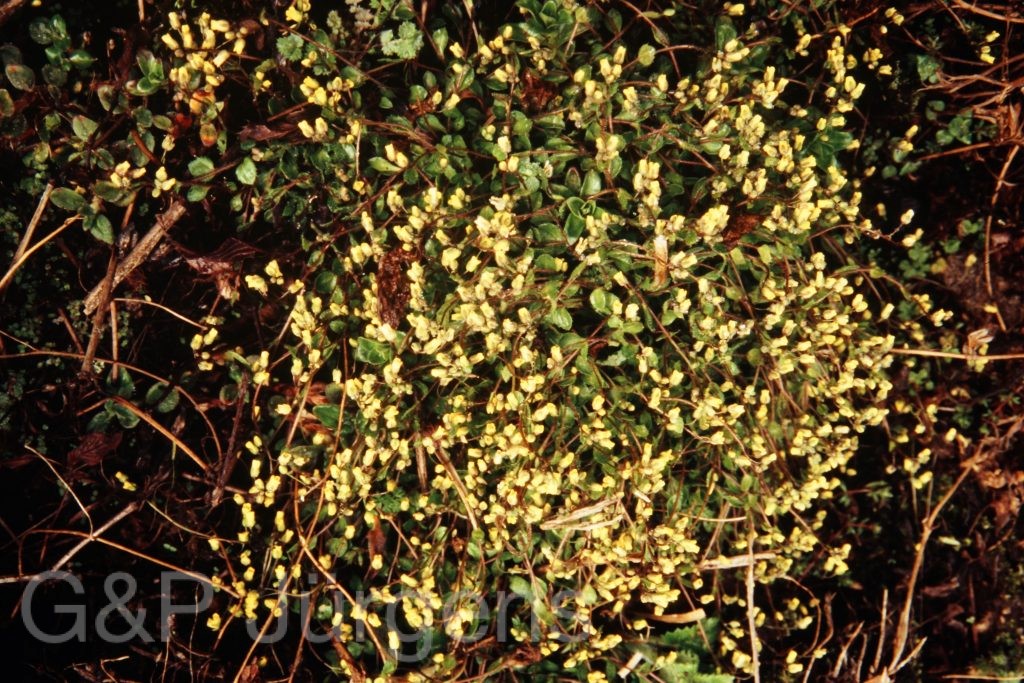
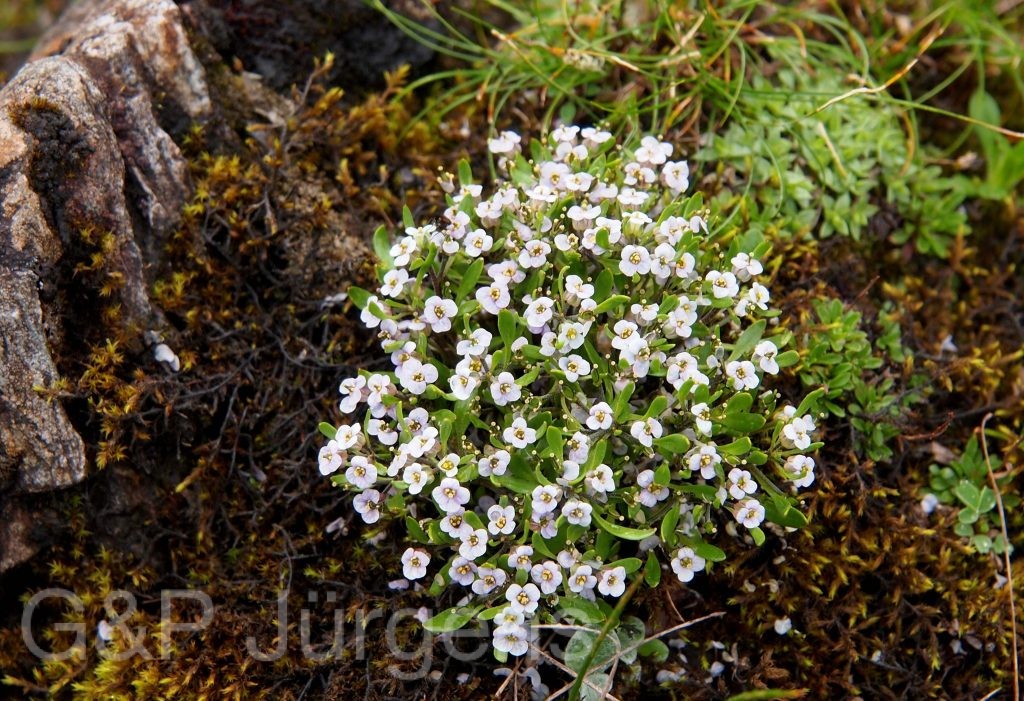
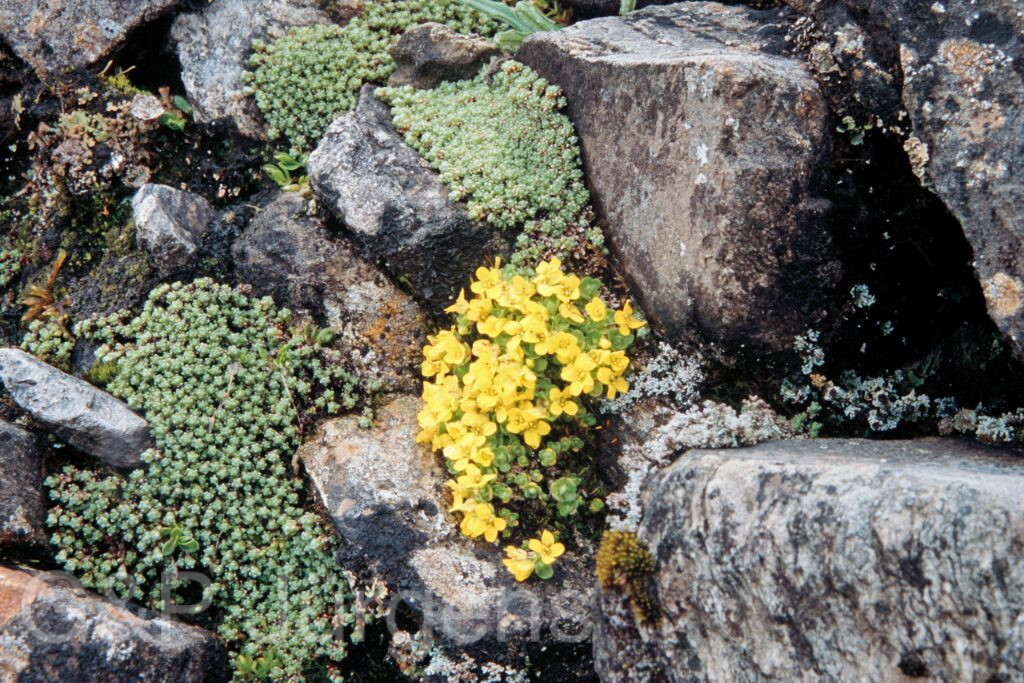
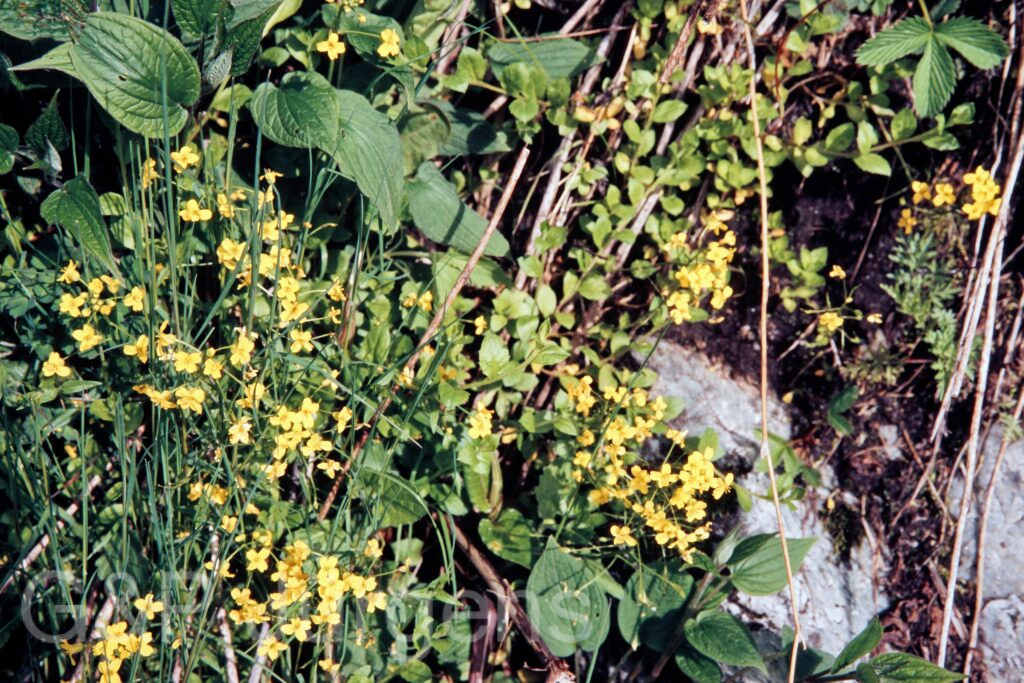
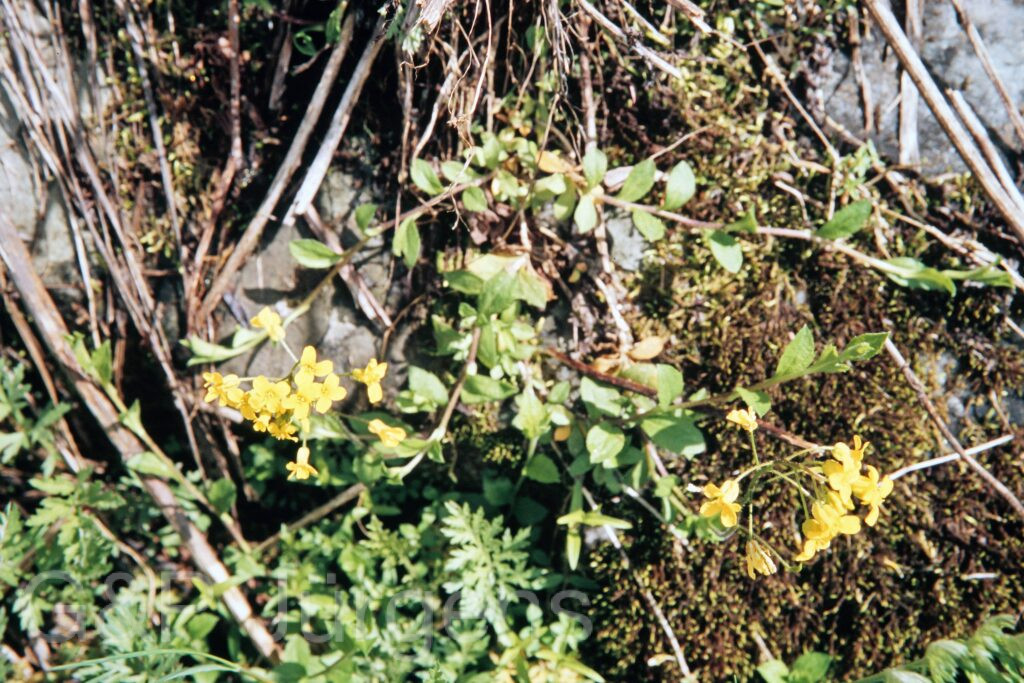
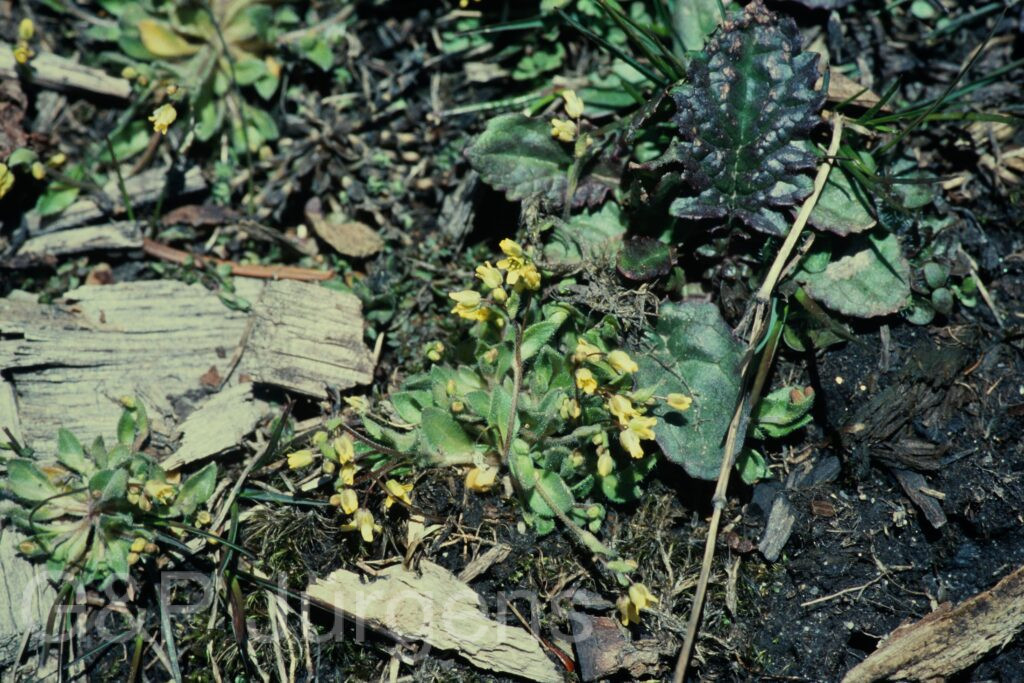
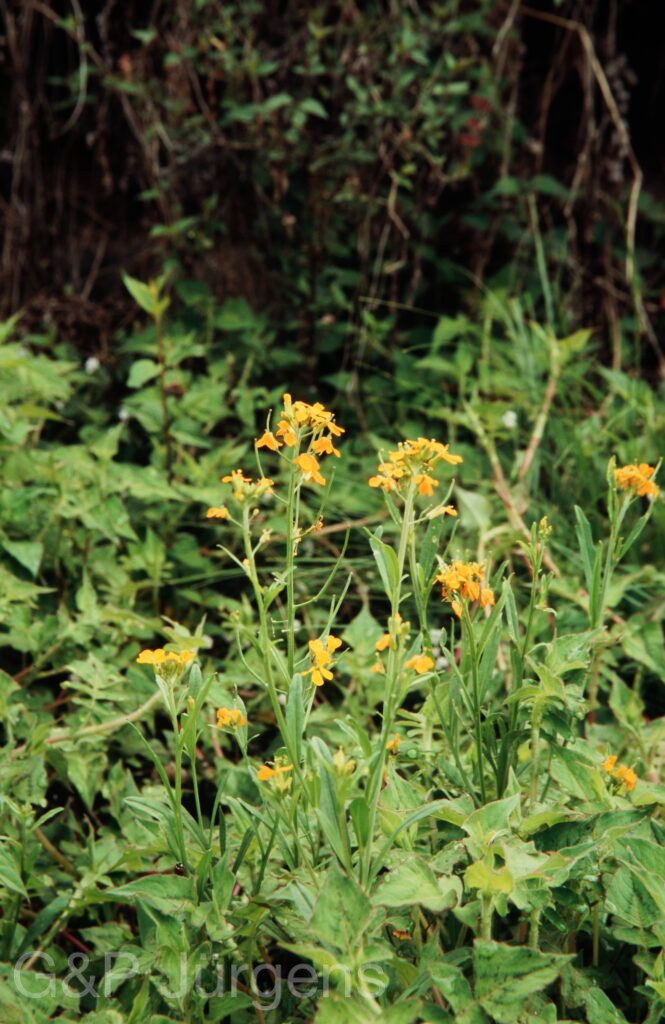
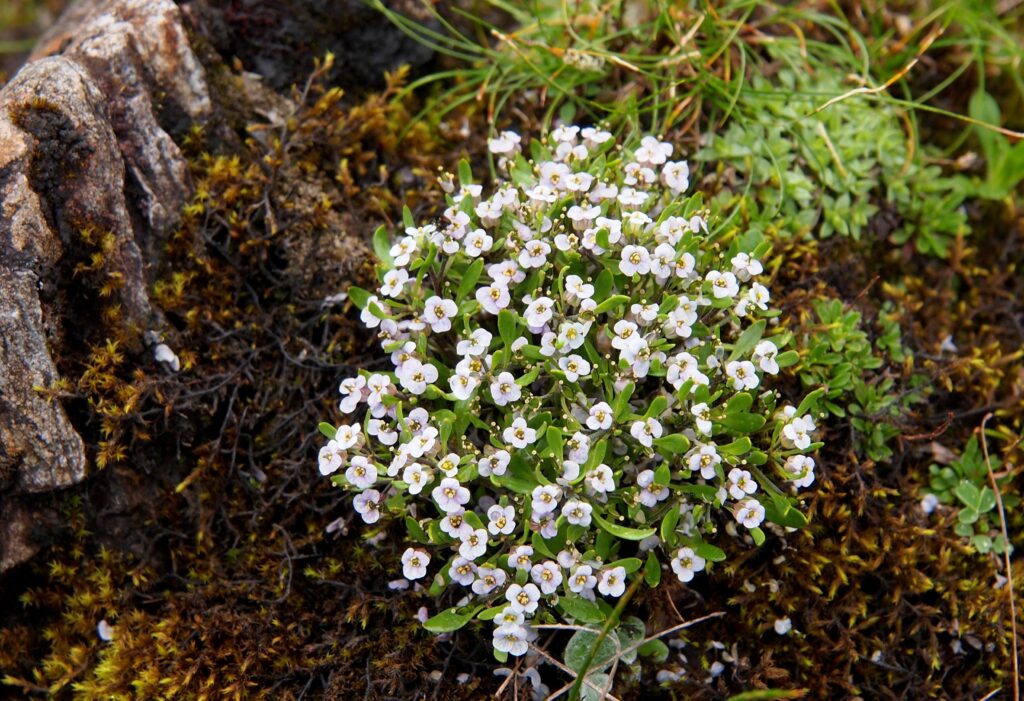
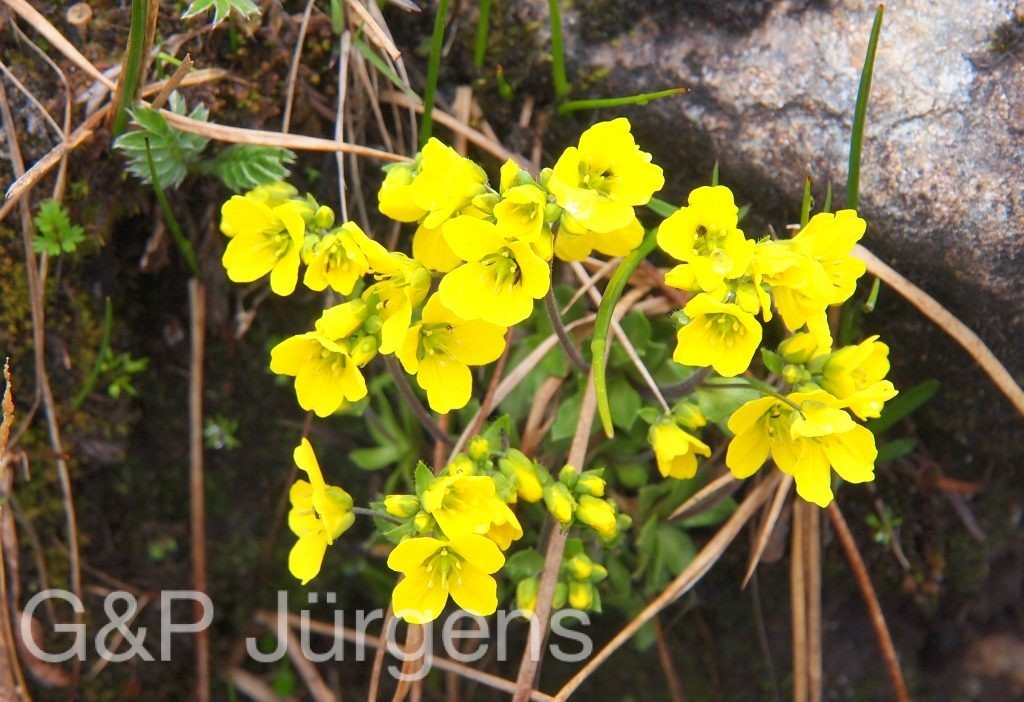
Draba bhutanica H.Hara is a narrowly distributed alpine crucifer recorded only from Bhutan and adjacent China (gbif_countries: BT, CN), with a mere 13 occurrences in GBIF, marking it as a rare Eastern Himalayan high-mountain endemic. It occupies the upper alpine zone, growing on open stony slopes, scree, gravelly ridges and rock crevices near the limits of vascular plant life. The image record from the Ludlow-Sherriff Trail at Warrtlang-La in Bhutan at 4400 m, in June, situates it in the early-summer high alpine, where short-statured perennials flower briefly after snowmelt on exposed, well-drained ground.
It is a small, low, tufted or cushion-forming perennial herb, typically clothed in the branched, stellate or forked trichomes characteristic of the genus, giving a greyish indumentum. The leaves are small, entire to slightly toothed, crowded into basal rosettes. The flowering scapes are short and bear few-flowered terminal racemes. The flowers conform to the cruciferous plan, with four sepals, four clawed yellow (or whitish) petals in a cross, and tetradynamous stamens. The fruit is a small silicula, ovate to elliptic and somewhat flattened, dehiscing by two valves to release several seeds.
Draba is a large, predominantly arctic-alpine genus, and its Sino-Himalayan species are taxonomically intricate; D. bhutanica has been associated with the segregate Chrysobraya, reflecting unsettled generic limits in the region. Its cushion habit and dense indumentum are classic adaptations to cold, high-radiation, desiccating alpine environments. Given its extremely restricted range and few records, the species is of considerable conservation and biogeographic interest as a Bhutanese alpine endemic.
Author: H.Hara · Sources: POWO (Kew), GBIF, Flora of China (Brassicaceae), Flora of Bhutan, Al-Shehbaz systematic studies of Himalayan Draba and Cruciferae