
(Hook.f. & Thomson) Jafri
Description
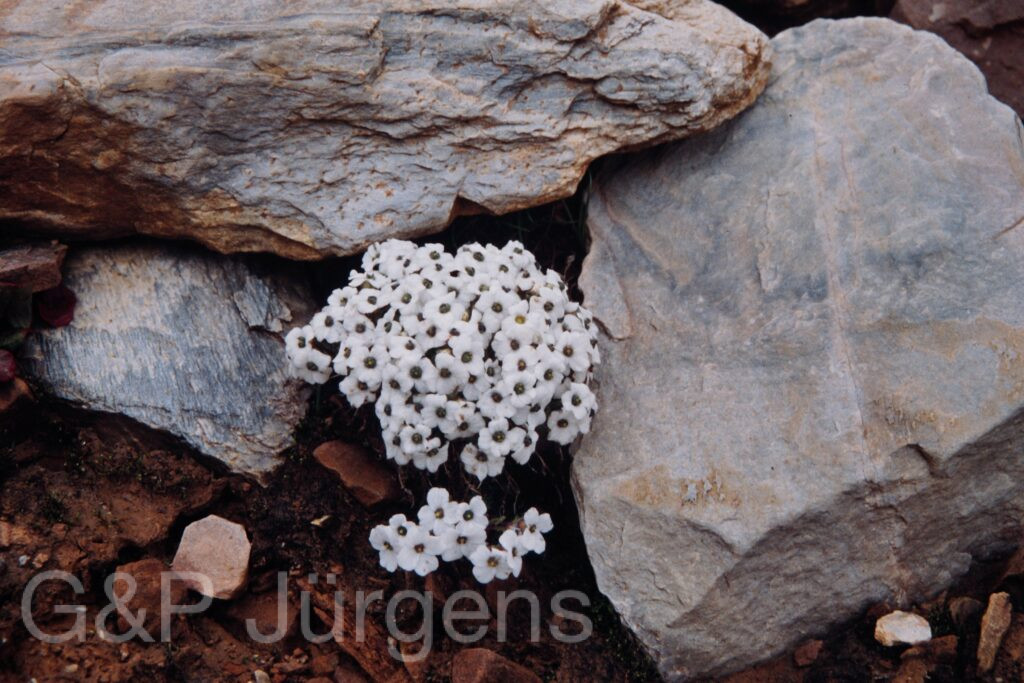
Aphragmus oxycarpus is a high-alpine crucifer of the Himalaya and adjacent Central Asian and Tibetan ranges, recorded from China, India, Nepal, Pakistan, Bhutan, Afghanistan, Tajikistan, Kyrgyzstan and Myanmar; the distant European, British, Japanese and North American records (some 540 in total) represent database artefacts rather than native populations. It is a cushion- to mat-forming plant of the upper alpine and subnival zones, colonising scree, moraine, gravelly slopes and the margins of late-lying snow. The documented stations are strikingly high: West Nepal's Kagmara-La at around 5000 m and Bhutan's Warrtlang-La at about 4400 m, both flowering in July during the brief alpine summer.
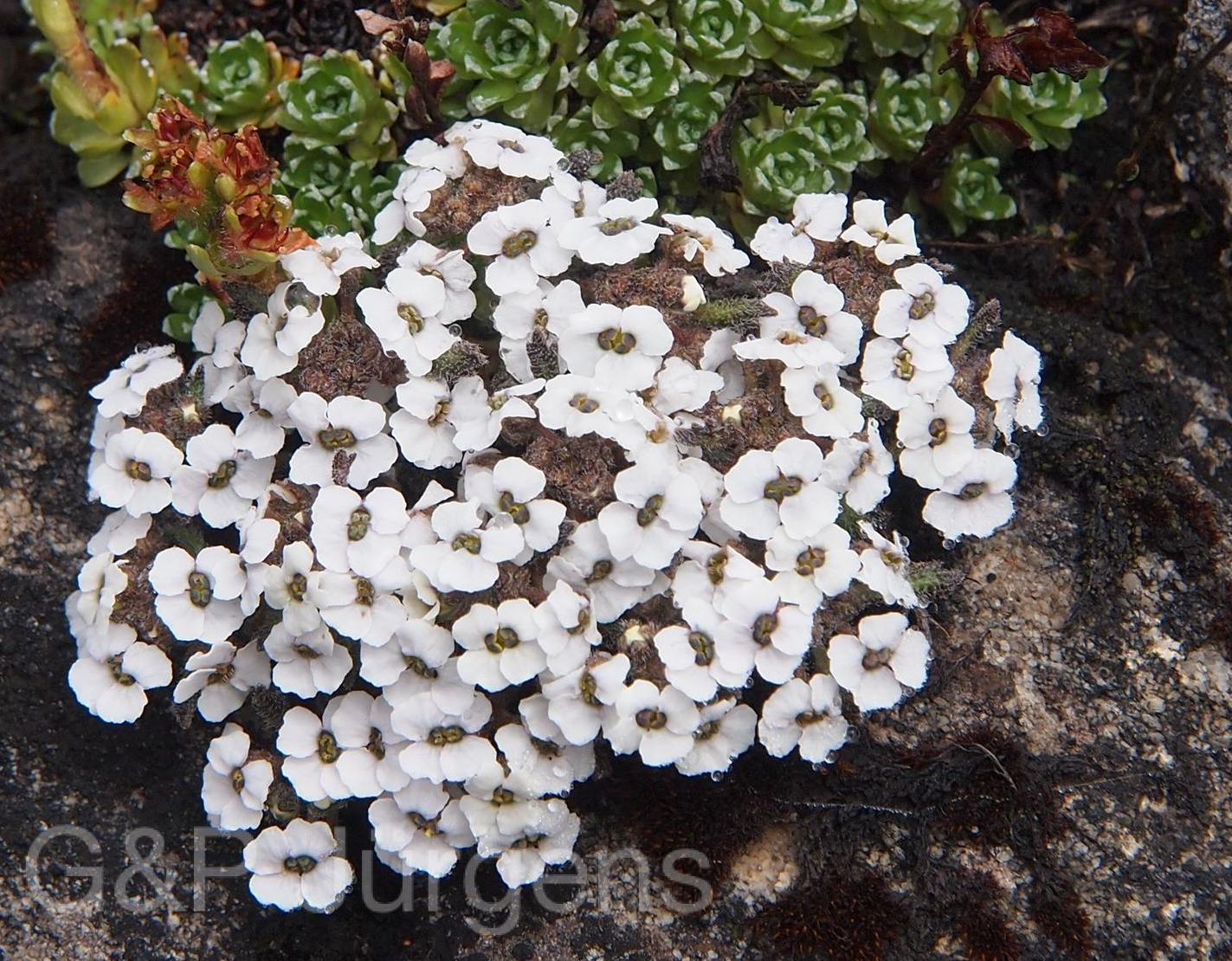
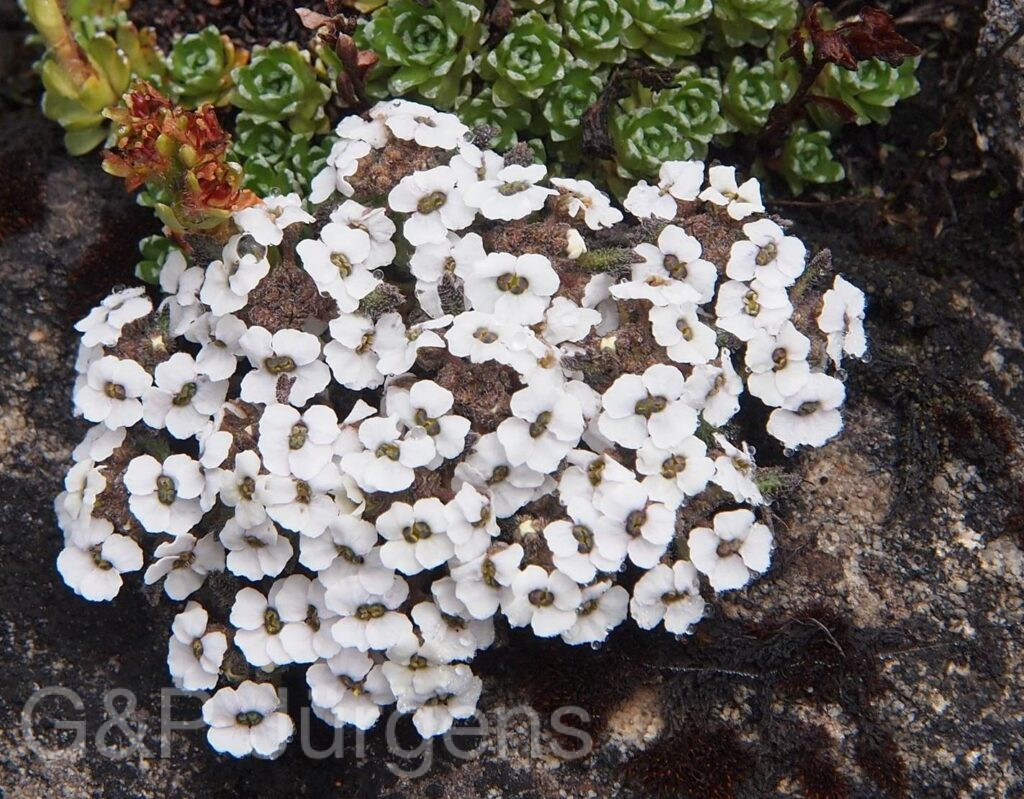
It is a small perennial herb with a stout, often multicipital caudex topped by rosettes of fleshy, spathulate to oblanceolate leaves with entire or slightly toothed margins. The flowering stems are short and few-leaved, bearing compact corymbose racemes of small white to pale lilac flowers with the four spreading petals and tetradynamous stamens characteristic of the family. The fruit, from which the epithet derives, is an ovoid to lanceolate, acute-tipped silicle that is somewhat flattened and few-seeded, the septum often reduced or perforate as is typical of the genus.
Aphragmus is a small genus of high-mountain Brassicaceae whose generic and species limits have been repeatedly revised through molecular work, and A. oxycarpus, originally described under Hooker and Thomson and later transferred by Jafri, exemplifies the dwarf, snow-bed habit of the group. Such plants endure extreme cold, intense radiation and a very short growing season, relying on the caudex for perennation. The species is widespread across remote high terrain and faces no recognised threat, though alpine cushion communities are increasingly cited as sensitive indicators of climate-driven upslope shifts.
Author: (Hook.f. & Thomson) Jafri · Sources: POWO (Kew), GBIF, Flora of Pakistan, Flora of China, Flora of Bhutan, Al-Shehbaz revisionary studies of Aphragmus (Brassicaceae)