
(Hook. f. & Thomson) Al-Shehbaz
Description
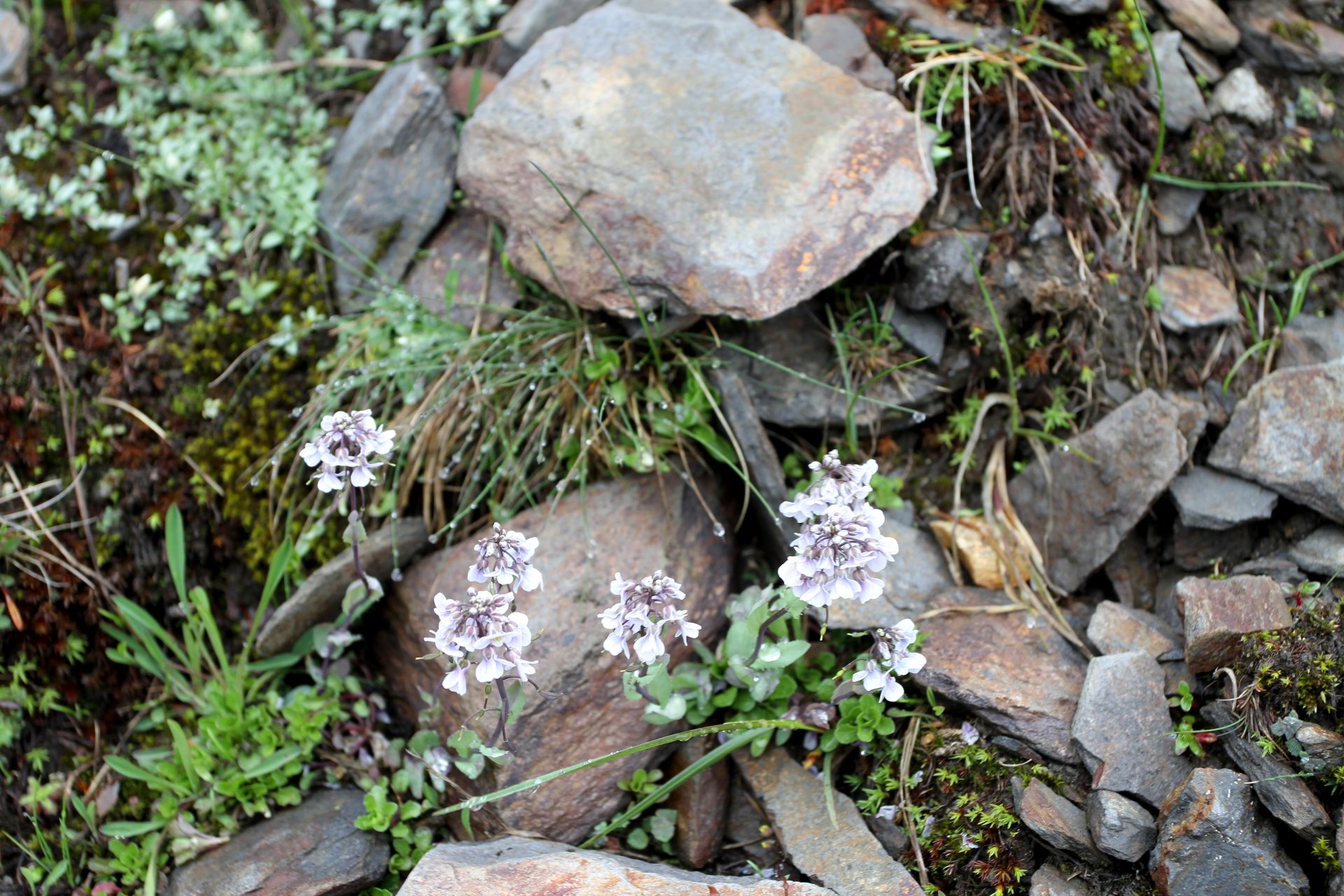
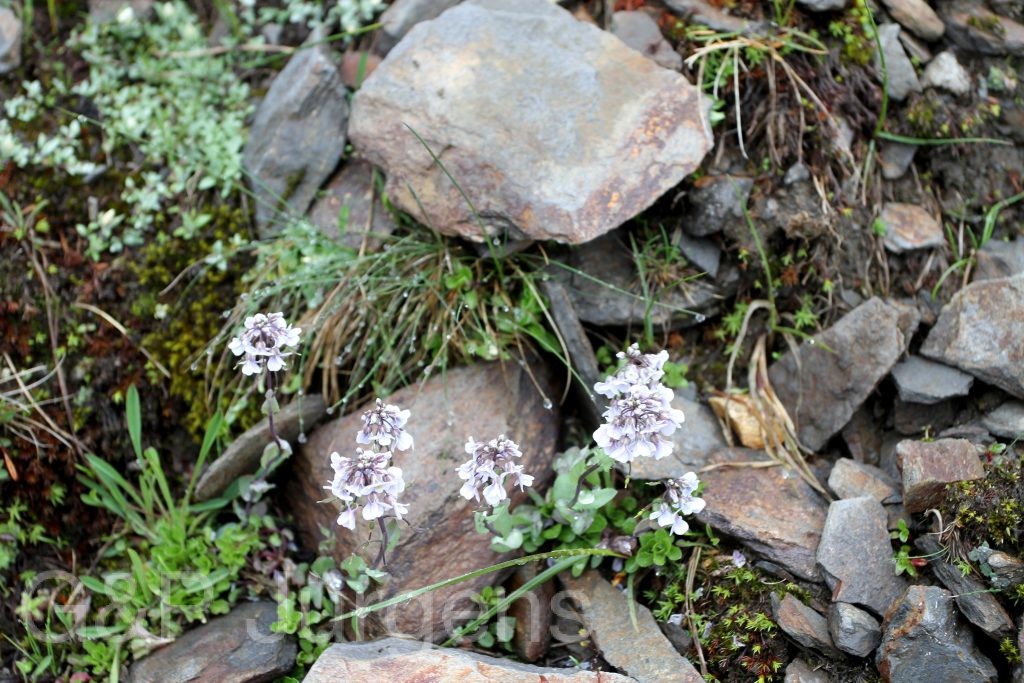
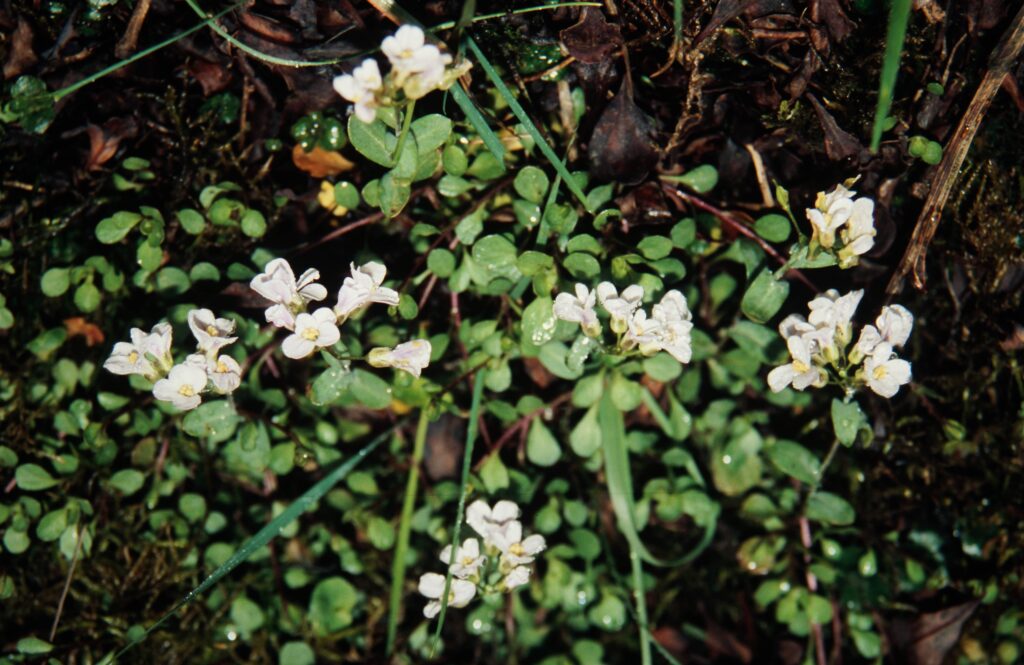
Noccaea cochlearioides (Hook. f. & Thomson) Al-Shehbaz is a high-alpine crucifer of the Himalaya and adjacent Central Asia, recorded from India, Nepal, Pakistan, Bhutan, Afghanistan, southern China and the Russian mountains, with about 93 GBIF occurrences reflecting its restricted, high-elevation niche. It grows on stony alpine slopes, screes, moraines and rock crevices, characteristically between about 3500 and 4800 m. The cited gatherings from Jule-Tso in Bhutan at around 4200 m in June and from Molley in West Bengal at 3630 m in May exemplify its presence in cold, open subnival habitats where the snow-free season is brief.
The species is a small, glabrous, somewhat fleshy perennial herb with a branched caudex bearing rosettes of entire to obscurely toothed, often spathulate basal leaves; the cauline leaves are sessile and amplexicaul with auriculate-sagittate bases. The flowers are arranged in a short corymbose raceme and have four white to pale lilac petals in the typical cruciform arrangement. The fruit is a flattened, obcordate to obovate silicula, narrowly winged and notched at the apex, containing few smooth seeds in each locule.
The taxon was transferred from Thlaspi to the segregate genus Noccaea by Al-Shehbaz in his molecular-based recircumscription of the Thlaspi alliance (Brassicaceae, tribe Coluteocarpeae). Its auriculate cauline leaves and winged, notched silicles are diagnostic. A narrow alpine endemic of restricted range, it is uncommon but not assessed as threatened.
Author: (Hook. f. & Thomson) Al-Shehbaz · Sources: POWO (Kew), GBIF, Flora of Bhutan, Flora of China, Flora of Pakistan, Al-Shehbaz revisions of Thlaspi and allied Brassicaceae