
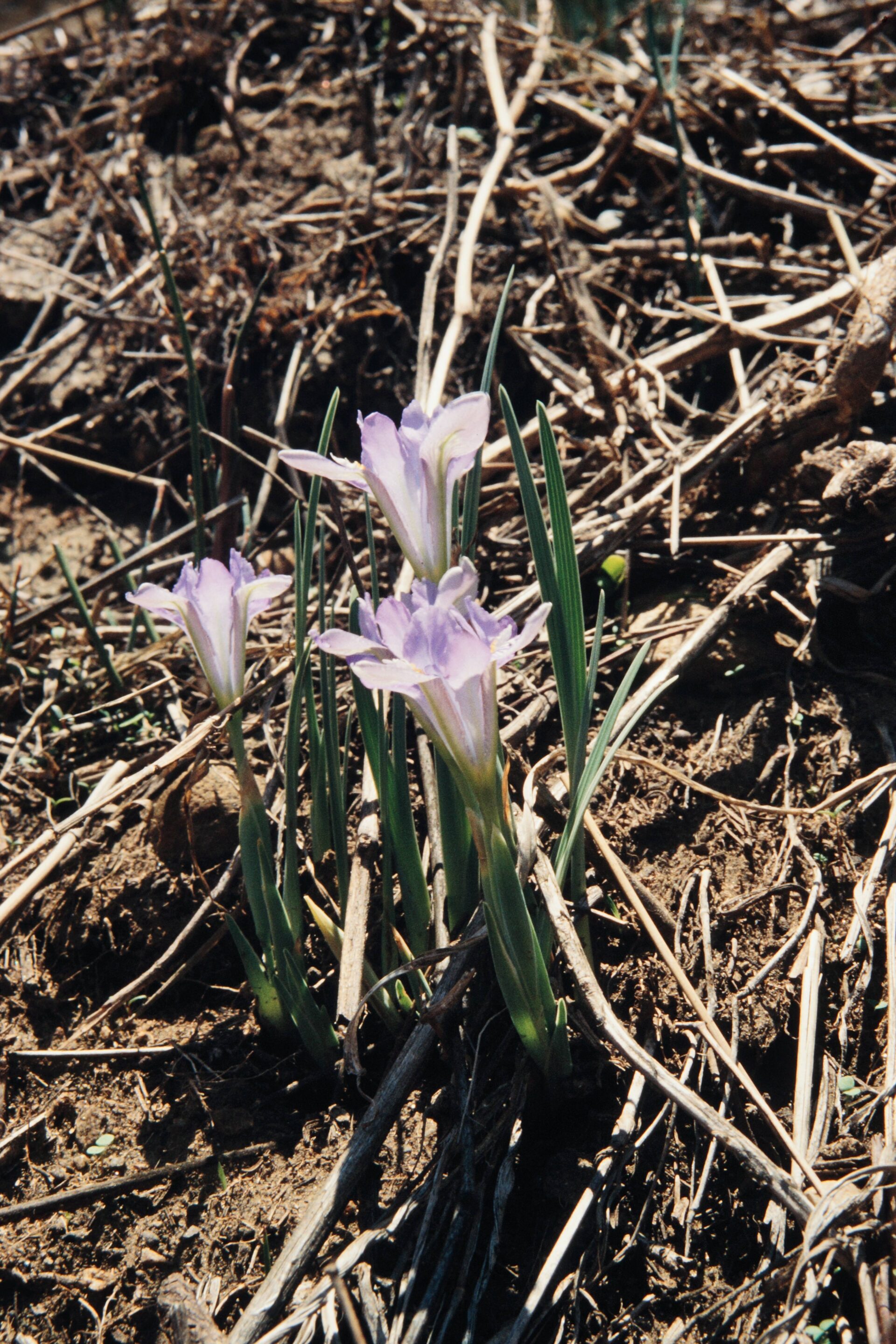
Wall.
Description
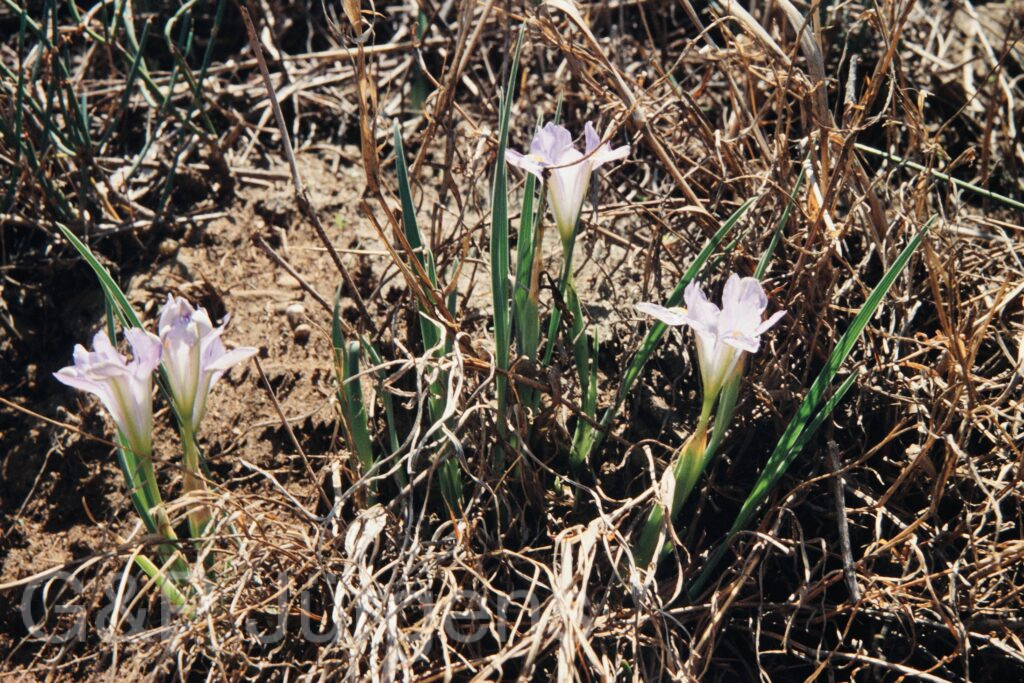
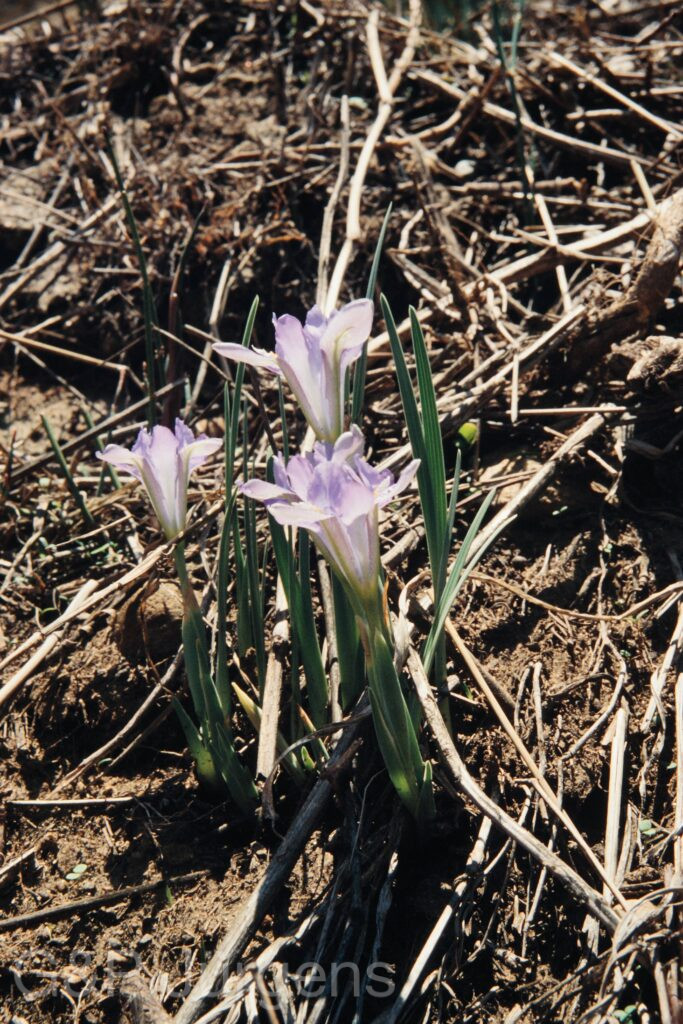
Iris decora Wall. is a tuberous-rooted iris of the Himalaya and the mountains of southwestern China. GBIF data confirm its presence in Nepal, India, Bhutan, Pakistan, China and Myanmar, a range extending the length of the Himalayan arc into Yunnan. It grows on open grassy hillsides, stony slopes and among scrub in the temperate zone, characteristically between about 1,800 and 3,300 m. The plant recorded near Jumla in west Nepal at 2,500 m, flowering in June, typifies its early-summer flowering on sunny montane meadows.
The species arises from a cluster of slender, fleshy, fascicled roots rather than a true rhizome, and produces narrow, grass-like, ribbed leaves that develop fully after flowering. The flowering stem is short, bearing one to several flowers in succession, each subtended by membranous spathe valves. The flowers are lilac to pale violet-blue, the falls bearing a conspicuous yellow or white crest along the central ridge and the standards smaller and erect. The capsule is oblong-cylindric with a beaked apex, splitting to release numerous seeds.
Iris decora belongs to the subgenus Nepalensis (section Pseudoregelia in older treatments), a small group of Sino-Himalayan irises characterised by fascicled fleshy roots and crested falls. It is grown by alpine-plant enthusiasts and is the type of its species group. Although locally common in suitable grassland, it is vulnerable to overgrazing and habitat conversion in the more accessible parts of its range.
Author: Wall. · Sources: POWO (Kew), GBIF, Flora of China Vol. 24, Flora of Bhutan Vol. 3, Mathew: The Iris (1989)