Tamura
Description
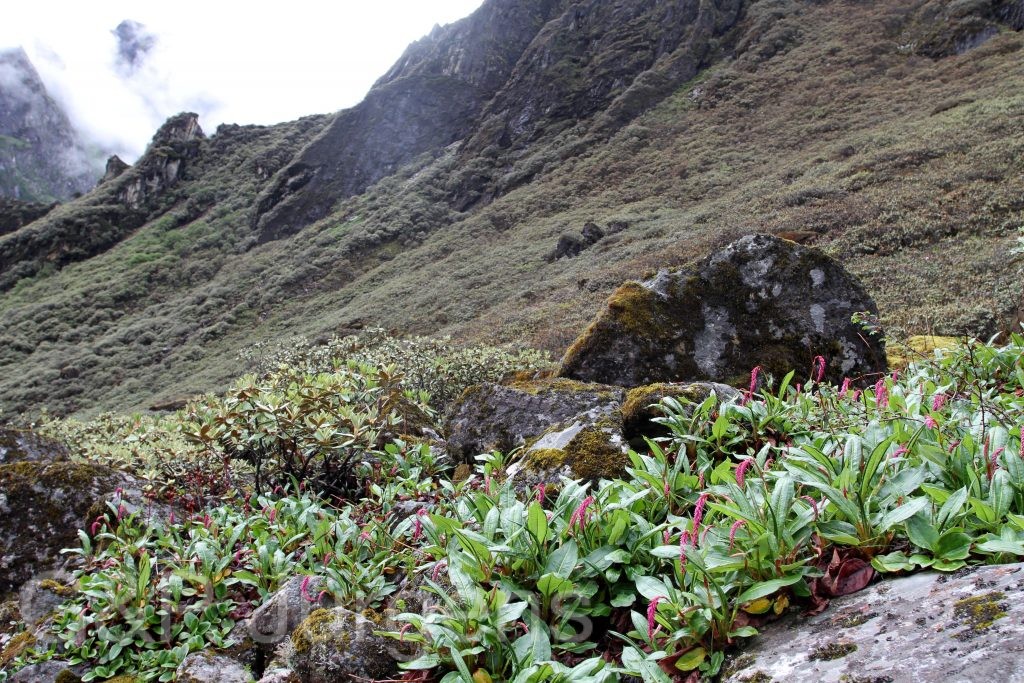
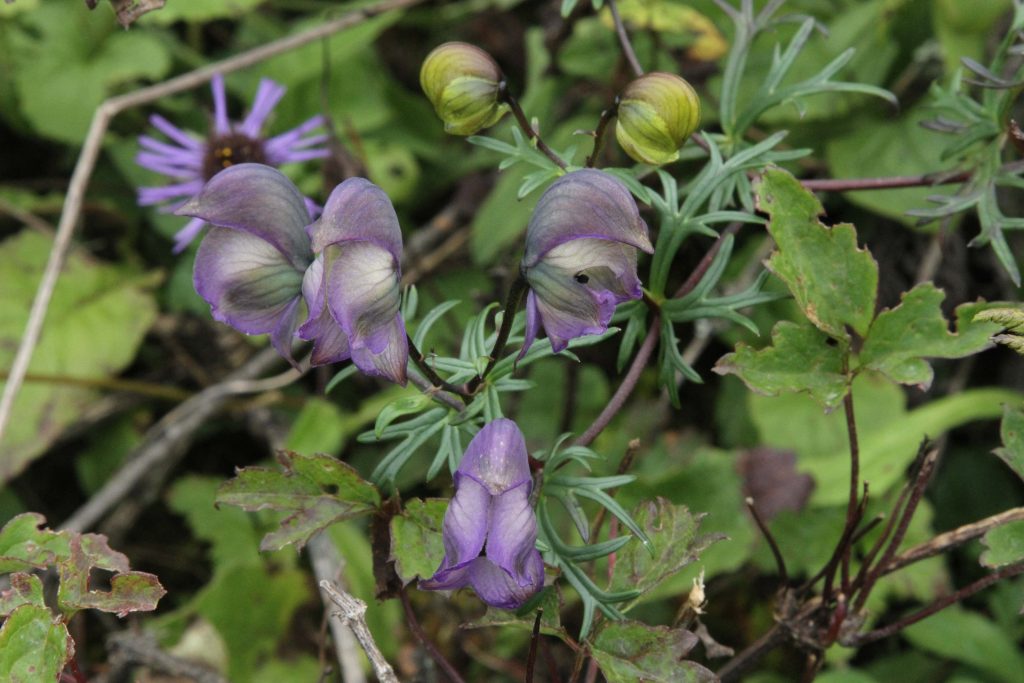
Aconitum nakaoi is a high-alpine monkshood distributed across the eastern Himalaya and the south-eastern Tibetan plateau margin, recorded from Bhutan, China (Xizang and adjacent Yunnan), Nepal and northern India. Its modest documentary record of around 21 georeferenced occurrences reflects both its restricted range and the difficulty of botanizing the steep upper screes and meadows it favours. The species inhabits open alpine turf, the margins of dwarf-shrub thickets and damp stony slopes, typically between about 3,800 and 4,500 m. The photographed plant from Shele-La in Bhutan at 4,100 m, flowering in September, is characteristic of its late-season anthesis in the cool, monsoon-influenced uplands where snowmelt and persistent humidity sustain the short growing season.
The plant is a perennial herb arising from small paired tuberous roots, with slender, often decumbent to ascending stems. The leaves are palmately divided into narrow, deeply incised segments, glabrous to thinly pubescent, the basal leaves long-petiolate and the cauline ones progressively reduced. The inflorescence is a lax few-flowered raceme bearing the zygomorphic, helmet-shaped flowers typical of the genus; the upper sepal forms a high, narrowly conical to galeate hood enclosing two long-clawed nectariferous petals, the colour ranging from violet-blue to dull purplish. The fruit is a cluster of several erect follicles releasing winged seeds.
Like all Aconitum, the species contains diterpenoid alkaloids and is highly toxic. It belongs to the taxonomically intricate Himalayan radiation of section Aconitum, where narrow endemics and clinal variation complicate species delimitation. Though not formally assessed as threatened, its narrow altitudinal band makes it sensitive to upward shifts of the treeline and to grazing pressure on alpine pastures.
Author: Tamura · Sources: POWO (Kew), Flora of China Vol. 6, Flora of Bhutan Vol. 1, GBIF, Tamura: Ranunculaceae in Die natürlichen Pflanzenfamilien