
Schott
Description
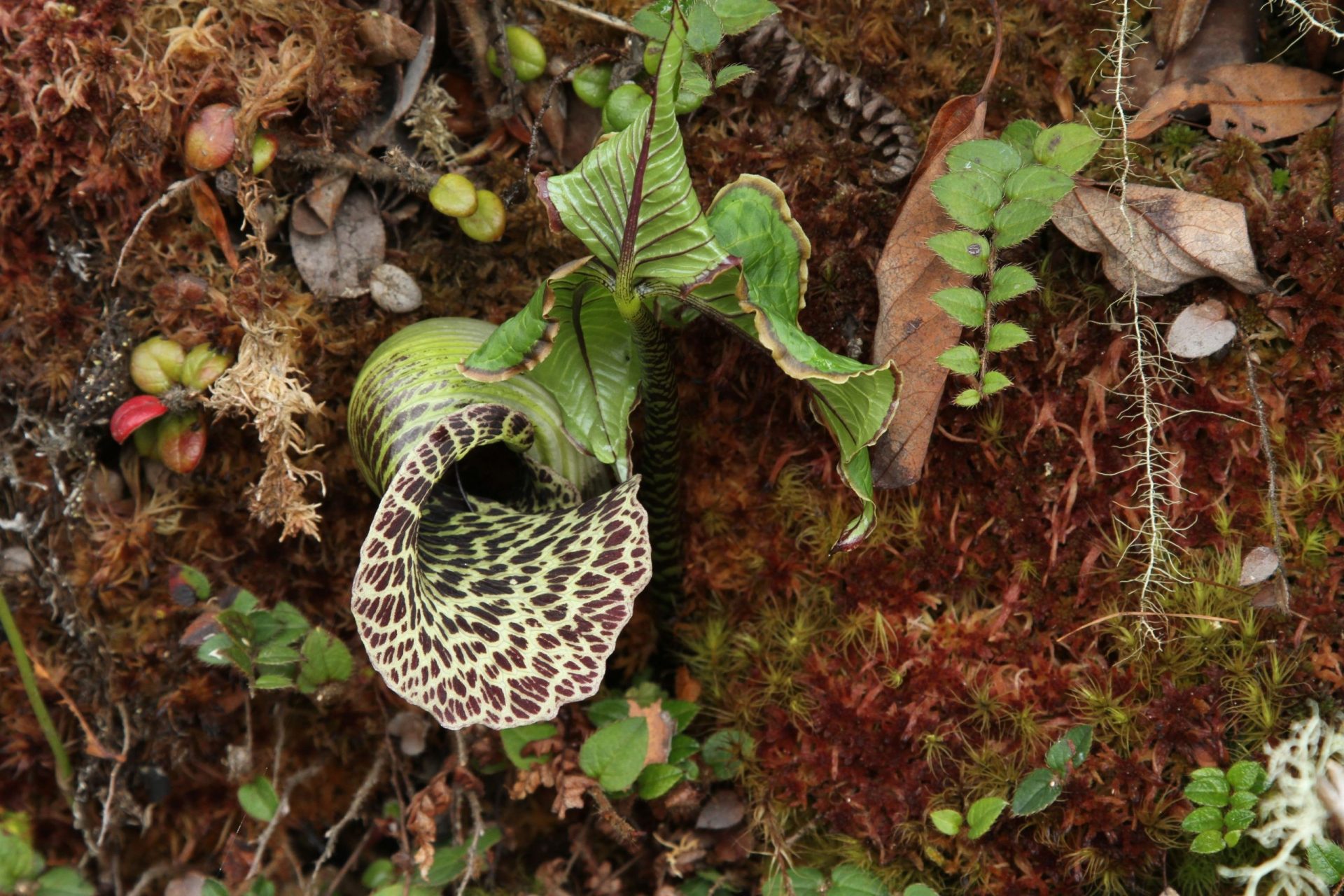
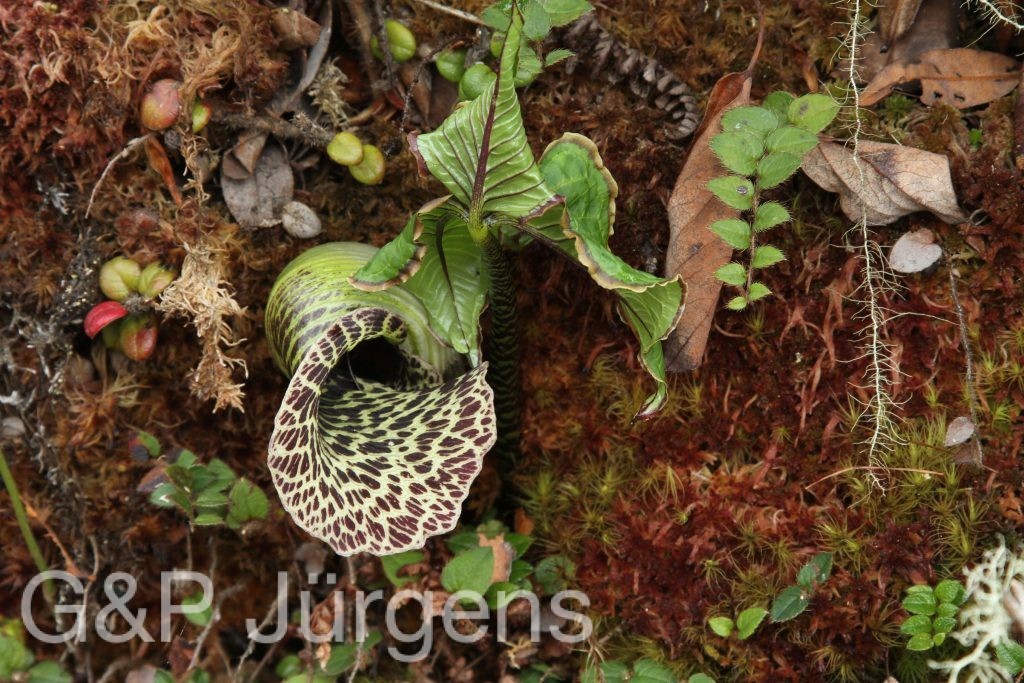
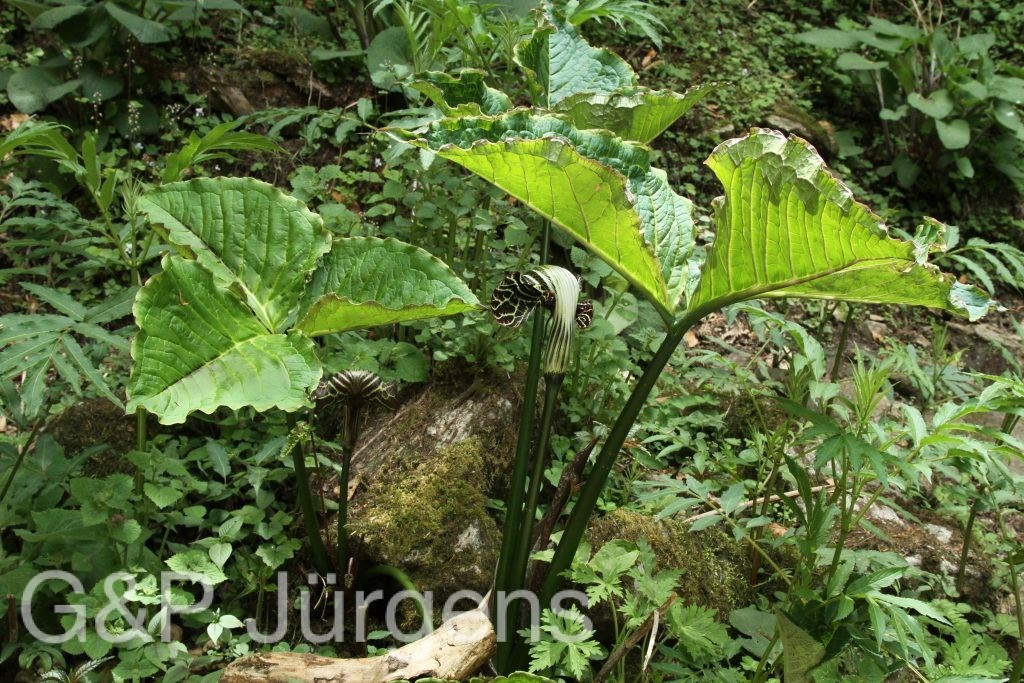
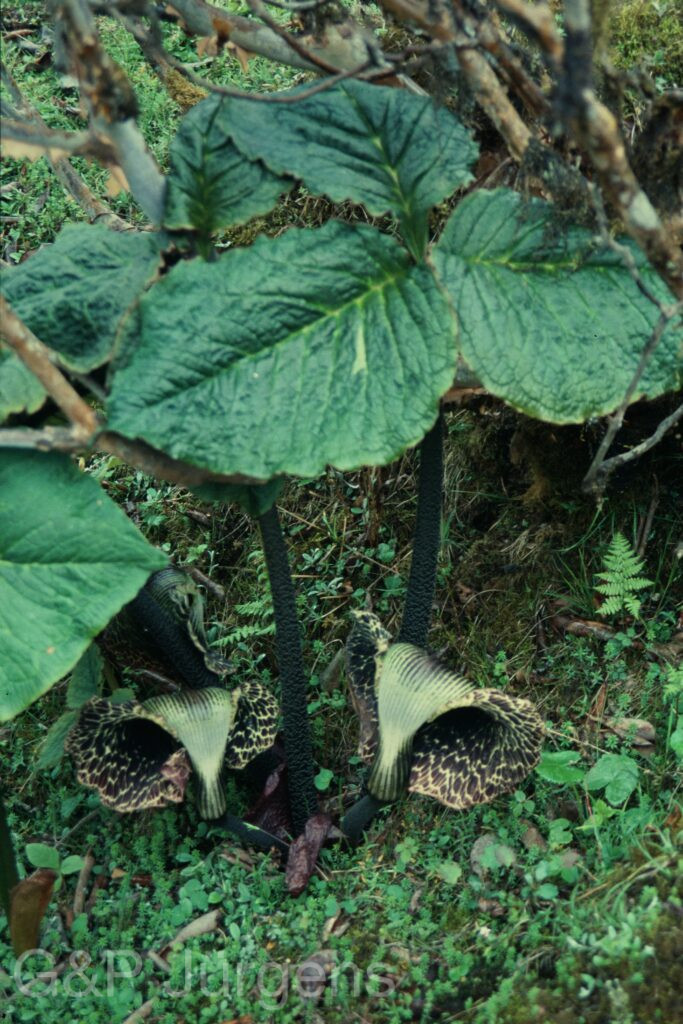
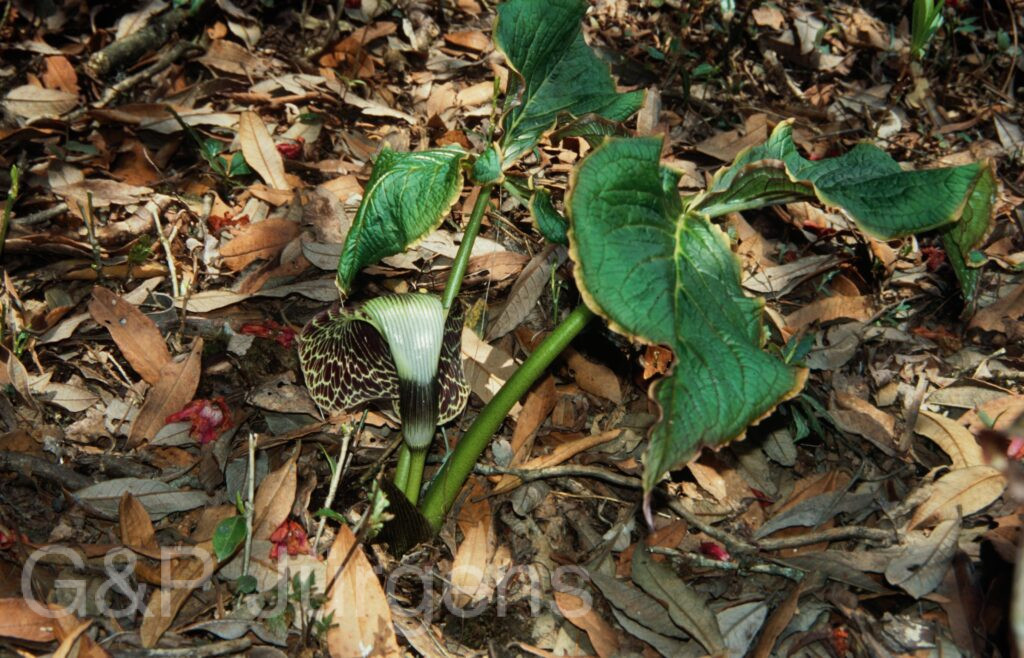
Arisaema griffithii is an eastern Himalayan tuberous geophyte distributed through Nepal, Sikkim and Darjeeling in India, Bhutan, and into adjacent southern China (Xizang, Yunnan) and northern Myanmar, with georeferenced records also from Bangladesh. It is a plant of the cool temperate zone, growing in shaded moist forest, shrubberies, forest clearings and grassy slopes broadly between 2400 and 3600 m. The images document its altitudinal span, from Bhutan's Tumching-La at 3100 m and Thimphu at 2450 m flowering in May, to Lachung in Sikkim at 3200 m and Gupka Pokhari in east Nepal at 3050 m in April.
The plant arises from a depressed tuber and typically bears two trifoliolate leaves with broadly ovate to rhombic, acuminate leaflets, the lateral pair often oblique. The species is celebrated for its remarkable inflorescence: the spathe is large and deeply purple, conspicuously net-veined with pale reticulation, with the tube broadly funnel-shaped and the lamina arched and downturned, its margins recurved. The spadix appendix is exserted and elongated into a long, pendent whip-like flagellum. The plants are dioecious, with small unisexual flowers crowded at the base of the spadix, and the female inflorescence develops a cluster of red berries at maturity.
Within Araceae, A. griffithii belongs to section Sinarisaema and is one of the most distinctive members of the genus, named for William Griffith. Its drooping, intricately veined spathe lures fungus-gnat and small fly visitors into the inflorescence. Prized among specialist gardeners, it remains locally frequent and is not considered globally threatened, though vulnerable to habitat loss and tuber collection.
Author: Schott · Sources: POWO (Kew), GBIF, Flora of Bhutan, Flora of China, Gusman & Gusman 'The Genus Arisaema: A Monograph for Botanists and Nature Lovers'