
Blume
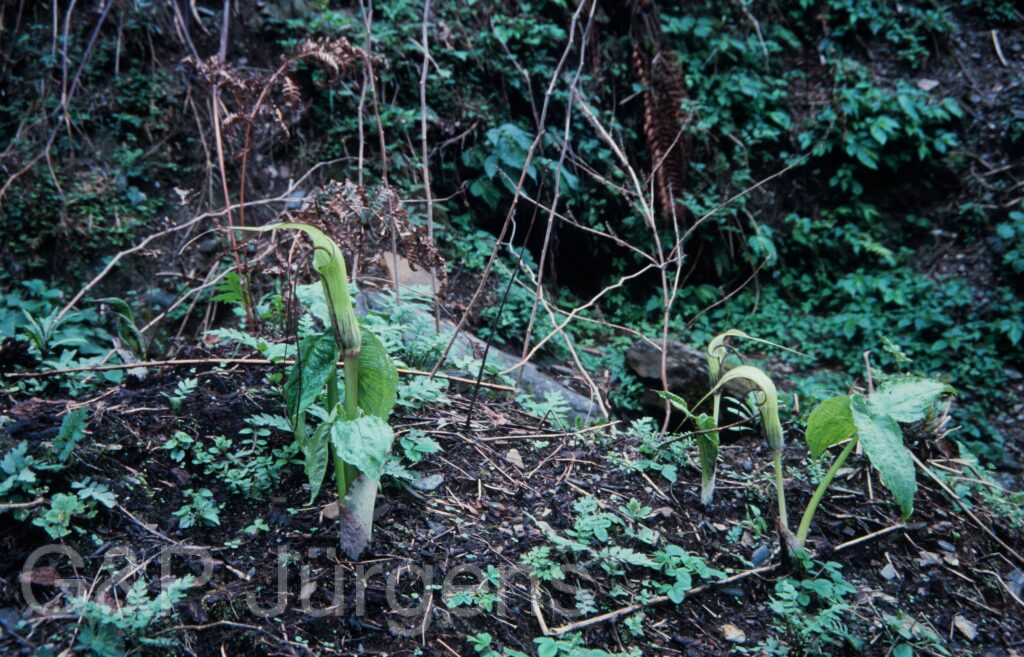
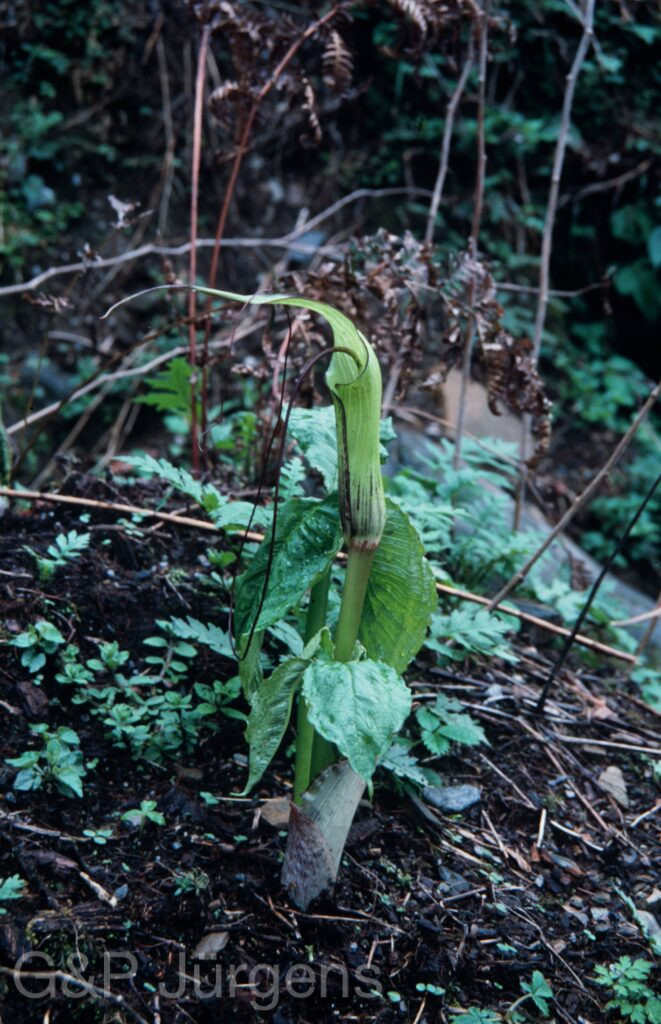
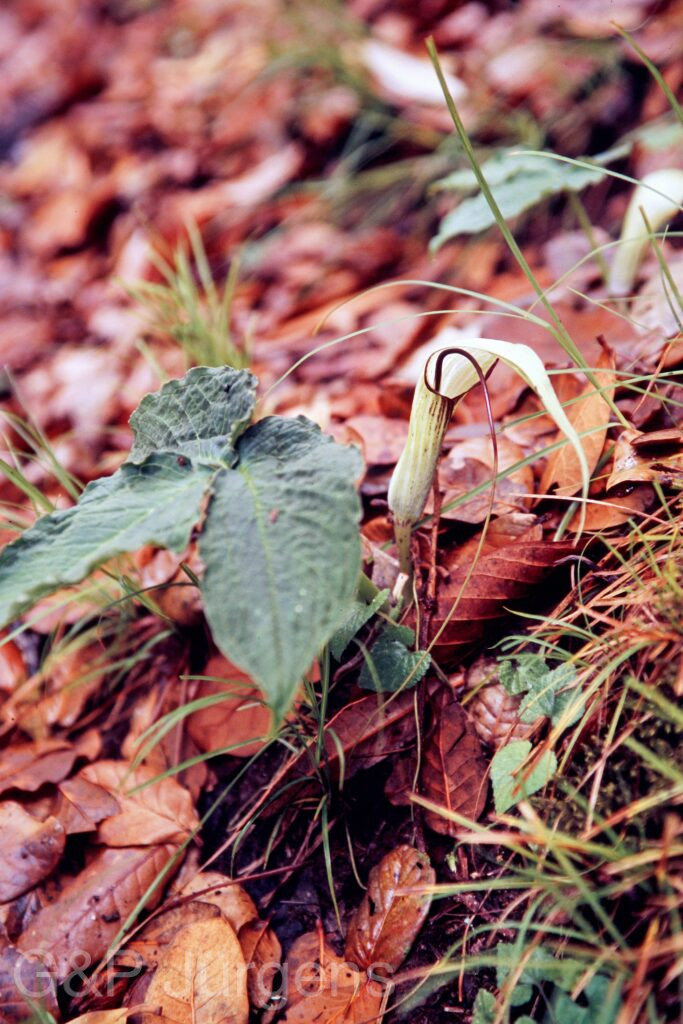
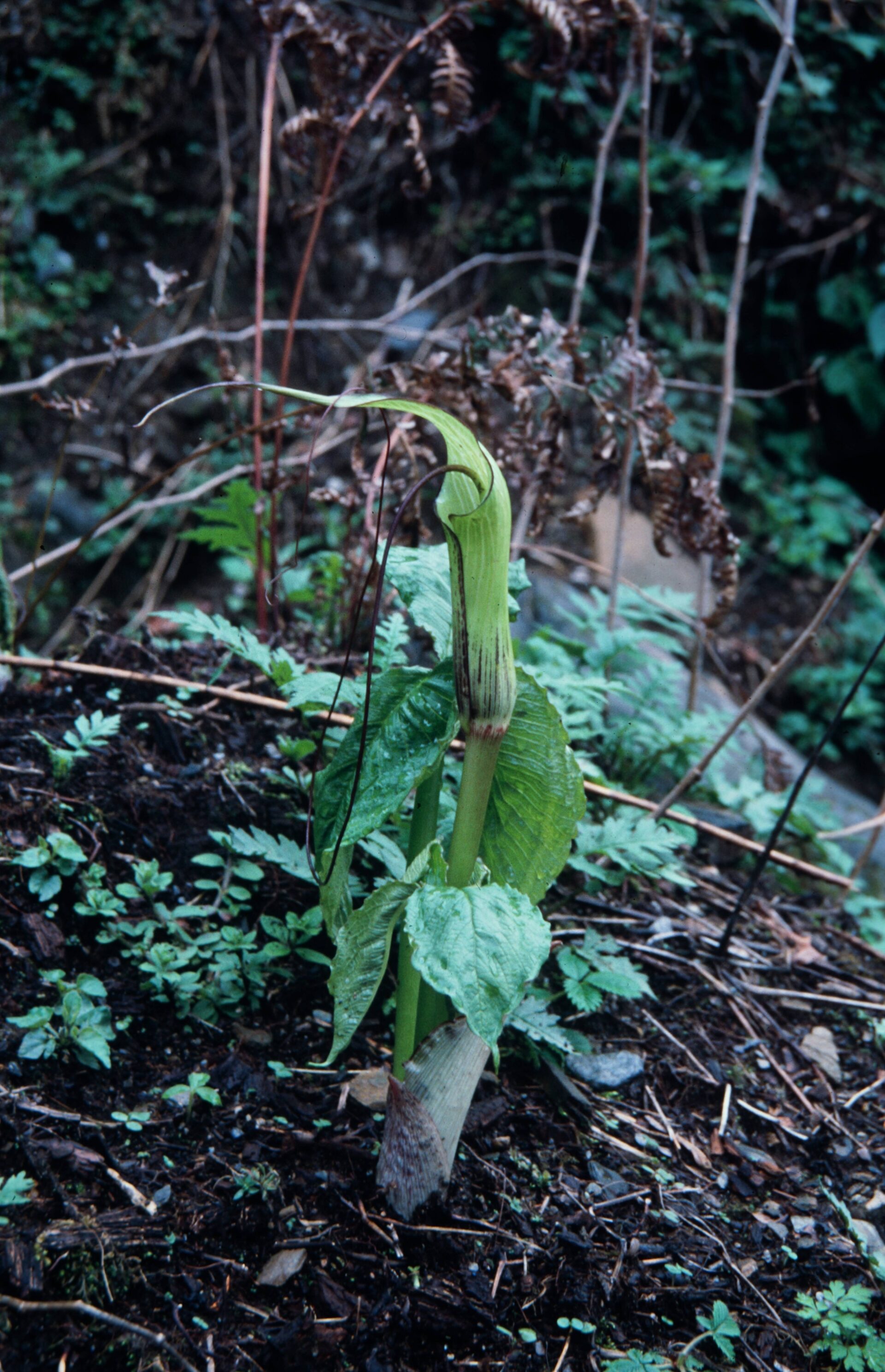
Description
Arisaema intermedium is a Himalayan tuberous aroid distributed along the temperate forest belt of the central and eastern Himalaya, recorded by GBIF from India, Nepal, China, Bhutan and Pakistan across some 118 georeferenced collections. It is a plant of moist, humus-rich woodland floors, shady banks, forest clearings and the margins of rhododendron, oak and conifer forest, where it emerges with the onset of the pre-monsoon and monsoon seasons. Its typical elevational band lies between roughly 2,400 and 3,200 m, consistent with the documented occurrences from Niuli Kharka in the Nepalese district of Gorkha at about 2,600 m in May and from Belag Khal in Garhwal, India, at around 2,800 m in June. The flowering coincides with the early growing season before the leaf is fully expanded.
The species grows from a subglobose underground tuber and produces a solitary leaf divided into three leaflets, the central leaflet broadly ovate to rhombic and the laterals obliquely ovate, the blade often somewhat undulate and acuminate. The inflorescence is a typical aroid spathe-and-spadix structure, the pseudostem and peduncle arising together; the spathe tube is greenish and the limb arched, frequently striped purplish and white with a long-acuminate apex. The diagnostic feature of the genus is the spadix appendage, which in this species is elongate and gradually tapering, projecting forward beyond the spathe mouth. As in other Arisaema the plants are paradioecious, smaller individuals bearing male flowers and larger ones female; pollinated female spadices develop into a dense club of fleshy red berries at maturity.
Arisaema intermedium belongs to a notoriously variable complex within section Sinarisaema, and its delimitation against allied taxa such as A. propinquum has long occupied aroid systematists. The genus exemplifies size-dependent sex change (sequential hermaphroditism keyed to tuber reserves), a reproductive strategy of considerable interest to evolutionary ecologists, with pollination effected by fungus-gnats and small flies trapped within the spathe. Though not formally assessed as threatened and locally frequent within its range, the species shares the general vulnerability of forest-floor Himalayan herbs to habitat degradation and the harvesting pressures that affect tuberous aroids.
Author: Blume · Sources: POWO (Kew), GBIF, Flora of China Vol. 23, Flora of Bhutan Vol. 3, Flora of Nepal, Flora of Pakistan, Gusman & Gusman: The Genus Arisaema, A Monograph for Botanists and Nature Lovers