
Blume
Description
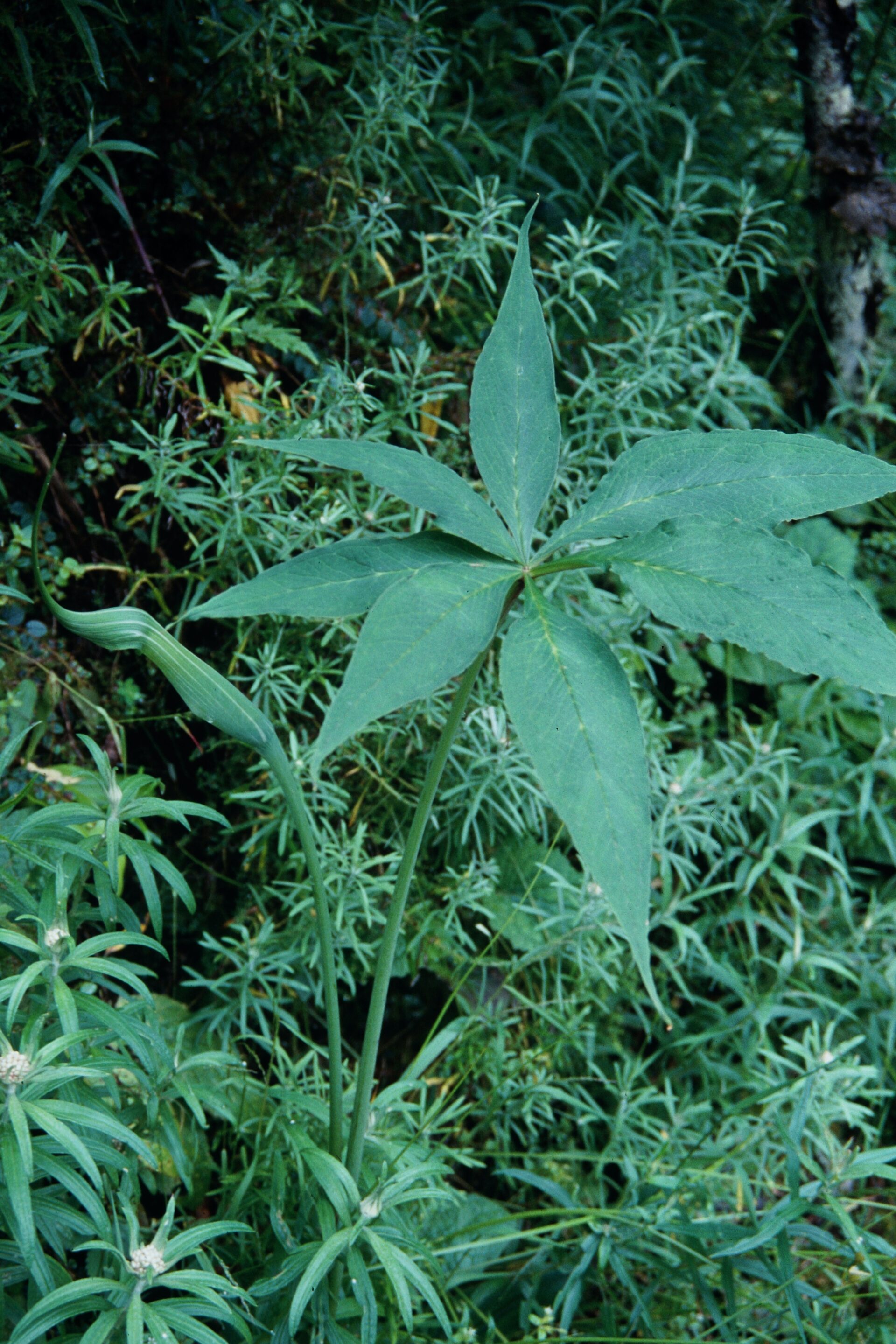
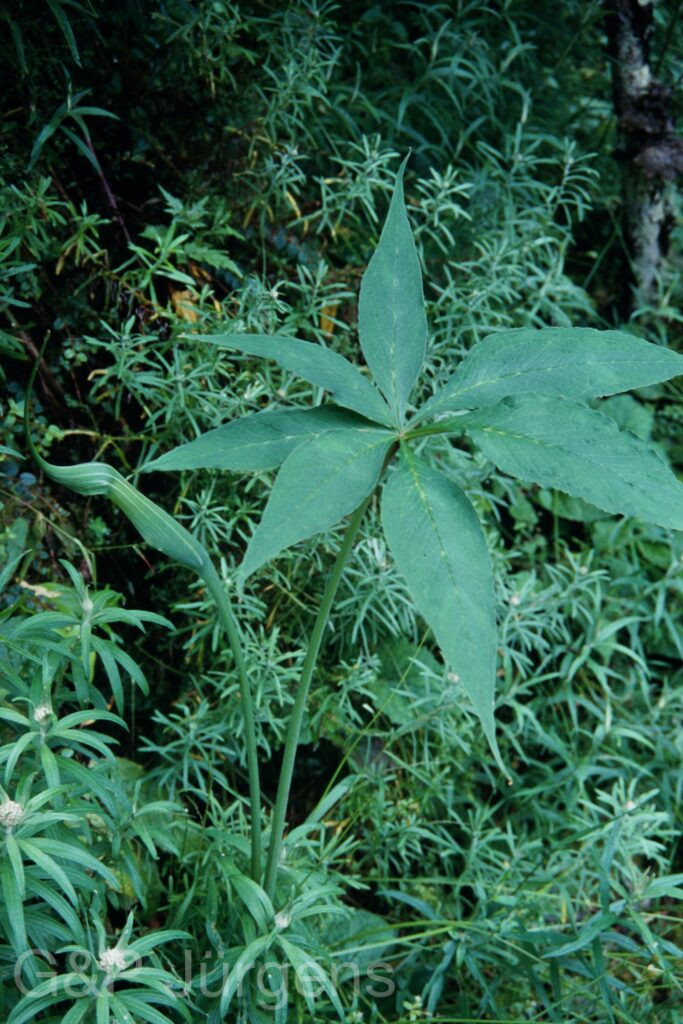
Arisaema jacquemontii is a slender alpine cobra-lily widely distributed across the Himalaya, ranging from Afghanistan and Pakistan eastward through northern India, Nepal and Bhutan into south-western China. GBIF records some 568 occurrences, the core lying in India, Nepal, China, Pakistan and Bhutan, with additional cultivated or vouchered material reported from Britain, Belgium and Canada. The species inhabits subalpine and alpine meadows, open forest margins, shrubberies and moist grassy slopes, generally between about 2400 and 4500 m. The plant shown was photographed in Sikkim near Dzongri at 3920 m in August, a high pasture setting typical of its summer flowering on the eastern Himalayan ridges.
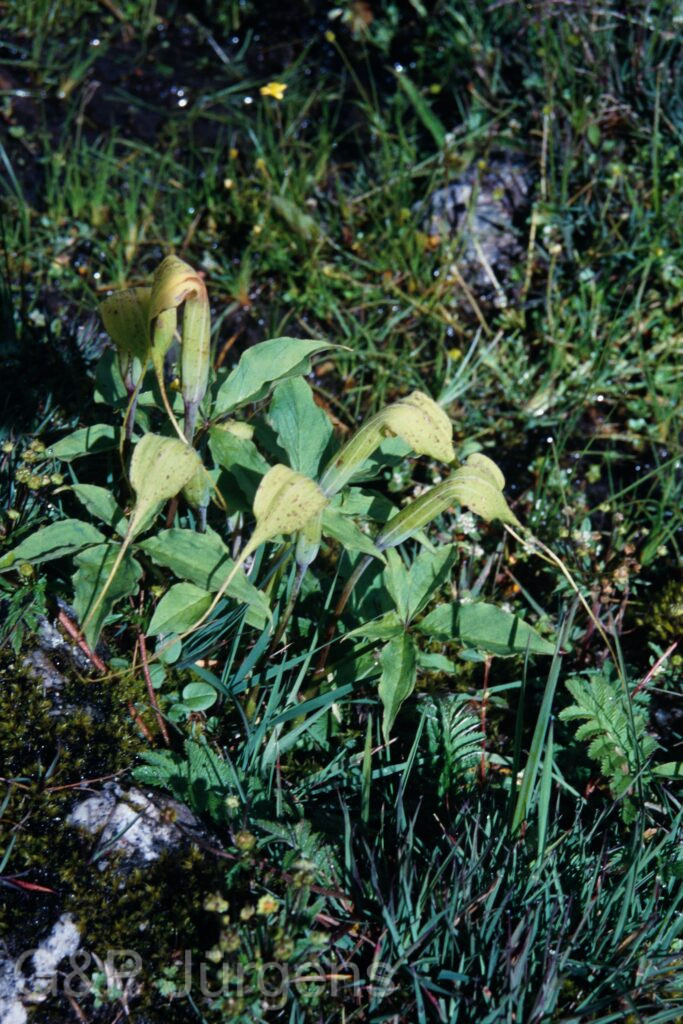
The plant grows from a depressed, subglobose tuber and produces usually a single pedately divided leaf with five to eleven elliptic-lanceolate, acuminate leaflets borne on a green, sometimes faintly mottled petiole sheathed at the base. The inflorescence is a spathe with a green tube and an erect to slightly arched, narrowly acuminate limb striped green and white. The spadix bears a slender, cylindrical, greenish appendix shorter than the spathe; the species is dioecious, with sterile or fertile zones of minute unisexual flowers concealed within the tube. The fruit is a dense club-shaped infructescence of orange-red berries each containing few seeds.
Arisaema, the largest genus of the Araceae in temperate Asia, exhibits remarkable sexual lability, individual tubers shifting between male and female expression with size and resource status. A. jacquemontii belongs to the section characterised by green, unmottled spathes and is among the most widespread and hardy Himalayan species, frequently grown by alpine gardeners. It is not considered threatened, though high-altitude collection and grazing locally affect populations.
Author: Blume · Sources: POWO (Kew), GBIF, Flora of China, Flora of Bhutan, The Genus Arisaema: A Monograph for Botanists and Nature Lovers, Aroids: Plants of the Arum Family