
(C.B.Clarke) C.Norman
Description
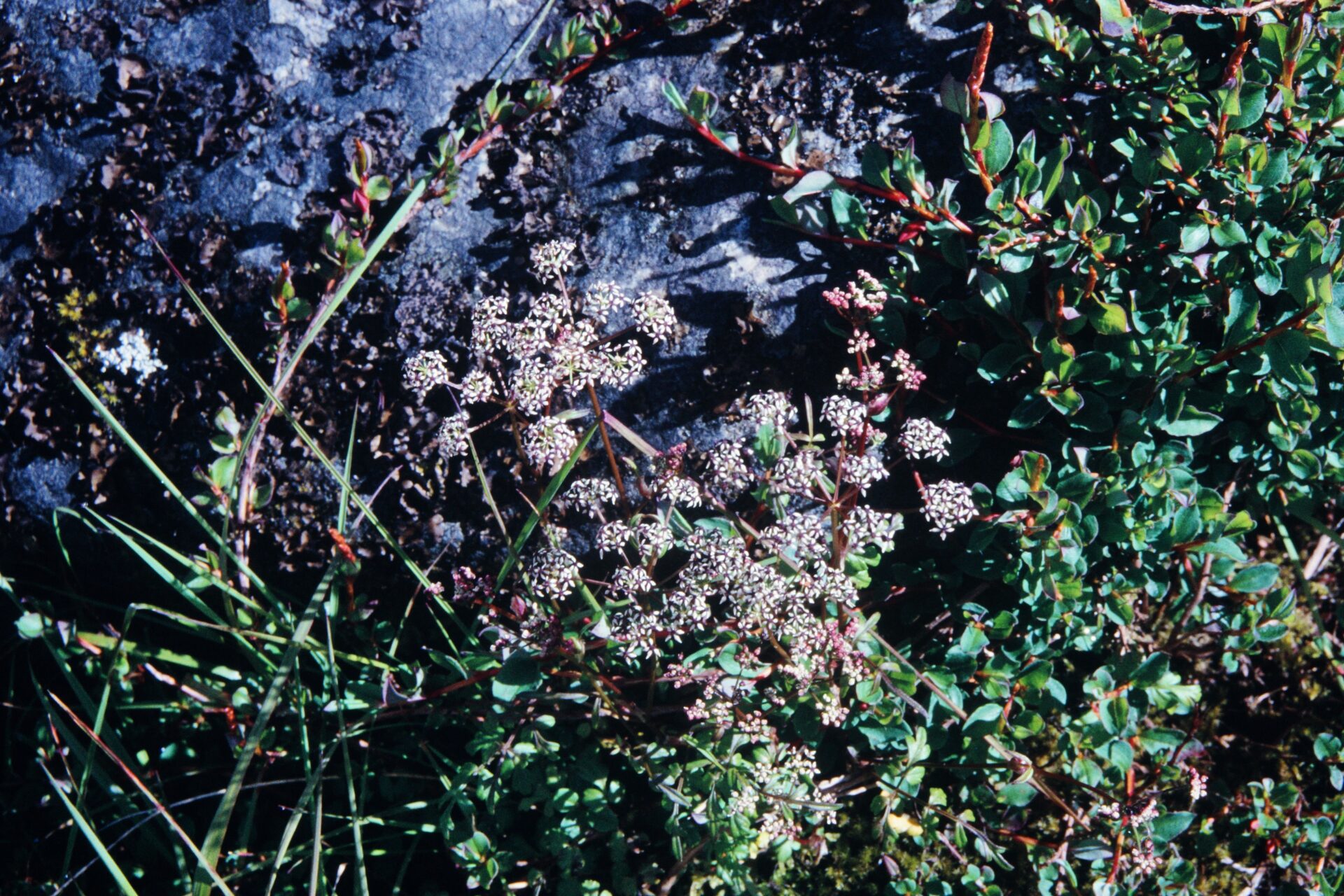
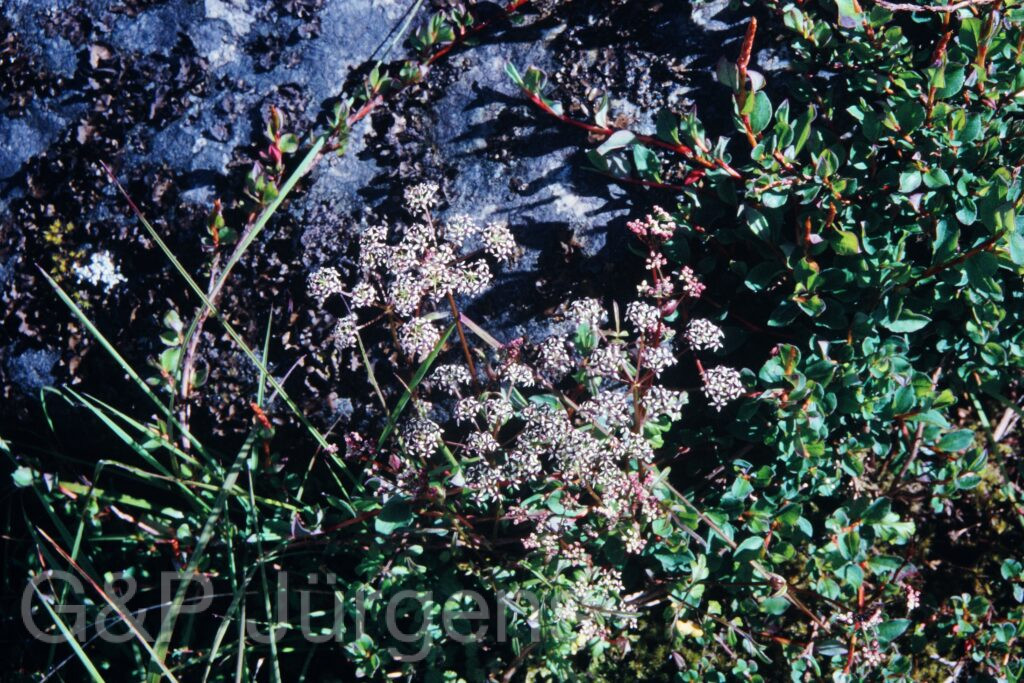
Cortiella hookeri is a cushion-forming umbellifer of the high Himalaya and Tibetan Plateau, distributed through Nepal, China, India and Bhutan; GBIF records 115 occurrences, concentrated in the alpine zone of this region. It grows on open stony slopes, gravelly alpine turf, screes and exposed ridges, typically above 4000 m where few flowering plants persist. The illustrated material was gathered in Sikkim at Dzongri at about 4100 m in August, a classic high-alpine station where the species flowers late in the short growing season among rock and short turf swept by monsoon cloud.
The plant is a low, compact perennial herb forming a flattened rosette or cushion from a stout, often woody taproot crowned by the fibrous remains of old leaf bases. Leaves are crowded, petiolate and pinnately to ternately dissected into small, firm, often crowded segments adapted to cold and wind. The inflorescence is a condensed, sessile or short-stalked compound umbel held close to the rosette, subtended by conspicuous bracts and bracteoles; the small flowers are white to pinkish, five-merous, with inflexed petals and an inferior ovary. The fruit is a dorsally somewhat compressed schizocarp splitting into two ribbed mericarps, the ribs and vittae providing key diagnostic characters.
Cortiella is a small genus of the Sino-Himalayan alpine flora, segregated within the carrot family on fruit anatomy and habit, with C. hookeri commemorating J. D. Hooker. POWO and GBIF accept the name. Its cushion habit and high-elevation niche exemplify the convergent growth forms that allow Apiaceae to colonise the harshest Tibetan alpine ground.
Author: (C.B.Clarke) C.Norman · Sources: POWO (Kew), GBIF, Flora of China, Flora of Bhutan, Annotated Checklist of the Flowering Plants of Nepal, Umbelliferae of the Sino-Himalaya (Apiaceae monograph)