
Wall.
Description
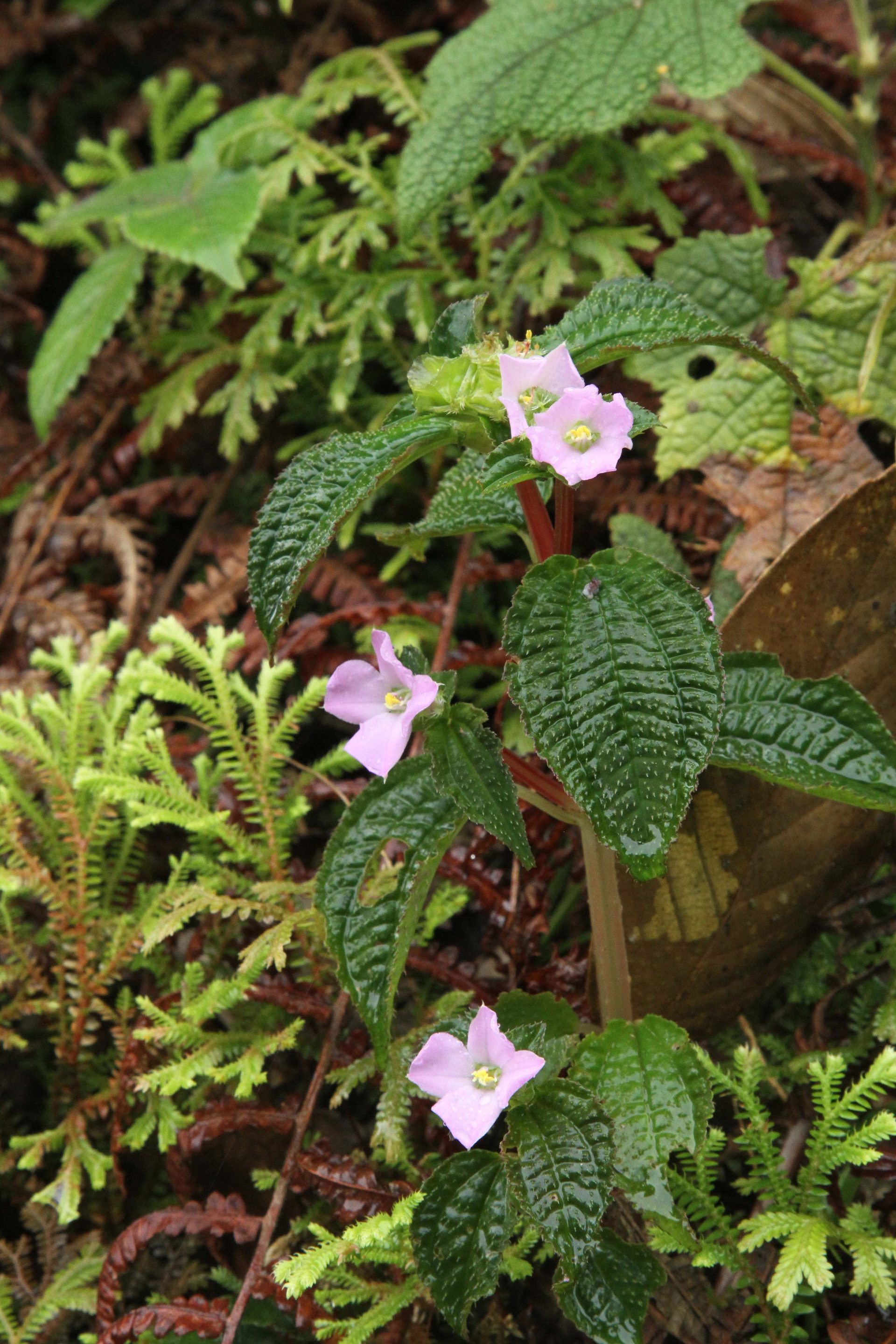
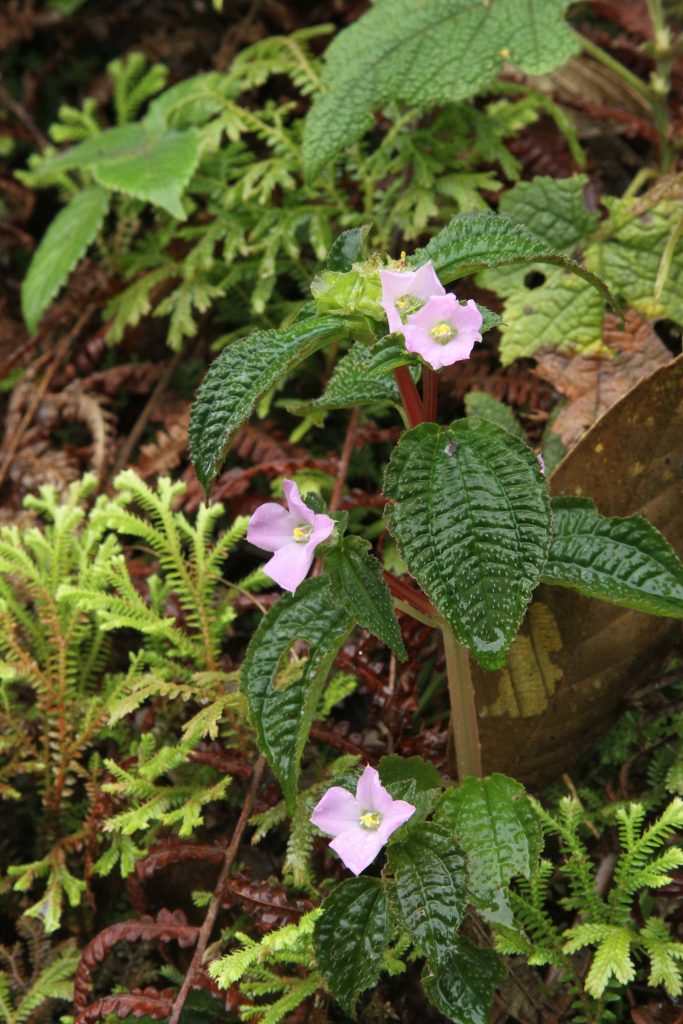
Sarcopyramis nepalensis Wall. is a small, delicate herb of the Melastomataceae distributed through the eastern Himalaya and Southeast Asia. Its several hundred records range across Nepal, northeast India, Bhutan, southern China, Taiwan, Myanmar, Vietnam, Malaysia, Indonesia and the Philippines. The species is a denizen of cool, shaded, perpetually moist habitats, growing on damp humus-rich banks, mossy rocks, ravine sides and the forest floor of evergreen broad-leaved and subtropical forests. It generally occupies low to mid elevations, and the plant photographed near Galephu in southern Bhutan at 900 m in September, late in the monsoon when these herbs flower, is typical of its preference for humid, dripping microsites.
The plant is a small, succulent, low annual or short-lived perennial with weak, ascending, four-angled stems that often root at the lower nodes. The leaves are opposite, membranous, broadly ovate to elliptic, with the three to five arcuate, longitudinally curved veins characteristic of the family, the margins finely toothed and sometimes reddish beneath. The flowers are borne singly or in few-flowered terminal cymes; they have a distinctive urceolate, four-angled hypanthium with prominent crested or winged angles, four pink to pale rose-purple petals, and eight stamens with conspicuously appendaged connectives. The fruit is a small, four-lobed, cup-shaped capsule crowned by the persistent calyx.
Sarcopyramis is a small Asian genus closely allied to Bredia and Phyllagathis within tribe Sonerileae, and the species has at times been treated as a variable complex with several segregate taxa and varieties. Its dependence on humid, shaded forest microhabitats makes it a useful indicator of intact, moisture-rich forest understorey. While not currently regarded as threatened across its broad range, local populations are sensitive to deforestation and the drying of streamside and seepage habitats.
Author: Wall. · Sources: POWO (Kew), GBIF, Flora of China Vol. 13, Flora of Bhutan Vol. 2, Renner et al.: Melastomataceae systematics