
Wall. ex Hook.f. & Thomson
Description
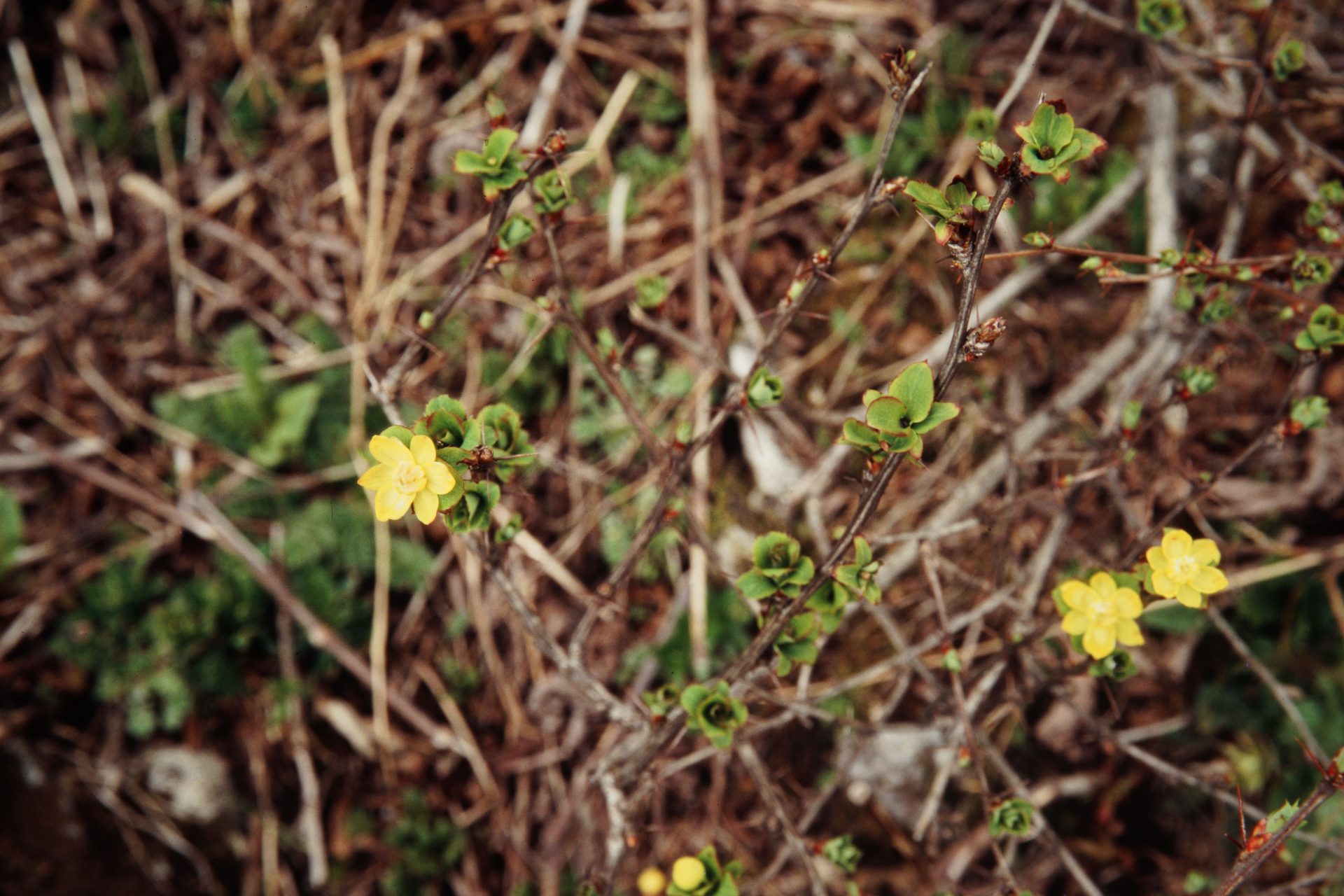
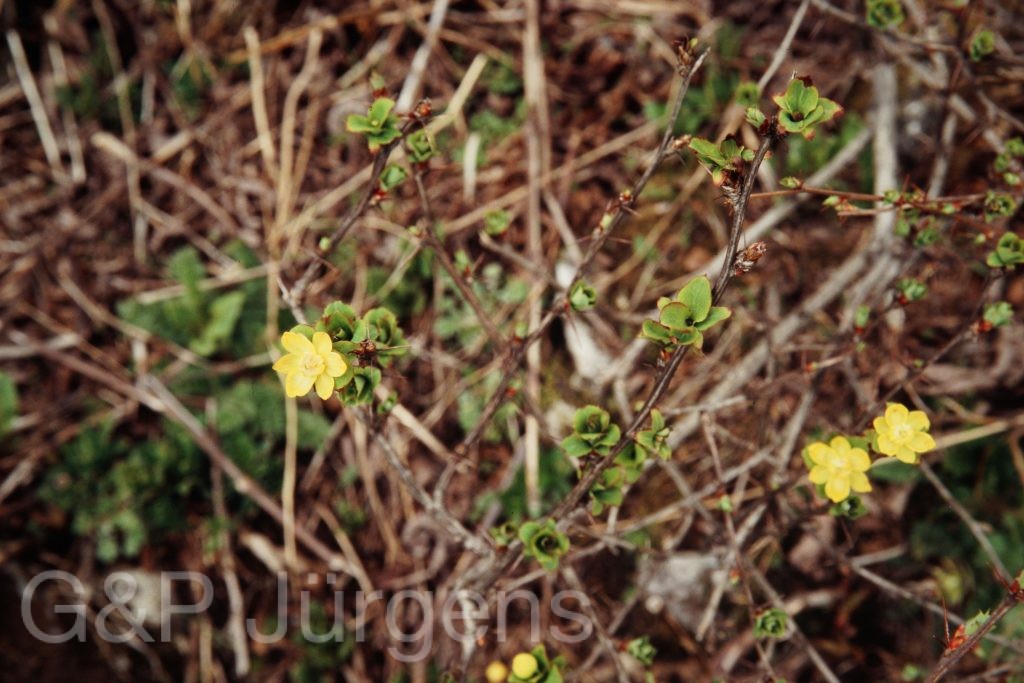
Berberis angulosa Wall. ex Hook.f. & Thomson is a deciduous, spiny shrub of the high Himalaya. GBIF (around 164 occurrences) confirms a core range across Nepal, southern China (Tibet), Bhutan and northern India, the remaining scattered records reflecting cultivated or herbarium material outside the native area. It is a plant of subalpine and alpine zones, growing on open slopes, among rocks, in shrubberies and at the upper forest margin, typically between 3,000 and 4,300 m. The specimen photographed at Labana in Bhutan at 4,000 m in June represents the species near the upper limit of its altitudinal range, flowering early in the short alpine season.
The shrub is low and densely branched, often less than a metre high, with terete to angled, reddish-brown young shoots and stout, usually three-parted spines derived from modified leaves. The foliage leaves are clustered in axillary fascicles, obovate to spathulate, entire or with a few spinulose-dentate margins, often glaucous beneath. The flowers are comparatively large for the genus, solitary or in few-flowered clusters, with the typical Berberis arrangement of sepals and petals in whorls of three and six stamens that respond to touch; they are yellow, sometimes flushed reddish outside. The fruit is an ellipsoid red berry, glaucous when young, containing few seeds.
Berberis angulosa is distinguished within the large and taxonomically difficult Sino-Himalayan Berberis assemblage by its relatively large, often solitary flowers and conspicuous berries. Like other species of the genus it is a host in the alternation of the wheat-rust fungus and is valued locally for its edible fruit and the yellow alkaloid berberine in its bark and wood. Its high-elevation, cold-adapted habit makes it a characteristic component of Himalayan alpine scrub communities.
Author: Wall. ex Hook.f. & Thomson · Sources: POWO (Kew), Flora of Bhutan Vol. 1, Flora of China Vol. 19, GBIF, Ahrendt: Berberis and Mahonia, a taxonomic revision (1961)