
Hand.-Mazz.
Description
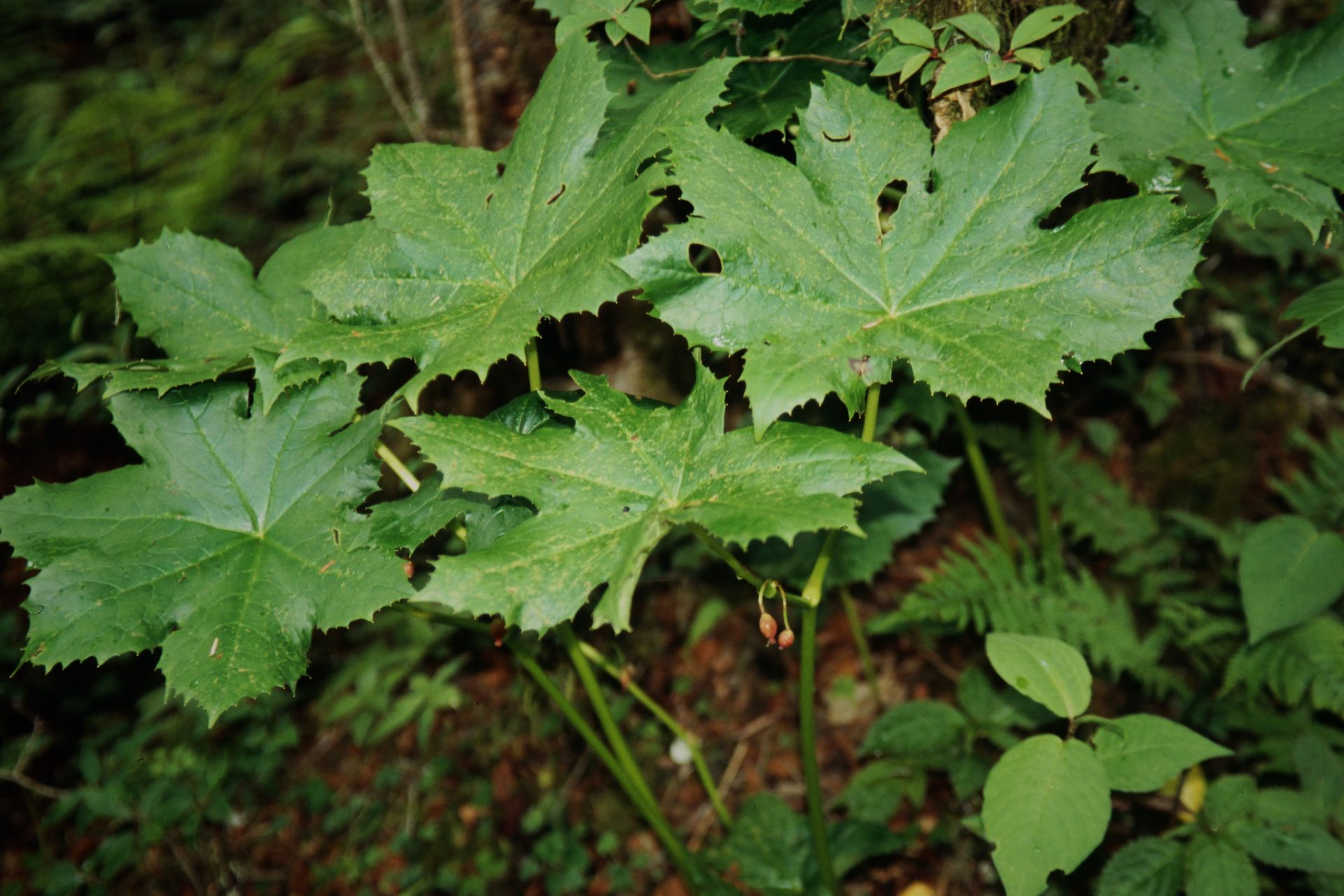
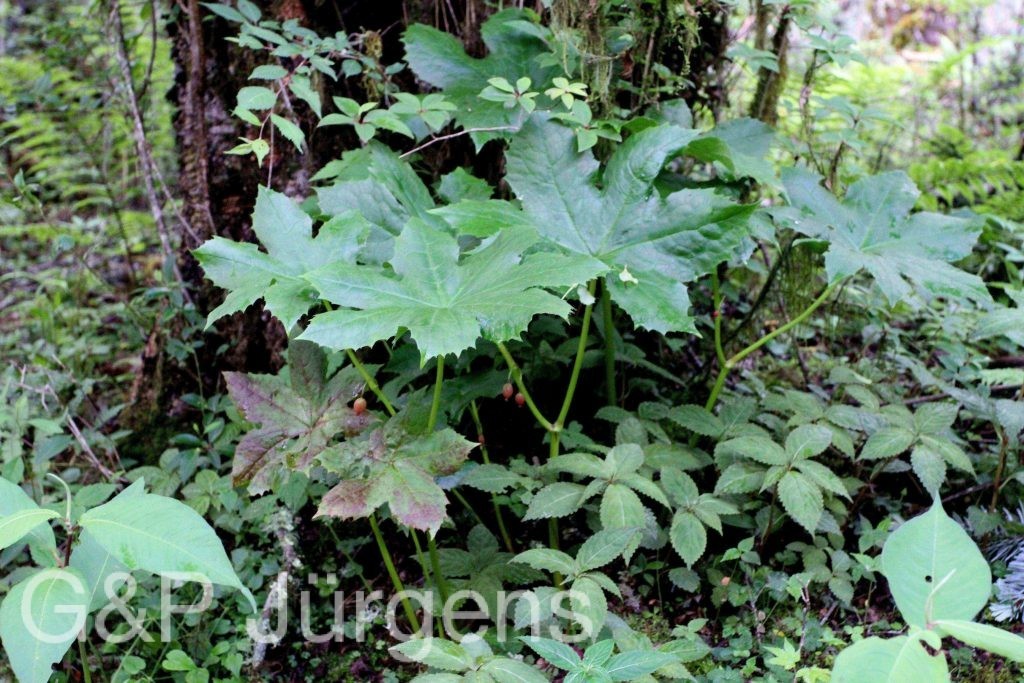
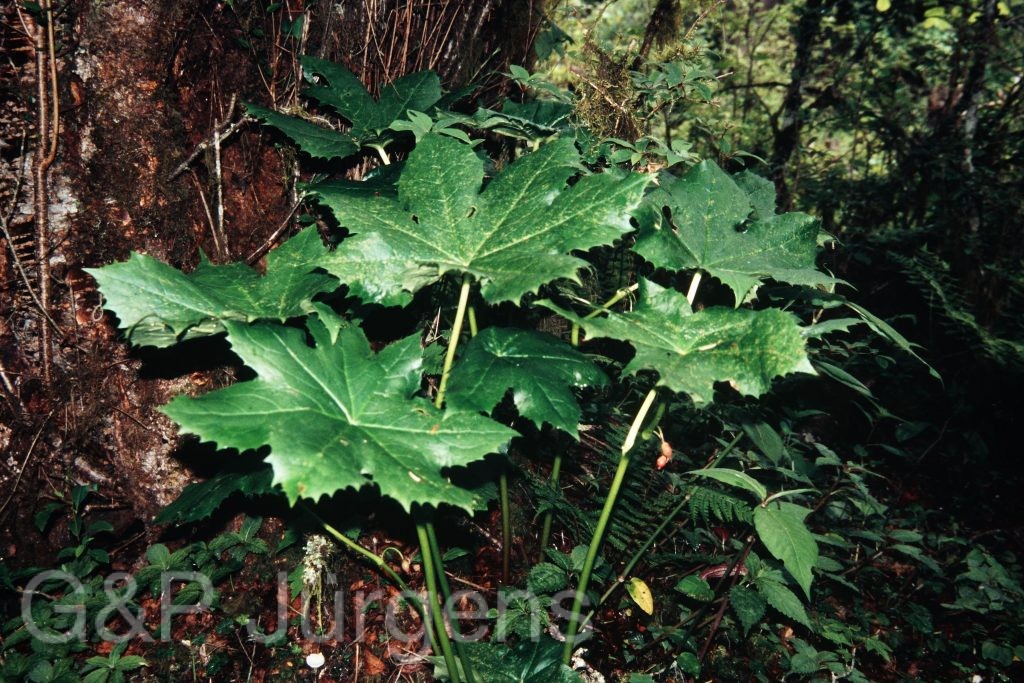
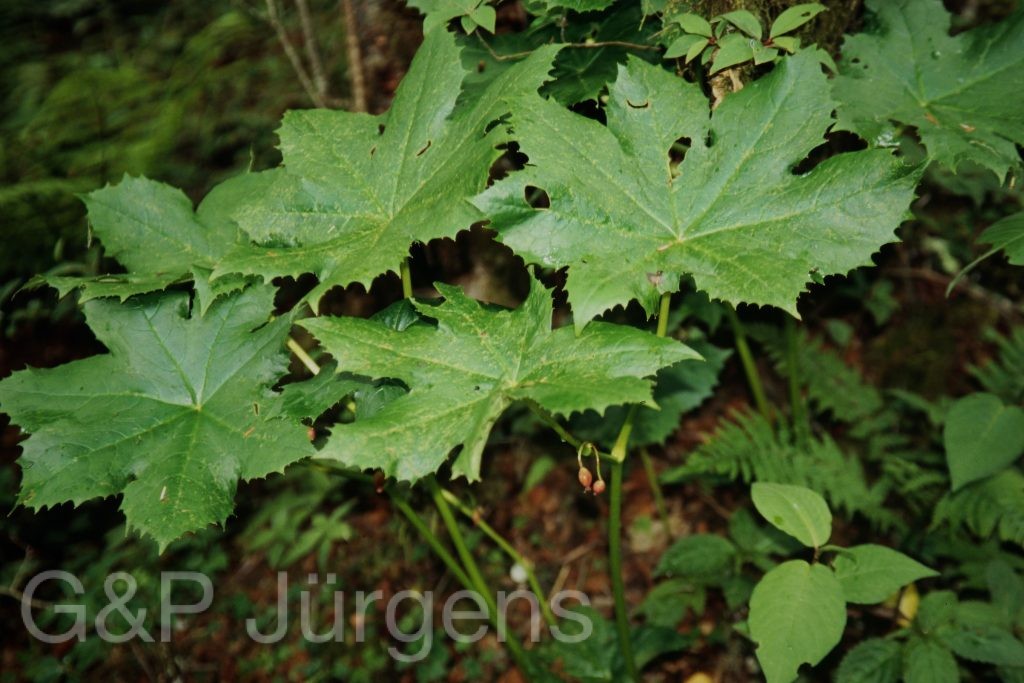
Podophyllum aurantiocaule is a Sino-Himalayan woodland herb recorded from China, Myanmar and India (with one extralimital cultivated record from the Netherlands), the c. 25 georeferenced occurrences reflecting a relatively narrow and uncommon distribution in the eastern Himalaya and adjacent mountains. It grows in the shade and humus of temperate broadleaved and conifer forest, on cool, moist, sheltered slopes and forest floor, generally between about 2400 and 3400 m. The illustrated plants were photographed at Jakar in Bhutan at 2600 m and at Pele-La at 3200 m, both in June, sites characteristic of the species, which emerges and flowers in early summer beneath the forest canopy. Under GBIF this name is treated as a synonym, with Podophyllum aurantiocaule itself recognised as the accepted name in that backbone.
It is a perennial herb arising from a stout creeping rhizome, sending up an erect, fleshy, often orange-tinted stem, the colouration reflected in the epithet aurantiocaule. The stem bears typically two large, long-petioled, peltate to deeply palmately lobed leaves whose margins are toothed. A single, rather large, nodding flower is borne at the fork between the leaves; it has free, somewhat fleshy petals in shades of dull red to purplish, numerous stamens and a single superior carpel. The fruit is a large fleshy berry containing many seeds embedded in pulp.
The Asian podophylloids, treated either in a broad Podophyllum or in the segregate genera Dysosma and Sinopodophyllum, are placed in Berberidaceae and are renowned for the lignan podophyllotoxin, precursor of the anticancer drugs etoposide and teniposide. As a slow-growing, rhizomatous, narrowly distributed forest herb subject to medicinal collection and habitat loss, P. aurantiocaule is intrinsically vulnerable, and members of this complex are widely flagged for conservation attention.
Author: Hand.-Mazz. · Sources: POWO (Kew), GBIF, Flora of China, Flora of Bhutan, Shaw monograph of the podophylloid Berberidaceae