
(Wall. ex. D.Don) A.B.Jacks.
Description
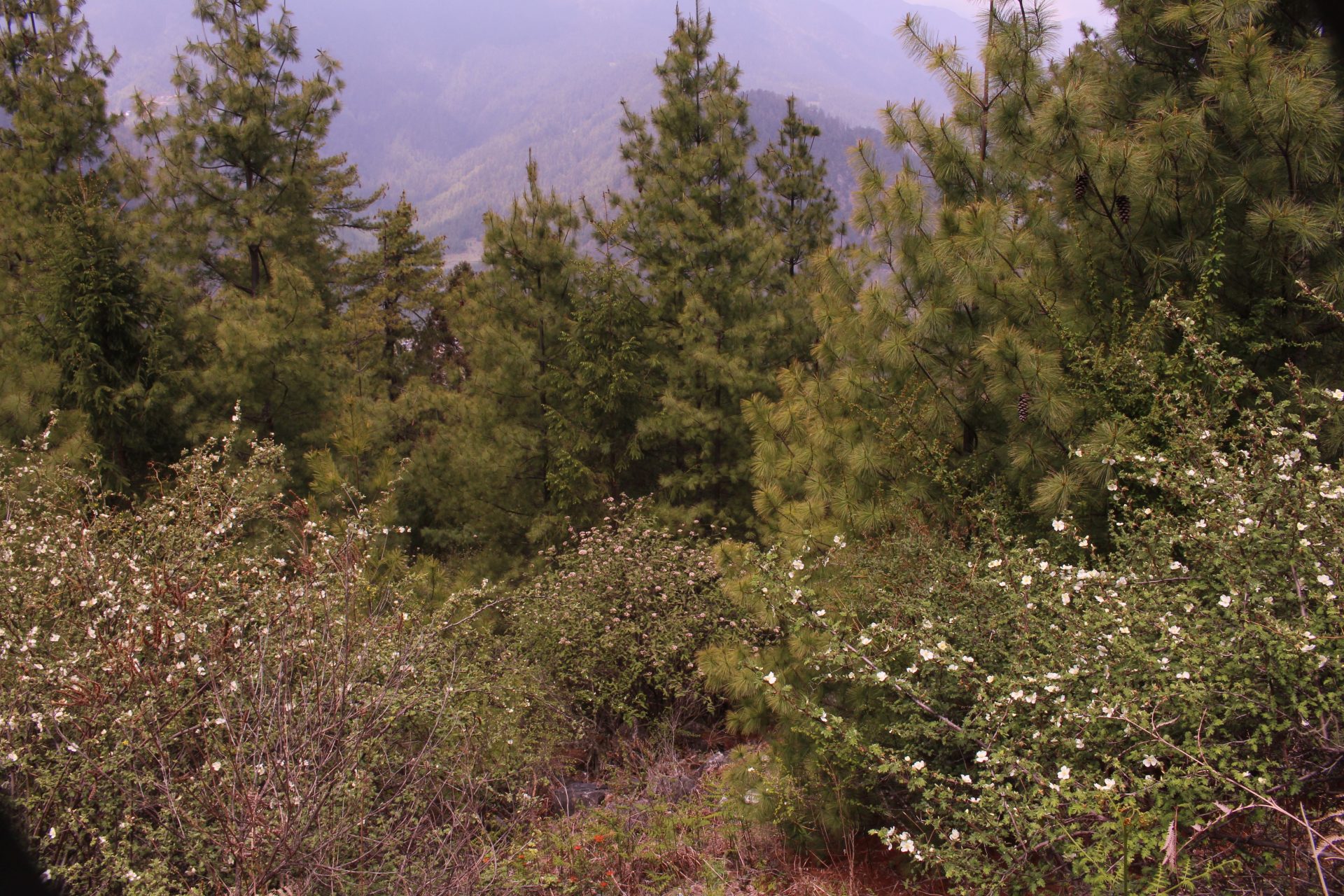
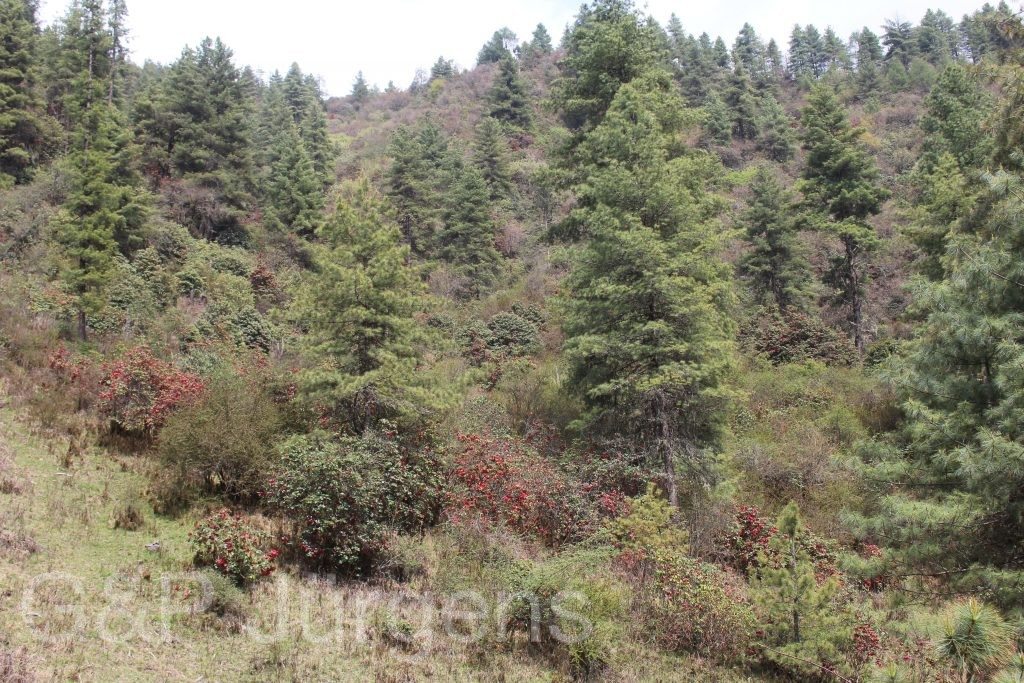
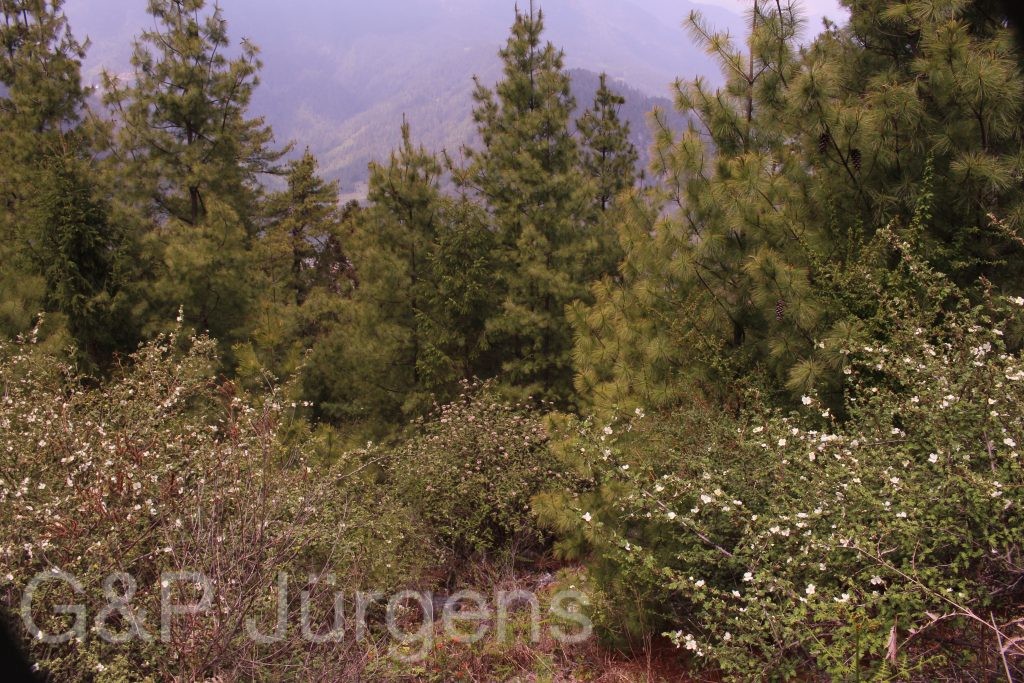
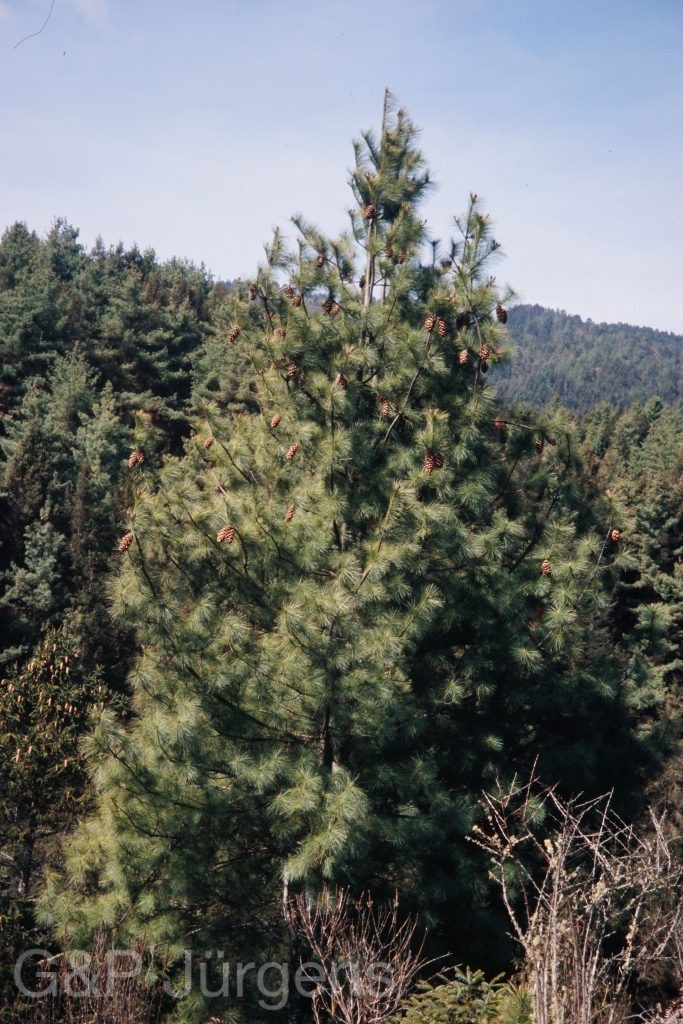
Pinus wallichiana, the Bhutan or blue pine, is a major timber conifer of the Himalaya and Hindu Kush, ranging from Afghanistan and Pakistan through Kashmir, the Indian Himalaya, Nepal and Bhutan to south-eastern Tibet and China. It is among the best-recorded Himalayan trees, GBIF holding over 2400 occurrences, many from cultivation in Europe, North America and Australasia where it is a graceful ornamental. Natively it forms montane forests, often with Picea, Abies and Cedrus, on well-drained slopes between about 1800 and 4000 m. The Bhutanese stands at Phobjikha, the Haa valley and Ura between 2800 and 3000 m exemplify its dominance in the temperate conifer belt.
It is a large evergreen tree to 40 m or more, with a straight trunk, greyish fissured bark and whorled spreading branches forming a broad conical crown. The needle leaves are five per fascicle, slender, soft and drooping, 12 to 20 cm long, glaucous-bluish (whence blue pine) and finely serrulate. It is monoecious: small yellow pollen cones cluster at the base of new shoots, while the seed cones are long-pedunculate, cylindrical and resinous, 15 to 30 cm long and pendent, with broad woody scales spreading at maturity, each fertile scale bearing two winged, wind-dispersed seeds.
A member of Pinus subgenus Strobus (the soft or white pines, section Quinquefoliae), P. wallichiana is allied to P. griffithii and other five-needle pines of eastern Asia and North America, distinguished by its long pendulous cones and drooping foliage. It is important for construction timber, resin and fuel, and ecologically as a pioneer colonising landslides and abandoned terraces. Though widespread and not threatened, it is locally susceptible to blister rust and to over-exploitation near settlements.
Author: (Wall. ex. D.Don) A.B.Jacks. · Sources: POWO (Kew), GBIF, Flora of China Vol. 4, Flora of Bhutan Vol. 1, Flora of Pakistan, Farjon A Handbook of the World's Conifers