
Description
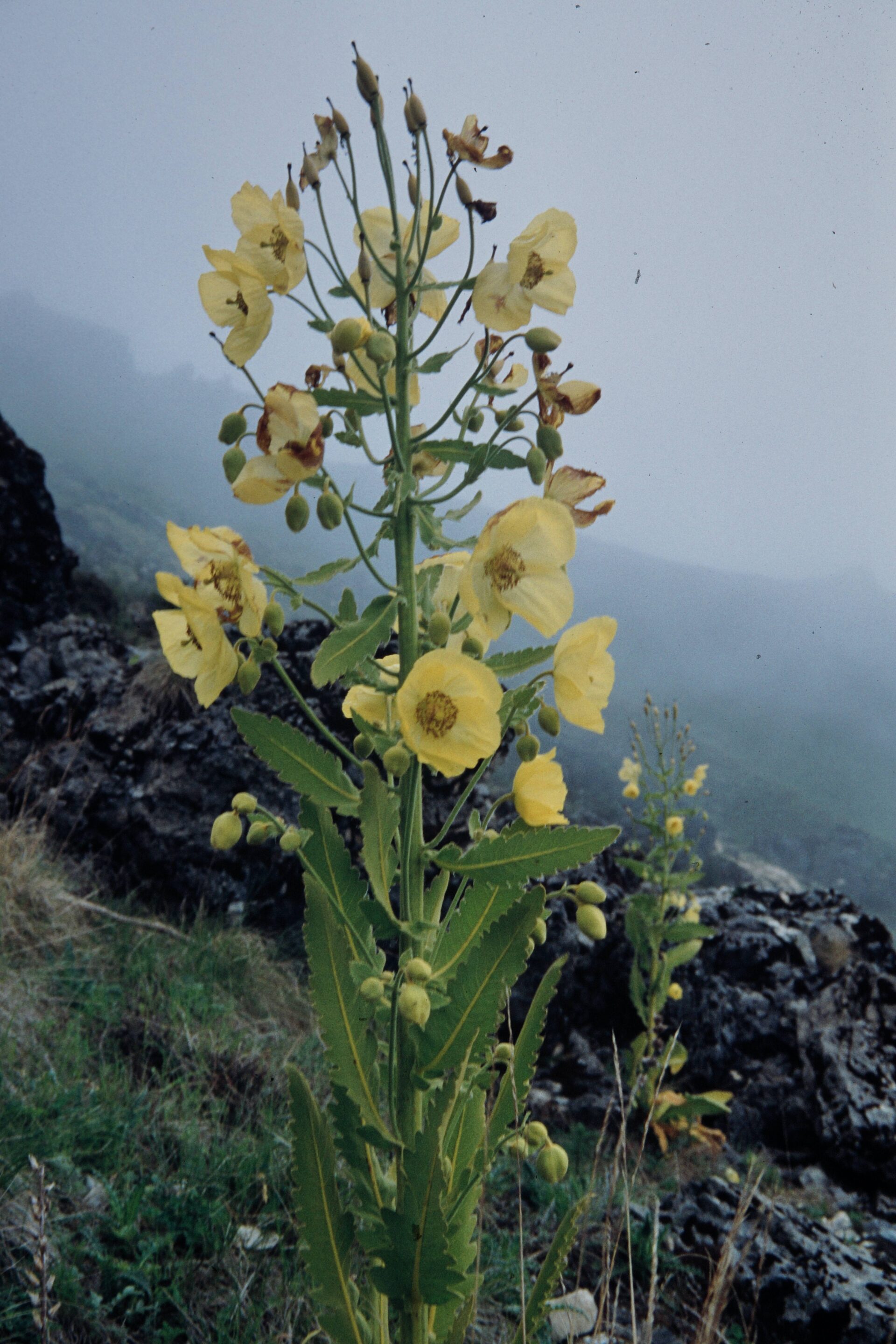
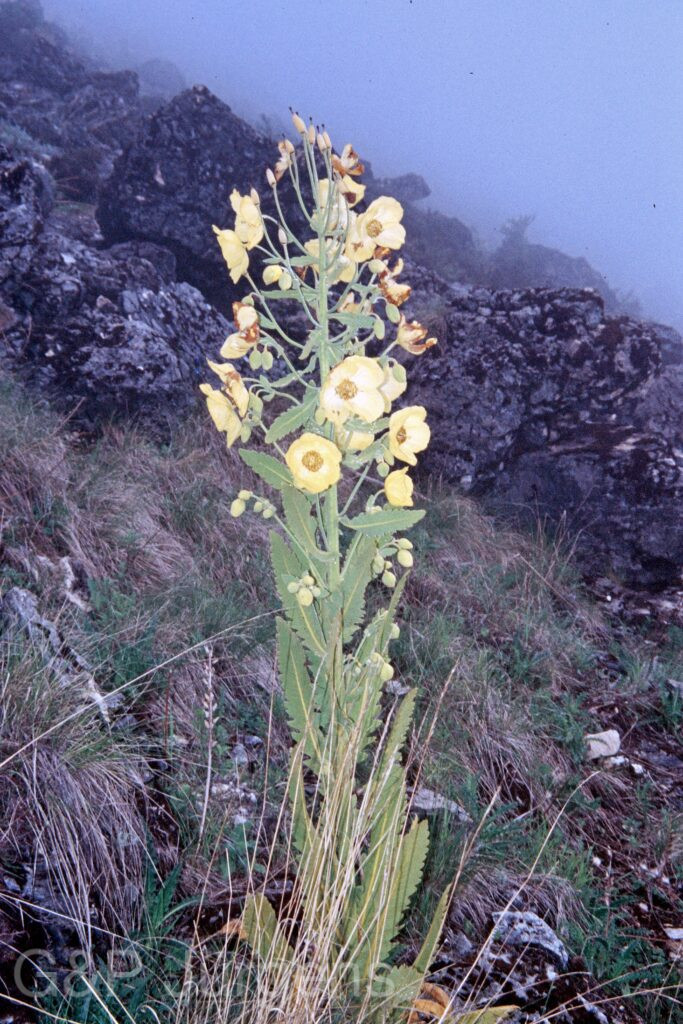
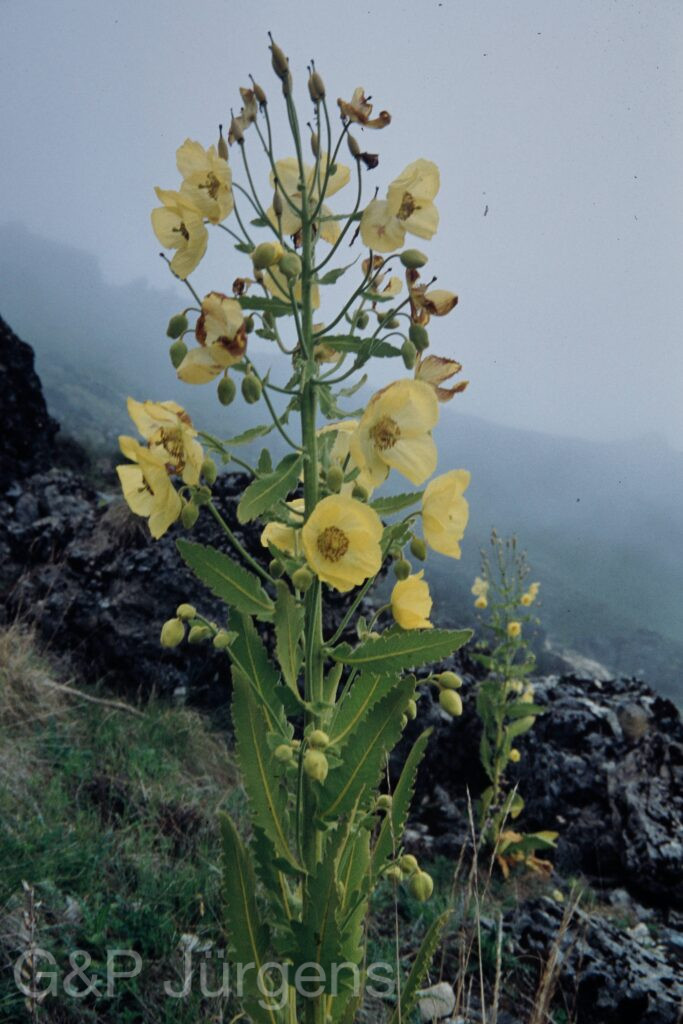
Meconopsis is a genus of approximately 50–80 species of poppy-like herbs predominantly centred on the Sino-Himalayan region, with a single outlying species (M. cambrica) in western Europe. The genus ranges from Pakistan through the Himalayas to southwestern China and northern Myanmar, with its greatest species diversity in southeastern Xizang, northwestern Yunnan, and western Sichuan. Species occupy diverse montane to alpine habitats including forest clearings, scrub, rocky slopes, scree, and high-altitude meadows at elevations from 2,000 to over 5,500 m. The present specimen, photographed in the Nyor Gaad valley of western Nepal at 2,800 m in June, represents a population in the lower elevational range typical for the genus.
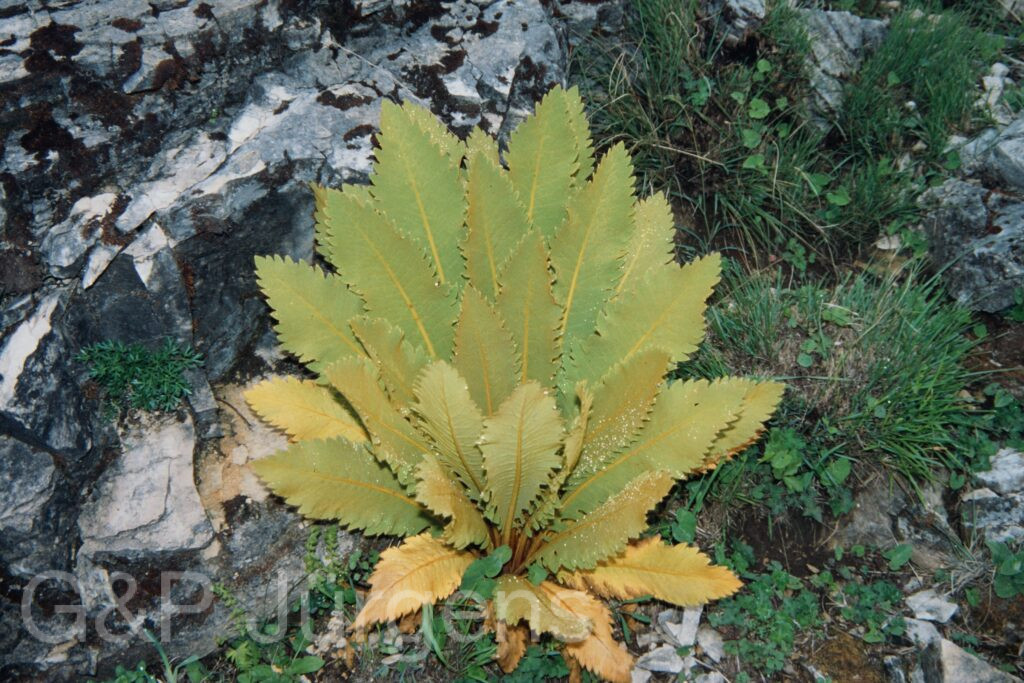
Meconopsis species are annual, biennial, or monocarpic to polycarpic perennial herbs, producing rosettes of basal leaves that are variously lobed, pinnatifid, or entire, and typically covered with bristly or plumose hairs. The flowers are borne singly or in racemose to paniculate inflorescences and are characteristically large and showy, 3–10 cm across, with 4–8 petals in shades of blue, purple, red, yellow, or white. The stamens are numerous, with conspicuous yellow to orange anthers. The gynoecium consists of a syncarpous ovary that matures into a capsule dehiscing by apical valves. Identification to species level often requires examination of fruit morphology, indumentum type, and style characters.
Species-level determination in Meconopsis from photographs alone is frequently unreliable, as many taxa overlap in floral colour and vegetative morphology, and the genus has undergone considerable taxonomic revision. Western Nepal harbours several species including M. regia, M. napaulensis, and M. paniculata, among others. Over 9,200 occurrence records in GBIF attest to the genus's wide distribution and collecting interest. Many species are of significant horticultural value, particularly the blue-flowered taxa, while several narrow endemics face conservation concerns due to climate-driven habitat shifts and overcollection. Continued field surveys and molecular phylogenetic studies are essential for resolving species boundaries within this iconic Himalayan genus.
Sources: POWO (Kew), GBIF, Grey-Wilson: The Genus Meconopsis (2014), Flora of China Vol. 7, Flora of Nepal