
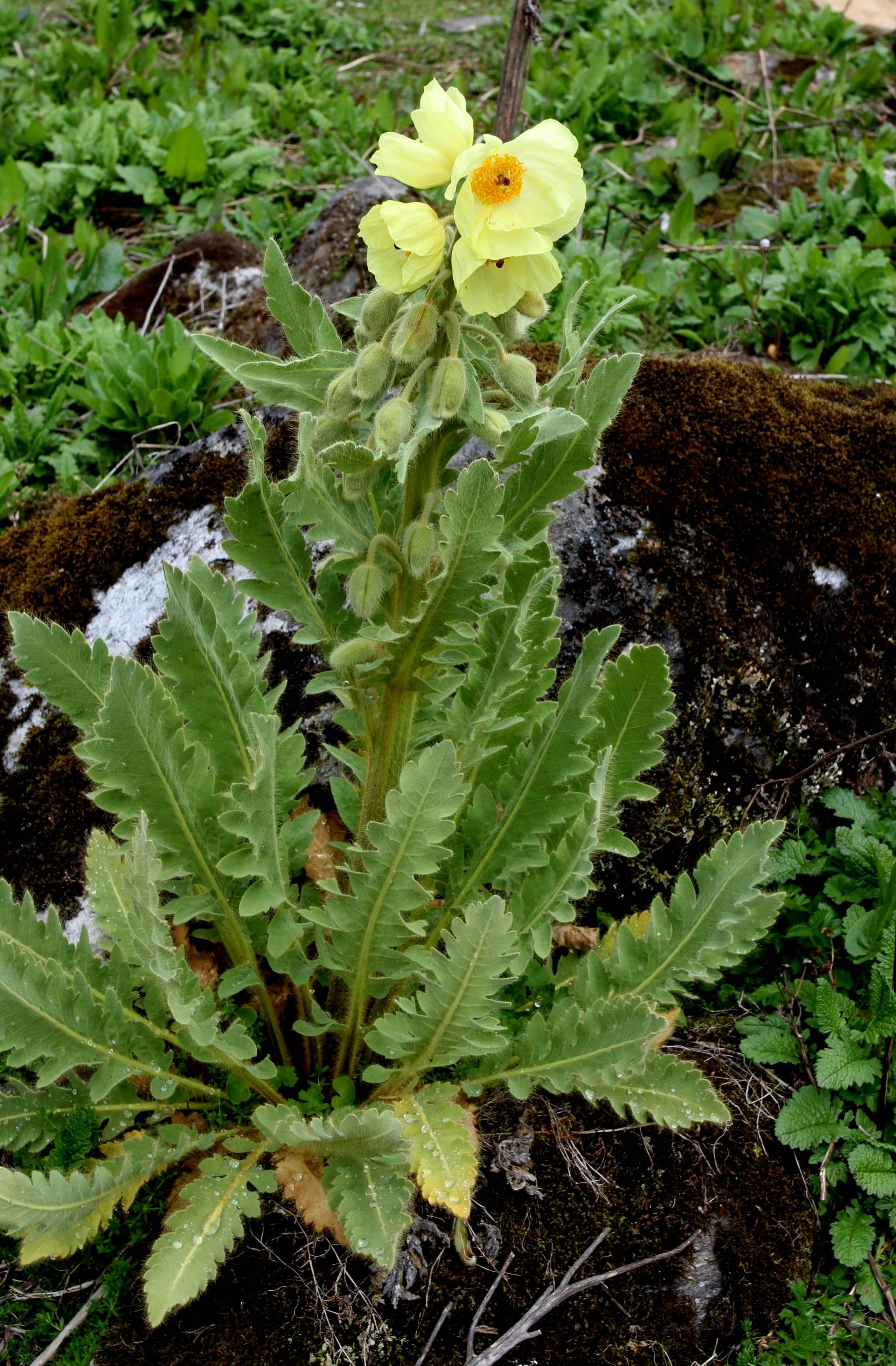
(D. Don) Prain
Description
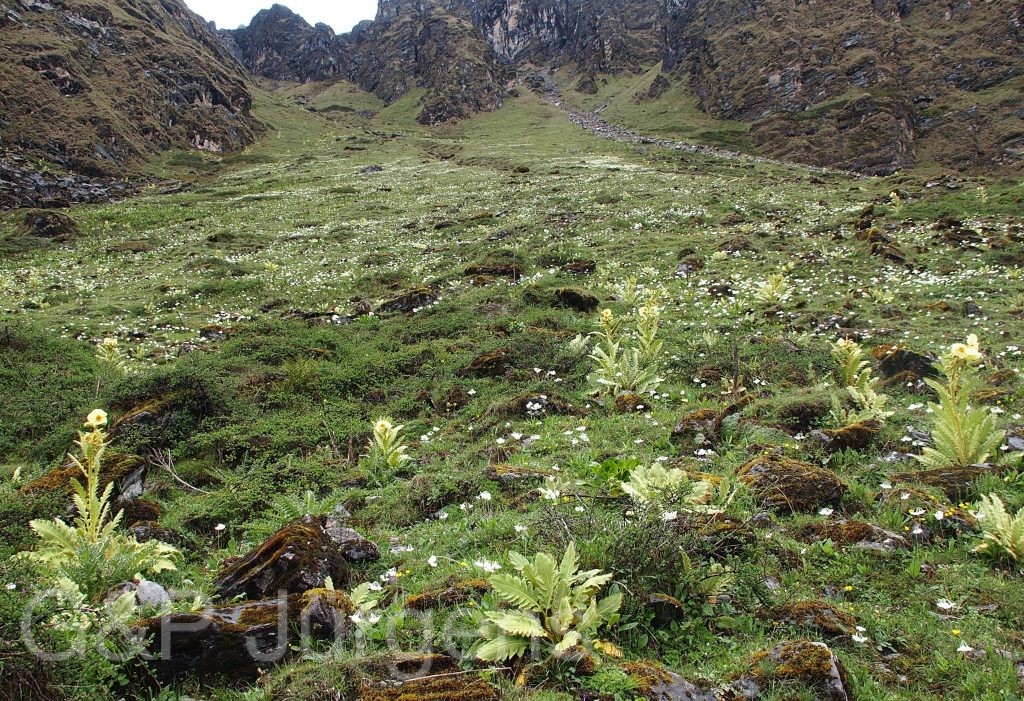
Meconopsis paniculata is a stately Himalayan poppy distributed through Nepal, the Indian states of Sikkim and Darjeeling, Bhutan and southern Tibet (China), with cultivated records in Britain and Canada; GBIF documents about 440 occurrences. It grows in the upper temperate to subalpine and lower alpine zone, on open grassy slopes, forest clearings, streamsides and shrubby hillsides, as recorded in the Chopta valley (4200 m) and at Yumthang (3700 m) in Sikkim and at Mewa-Khola (3100 m) in Nepal. Spanning roughly 3000-4200 m, it flowers from spring into early summer (April-June), often forming conspicuous stands on damp, humus-rich slopes.
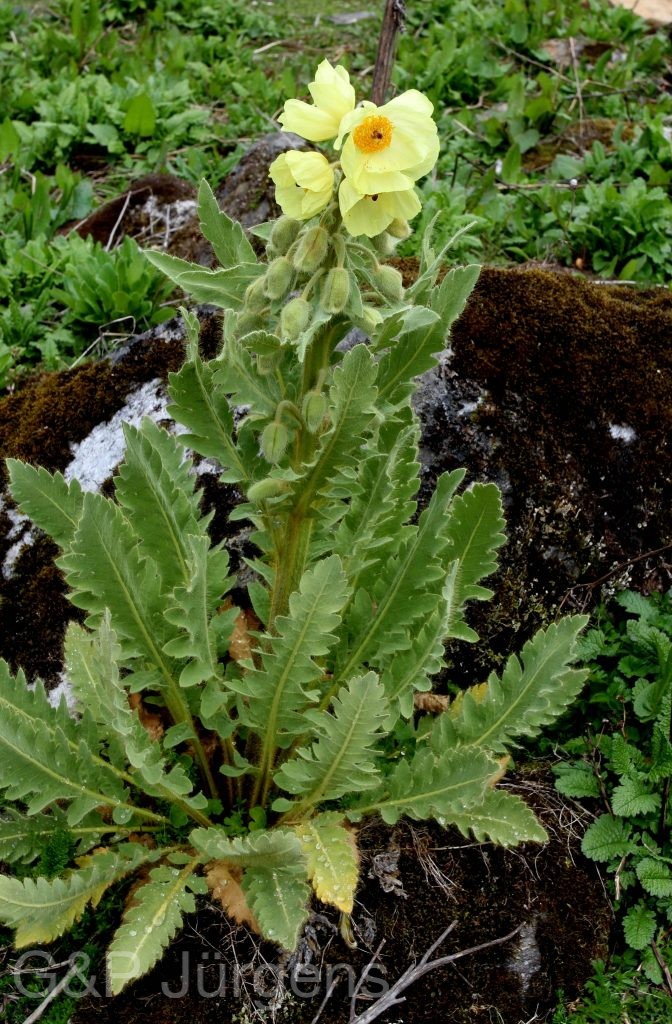
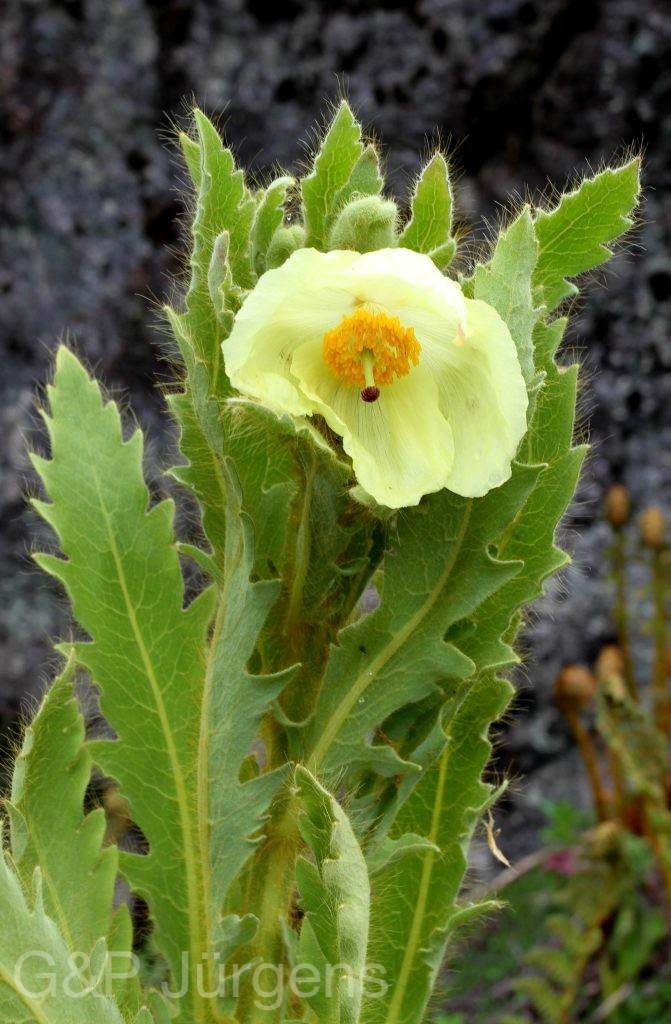
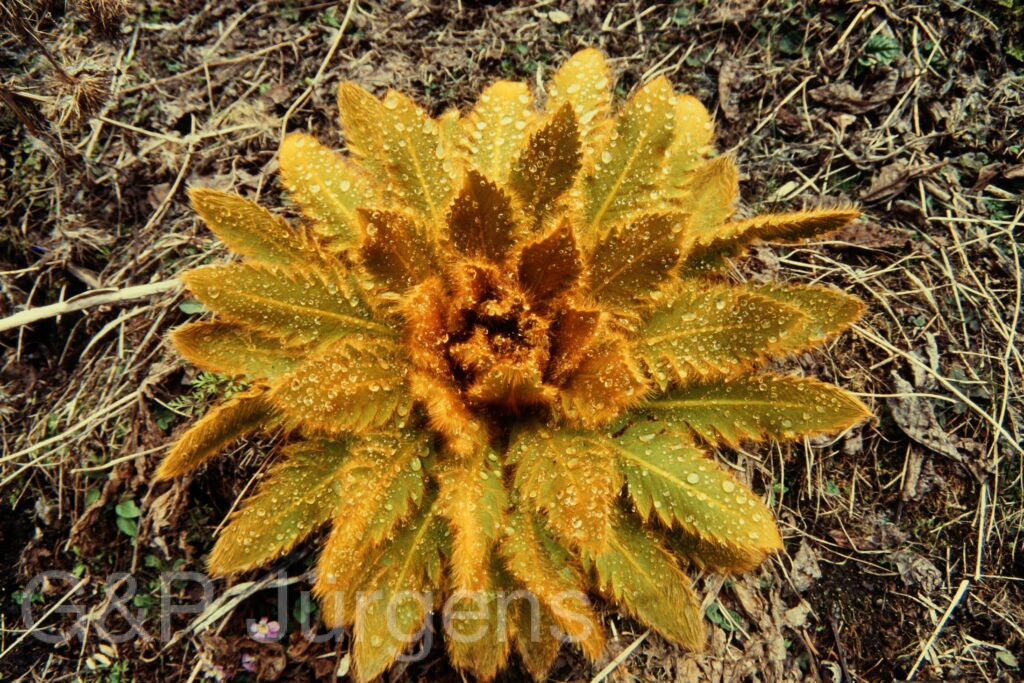
It is a robust monocarpic herb, forming in its first years a large basal rosette before producing a single tall, branched flowering stem up to 1.5-2 m. The whole plant is densely clothed in golden to rusty, spreading bristly hairs. The basal leaves are large, oblong-lanceolate and pinnately lobed or deeply cut, narrowing into a winged petiole. The inflorescence is an elongate, leafy panicle (the epithet "paniculata") of nodding, broadly cup-shaped flowers; the four (rarely more) petals are pale to clear yellow, surrounding a boss of numerous yellow stamens and a stout ovary crowned by a short style and lobed stigma. The fruit is an oblong, bristly capsule dehiscing by apical pores to shed many small seeds.
Described by Prain from D. Don's basionym, M. paniculata belongs to the monocarpic, bristly-fruited group of Meconopsis allied to M. napaulensis and M. wallichii, a complex whose taxonomy has long been debated owing to hybridisation and variable indumentum. As a monocarpic species it dies after a single flowering, relying entirely on abundant seed for regeneration. The flowers are visited by bumblebees foraging at altitude. Widespread across its range, it is not considered globally threatened, though seed collection and grazing can affect local populations.
Author: (D. Don) Prain · Sources: POWO (Kew), GBIF, Flora of Bhutan, Flora of Nepal, Grey-Wilson's monograph of the genus Meconopsis