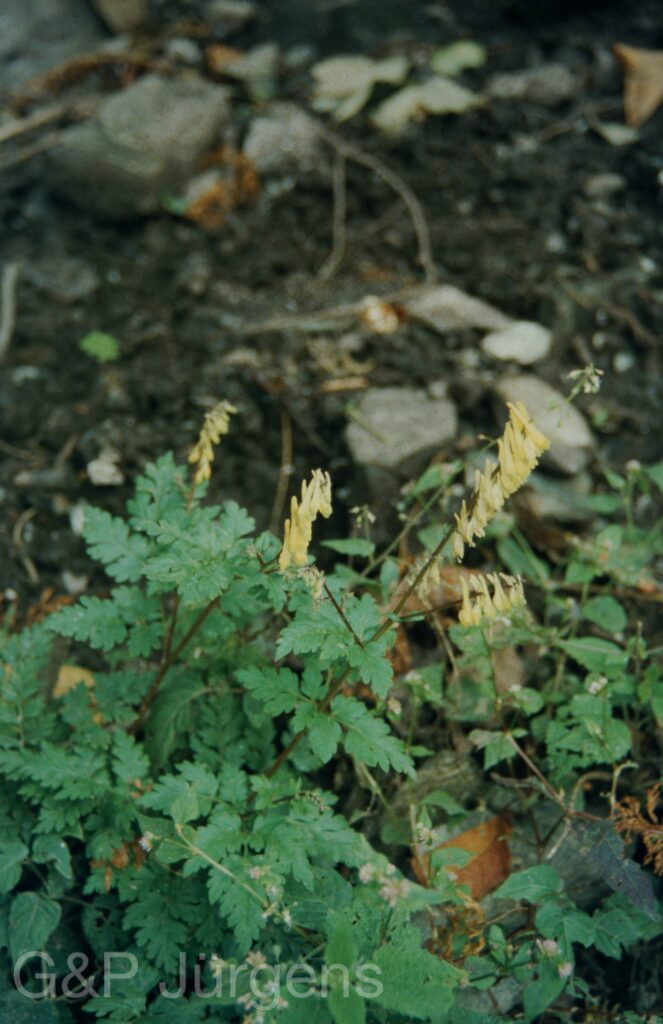
Papaveraceae

Royle

Garw 2005 427 ergebnis
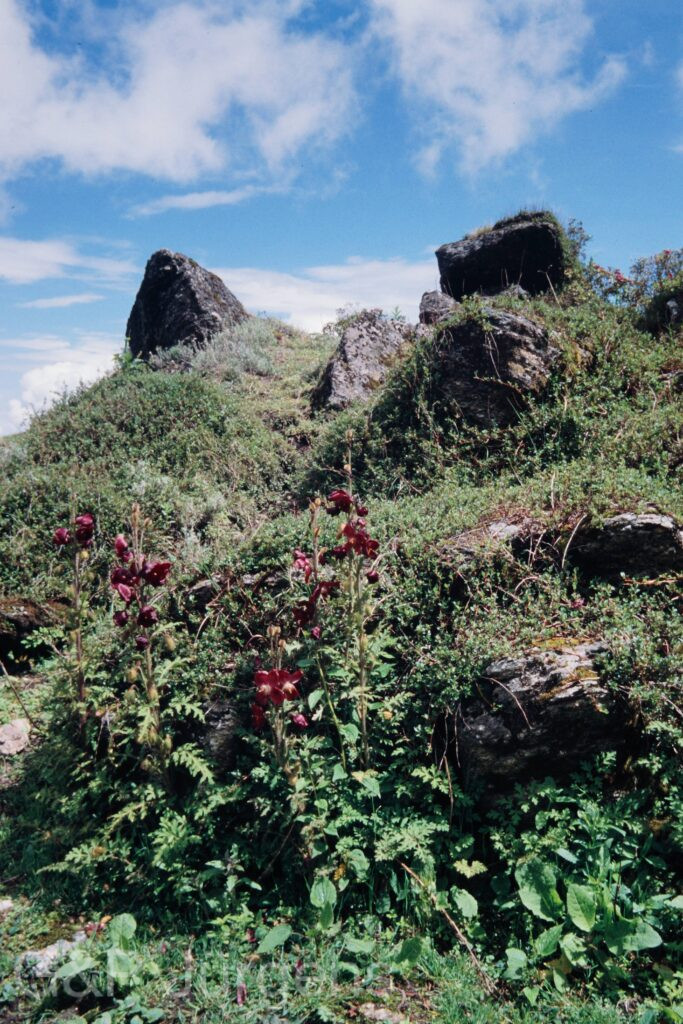
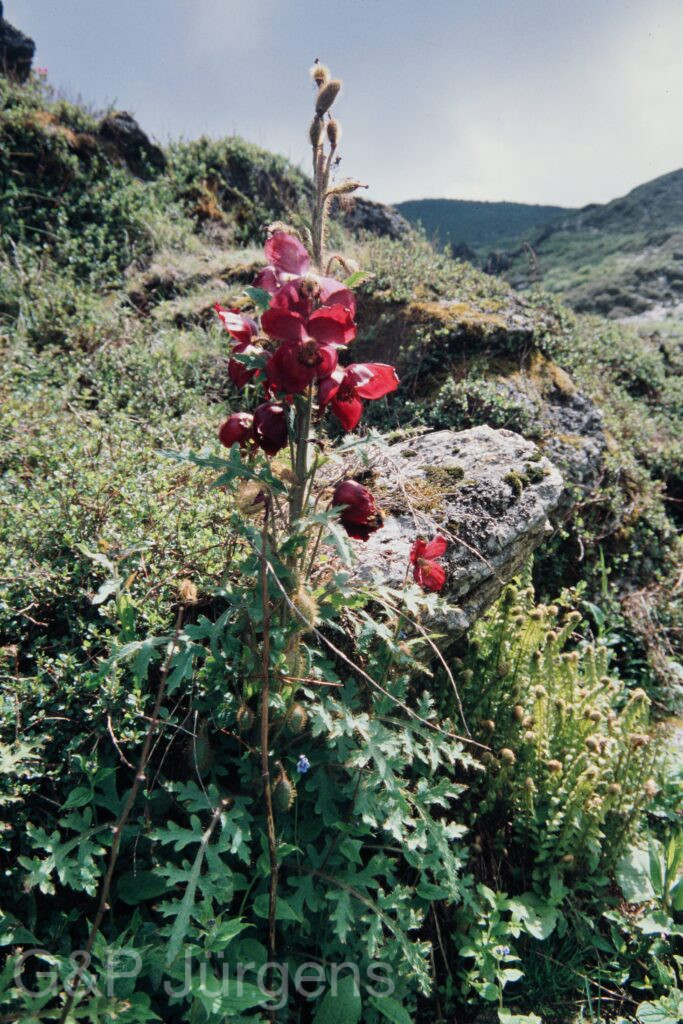
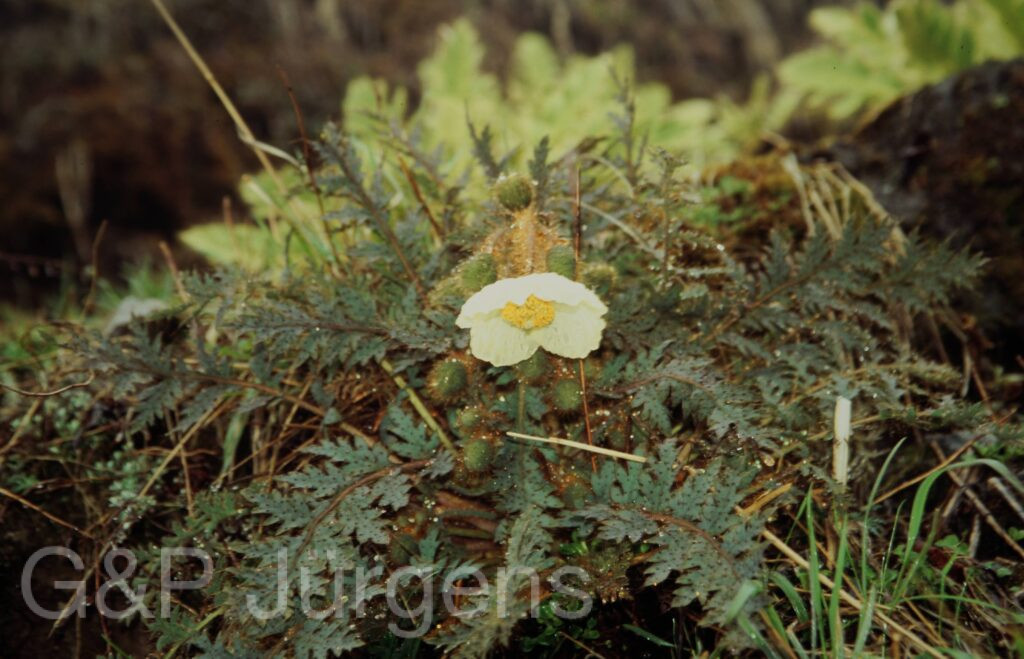
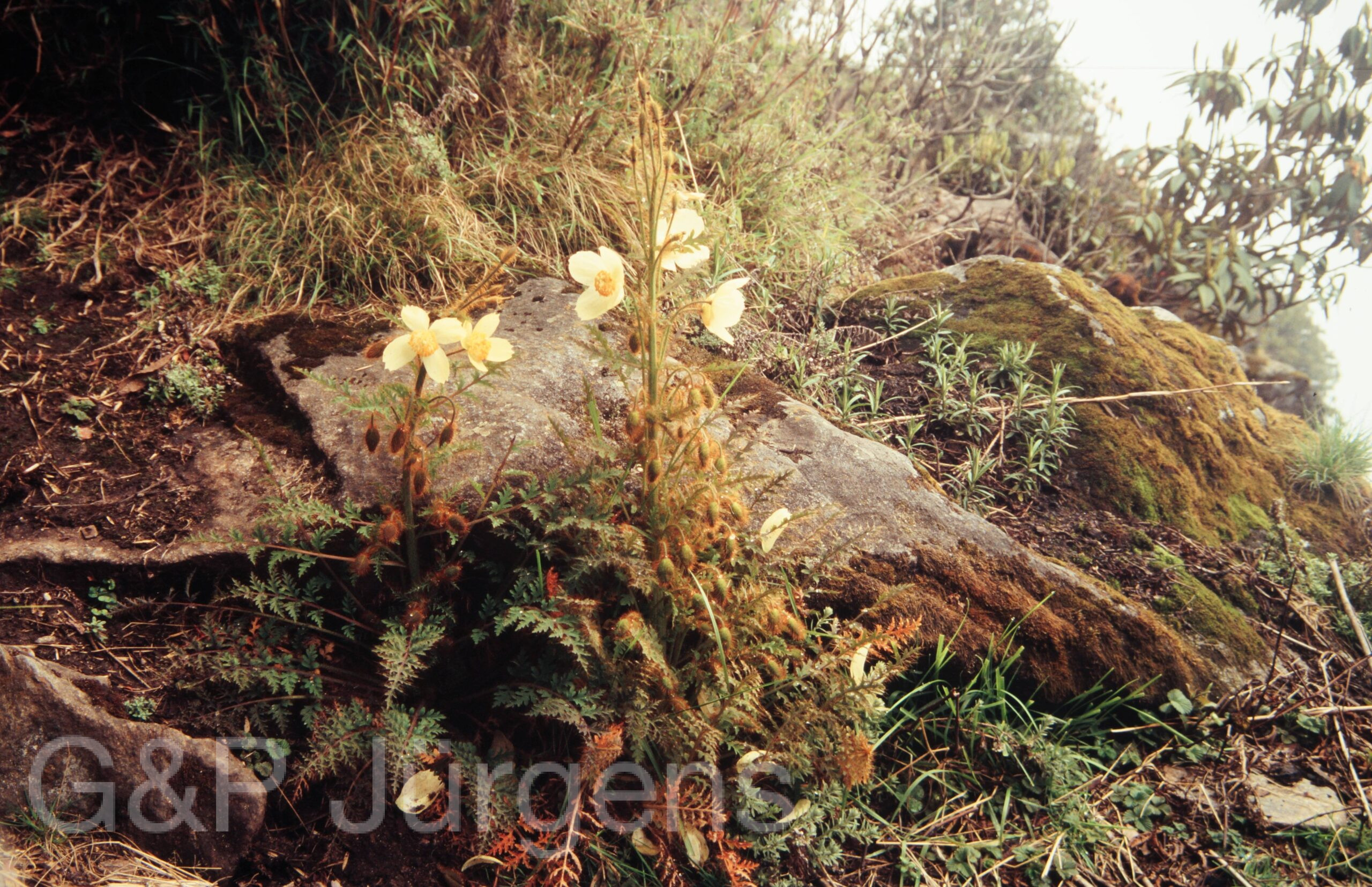
India Garhwal Didina 2470m, September

Description

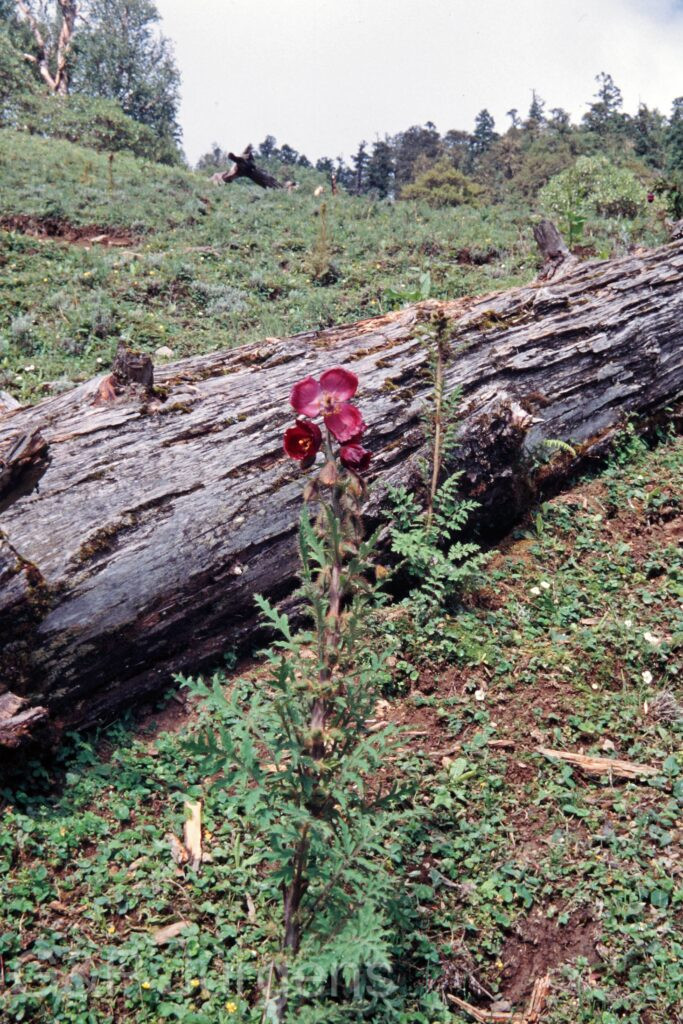
Corydalis vaginans is a Sino-Himalayan herb of the western and central Himalaya, with georeferenced collections concentrated in India, Pakistan and Nepal; GBIF records some 164 occurrences. It is a plant of cool, humid temperate to subalpine zones, favouring shaded forest margins, moist rocky banks, stream sides and clearings within Quercus and Abies forest. The image, taken near Didina in Garhwal (India) at about 2470 m in September, illustrates its typical late-season flowering in this moist mid-montane belt, where it grows among ferns and tall herbs on humus-rich, well-drained slopes.

The plant is a slender, glaucous, glabrous annual or short-lived perennial arising from a slender taproot. Stems are erect to ascending, somewhat fleshy and ribbed, branched above. The leaves are alternate, the lower long-petiolate and conspicuously sheathing at the base (the epithet vaginans referring to these dilated sheaths), the blades two- to three-pinnately divided into ovate to cuneate, lobed segments. Flowers are borne in lax terminal and axillary racemes, zygomorphic and yellow, with two outer petals one of which is spurred and the inner petals connate and crested. The fruit is a slender, dehiscent siliquiform capsule containing several shining black seeds with an elaiosome.

Within the large, taxonomically intricate genus Corydalis, this species belongs to the predominantly Asian assemblage of mesophytic, sheathing-leaved annuals, distinct from the tuberous spring-flowering groups. Its ant-dispersed seeds (myrmecochory) and shade-tolerant habit allow colonisation of disturbed forest soils. Though not assessed as threatened, populations are localised and dependent on intact temperate forest cover, sensitive to deforestation and grazing in the western Himalaya.

Author: Royle · Sources: POWO (Kew), GBIF, Flora of Pakistan, Flowers of the Himalaya (Polunin & Stainton), Lidén & Zetterlund monograph of Corydalis
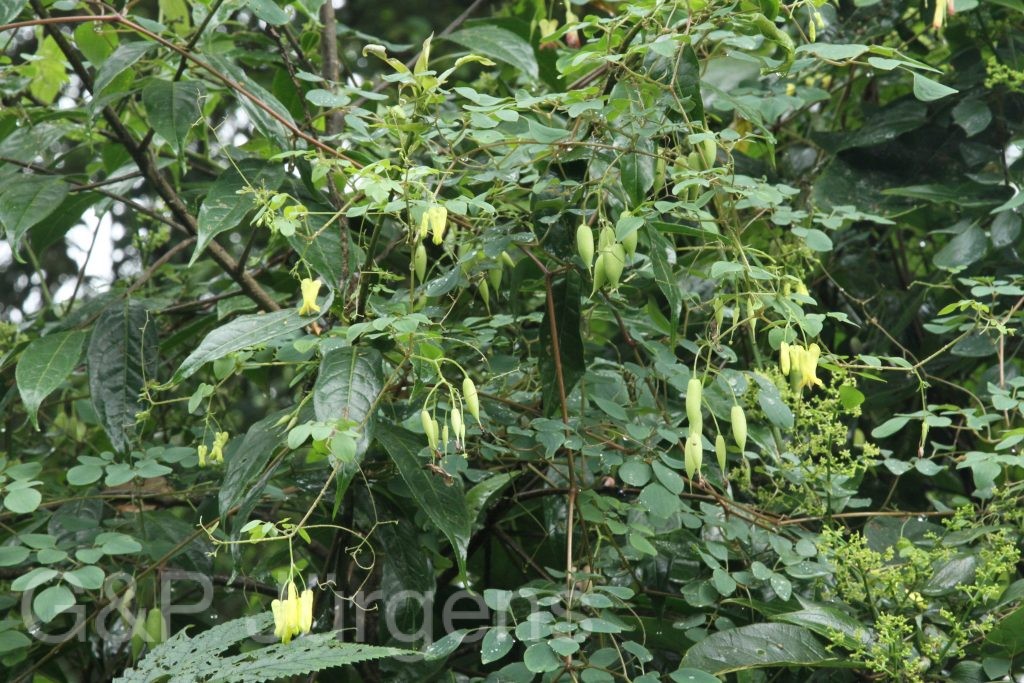
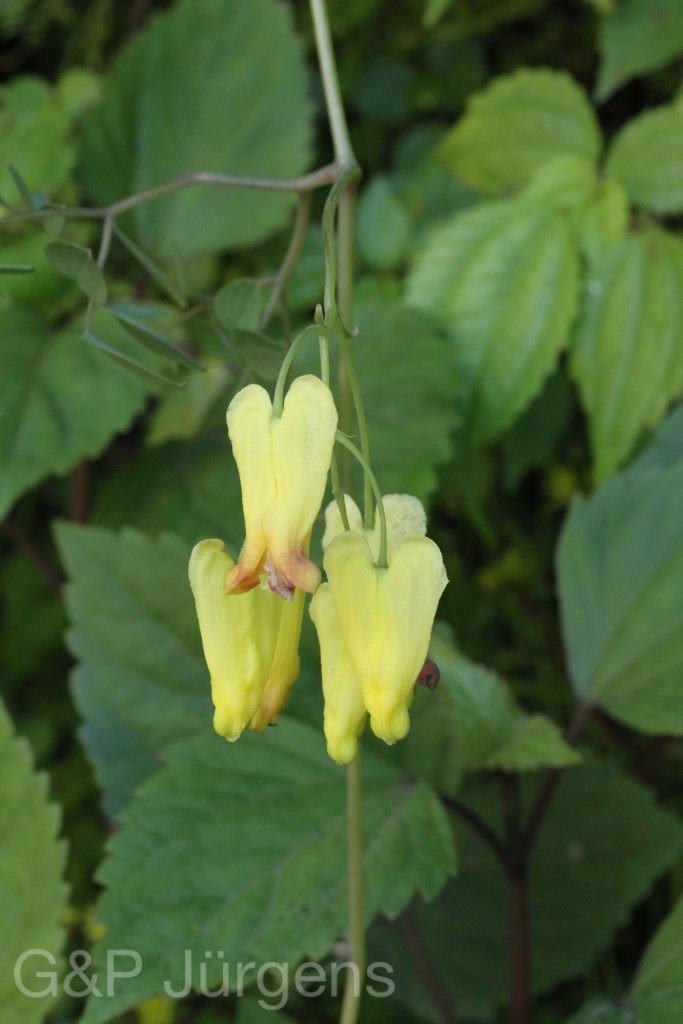
(Fedde.) Hand.-Mazz.

Bhutan2012 678
Bhuitan Tserang 1300m, June

Description

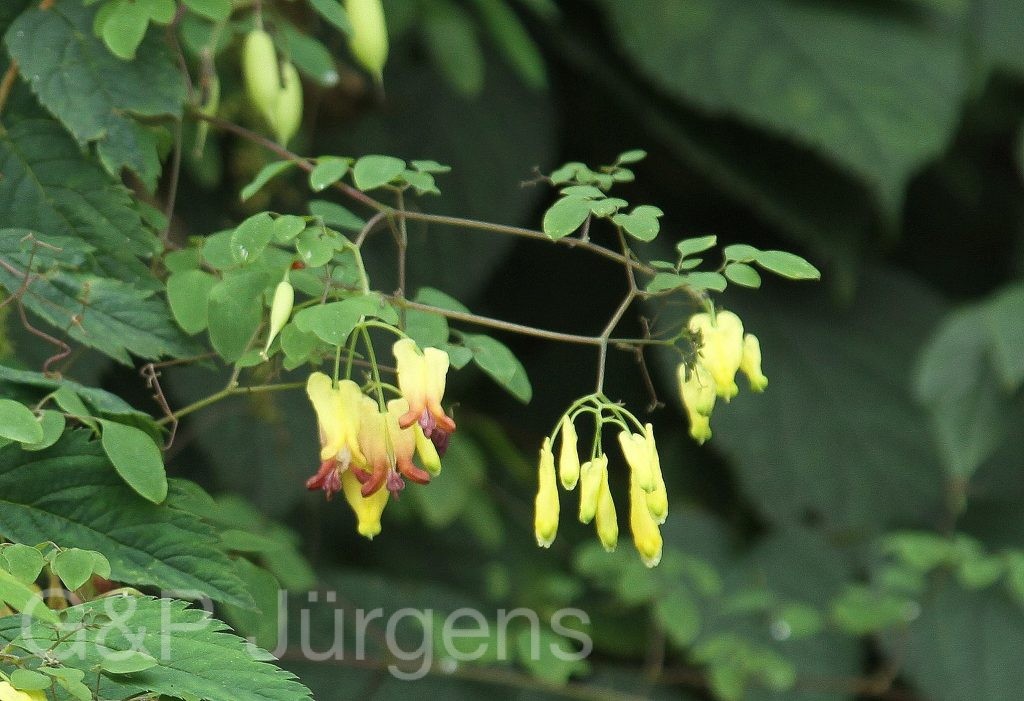
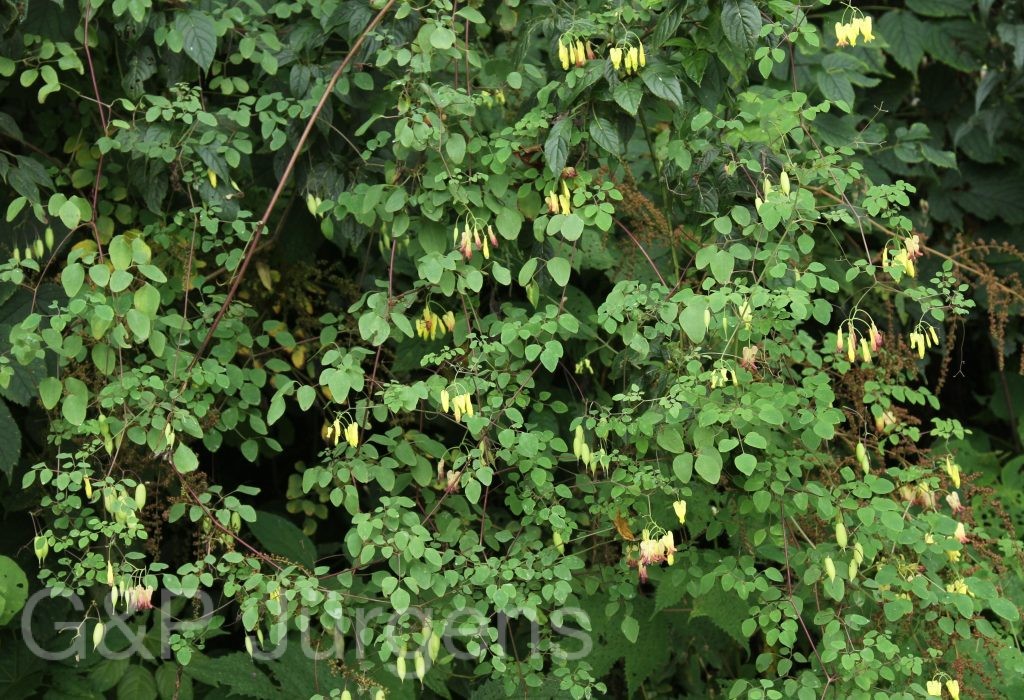
Dactylicapnos lichiangensis (Fedde) Hand.-Mazz. is a scandent herbaceous climber of the Fumarioideae, distributed across the eastern Himalaya and the Sino-Himalayan transition zone. GBIF records (136 occurrences) confirm its presence in southwest China (notably Yunnan, where the epithet references the Lijiang district) and Bhutan, where it ascends into the subtropical and warm-temperate belts. The species was photographed at Tserang in Bhutan at 1,300 m in June, a typical setting along moist forest margins, shaded ravines, and shrubby thickets where it scrambles over neighbouring vegetation. It favours humid, sheltered microhabitats on well-drained slopes between roughly 1,200 and 2,800 m.

The plant is a delicate, glabrous annual or short-lived perennial with slender, brittle, much-branched stems that climb by means of tendril-like terminations of the much-divided leaves. The foliage is biternately to triternately compound, the ultimate segments ovate to lanceolate, glaucous beneath. The pendent, few-flowered racemes bear distinctive yellow, heart-shaped flowers; the outer pair of petals is saccate at the base, forming a dorsal pouch characteristic of the genus, enclosing the inner petals. The fruit is a slender capsule containing several glossy black seeds, each typically bearing an elaiosome that promotes myrmecochorous dispersal.

Dactylicapnos was segregated from Dicentra on the basis of its climbing habit and tendrillar leaves, and lichiangensis sits within a cluster of yellow-flowered Sino-Himalayan species often confused in herbaria. Like many Fumarioideae it contains isoquinoline alkaloids of pharmacological interest. Although not formally assessed as threatened, its restricted distribution and dependence on intact forest-edge habitat make local populations sensitive to deforestation.

Author: (Fedde.) Hand.-Mazz. · Sources: POWO (Kew), Flora of China Vol. 7, Flora of Bhutan Vol. 1, GBIF, Lidén & Fukuhara: Taxonomy of Fumariaceae (1997)

(D.Don) Hutch.

Bhutan2012 477
Bhutan Pele-La 3300m, June

Description

Dactylicapnos scandens is a climbing fumitory of the Himalaya and adjacent China and Indochina, native across China, India, Nepal, Bhutan, Myanmar, Vietnam, Thailand and Sri Lanka; its more than 300 GBIF records include numerous cultivated and naturalised occurrences in Europe, North America and New Zealand, reflecting its popularity as an ornamental climber. It grows in moist temperate forest, thickets and shrubby clearings, scrambling over other vegetation, mostly between about 1500 and 3300 m. The plant shown from Pele-La in Bhutan at 3300 m, flowering in June, sits at the upper edge of this range in cool broadleaved and conifer forest.

It is a herbaceous to suffrutescent perennial climber with slender, much-branched stems clinging by means of branched, tendril-like leaflet tips. The leaves are alternate, two- to three-pinnately compound and glaucous, the ultimate segments small and ovate, the terminal portions modified into coiling tendrils. The flowers hang in pendulous racemes and are zygomorphic with two bilaterally symmetrical, spurred or saccate outer petals enclosing two inner petals, the whole corolla bright golden-yellow. The fruit is an elongate, several-seeded capsule that dehisces to release shining black seeds, each bearing an elaiosome.

Dactylicapnos was separated from Dicentra and Corydalis on the basis of its climbing habit, tendrillate leaves and capsular fruit. D. scandens, based on D. Don's Fumaria scandens and transferred by Hutchinson, is widespread and not threatened, and its toxic isoquinoline alkaloids have attracted pharmacological interest in traditional medicine.

Author: (D.Don) Hutch. · Sources: POWO (Kew), GBIF, Flora of Bhutan, Flora of China, Lidén & Fukuhara revision of Dactylicapnos

(D.Don) Hutch.

Bhutan2012 1316
Bhutan2012 1315
Bhutan2012 678
Bhutan2012 477

Description

Dactylicapnos scandens (D.Don) Hutch. is a scrambling herbaceous climber of the eastern Himalaya and adjacent montane Asia, ranging across Nepal, India, Bhutan, southern China and Myanmar, with extensions into Thailand and Vietnam; the GBIF dataset records some 301 occurrences, the majority along the Sino-Himalayan arc, while scattered points from Europe, North America and New Zealand reflect cultivated or naturalised material. It favours moist temperate and subtropical forest margins, thickets, ravines and disturbed slopes, typically between about 1500 and 3000 m, threading through supporting vegetation by means of tendrillar leaf appendages.

The plant is a glabrous, glaucous perennial with slender, much-branched, climbing stems arising from a slender rootstock. The leaves are alternate, several times pinnately or ternately divided into small ovate to lanceolate leaflets, the terminal segments of the rachis modified into branched tendrils that secure the climbing habit. The pendent inflorescences are racemose, bearing nodding, bright yellow, distinctly heart-shaped flowers; the outer pair of petals is saccate to spurred at the base and connivent at the apex, enclosing the inner petals in the characteristic fumarioid manner. The fruit is a slender, elongate, dehiscent capsule containing several shining black seeds.

Formerly placed in Dicentra and Corydalis, the genus Dactylicapnos is now firmly assigned to the Papaveraceae subfamily Fumarioideae, distinguished by its climbing tendrillate habit and zygomorphic dimerous flowers. The species is widespread and locally common, of no immediate conservation concern, and is valued horticulturally as an ornamental climber for cool temperate gardens.

Author: (D.Don) Hutch. · Sources: POWO (Kew), GBIF, Flora of China, Flora of Bhutan, Flora of Nepal, Lidén & Zetterlund monograph of Dactylicapnos and Fumarioideae

Hook.f. & Thomson

Nepal 99 399 ergebnis
West-Nepal Talphi 2830m, June
Nepal 99 551 ergebnis
West-Nepal Talphi 2830m, June
Nepal 99 552 ergebnis
West-Nepal Talphi 2830m, June

Description

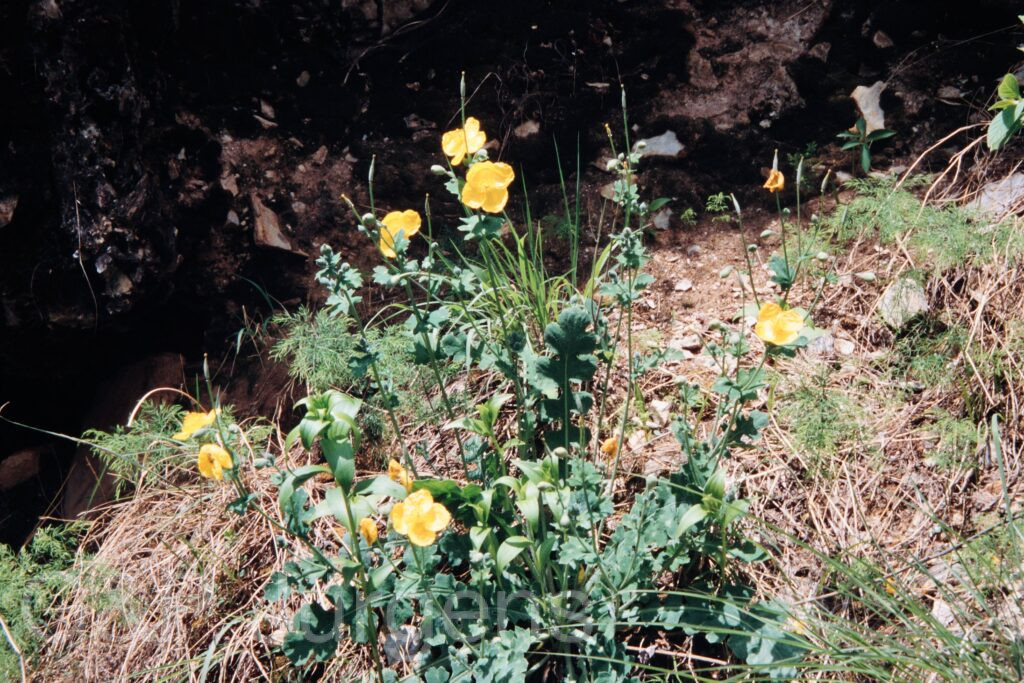
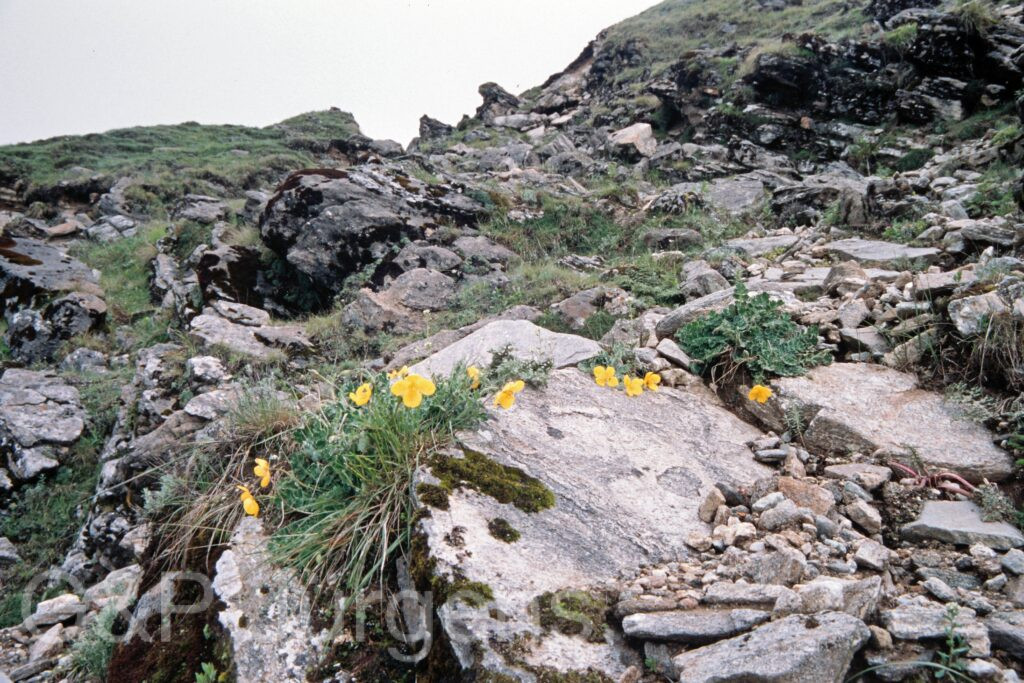
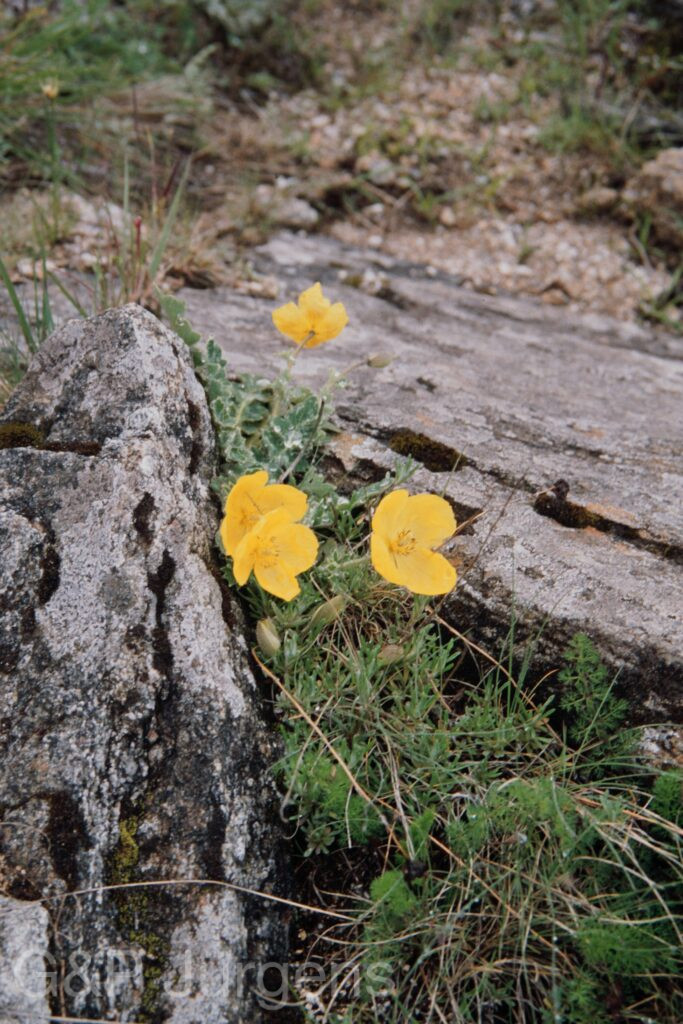
Dicranostigma lactucoides Hook.f. & Thomson is a yellow-flowered Himalayan poppy relative known from about 145 records in Nepal, China, India and Bhutan. It is a plant of dry, open, often disturbed ground: stony slopes, rock crevices, river terraces, field margins and roadside banks in the inner valleys, generally in the warm-temperate to subalpine belt between roughly 2500 and 4000 m. The individual photographed at Talphi in West Nepal at 2830 m in June reflects its preference for sunny, well-drained, somewhat ruderal sites in the comparatively arid trans-Himalayan rain-shadow.

The species is an erect annual to short-lived perennial herb containing yellow to orange latex. The basal leaves form a rosette and are oblanceolate in outline, pinnately lobed to lyrate-pinnatifid with a large terminal lobe, glaucous and somewhat lettuce-like, whence the epithet "lactucoides." Cauline leaves are smaller and clasping. The flowers are borne on slender pedicels; two caducous sepals enclose four broad, crinkled, bright yellow petals surrounding numerous stamens. The fruit is the diagnostic feature of the genus: a slender, elongate, more or less cylindrical siliqua-like capsule dehiscing from the apex, crowned by a short style with a forked (bifid) stigma, and releasing many small seeds.

Dicranostigma is a small Asian genus close to Glaucium and Chelidonium in tribe Chelidonieae, distinguished by its elongate capsule and divided stigma; D. lactucoides is its principal Himalayan representative. Like its allies it contains benzylisoquinoline alkaloids and has been used locally in folk medicine. As a ruderal, weedy colonist of open ground it is resilient to moderate disturbance and is not regarded as threatened across its Sino-Himalayan range.

Author: Hook.f. & Thomson · Sources: POWO (Kew), GBIF, Flora of China, Flora of Nepal, Hooker's Flora of British India, monograph of Papaveraceae tribe Chelidonieae

Prain

BhutanPG2011 198
Bhutan Tsochenchen, 3650m June
BhutanPG2011 206
Bhutan Tsochenchen, 3650m June

Description

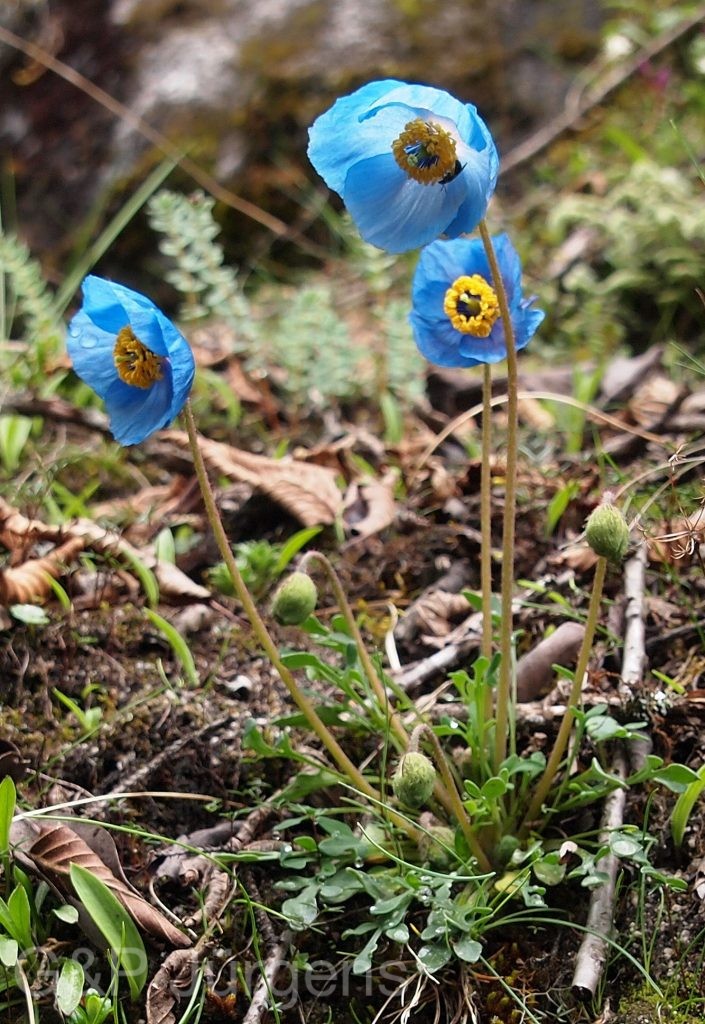
Meconopsis bella is a dwarf, exquisite blue poppy endemic to the eastern Himalaya, recorded from Nepal, northern India, Bhutan and adjacent southern China, the 79 GBIF occurrences reflecting its narrow range and the inaccessibility of its habitat. It grows in cool, moist, sheltered situations at high elevation, characteristically rooted in crevices of rock faces, cliff ledges, moraines and shaded banks between roughly 3300 and 4500 m. The photographed plant was found at Tsochenchen in Bhutan at 3650 m in June, the early-summer flowering season when it blooms amid the monsoon mists of the subalpine zone.

It is a small, slender, tap-rooted perennial lacking a leafy stem, the few leaves forming a basal tuft; the blades are obovate and pinnately lobed or coarsely toothed, on long slender petioles, bearing scattered fine hairs. The flowers are solitary on long, thread-like leafless scapes that arise directly from the rootstock and nod gracefully. Each flower has four broad, satiny petals in pale sky-blue to lavender or, in some forms, soft pink-mauve, surrounding a boss of yellow stamens and a prominent ovary tipped by a clavate stigma. The fruit is a narrow erect capsule dehiscing apically to shed numerous small seeds.

The genus Meconopsis is the celebrated assemblage of Asiatic blue poppies, and M. bella is among the smallest and most delicate, belonging to the crevice-dwelling group. Its scattered, cliff-bound populations and exacting requirements for cool humid air and sharp drainage render it both horticulturally prized and intrinsically vulnerable to collection and climatic shifts. Although not formally Red-Listed, its restricted eastern Himalayan endemism warrants conservation attention, and seed-grown stock underpins its limited cultivation in specialist gardens.

Author: Prain · Sources: POWO (Kew), GBIF, Flora of Bhutan, Grey-Wilson: The Genus Meconopsis, Flora of China

Grey-Wilson

Nepal 99 248 ergebnis
West-Nepal Tallekh 3155m, June
Nepal 99 265 ergebnis
West-Nepal Tallekh 3155m, June
Nepal 99 266 ergebnis
West-Nepal Tallekh 3155m, June

Description

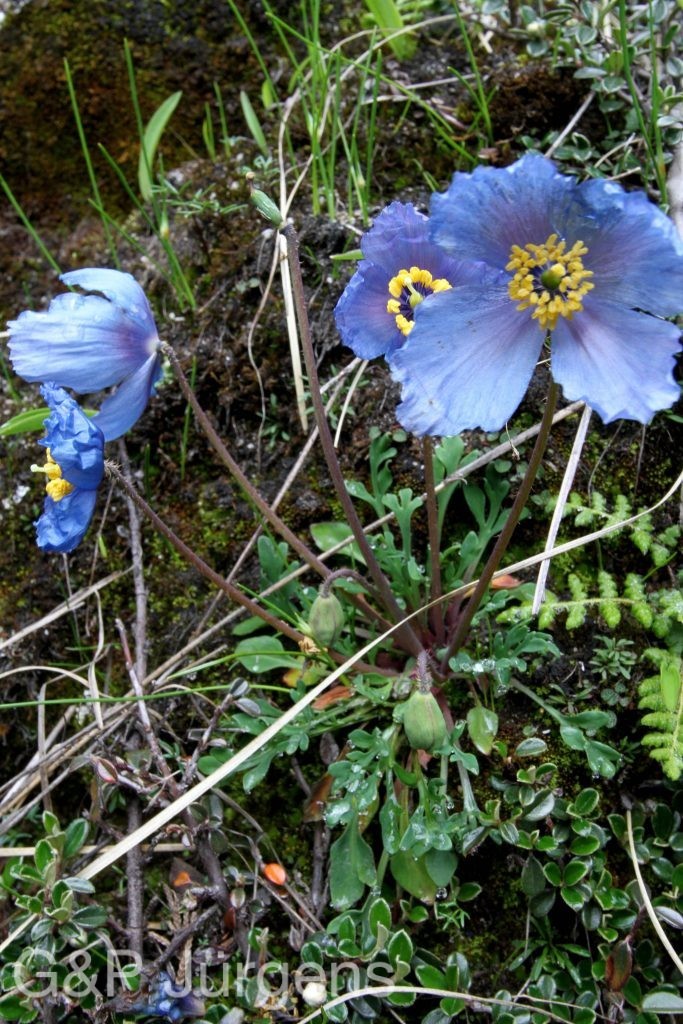
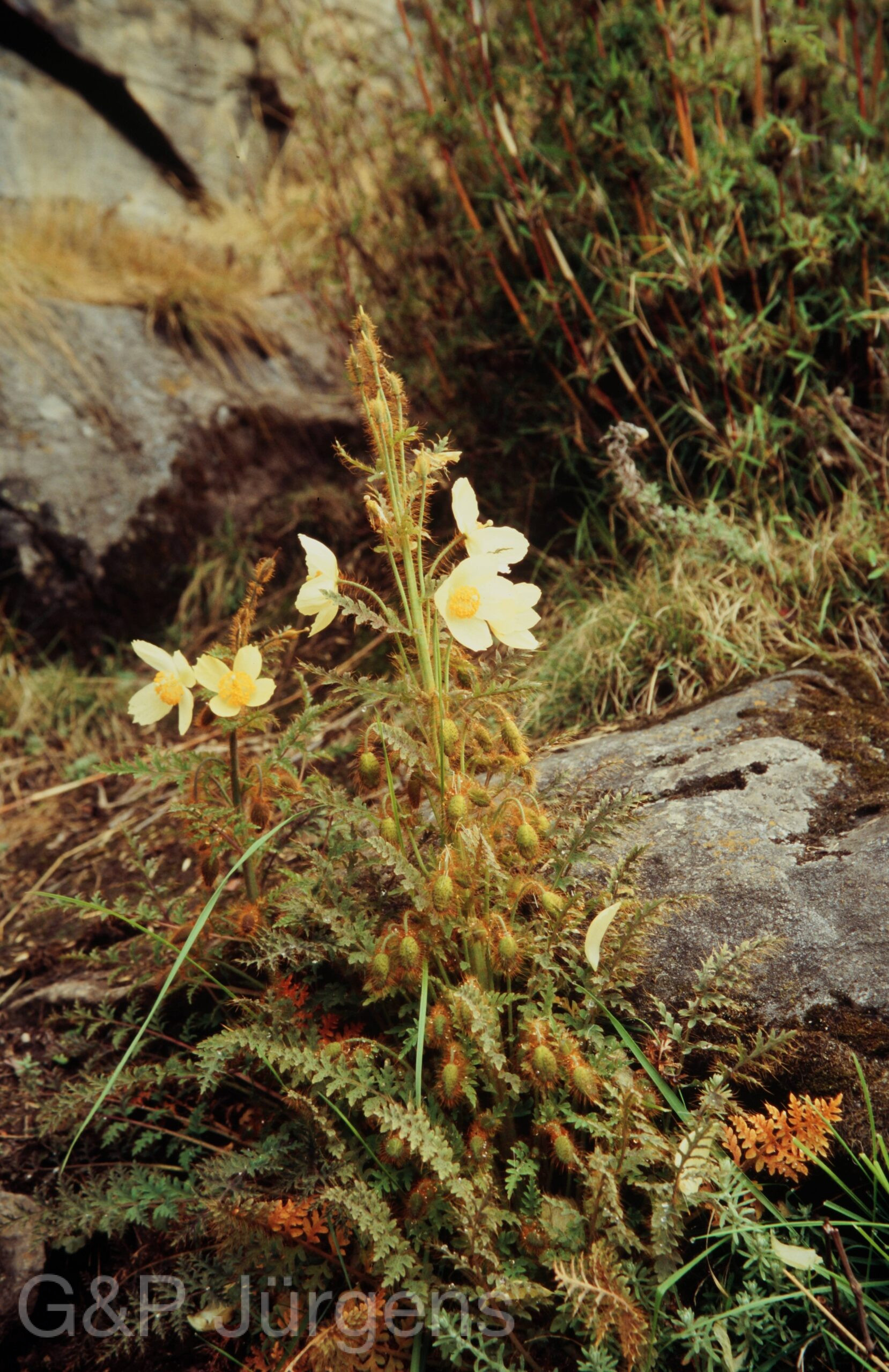
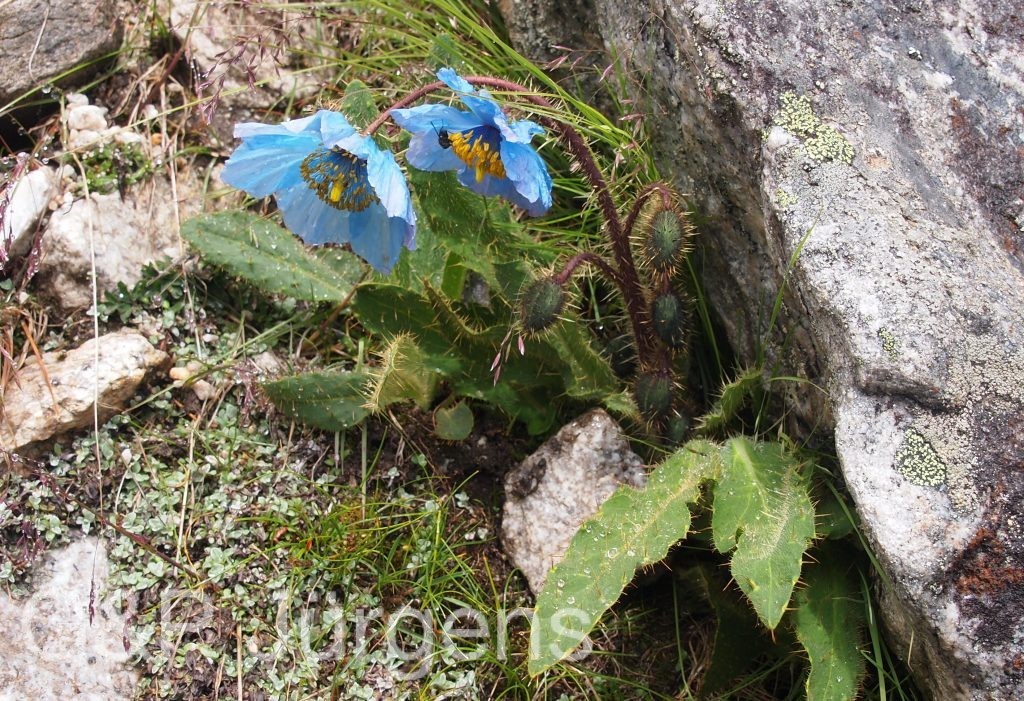
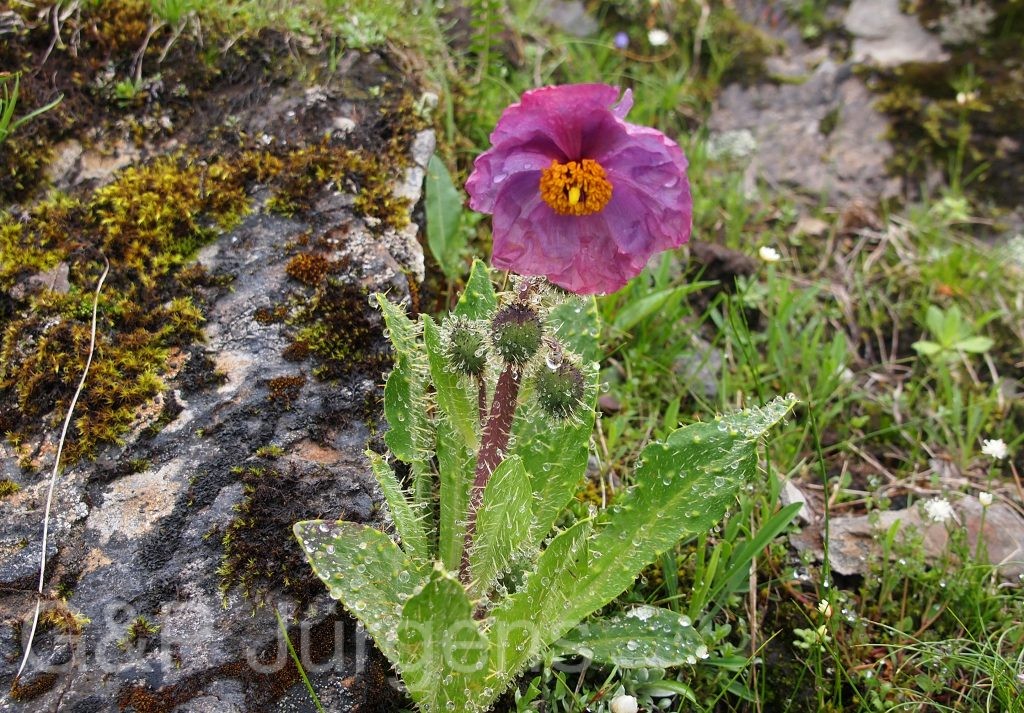
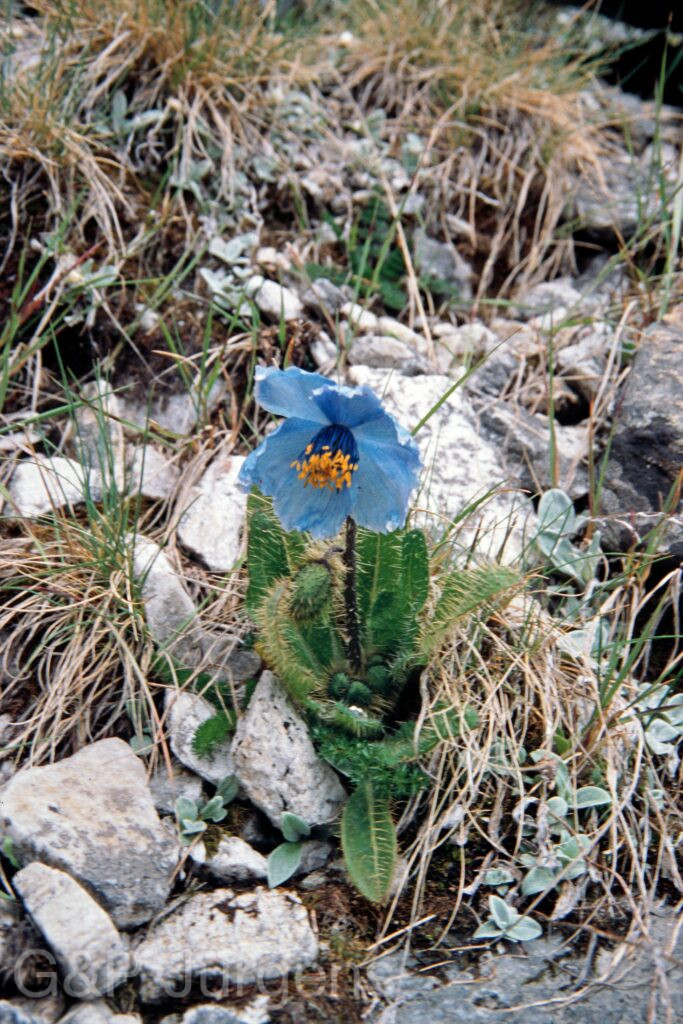
Meconopsis chankheliensis is a narrowly endemic poppy of the western Himalaya, presently documented only from Nepal, where the comparatively small number of records (18 georeferenced occurrences) reflects both its restricted range and the remoteness of its habitat. It is a plant of moist, sheltered situations in the upper temperate and subalpine zones, typically growing in damp meadows, on humus-rich banks and among rocks beside seepages and streamsides. The photographed material from Tallekh in West Nepal, at about 3155 m and flowering in June, is characteristic of the moderate elevations at which the species comes into bloom following the onset of the early summer monsoon moisture.

The plant is a tufted herb arising from a basal rosette of leaves and a stout taproot. The foliage is more or less covered in spreading bristly hairs; the leaves are oblanceolate to obovate, narrowed to a winged petiole, with entire to lobed or coarsely toothed margins. Flowering stems are erect and bristly, bearing one to several flowers. The blooms are bowl-shaped and showy, with four (occasionally more) broad, satiny petals in shades of blue to purplish-blue, surrounding a dense boss of numerous stamens with slender filaments and a short style crowned by a lobed stigma. The fruit is an elongate, bristly capsule dehiscing by apical valves to release many small seeds.

Meconopsis is a genus of the Sino-Himalayan region whose blue poppies have attracted intense horticultural and taxonomic attention, much of it through the monographic work of Christopher Grey-Wilson, whose name is associated with this taxon. As a localised Nepalese endemic restricted to a single mountain region, M. chankheliensis is of conservation concern, vulnerable to grazing pressure, habitat disturbance and the climatic shifts increasingly affecting Himalayan alpine floras. Its narrow distribution makes accurate field documentation and protection of known populations particularly important.

Author: Grey-Wilson · Sources: POWO (Kew), GBIF, Flora of Nepal, Annotated Checklist of the Flowering Plants of Nepal, Grey-Wilson: The Genus Meconopsis (monograph)

G.Taylor

Nepal 2009 48 ergebnis
Nepal Helambu Hile-Bhangyang 3380, May

Description

Meconopsis dhwojii is a narrow Central Himalayan endemic, restricted to the high mountains of Nepal, where GBIF records cluster; the remaining occurrences in Great Britain and Canada represent cultivated and herbarium material. The 46 georeferenced records reflect its rarity and confined range. It inhabits the upper subalpine and alpine zone between roughly 3000 and 4300 m, growing on open rocky slopes, screes, moist cliff ledges and disturbed grazed turf. The plant photographed at Hile-Bhangyang in Helambu at about 3380 m in May typifies this monsoon-influenced montane habitat, where flowering coincides with snowmelt and the early growing season.

This is a monocarpic herb forming a dense basal rosette of pinnatifid to pinnatisect leaves, the whole plant conspicuously clothed in spreading, pale yellowish-brown to purple-based bristly hairs arising from dark spotted bases. From the rosette a stout, leafy, bristly flowering stem ascends, bearing the flowers in a leafy raceme. The nodding to half-spreading flowers have four broad, pale yellow petals; the numerous stamens surround a single style topped by a clavate stigma. The fruit is a narrowly oblong, bristly capsule dehiscing by short apical valves and releasing many small seeds.

Named for Dhwoj, a Nepali plant collector of the early-twentieth-century explorations, M. dhwojii belongs to the bristly, monocarpic poppyworts and is allied to M. paniculata and M. napaulensis within section Aculeatae. Like its relatives it dies after a single flowering, relying entirely on copious seed for persistence, an adaptation to unstable scree and disturbed alpine ground. Though not formally assessed as threatened, its restricted Nepalese distribution and collection for horticulture make habitat integrity important to its survival.

Author: G.Taylor · Sources: POWO (Kew), GBIF, Flora of Nepal, Annotated Checklist of the Flowering Plants of Nepal, Grey-Wilson Meconopsis monograph

G.Taylor

Description

Meconopsis gracilipes is a rare Himalayan poppy of restricted range, recorded from Nepal and adjacent south-western China. The low GBIF tally of 50 occurrences reflects both its scarcity and its confinement to remote high-mountain terrain. It grows in the subalpine and lower alpine zone, on shaded rocky banks, moist cliff ledges, mossy boulders and the margins of forest and shrubbery, generally between about 3000 and 4000 m. The plant photographed at Koktrok in the Helambu region of Nepal at about 3100 m in May exemplifies this damp, sheltered montane habitat, where it flowers early in the growing season before the full monsoon.

It is a slender, monocarpic or short-lived herb forming a rosette of petiolate, lobed to pinnatifid leaves, the plant sparsely clothed in fine bristly hairs. From the rosette arise delicate, thread-like (gracile) flowering stems, the specific epithet referring to these slender pedicels. The nodding flowers have four broad petals in shades of pale blue to lavender or purple; numerous stamens surround a short style with a small capitate stigma. The fruit is a narrow, few-valved capsule opening at the apex to shed many minute seeds.

Meconopsis gracilipes belongs among the blue-flowered Himalayan poppies and is allied to slender-stemmed species such as M. bella, sharing their preference for moist, shaded rock habitats rather than open scree. Its restricted distribution, low recorded abundance and dependence on specialised microhabitats make it of potential conservation interest, though it has not been formally assessed; the integrity of its high-elevation rock and forest-margin habitats is key to its persistence.

Author: G.Taylor · Sources: POWO (Kew), GBIF, Flora of Nepal, Annotated Checklist of the Flowering Plants of Nepal, Grey-Wilson Meconopsis monograph

Hook.f. & Thomson

BhutanPG2011 552 1
Bhutan Ludlow-Sherriff-Trail Dem-Tso, 4650m July
BhutanPG2011 664
Bhutan Ludlow-Sherriff-Trail Dem-Tso, 4700m July
Nepal 99 328 ergebnis
West-Nepal Kalmura 4300m, June

Description

Meconopsis horridula is one of the most widespread of the blue poppies, distributed across the high Himalaya and the Tibetan plateau through China, Nepal, Bhutan and India, with a large dataset of around 1472 occurrences (records reported from cultivation in Britain, Canada and elsewhere reflect its horticultural celebrity). It inhabits open stony slopes, scree, moraine, rock crevices and high alpine turf, typically between about 4000 and 5000 m. The photographed plants from Dem-Tso on the Ludlow-Sherriff Trail in Bhutan at 4650–4700 m in July, and from Kalmura in West Nepal at 4300 m in June, are characteristic of its preference for exposed, well-drained high-elevation ground.

It is a monocarpic herb, the whole plant densely armed with stiff, spreading, pale to purplish spines. The leaves form a basal rosette and are oblanceolate, entire to lobed and likewise spiny on both surfaces and along the petiole. Flowering stems bear nodding, saucer-shaped flowers, solitary on long scapes or several on a leafy raceme; the four (to six) petals are sky-blue to purple or occasionally reddish, surrounding a boss of yellow stamens and a stout ovary topped by a short style. The fruit is an erect, narrowly ellipsoid, bristly capsule dehiscing by apical valves to release numerous small seeds.

Meconopsis horridula, described by Hooker and Thomson, has long served as a catch-all for variable spiny blue poppies, and modern revisions have segregated several taxa (such as M. racemosa and M. prattii) formerly lumped under it. Being monocarpic, individuals flower once and die after seed-set. Though locally common, the genus is subject to over-collection of seed and pressure from trekking and grazing across its range.

Author: Hook.f. & Thomson · Sources: POWO (Kew), GBIF, Flora of China (Papaveraceae), Annotated Checklist of the Flowering Plants of Nepal, Grierson & Long Flora of Bhutan, Christopher Grey-Wilson's monograph The Genus Meconopsis