
Hook.f. & Thomson
Description
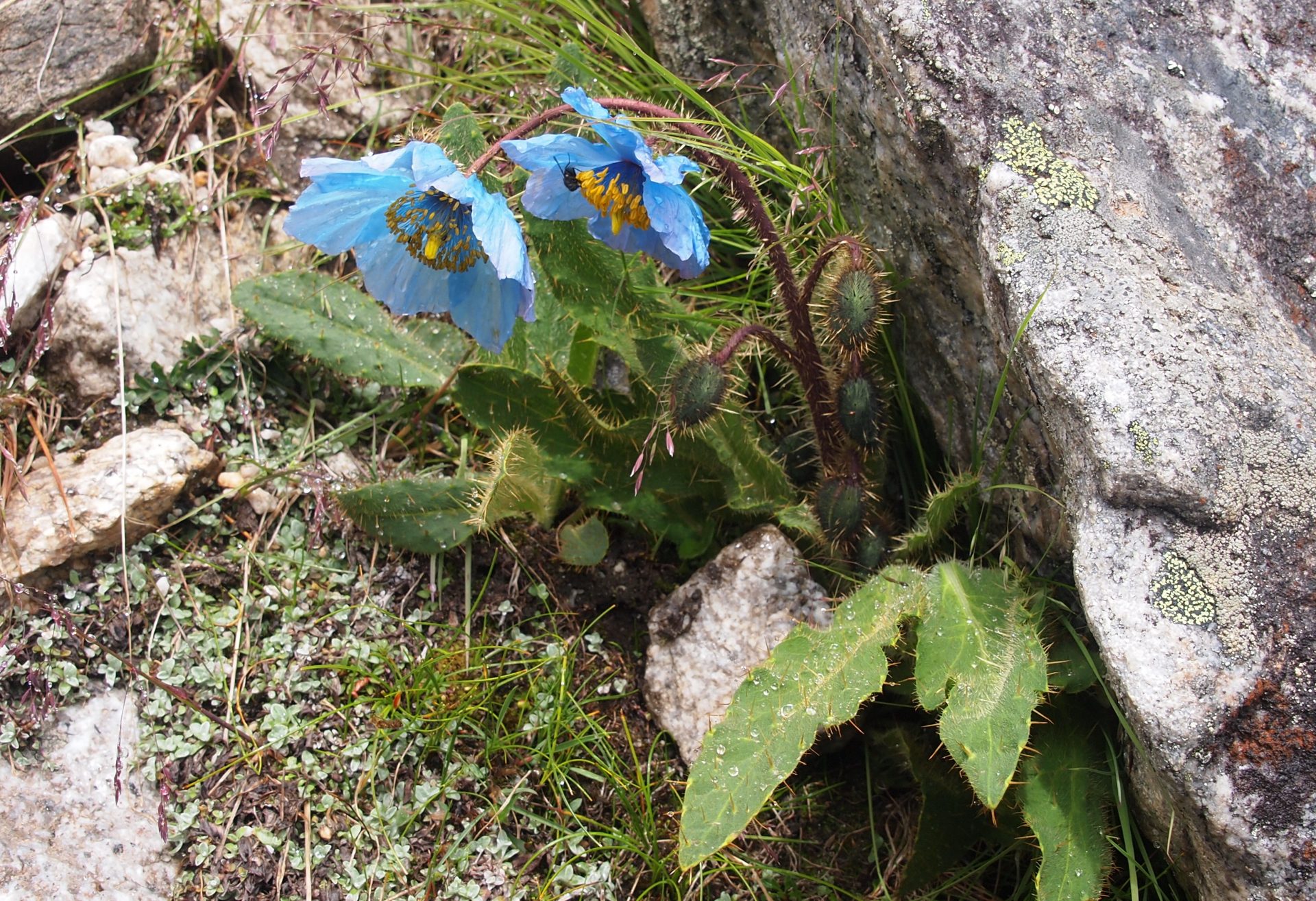
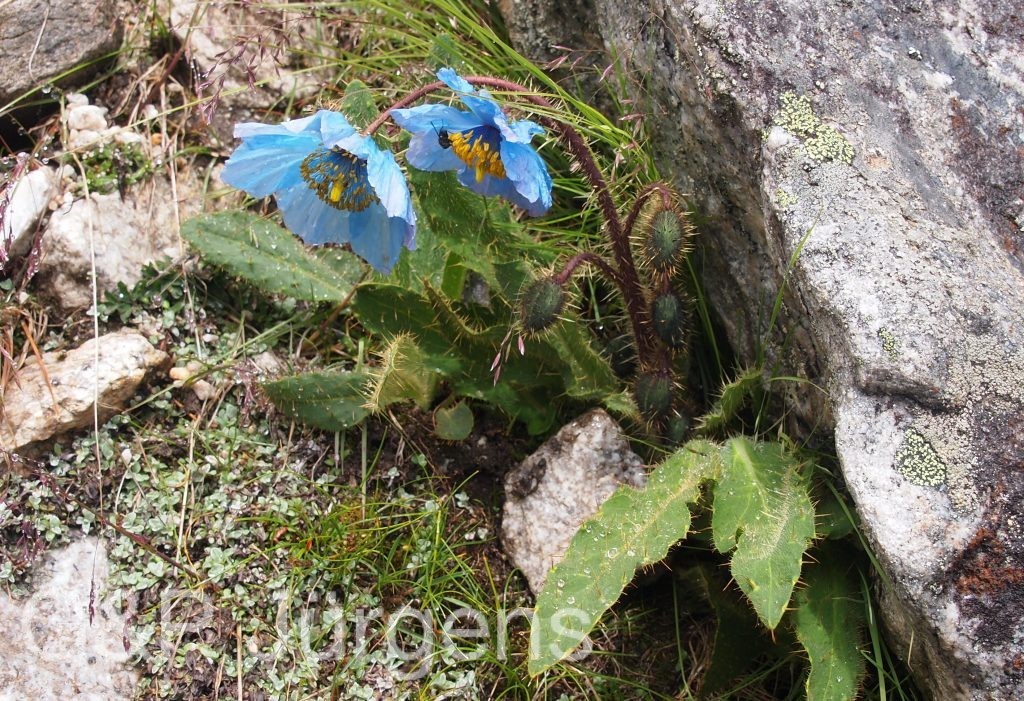
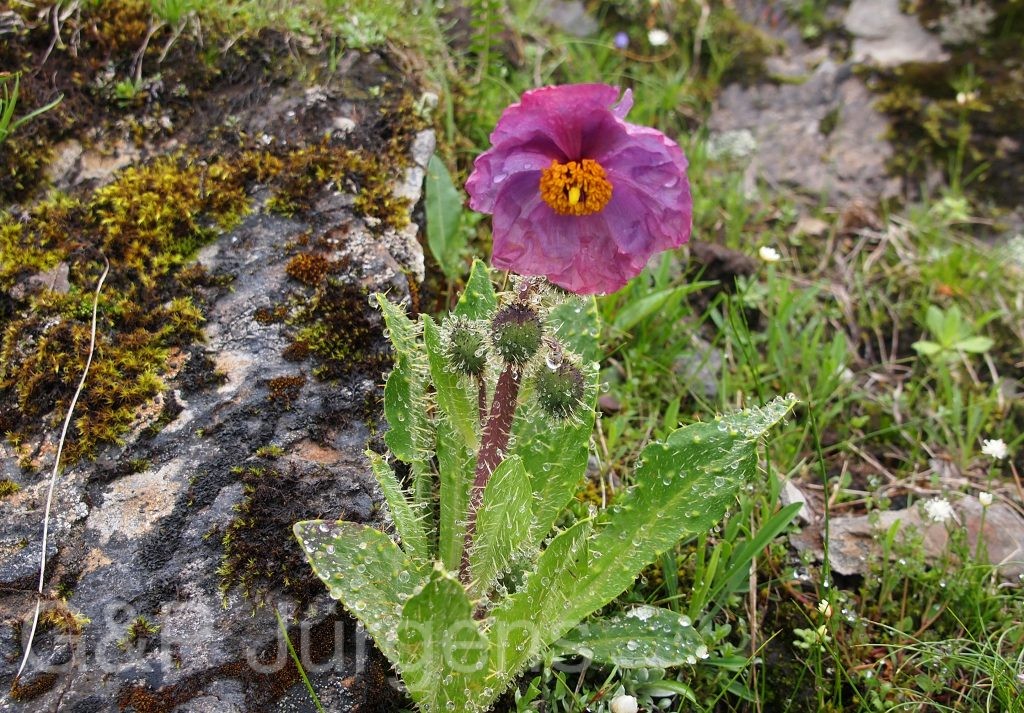
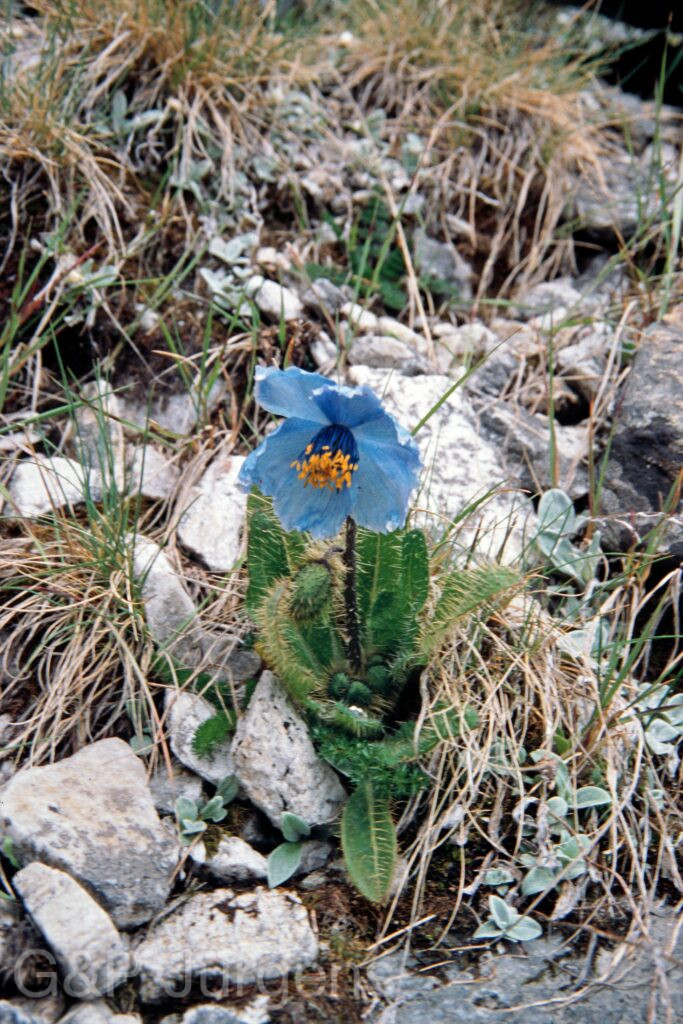
Meconopsis horridula is one of the most widespread of the blue poppies, distributed across the high Himalaya and the Tibetan plateau through China, Nepal, Bhutan and India, with a large dataset of around 1472 occurrences (records reported from cultivation in Britain, Canada and elsewhere reflect its horticultural celebrity). It inhabits open stony slopes, scree, moraine, rock crevices and high alpine turf, typically between about 4000 and 5000 m. The photographed plants from Dem-Tso on the Ludlow-Sherriff Trail in Bhutan at 4650–4700 m in July, and from Kalmura in West Nepal at 4300 m in June, are characteristic of its preference for exposed, well-drained high-elevation ground.
It is a monocarpic herb, the whole plant densely armed with stiff, spreading, pale to purplish spines. The leaves form a basal rosette and are oblanceolate, entire to lobed and likewise spiny on both surfaces and along the petiole. Flowering stems bear nodding, saucer-shaped flowers, solitary on long scapes or several on a leafy raceme; the four (to six) petals are sky-blue to purple or occasionally reddish, surrounding a boss of yellow stamens and a stout ovary topped by a short style. The fruit is an erect, narrowly ellipsoid, bristly capsule dehiscing by apical valves to release numerous small seeds.
Meconopsis horridula, described by Hooker and Thomson, has long served as a catch-all for variable spiny blue poppies, and modern revisions have segregated several taxa (such as M. racemosa and M. prattii) formerly lumped under it. Being monocarpic, individuals flower once and die after seed-set. Though locally common, the genus is subject to over-collection of seed and pressure from trekking and grazing across its range.
Author: Hook.f. & Thomson · Sources: POWO (Kew), GBIF, Flora of China (Papaveraceae), Annotated Checklist of the Flowering Plants of Nepal, Grierson & Long Flora of Bhutan, Christopher Grey-Wilson's monograph The Genus Meconopsis