
Hook.f. & Thomson
Description
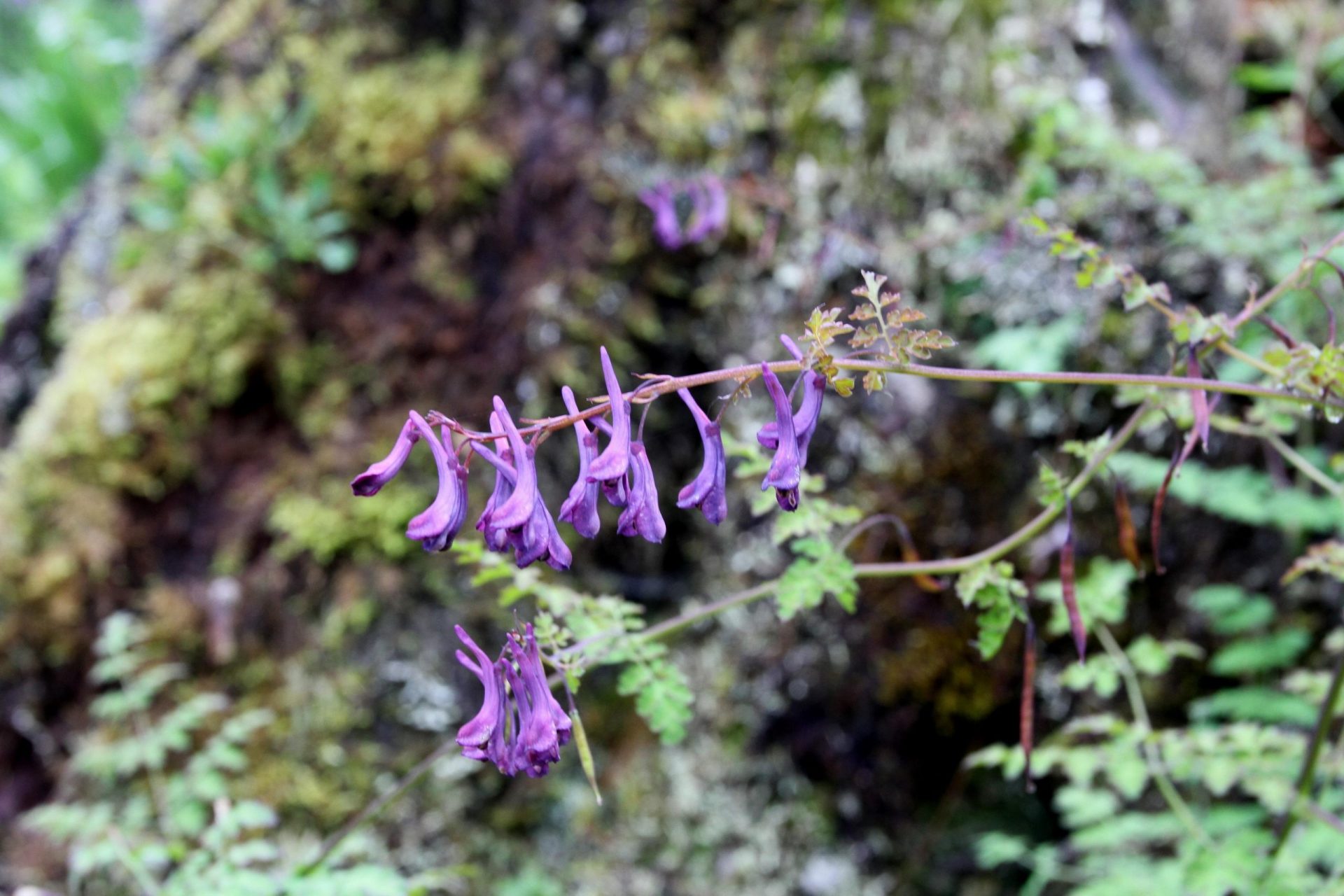
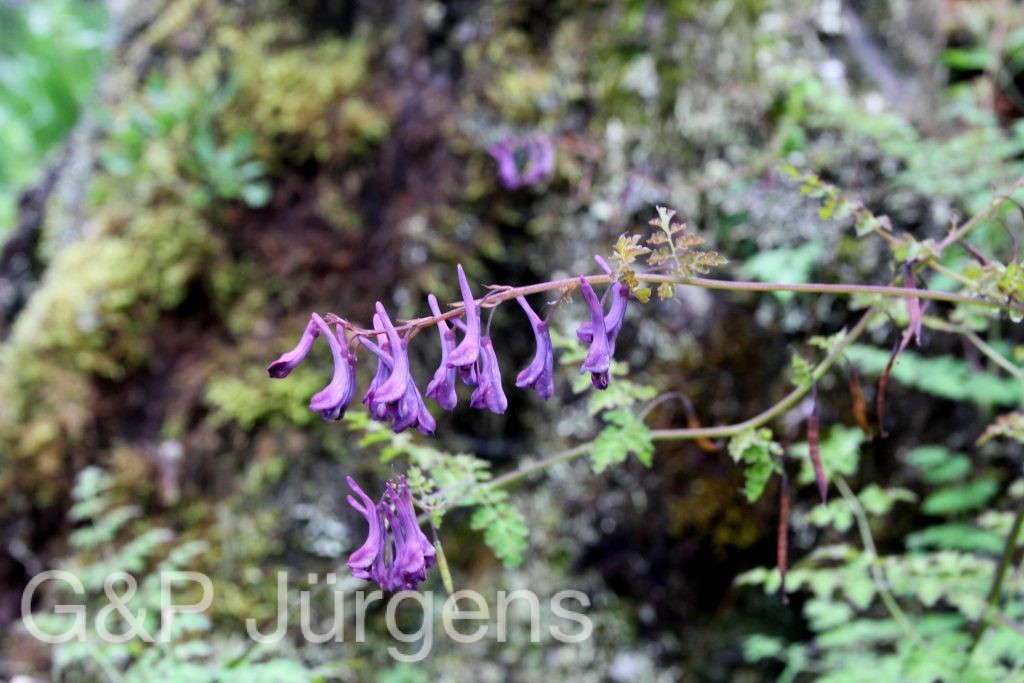
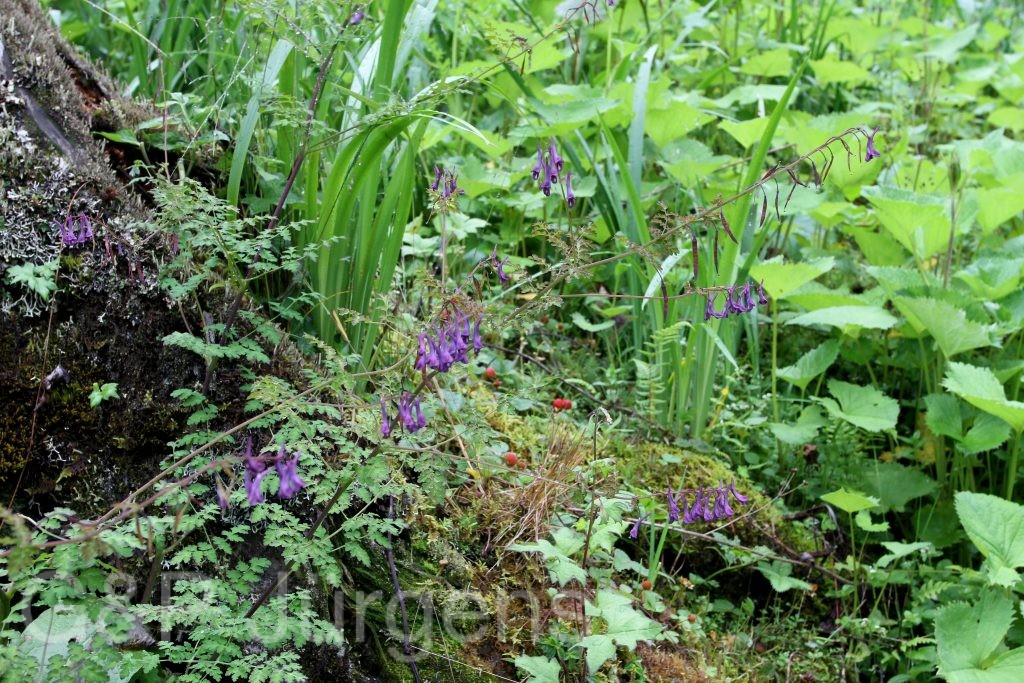
Corydalis flaccida is a Himalayan herb distributed through China, Nepal, India and Bhutan, with GBIF documenting 138 occurrences across this Sino-Himalayan arc. It grows in cool, moist montane to sub-alpine habitats, including forest margins, shrubberies, shaded banks, rocky slopes and stream-sides, broadly between 2700 and 4000 m. The photographed plant from the Chele-La pass in western Bhutan at about 3700 m, flowering in July, illustrates its monsoon-season blooming in humid high-pass environments where it grows among rocks and moist alpine scrub.
The species is an erect, somewhat lax, glabrous annual or short-lived perennial herb with brittle, often somewhat flaccid stems, as the epithet suggests. The leaves are alternate and two- to three-pinnately divided into small ovate to oblong segments, frequently glaucous beneath. Flowers are borne in elongating racemes subtended by leafy or dissected bracts; each zygomorphic flower has four petals in two whorls, the upper petal prolonged backward into a slender spur. The corolla is typically blue to purplish-blue, sometimes with darker tips, and the inner petals are apically connate over the stigma. The fruit is a slender, linear, dehiscent capsule containing several shiny black seeds, each usually bearing an oily elaiosome.
Described by Hooker and Thomson, the species belongs to the large, taxonomically complex genus Corydalis (Fumarioideae), notable in the Himalaya for its diversity of blue-flowered species. The elaiosome-bearing seeds promote myrmecochorous (ant-mediated) dispersal, while the spurred flowers are adapted for pollination by long-tongued bees. Like many Himalayan Corydalis it contains isoquinoline alkaloids of pharmacological interest. With a broad regional distribution it is not considered threatened, though its specialised high-elevation habitats are sensitive to land-use and climatic change.
Author: Hook.f. & Thomson · Sources: POWO (Kew), GBIF, Flora of China, Flora of Bhutan, Revision of the genus Corydalis (Lidén & Zetterlund)