
Buch.-Ham. ex D.Don
Description
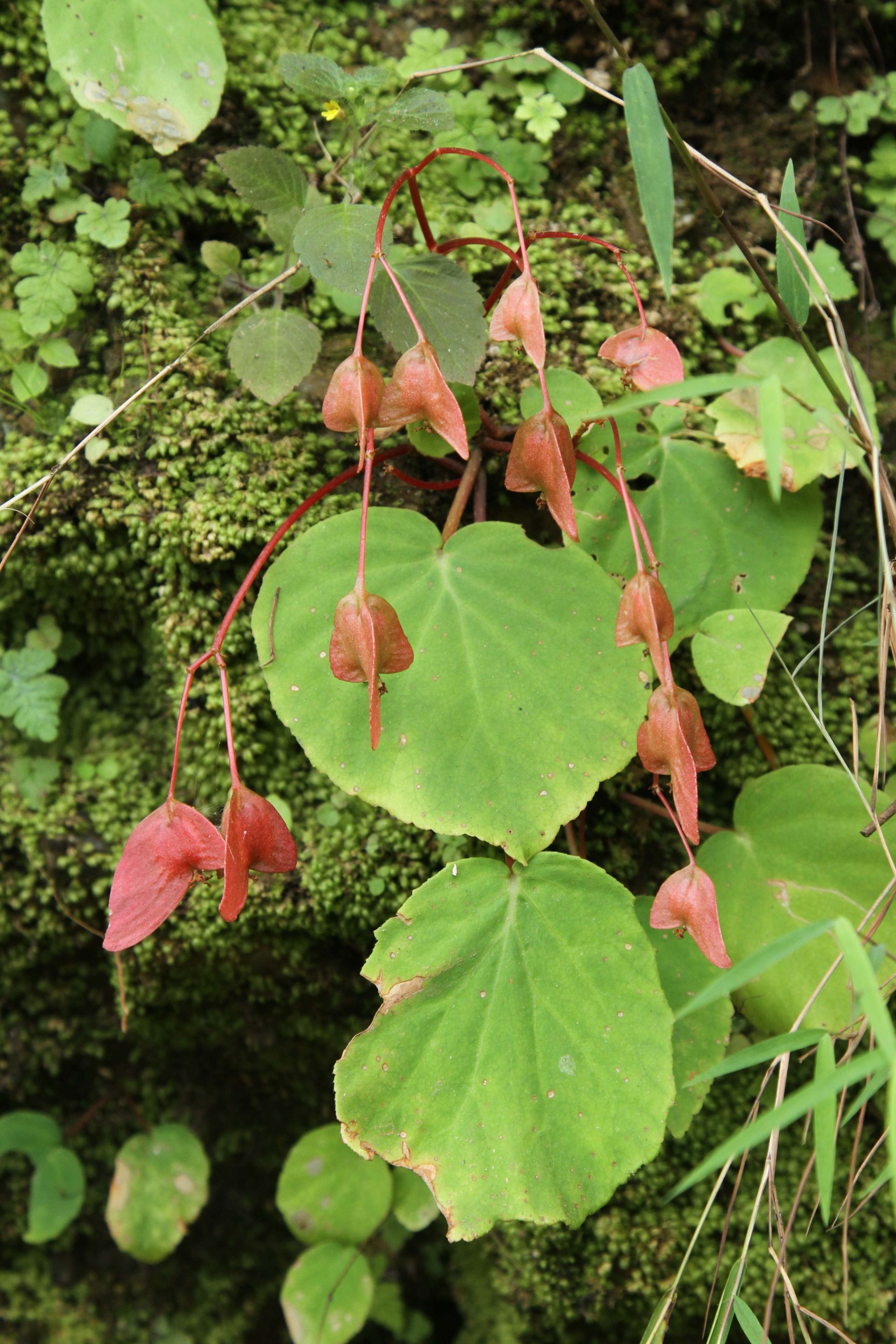
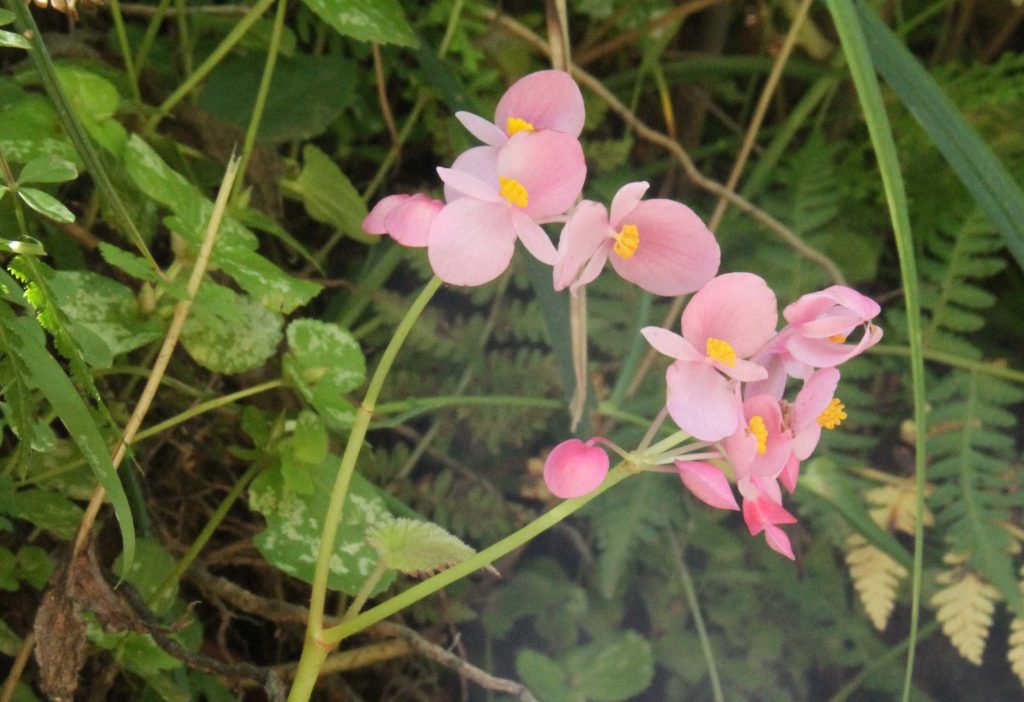
Begonia dioica is a Himalayan tuberous herb whose GBIF range (c. 147 occurrences) centres on India, Nepal, Bhutan and Pakistan, with a few cultivated European records. It grows in shaded, humid situations—mossy rock faces, damp banks, ravine walls and broadleaved forest floor—generally at mid elevations between roughly 1000 and 2800 m, flowering through the monsoon into autumn. The plant photographed from Wangdi (Wangdue) in Bhutan at 2500 m, in flower in September, typifies its preference for cool, moist, partially shaded montane microhabitats kept continuously damp by seepage.
It is a low, succulent, monoecious perennial arising from a small subterranean tuber, with reddish, watery, more or less hairy stems 10–40 cm tall. The leaves are alternate, ovate and markedly asymmetric (oblique) at the base in the manner characteristic of the genus, palmately veined, with a serrate to shallowly lobed, ciliate margin. As in all Begonia the flowers are unisexual and borne in axillary cymes; staminate flowers have two larger and two smaller white to pinkish tepals with yellow stamens, while pistillate flowers subtend an inferior, three-winged ovary. The fruit is a membranous, unequally three-winged capsule releasing minute seeds.
Described by Buchanan-Hamilton (ex D. Don), the epithet "dioica" is misleading because the species is in fact monoecious—a frequent source of nomenclatural confusion in Begonia, a genus of several thousand species. It is locally frequent and not regarded as threatened, though dependent on intact shaded forest and seepage. Ecologically it specialises in moist rock and forest-floor niches, its dust-like seeds dispersed by water splash and air currents.
Author: Buch.-Ham. ex D.Don · Sources: POWO (Kew), GBIF, Flora of Bhutan, Flora of British India, Begoniaceae (Doorenbos, Sosef & de Wilde monograph)