
L.
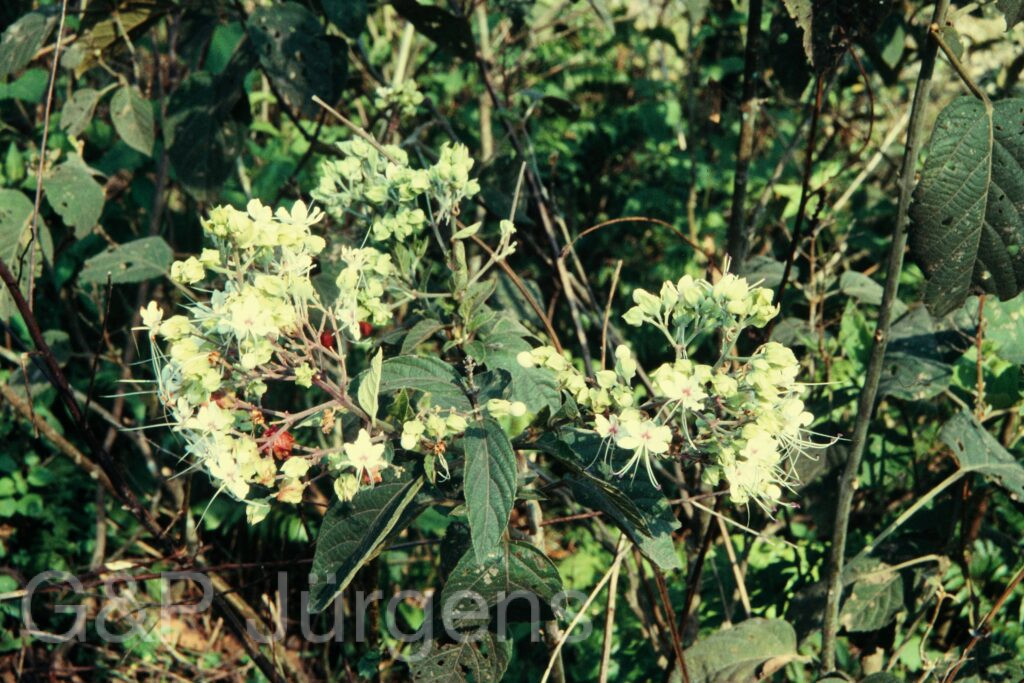

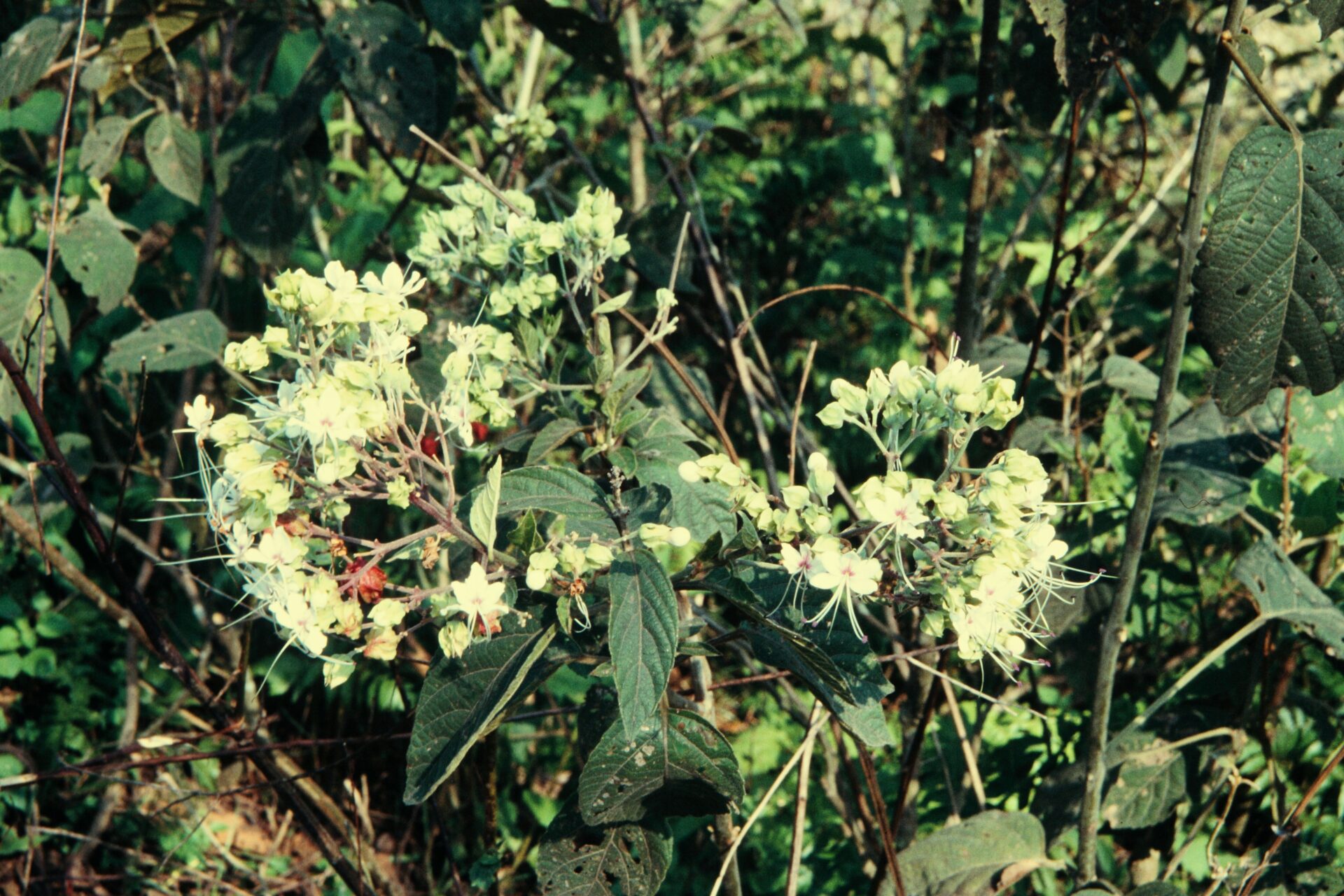
Nepal Sabha-Khola 520m, May
Description
Clerodendrum infortunatum is a common shrub of the lowland and foothill regions of tropical southern and southeastern Asia. GBIF records document a wide range across India, Thailand, Sri Lanka, Indonesia, Malaysia, Nepal, Bangladesh, the Philippines, China, Bhutan and Myanmar, with naturalised or cultivated occurrences in Brazil, Mexico, Singapore and elsewhere, amounting to over 2200 records. It is a plant of forest margins, clearings, wastelands, roadsides and disturbed secondary scrub, often forming dense thickets in the warm humid lowlands. The photographed material from the Sabha-Khola valley in Nepal at 520 m, flowering in May, is typical of its occurrence in the subtropical foothill belt, where it blooms in the pre-monsoon period.
It is an erect, soft-wooded shrub usually under 2 m, with quadrangular young stems and large, broadly ovate to cordate leaves that are opposite, softly pubescent and emit a characteristic unpleasant smell when crushed. The flowers are borne in large, lax, terminal panicled cymes; each has an inflated, often reddish calyx and a white to pinkish-tinged, salverform corolla with a slender tube and five spreading lobes, the four stamens and style long-exserted. The fruit is a fleshy drupe seated on the persistent, accrescent calyx, splitting at maturity into four nutlet-like pyrenes.
Formerly placed in the Verbenaceae, Clerodendrum is now treated within the Lamiaceae following molecular phylogenetic reclassification. C. infortunatum is well known in traditional medicine across South Asia, where its leaves and roots are used against fevers and skin and digestive ailments. Ecologically it is a pioneer of disturbed ground, its exserted flowers attracting butterflies and other long-tongued pollinators, and its drupes dispersed by birds.
Author: L. · Sources: POWO (Kew), GBIF, Flora of Nepal, Flora of China (Lamiaceae), Revision of Clerodendrum (Steane & Mabberley)