
Maxim.
Description
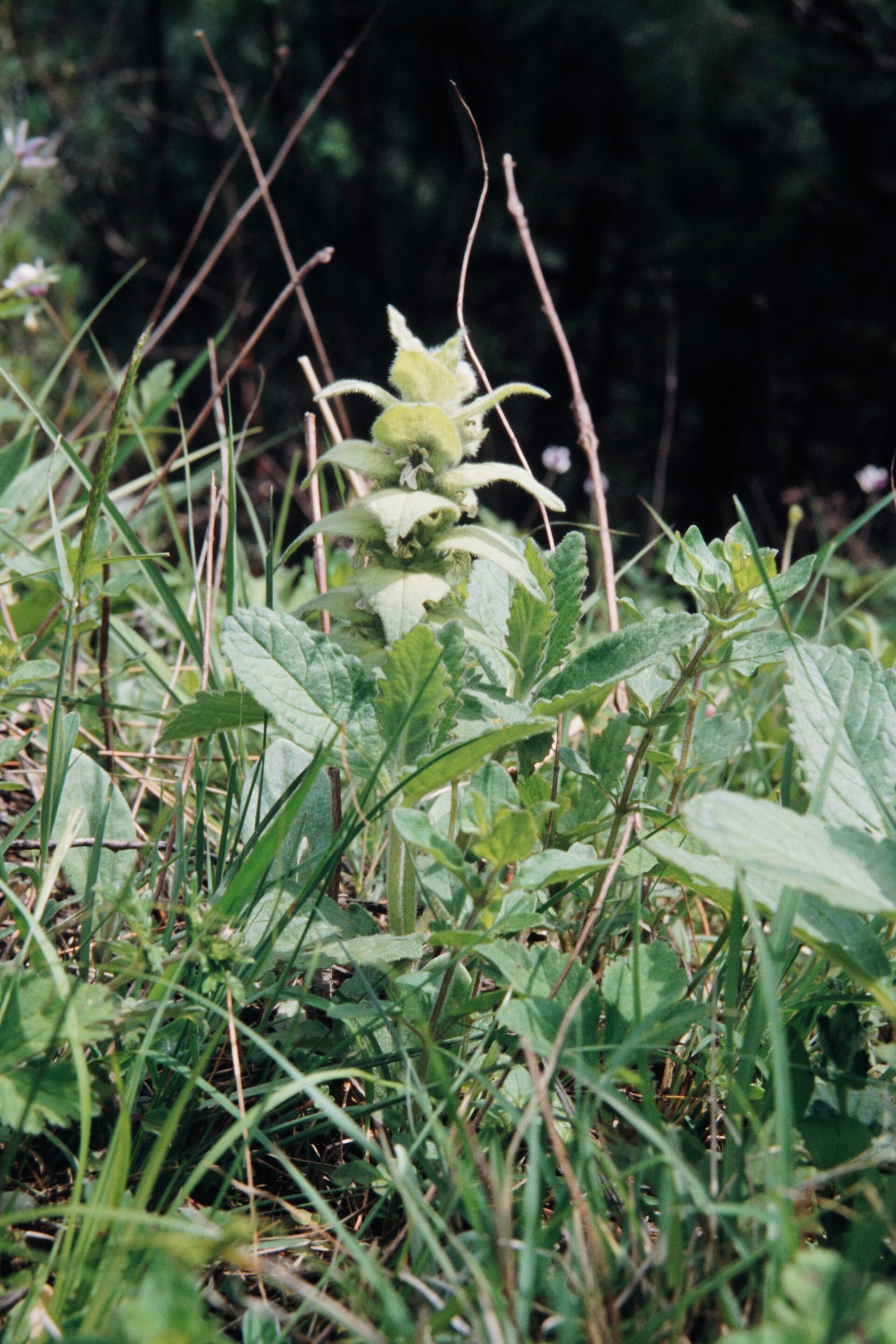
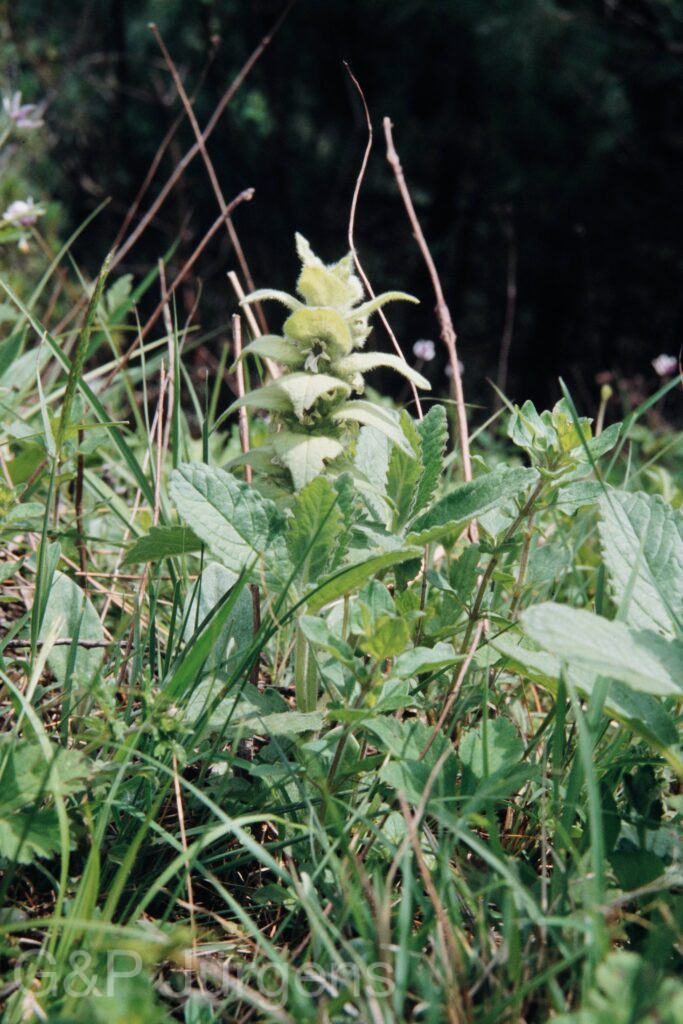
Ajuga lupulina is a robust perennial herb of the Sino-Himalayan region, distributed across China, Nepal and India and extending into Mongolia; GBIF logs about 1205 occurrences with its centre in the Tibetan Plateau borderlands and the high Himalaya. It grows on open alpine and subalpine slopes, gravelly pastures, riverbanks and stony meadows, generally between about 2500 and 4300 m. The photographed plant was found in West Nepal at Sallibagar Khola at roughly 3100 m in June, a typical setting for this conspicuous species among the early-summer flora of the western Himalayan valleys.
The species is an erect perennial arising from a stout rootstock, with quadrangular stems that are villous, especially at the nodes. The leaves are opposite, oblong-lanceolate to elliptic, toothed and softly hairy. The plant is most readily recognised by its dense, elongate, spike-like terminal inflorescence in which large, broadly ovate, often pale or purplish-tinged floral bracts overlap conspicuously and conceal the flowers, giving a hop-like aspect that explains the epithet lupulina. The flowers have a bilabiate corolla with a much-reduced upper lip and a conspicuous trilobed pale yellowish to whitish lower lip; the four stamens are didynamous and exserted. The fruit comprises four reticulate nutlets enclosed by the persistent calyx.
Ajuga lupulina Maxim. is widespread and common across its broad Sino-Himalayan range and of no conservation concern. It is valued in traditional Tibetan and Chinese herbal medicine, and the genus is known for neo-clerodane diterpenoids and ecdysteroids. Its large imbricate bracts make it one of the most recognisable Himalayan bugles and a useful field marker of alpine pastures.
Author: Maxim. · Sources: POWO (Kew), GBIF, Flora of China, Flora of Nepal, taxonomic revisions of Ajuga (Lamiaceae)