Lamiaceae

(Willd.) Sm.

Sikkim 2006 260 ergebnis
India West-Bengal, Lingza 1300m, May

Description

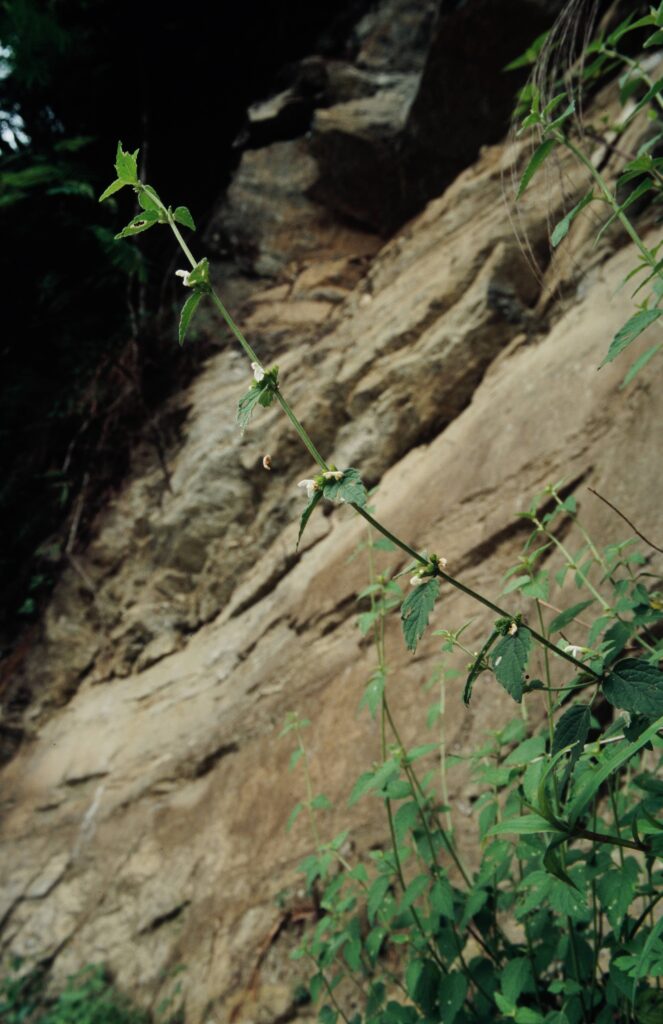
Leucas decemdentata is one of the most widely distributed members of its genus, ranging across tropical and subtropical Asia and out into the western Pacific. GBIF records, totalling more than 1,600 occurrences, document its presence in India, Nepal, Pakistan and Myanmar through China, Taiwan and Japan to Thailand, the Philippines, Indonesia, Timor-Leste and Papua New Guinea, and onward to Australia, Fiji, Tonga, Samoa, the Cook Islands and French Polynesia, as well as Christmas Island. In the eastern Himalaya it is a plant of warm-temperate to subtropical situations, frequenting open hillsides, roadside banks, cultivated margins, fallow fields and other disturbed ground. The photographed plant from Lingza in West Bengal, India, at about 1300 m and flowering in May, is typical of its lower montane occurrence, where it behaves as a weedy ruderal of sunny, well-drained slopes.

The species is an erect or ascending annual to short-lived perennial herb, usually 30-100 cm tall, with quadrangular stems that are retrorsely hairy along the angles. Leaves are opposite and decussate, ovate to lanceolate, with a crenate-serrate margin, an acute apex and a cuneate to attenuate base, the lamina sparsely pubescent and borne on short petioles. The white flowers are crowded into dense, globose, axillary verticillasters subtended by linear bracts. Each flower has a tubular, ten-toothed calyx with subequal spinescent teeth and a strongly two-lipped corolla, the upper lip arched and densely white-villous, the lower lip three-lobed with a larger middle lobe; the four didynamous stamens lie beneath the hood. The fruit comprises four smooth, trigonous nutlets enclosed in the persistent calyx.

The ten conspicuous calyx teeth give the species its epithet decemdentata and are a useful diagnostic character within the large, taxonomically intricate genus Leucas. Long included with the white-flowered, capitate-inflorescenced "thumbergia group" of species, it has frequently been confused with L. ciliata, L. mollissima and other allies, and several Asian names have been treated as synonyms. Ecologically it is a pioneer of open, disturbed habitats and a minor melliferous plant visited by bees and other insects. It carries no conservation concern, being abundant and adaptable across an enormous geographic range, and like many Leucas species it is used locally in folk medicine for fevers and skin complaints.

Author: (Willd.) Sm. · Sources: POWO (Kew), GBIF, Flora of China Vol. 17, Flora of Bhutan Vol. 2, Flora of Nepal, Flora of Pakistan, Revision of the genus Leucas (Lamiaceae) by Ryding
Sm.

Bhutan2015 595
Bhutan Mo-Chu 1900m, October
Bhutan2012 1307
Bhutan Mo-Chu 1900m, October

Description

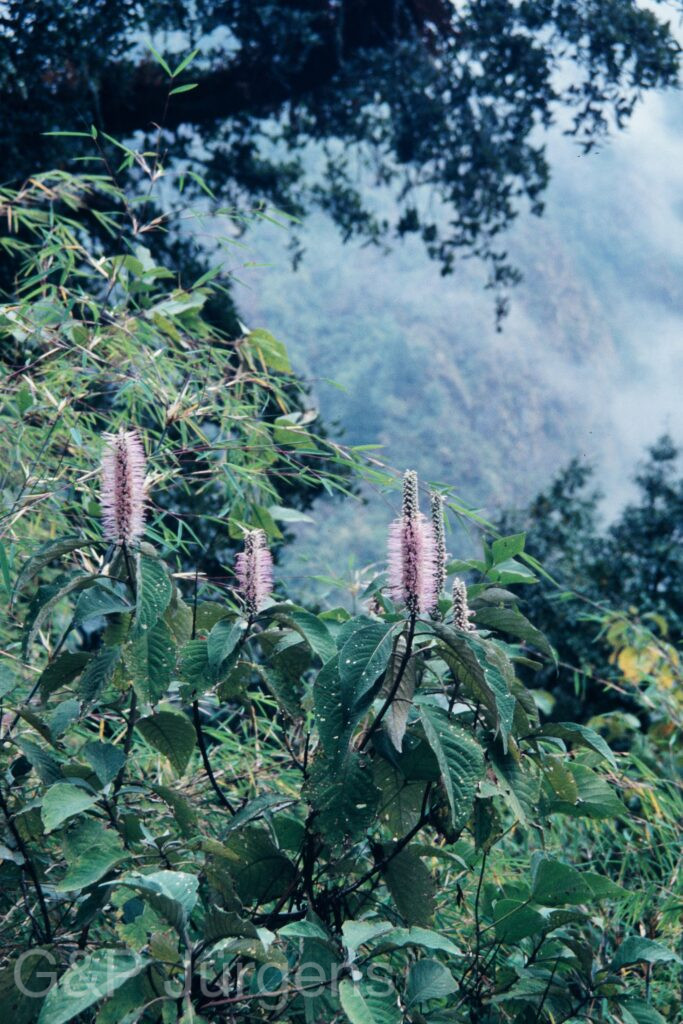
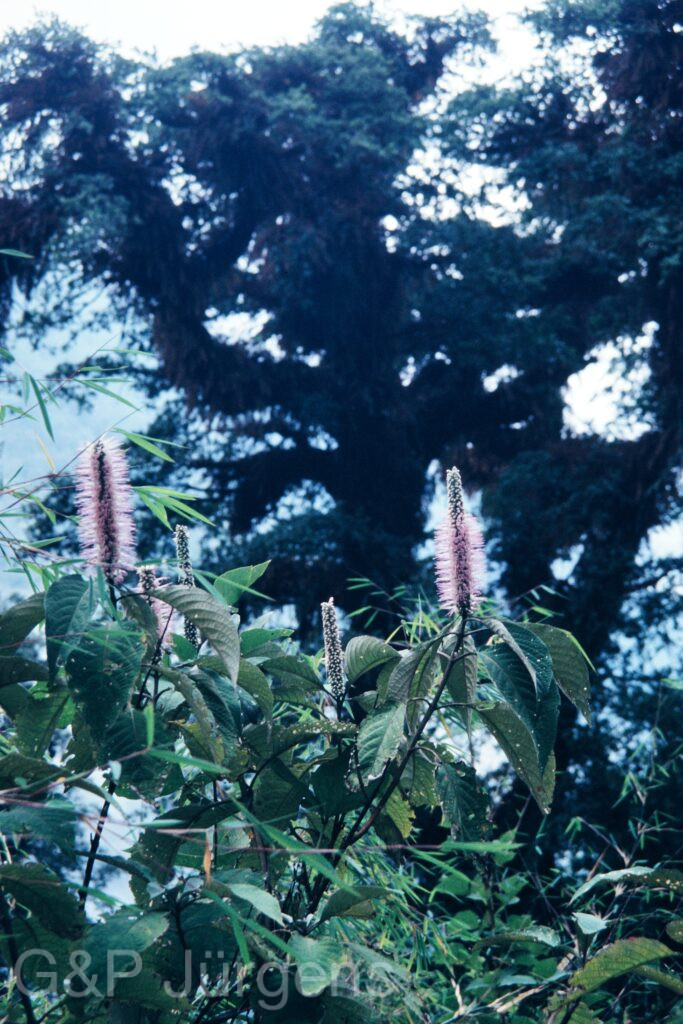
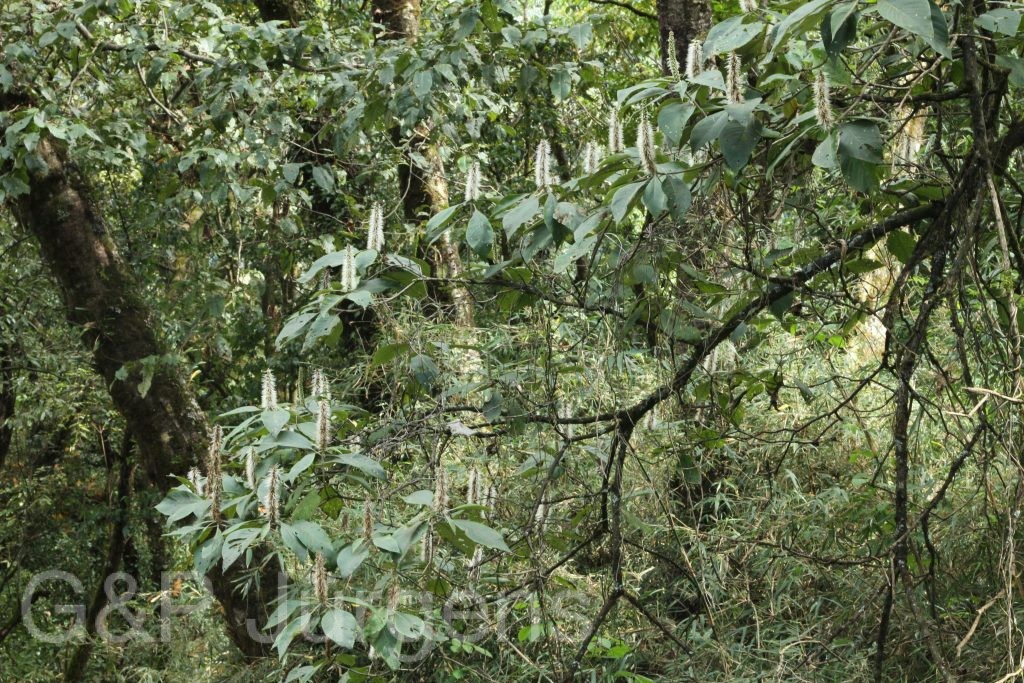
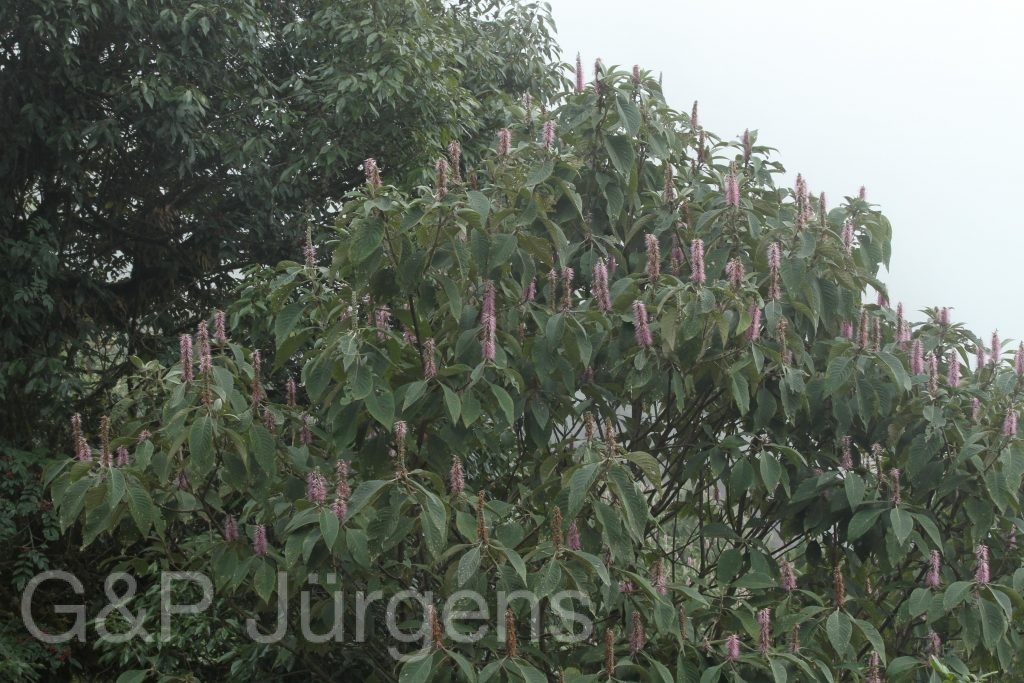
Leucosceptrum canum is a soft-wooded shrub or small tree of the Himalaya and southwestern China, distributed through China, Nepal, India, Bhutan and Myanmar and east to Indochina (CN, NP, IN, BT, MM, VN, TH, BD, LA, with further records), one of the more frequently collected species here with about 515 occurrences. It grows in moist temperate forest, on shaded slopes, ravine sides, forest margins and clearings, typically in the warm- to cool-temperate belt. The gatherings cited are from the Mo-Chu valley in Bhutan at 1900 m and from Trisuli in Nepal at 2700 m, both flowering in October, reflecting its autumn-to-early-winter blooming in the mid-montane forest zone.

The plant is a coarse shrub or small tree with stout, four-angled young branches densely clothed, like the leaf undersides and inflorescence, in a greyish (canous) tomentum from which the epithet derives. The leaves are large, opposite, elliptic to oblong-lanceolate, with a serrate margin, an acuminate apex and prominent venation. The flowers are crowded into a dense, terminal, cylindrical spike-like thyrse with conspicuous bracts; the calyx is tubular and five-toothed, and the white to pale yellow, two-lipped corolla has a short tube and exserted, declinate stamens. The fruit comprises four small nutlets (an eremocarp) enclosed in the persistent calyx.

Leucosceptrum is a small genus placed in the subfamily Lamioideae (or basal lineages) of the Lamiaceae and is of phylogenetic interest as part of an early-diverging Asian woody assemblage allied to Comanthosphace. The conspicuous, nectar-rich autumn inflorescences attract bees, butterflies and birds, and the species is notable for the production of defensive sesquiterpenes secreted by glandular trichomes. Widespread and common across the Himalaya into China, L. canum is of no conservation concern and is locally valued for fuel and as a bee plant.

Author: Sm. · Sources: POWO (Kew), GBIF, Flora of Bhutan, Flora of China, Labiatae of the Himalaya (Lamiaceae revision)

(Jacqu. ex Benth.) Hedge

Nepal 99 790 ergebnis
West-Nepal Baga-La-Phedi 4460m, July

Description

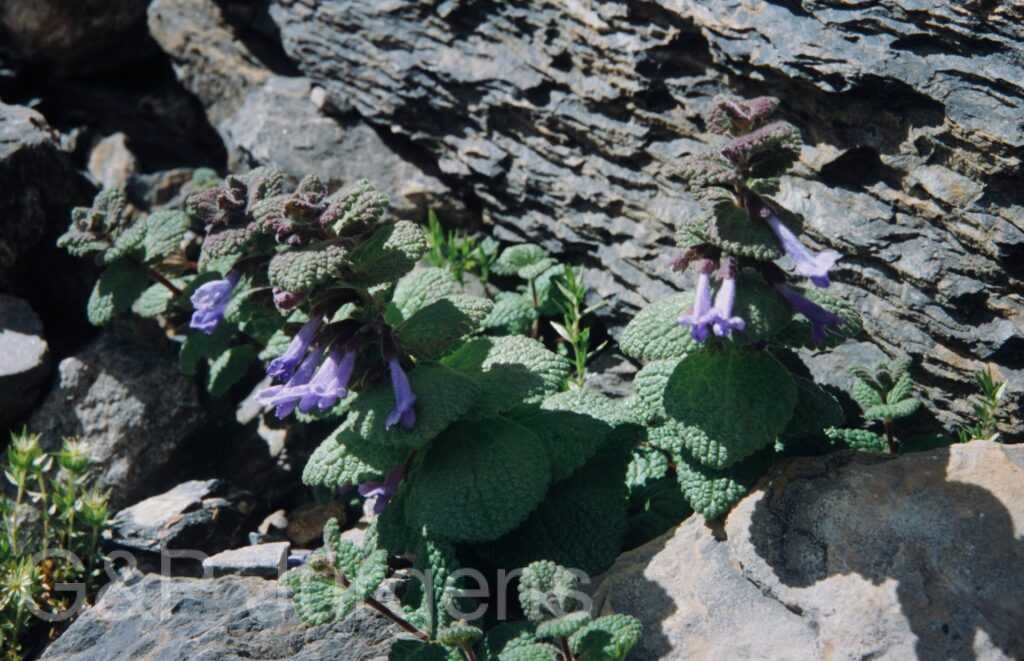
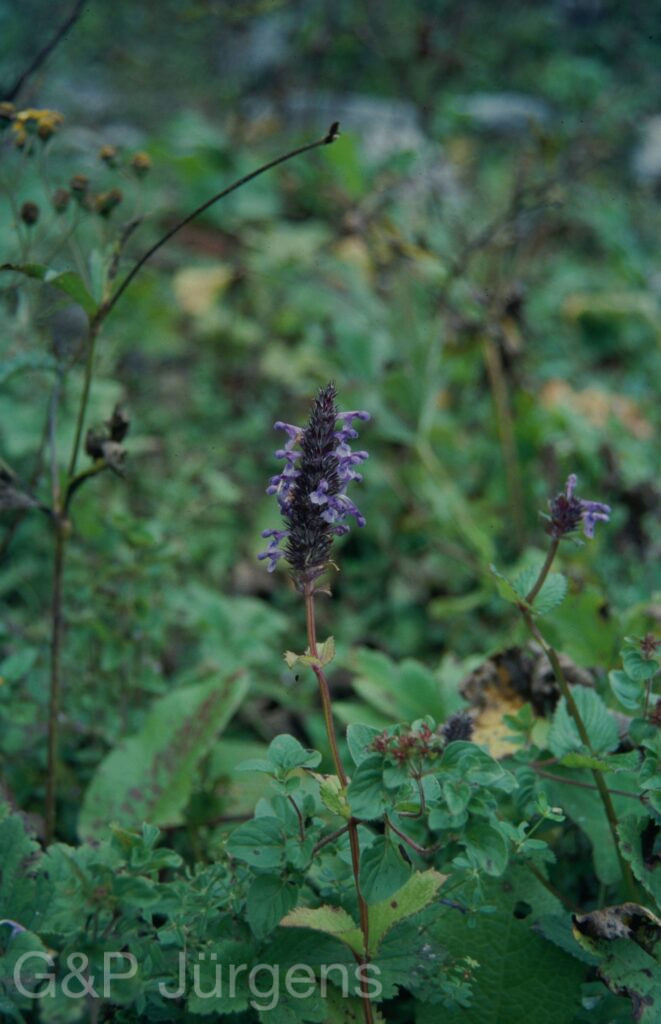
Marmoritis nivalis is a high-alpine herb of the Himalaya, recorded from India, Nepal, Bhutan and China; with only about 36 georeferenced records it is a sparsely collected, narrowly montane species. As the epithet "nivalis" indicates, it is a plant of the snow line, growing on open screes, stony alpine turf, moraine and rocky slopes typically between 4000 and 5000 m. The photographed individual from Baga-La-Phedi in West Nepal at 4460 m, flowering in July, exemplifies its occurrence in the cushion-and-scree zone above the timberline, where the short summer growing season coincides with the monsoon.

It is a low, mat-forming or tufted perennial herb arising from a branched woody caudex and slender rhizome, the stems short, ascending and grey-pubescent. The leaves are small, opposite, ovate to orbicular, crenate, thick and densely hairy, an adaptation to cold, exposed, high-radiation habitats. The flowers are crowded in compact terminal heads subtended by leafy bracts; each corolla is bilabiate, pale violet to bluish, with a notched upper lip and a spreading three-lobed lower lip. The calyx is tubular and conspicuously veined, and the four stamens lie under the upper lip. The fruit consists of four small nutlets enclosed in the persistent calyx.

This taxon is treated by GBIF as a synonym, with Marmoritis nivalis itself as the accepted name (combination by Hedge, based on Bentham's earlier name in Dracocephalum/Nepeta). Marmoritis is a small Sino-Himalayan genus segregated from the Nepeta alliance of the Lamiaceae. The cushion habit and dense indumentum are classic high-alpine adaptations. Pollination is by hardy bumblebees active in the brief alpine summer. Owing to its restricted, high-elevation range it warrants monitoring, though no formal threat status is established.

Author: (Jacqu. ex Benth.) Hedge · Sources: POWO (Kew), GBIF, Flora of Nepal, Flora of China, Flora of Bhutan, Hedge's treatment of Himalayan Nepeteae (Lamiaceae)

Benth.

Bhutan2014 1027
Bhutan Paro 2320m, May
Bh2008 553 G837
Bhutan Paro 1900m April

Description

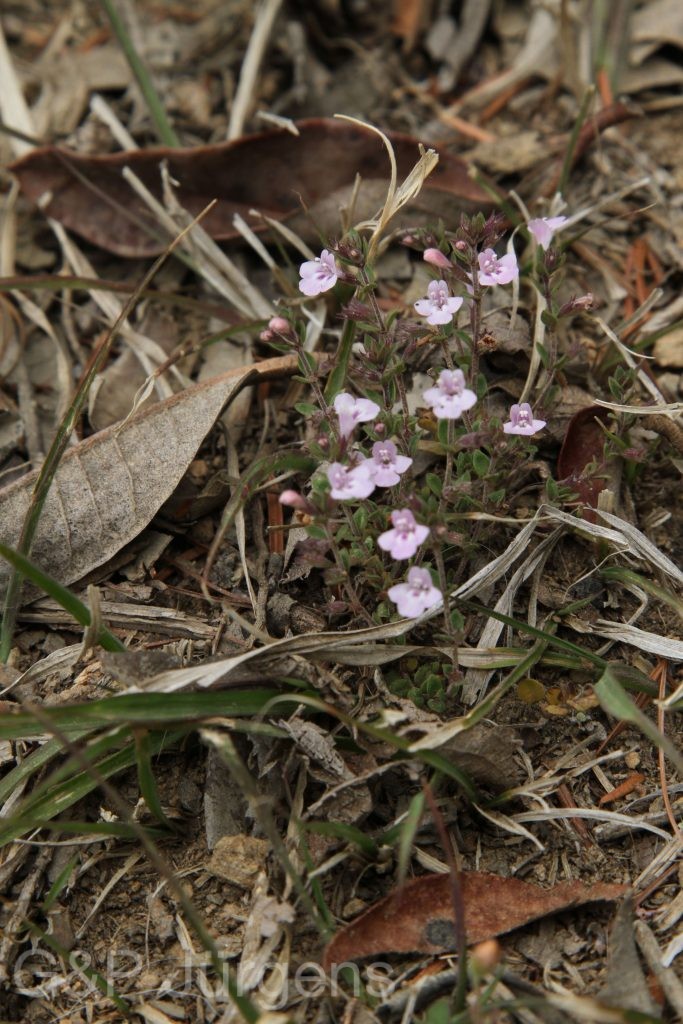
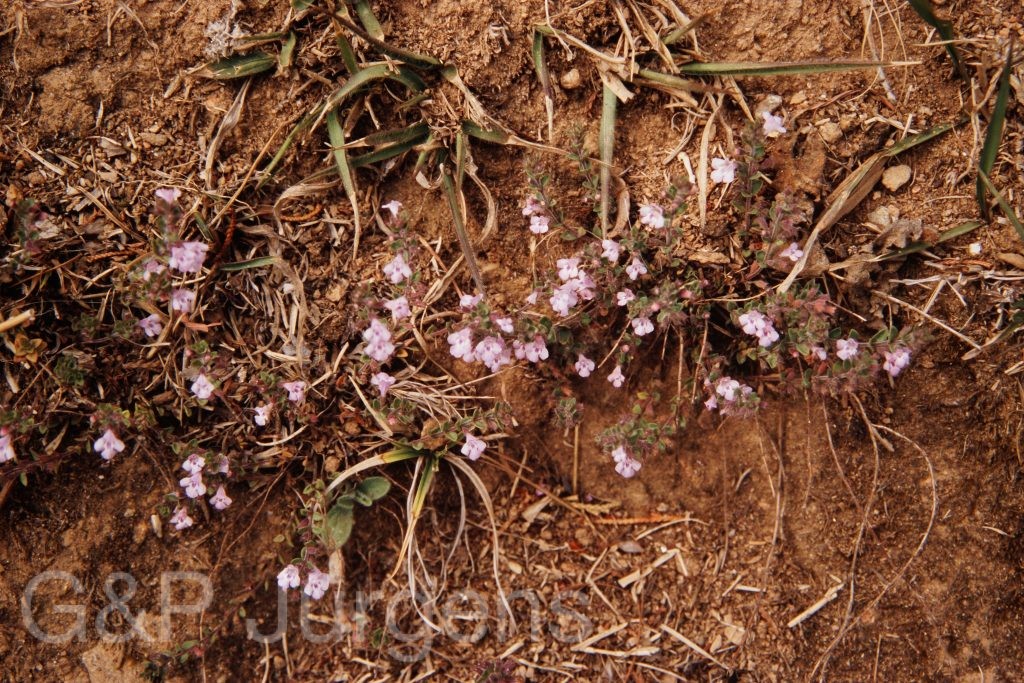
Micromeria biflora is an aromatic herb of remarkably wide Palaeotropical-to-Himalayan distribution, ranging from tropical and southern Africa (Ethiopia, Kenya, Tanzania, South Africa, Zimbabwe, Cameroon, Congo and others) through the Arabian Peninsula (Saudi Arabia, Yemen) and across to Afghanistan, Pakistan, India, Nepal, Bhutan, Myanmar and China; its nearly 1700 georeferenced occurrences underline this broad Old World range. It grows on dry, open, rocky and grassy slopes, banks and disturbed ground in the warm-temperate and montane belts, commonly between about 1500 and 2800 m. The plants documented around Paro in Bhutan at 1900-2320 m in April and May occupy exactly such sunny, well-drained hillsides.

It is a slender, much-branched perennial subshrub forming low, wiry tufts from a woody base, the quadrangular stems finely pubescent and clothed with a strong thyme-like aroma. The leaves are small, opposite, ovate to elliptic, entire and often revolute-margined, gland-dotted and short-petiolate. The pink to pale purple flowers are borne in axillary pairs or small few-flowered whorls, hence the epithet biflora; each has a tubular, ribbed, two-lipped calyx and a bilabiate corolla with the lower lip three-lobed, with four didynamous stamens. The fruit comprises four smooth, ovoid nutlets enclosed in the persistent calyx.

Micromeria belongs to tribe Mentheae of the Lamiaceae, allied to Clinopodium and Satureja, and the generic limits of this group have been much revised on molecular grounds. Rich in volatile monoterpene oils, M. biflora is widely used in folk medicine and as an aromatic herb. Its extensive range and tolerance of disturbed, arid habitats make it a successful and unthreatened species.

Author: Benth. · Sources: POWO (Kew), GBIF, Flora of China, Flora of Bhutan, Flora of Pakistan, Flora of Tropical East Africa, Harley's treatment of Labiatae

(Buch.-Ham. ex Roxb.) Maxim.

Bhutan2015 32
Bhutan Dochu-La 2800m, October
Bhutan2015 33
Bhutan Dochu-La 2800m, October

Description

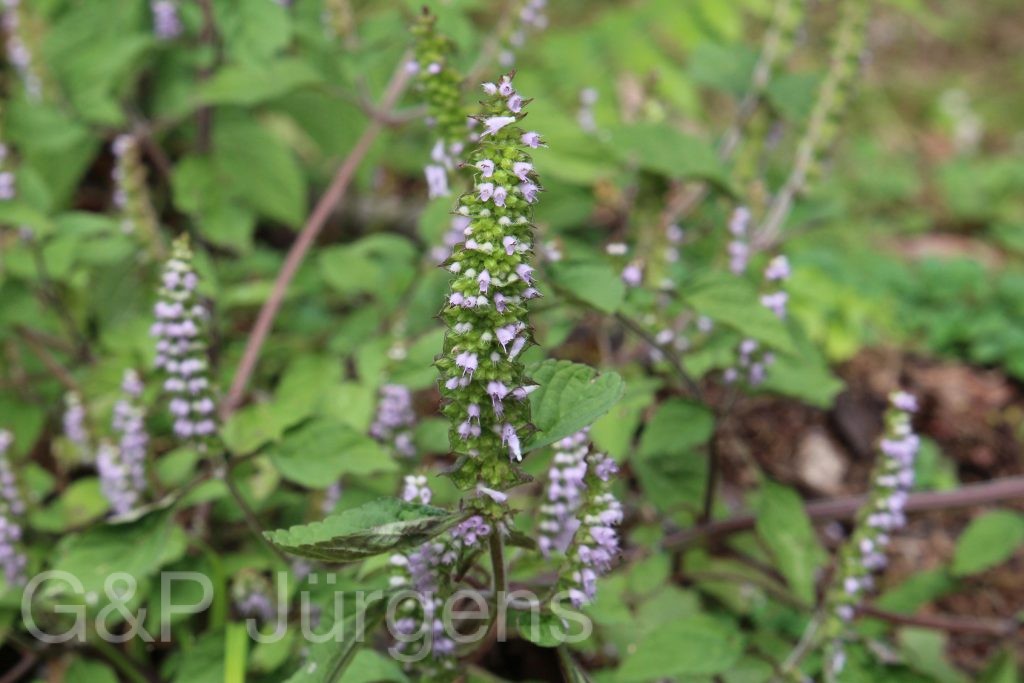
Mosla dianthera is a widespread annual mint of monsoonal Asia, ranging from the Himalaya (Nepal, Bhutan, India, Pakistan, Bangladesh, Myanmar) across China, Korea, Japan, Taiwan and the Russian Far East south into mainland and insular Southeast Asia; with over 7000 GBIF occurrences it is among the most frequently recorded species of its genus. It grows in disturbed and seasonally moist ground, including roadsides, field margins, fallow land, streambanks and open grassy slopes from the lowlands into the temperate hills, as recorded at Dochu-La in Bhutan at 2800 m. As an autumn-flowering annual it completes its cycle on the late monsoon moisture, flowering and fruiting in October.

It is a slender, erect, aromatic annual herb with the quadrangular stems typical of the Lamiaceae, often much branched and sparsely hairy. The leaves are opposite, petiolate, ovate-lanceolate to lanceolate, serrate along the margin and gland-dotted, releasing a pungent scent when crushed. The flowers are borne in lax, terminal and axillary racemes; each two-lipped corolla is small, pale pink to purplish, with a notched upper lip and a three-lobed lower lip. Diagnostic for Mosla are the two fertile stamens (the epithet "dianthera" referring to the two anthers) and the reticulately pitted nutlets. The fruit comprises four small, dry, one-seeded nutlets enclosed in the persistent, gland-dotted calyx.

Mosla is a small Asian genus segregated from Orthodon and allied to Perilla and Elsholtzia within the subfamily Nepetoideae, characterised by the reduction to two stamens and by aromatic terpene-rich foliage. The essential oils of M. dianthera are used in traditional medicine, and the plant is a minor nectar source for bees and other insects. Being a ruderal, broadly tolerant annual of vast geographic range, it is of least conservation concern and is sometimes weedy. (The associated WordPress link erroneously references Pogostemon benghalensis; the taxon treated here is Mosla dianthera.)

Author: (Buch.-Ham. ex Roxb.) Maxim. · Sources: POWO (Kew), GBIF, Flora of China, Flora of Bhutan, Li & Hedge's treatment of the Lamiaceae

Benth.

Garw 2005 67 ergebnis ergebnis
India Garhwal Valley of flowers 3350m, September

Description

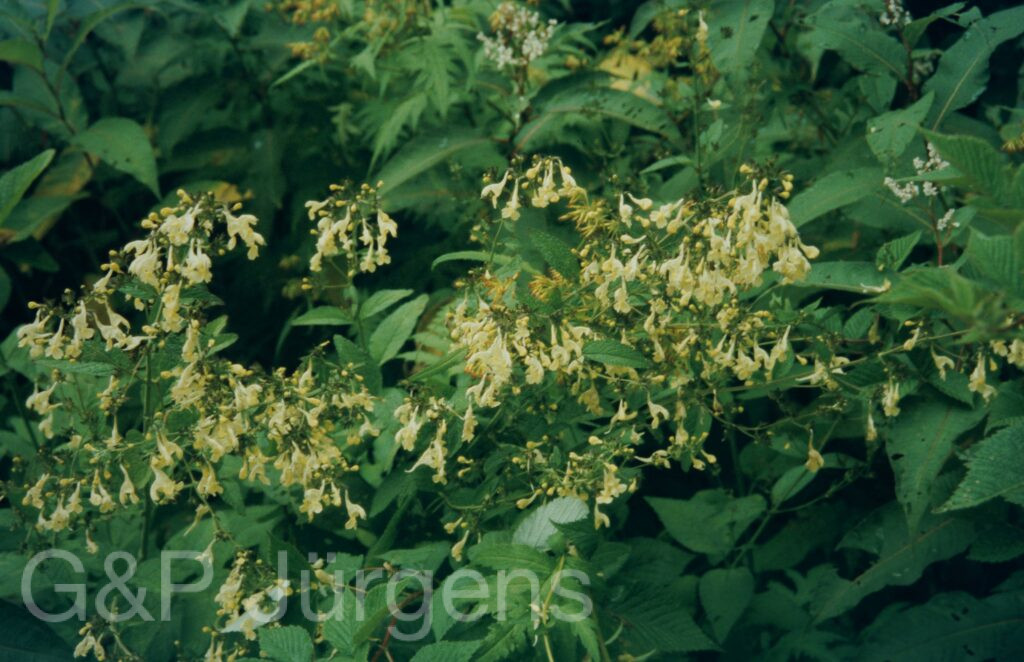
Nepeta govaniana is a western Himalayan endemic catmint distributed through the mountains of northern India, Pakistan and adjacent China, with GBIF recording about 169 occurrences concentrated in the north-western ranges. It is a plant of the upper temperate and subalpine zone, generally between roughly 2400 and 3700 m, the photographed material coming from the Valley of Flowers in Indian Garhwal at 3350 m, still in flower in September. It grows in moist alpine and subalpine meadows, forest clearings, among shrubberies and along stream banks on cool, humus-rich soils, often in the open herb-rich grassland of the high western Himalaya.

The species is an erect, aromatic perennial herb reaching about 0.6-1 m, with simple or branched, finely pubescent quadrangular stems. The leaves are opposite, petiolate, ovate to ovate-oblong with a cordate or truncate base, acuminate apex and coarsely serrate margins, somewhat soft-hairy and pleasantly scented. Distinctively for a Nepeta, the flowers are pale yellow rather than blue or violet; they are borne in lax, often paniculate terminal cymes, the tubular calyx fifteen-nerved and two-lipped, the corolla two-lipped with a broad, notched lower lip. The fruit comprises four smooth ovoid nutlets.

Nepeta (Lamiaceae) is a large, mainly Eurasian genus, and N. govaniana is unusual in its soft yellow corollas, a feature that has made it a valued ornamental in temperate gardens. Its open, two-lipped flowers are visited and pollinated chiefly by bees. Locally frequent within its restricted western Himalayan range, it is not regarded as threatened, though its dependence on intact moist subalpine meadows links its fortunes to high-pasture land use.

Author: Benth. · Sources: POWO (Kew), GBIF, Flora of Pakistan, Flora Simlensis, Flora of British India (Hooker), Hedge revision of Himalayan Nepeta, Harley et al. Labiatae (Kubitzki, The Families and Genera of Vascular Plants)

(D.Don) Hand.-Mazz.

Garw 2005 28 ergebnis ergebnis
India Garhwal Valley of flowers 2950m, September

Description

Nepeta laevigata is a perennial herb widely distributed across the temperate and subalpine Himalaya, ranging from Afghanistan and Pakistan eastwards through northern India and Nepal into south-western China, with a documented occurrence base of some 846 records (additional points from Germany, Norway and the United States reflecting cultivated or vouchered specimens). It favours open grassy slopes, forest margins, alpine meadows and disturbed ground between roughly 2400 and 3600 m. The plant illustrated here was photographed in India's Garhwal, in the celebrated Valley of Flowers at about 2950 m in September, where it flowers in the post-monsoon season among the rich herbaceous turf.

The species forms erect, quadrangular stems arising from a woody rootstock, typically 30-90 cm tall and often branched above. The leaves are opposite, ovate to ovate-lanceolate, crenate-serrate at the margin, cordate or truncate at the base and borne on distinct petioles, the surfaces glabrous to thinly pubescent and gland-dotted. The inflorescence is a slender terminal raceme or spike of well-spaced verticillasters subtended by small bracts; the flowers are bilabiate, the calyx tubular and bluntly toothed, the corolla white to pale violet with a hooded upper lip and a broad, often spotted lower lip. The fruit comprises four smooth nutlets enclosed in the persistent calyx.

Membership in Lamiaceae, subfamily Nepetoideae, is confirmed by the aromatic foliage, square stems and characteristic verticillate cymes. Like many catmints, N. laevigata is strongly insect-pollinated, its nectar-rich corollas visited by bees and bumblebees. The species is common across much of its montane range and is not regarded as threatened; it functions as a typical component of Himalayan meadow and forest-edge communities, where its volatile terpenoid oils may deter generalist herbivores.

Author: (D.Don) Hand.-Mazz. · Sources: POWO (Kew), GBIF, Flora of China, Flora of Pakistan, Flora of Bhutan, Annotated Checklist of the Flowering Plants of Nepal, Budantsev revision of Nepeta

(Royle ex Benth.) Kamelin & Makhm.

Nepal 99 353 ergebnis
West-Nepal Kalmura 3700m, June
Garh 07 209 ergebnis
India Garhwal Panwali 3300m, June

Description

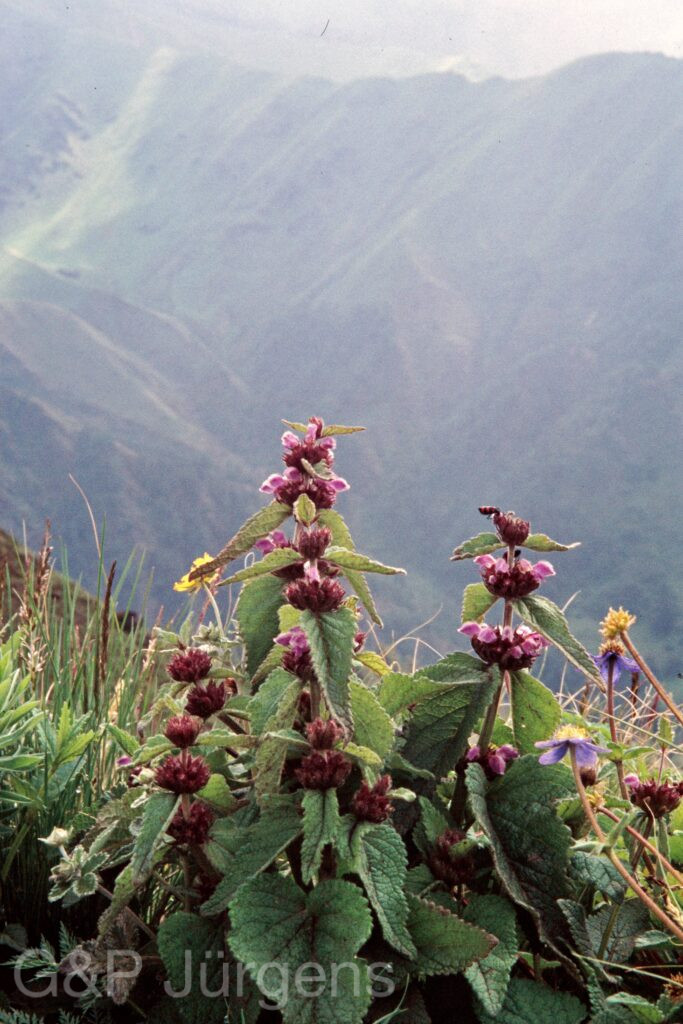
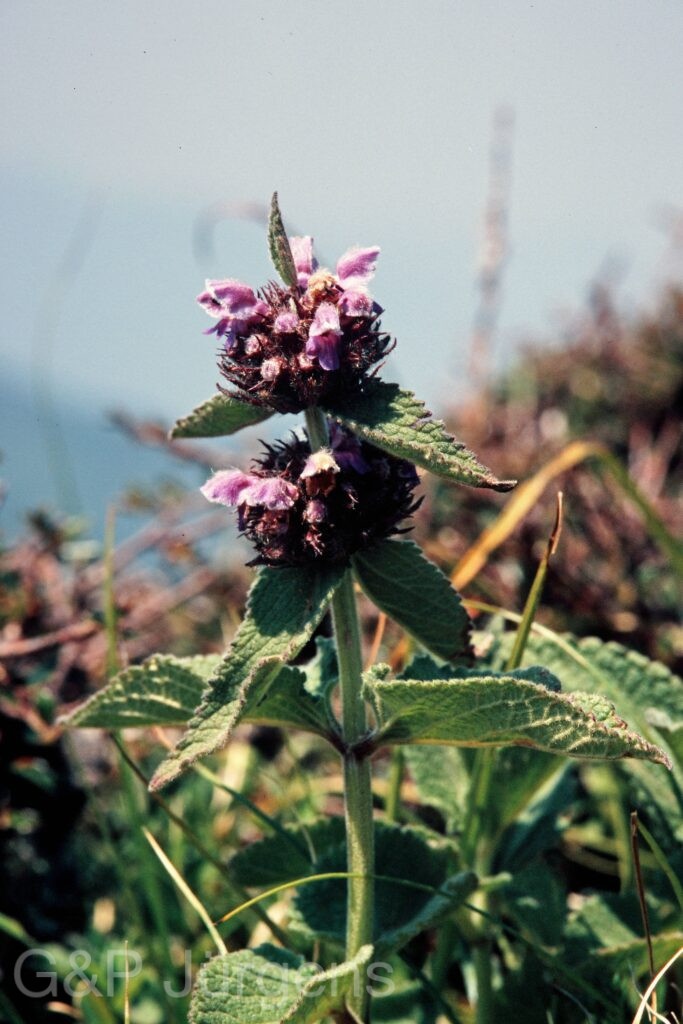
Phlomoides bracteosa is a robust perennial herb of the alpine and subalpine zones of the western and central Himalaya and adjacent Central Asia. Its distribution, documented from over 330 georeferenced records, spans India, Pakistan, Nepal, Afghanistan, China, Bhutan and Kazakhstan, reflecting a broad Irano-Turanian to Sino-Himalayan range. It favours open grassy slopes, forest margins, moist meadows and stabilised screes, typically between 2500 and 4000 m. The accompanying material was gathered at Kalmura in West Nepal at 3700 m and at Panwali in Garhwal, India, at 3300 m, both in June, near the onset of the monsoon flowering peak.

The plant forms erect, quadrangular, often purplish stems arising from a stout rootstock, reaching 0.5-1 m. The leaves are opposite, broadly ovate to cordate, rugose above with an impressed venation, crenate-serrate at the margin, and densely tomentose beneath. The inflorescence consists of several remote, many-flowered verticillasters subtended by conspicuous, often coloured and ciliate floral bracts that give the species its epithet. The two-lipped corolla is pink to purple, the upper lip galeate and bearded, enclosing didynamous stamens; the calyx is tubular with subequal teeth. The fruit is a schizocarp of four smooth trigonous nutlets.

The species belongs to a complex once treated under Phlomis, now segregated into Phlomoides on the basis of corolla, stamen and nutlet characters supported by molecular phylogenetics. It is a frequent component of Himalayan tall-herb and grazing communities, visited by long-tongued bees and bumblebees. Though not formally assessed, its wide range and tolerance of disturbed pasture suggest it is not currently threatened.

Author: (Royle ex Benth.) Kamelin & Makhm. · Sources: POWO (Kew), GBIF, Flora of Pakistan, Flora of China, Annotated Checklist of the Flowering Plants of Nepal, Kamelin & Makhmedov revision of Phlomoides

(Benth.) Kamelin & Makhm.

BhutanPG2011 781 01 01
Bhutan Chele-La, 3800m July

Description

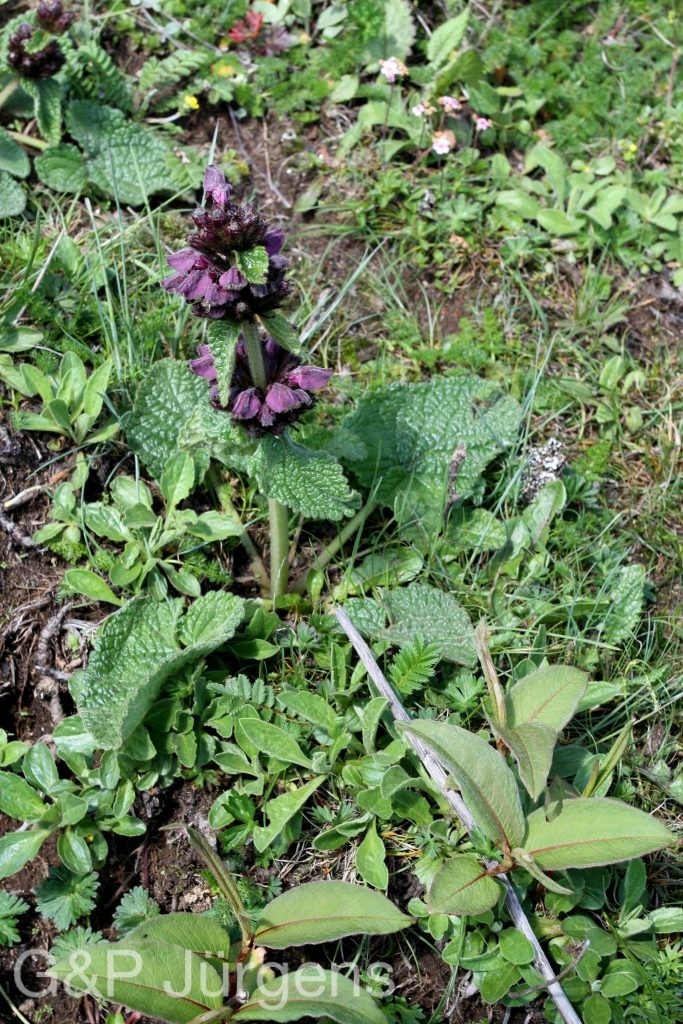
Phlomoides breviflora is a perennial herb of the Himalaya and adjacent mountains, recorded from Bhutan, Myanmar, Nepal, India and China. Its roughly 24 georeferenced collections indicate a fairly restricted, infrequently gathered species. It grows in subalpine and alpine meadows, open slopes, dwarf-shrub margins and grazed pasture, typically at about 3000-4200 m. The Bhutanese material from Chele-La at 3800 m in July is characteristic, the plant flowering through the high-summer monsoon on cool, open mountain turf at the upper limit of meadow vegetation.

It is an erect, more or less hairy perennial arising from a woody rootstock, the stems quadrangular as is typical of the mint family. The leaves are opposite, ovate to oblong with a cordate base and crenate margins, rugose above and paler and pubescent beneath, the upper leaves grading into floral bracts. The flowers are crowded in dense axillary verticillasters subtended by stiff bristly bracteoles; the tubular calyx is ribbed and the two-lipped corolla is comparatively short, hence breviflora, with a hooded, bearded upper lip and a spreading three-lobed lower lip, pink to purplish in colour. The four didynamous stamens lie beneath the upper lip, and the fruit comprises four smooth nutlets.

The species, based on the basionym described by Bentham and transferred by Kamelin and Makhmedov, belongs to Phlomoides, a genus segregated from the broadly defined Phlomis and characterised by its herbaceous habit and root structure; the original web placement under the Phlomis name reflects that earlier treatment. The dense bracteate verticillasters channel pollination by long-tongued bumblebees of the high Himalaya. No formal conservation assessment exists, but its relatively narrow range and dependence on intact alpine meadow leave it potentially sensitive to overgrazing and climate-driven habitat shifts.

Author: (Benth.) Kamelin & Makhm. · Sources: POWO (Kew), GBIF, Flora of China, Flora of Bhutan, Revision of Phlomoides (Lamiaceae) monograph

(Wall.) Kamelin & Makhm.

Nepal 99 380 ergebnis
West-Nepal Linji-Khola 3250m, June

Description

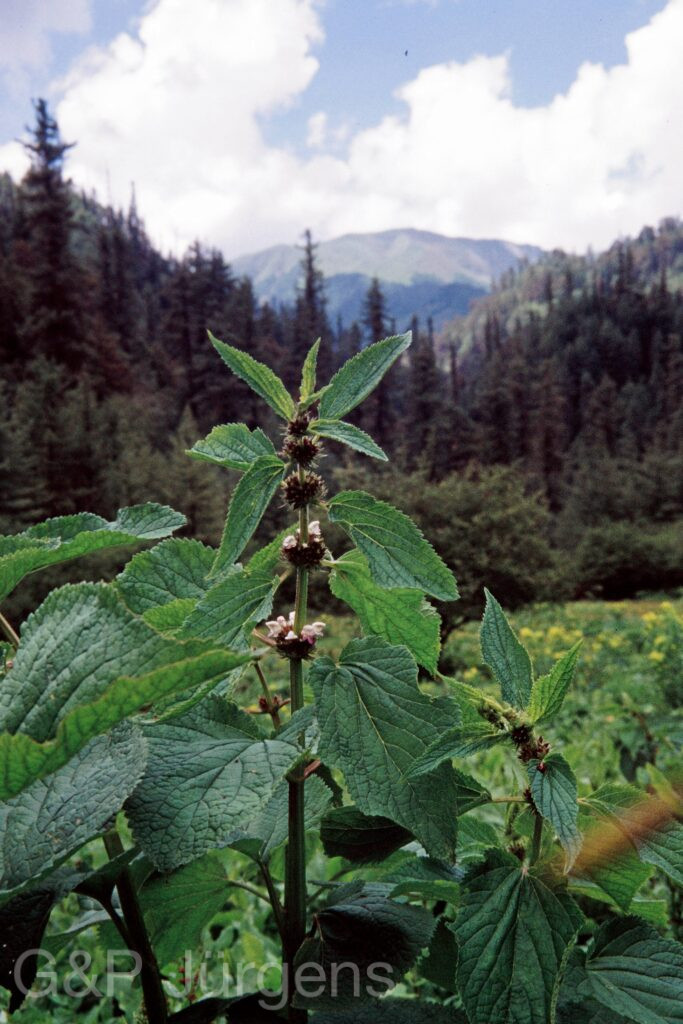
Phlomoides macrophylla is a Himalayan and Central Asian perennial mint distributed across Nepal, India, Pakistan, Bhutan, China and Afghanistan, with GBIF documenting roughly 120 occurrences along the main Himalayan arc and its western extensions. It occupies cool temperate to subalpine habitats, growing on open grassy slopes, in forest clearings, among shrubberies and on rocky banks, generally on well-drained soils in sunny to lightly shaded situations. The collection from Linji-Khola in western Nepal at about 3250 m in June is characteristic of its preferred subalpine elevation and its early monsoon flowering, when the herb-rich meadows of the inner valleys come into bloom.

The plant is an erect, robust perennial herb arising from a thick rootstock, the quadrangular stems clothed in stellate and simple hairs. As the epithet indicates, the leaves are conspicuously large, ovate to broadly cordate, with a crenate to serrate margin, a rugose upper surface and a densely tomentose, paler lower surface, the basal leaves long-petiolate and the upper ones reduced. The inflorescence comprises several dense, many-flowered verticillasters in the upper leaf axils, subtended by linear-subulate, often spinescent bracts. Each flower has a tubular, ribbed and toothed calyx and a strongly two-lipped corolla, typically purple, pink or pale violet, the hooded upper lip bearded and arching over the spreading three-lobed lower lip. Four didynamous stamens lie beneath the galea, and the gynobasic style yields four nutlets.

Described by Wallich and transferred to Phlomoides by Kamelin and Makhmedov, the species reflects the modern segregation of the herbaceous, rhizomatous Asiatic phlomises from the shrubby Mediterranean genus Phlomis s.str., a division supported by molecular phylogenetic study within tribe Phlomideae. Several Phlomoides species are used in regional folk medicine and as forage. Widespread and locally common in suitable montane grassland, P. macrophylla is not currently considered threatened, though it depends on the persistence of undisturbed subalpine meadow vegetation.

Author: (Wall.) Kamelin & Makhm. · Sources: POWO (Kew), GBIF, Flora of China, Flora of Pakistan, Flora of Bhutan, Mathiesen et al. phylogeny of Phlomoides