
(Benth.) Kamelin & Makhm.
Description
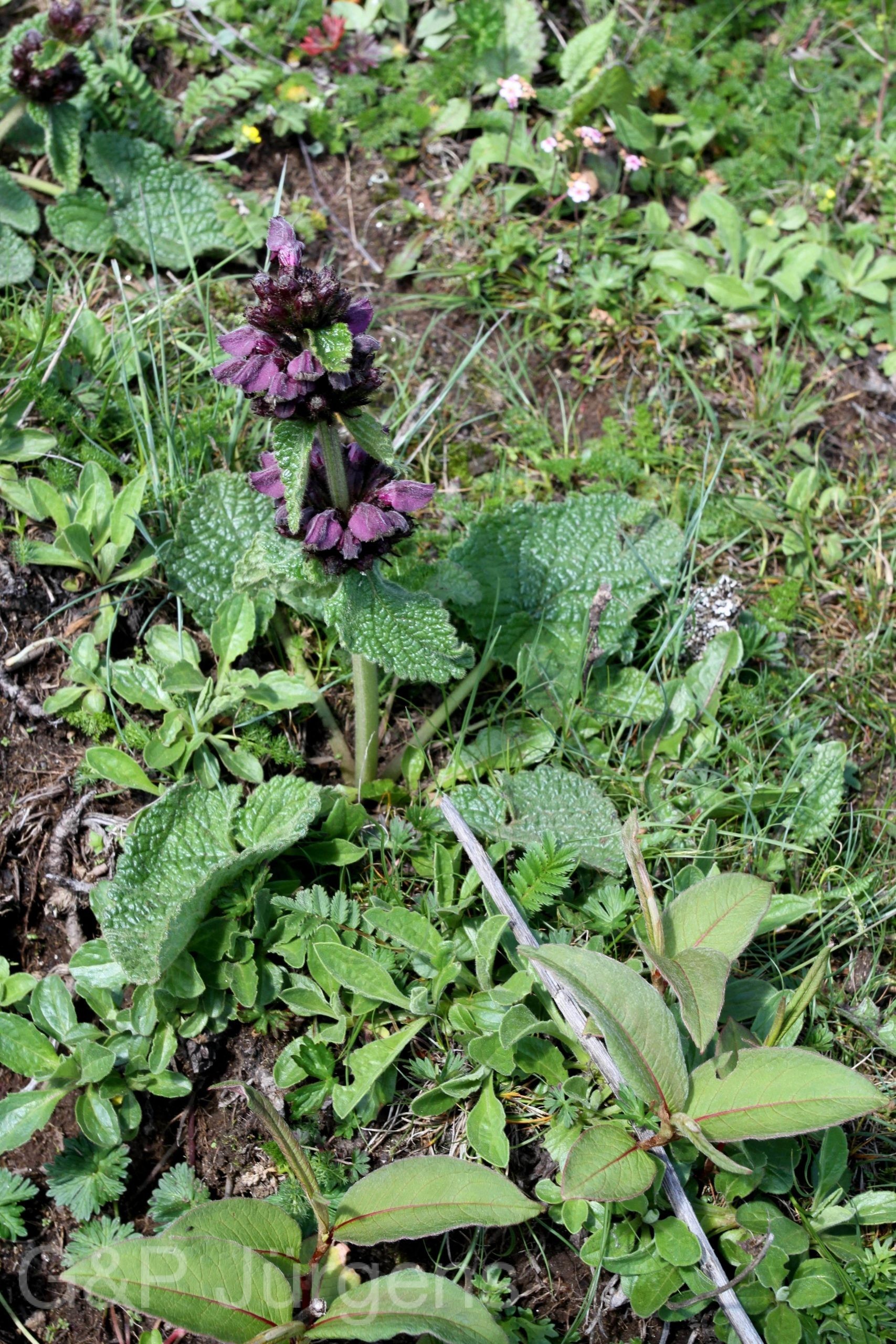
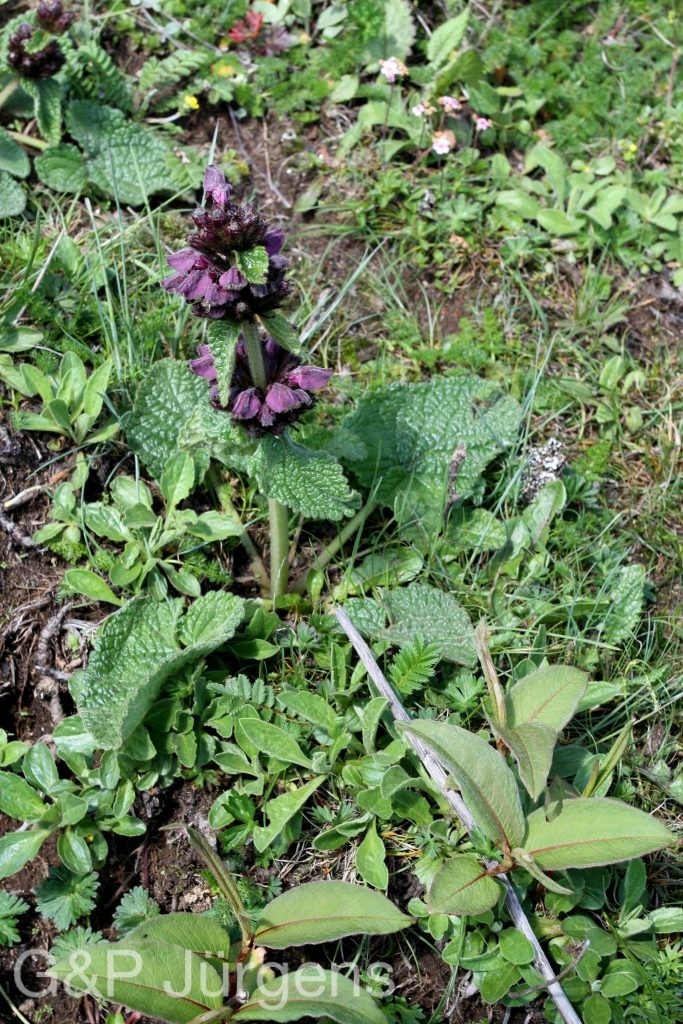
Phlomoides breviflora is a perennial herb of the Himalaya and adjacent mountains, recorded from Bhutan, Myanmar, Nepal, India and China. Its roughly 24 georeferenced collections indicate a fairly restricted, infrequently gathered species. It grows in subalpine and alpine meadows, open slopes, dwarf-shrub margins and grazed pasture, typically at about 3000-4200 m. The Bhutanese material from Chele-La at 3800 m in July is characteristic, the plant flowering through the high-summer monsoon on cool, open mountain turf at the upper limit of meadow vegetation.
It is an erect, more or less hairy perennial arising from a woody rootstock, the stems quadrangular as is typical of the mint family. The leaves are opposite, ovate to oblong with a cordate base and crenate margins, rugose above and paler and pubescent beneath, the upper leaves grading into floral bracts. The flowers are crowded in dense axillary verticillasters subtended by stiff bristly bracteoles; the tubular calyx is ribbed and the two-lipped corolla is comparatively short, hence breviflora, with a hooded, bearded upper lip and a spreading three-lobed lower lip, pink to purplish in colour. The four didynamous stamens lie beneath the upper lip, and the fruit comprises four smooth nutlets.
The species, based on the basionym described by Bentham and transferred by Kamelin and Makhmedov, belongs to Phlomoides, a genus segregated from the broadly defined Phlomis and characterised by its herbaceous habit and root structure; the original web placement under the Phlomis name reflects that earlier treatment. The dense bracteate verticillasters channel pollination by long-tongued bumblebees of the high Himalaya. No formal conservation assessment exists, but its relatively narrow range and dependence on intact alpine meadow leave it potentially sensitive to overgrazing and climate-driven habitat shifts.
Author: (Benth.) Kamelin & Makhm. · Sources: POWO (Kew), GBIF, Flora of China, Flora of Bhutan, Revision of Phlomoides (Lamiaceae) monograph