
(Jacqu. ex Benth.) Hedge
Description
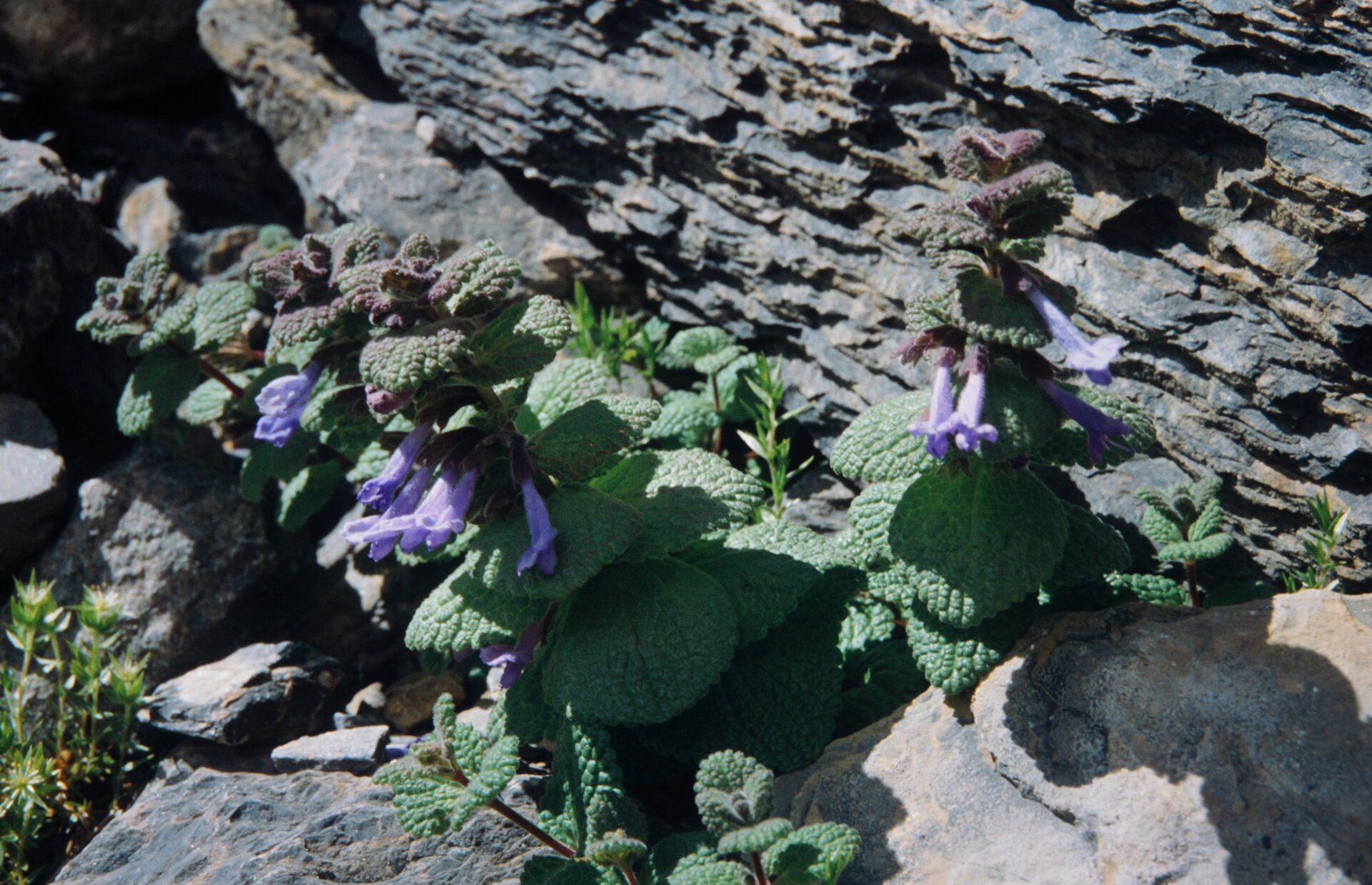
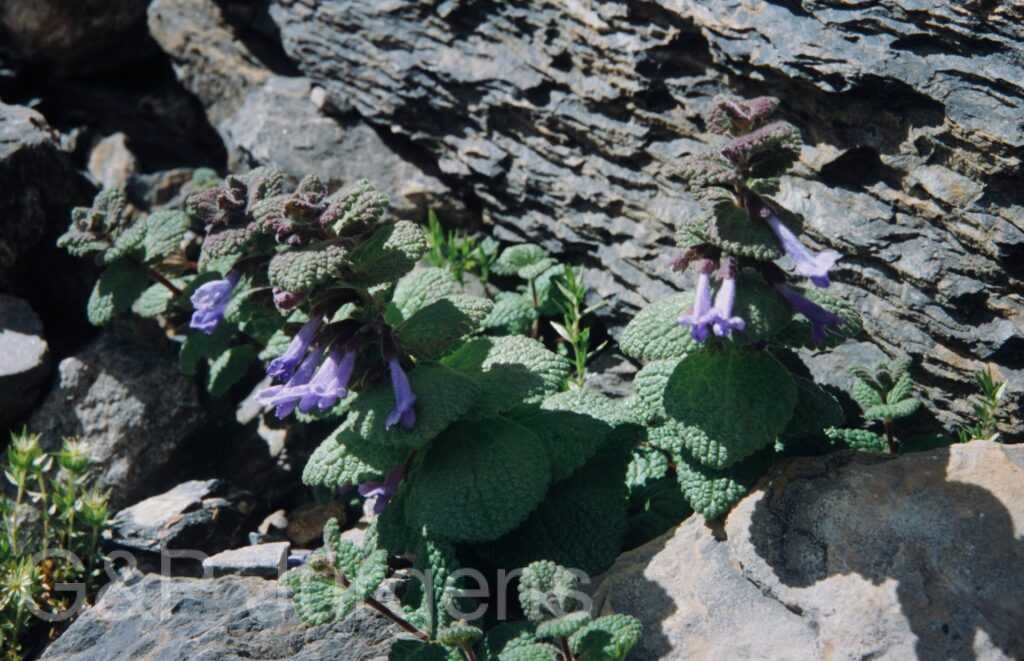
Marmoritis nivalis is a high-alpine herb of the Himalaya, recorded from India, Nepal, Bhutan and China; with only about 36 georeferenced records it is a sparsely collected, narrowly montane species. As the epithet "nivalis" indicates, it is a plant of the snow line, growing on open screes, stony alpine turf, moraine and rocky slopes typically between 4000 and 5000 m. The photographed individual from Baga-La-Phedi in West Nepal at 4460 m, flowering in July, exemplifies its occurrence in the cushion-and-scree zone above the timberline, where the short summer growing season coincides with the monsoon.
It is a low, mat-forming or tufted perennial herb arising from a branched woody caudex and slender rhizome, the stems short, ascending and grey-pubescent. The leaves are small, opposite, ovate to orbicular, crenate, thick and densely hairy, an adaptation to cold, exposed, high-radiation habitats. The flowers are crowded in compact terminal heads subtended by leafy bracts; each corolla is bilabiate, pale violet to bluish, with a notched upper lip and a spreading three-lobed lower lip. The calyx is tubular and conspicuously veined, and the four stamens lie under the upper lip. The fruit consists of four small nutlets enclosed in the persistent calyx.
This taxon is treated by GBIF as a synonym, with Marmoritis nivalis itself as the accepted name (combination by Hedge, based on Bentham's earlier name in Dracocephalum/Nepeta). Marmoritis is a small Sino-Himalayan genus segregated from the Nepeta alliance of the Lamiaceae. The cushion habit and dense indumentum are classic high-alpine adaptations. Pollination is by hardy bumblebees active in the brief alpine summer. Owing to its restricted, high-elevation range it warrants monitoring, though no formal threat status is established.
Author: (Jacqu. ex Benth.) Hedge · Sources: POWO (Kew), GBIF, Flora of Nepal, Flora of China, Flora of Bhutan, Hedge's treatment of Himalayan Nepeteae (Lamiaceae)