
Retz.
Description
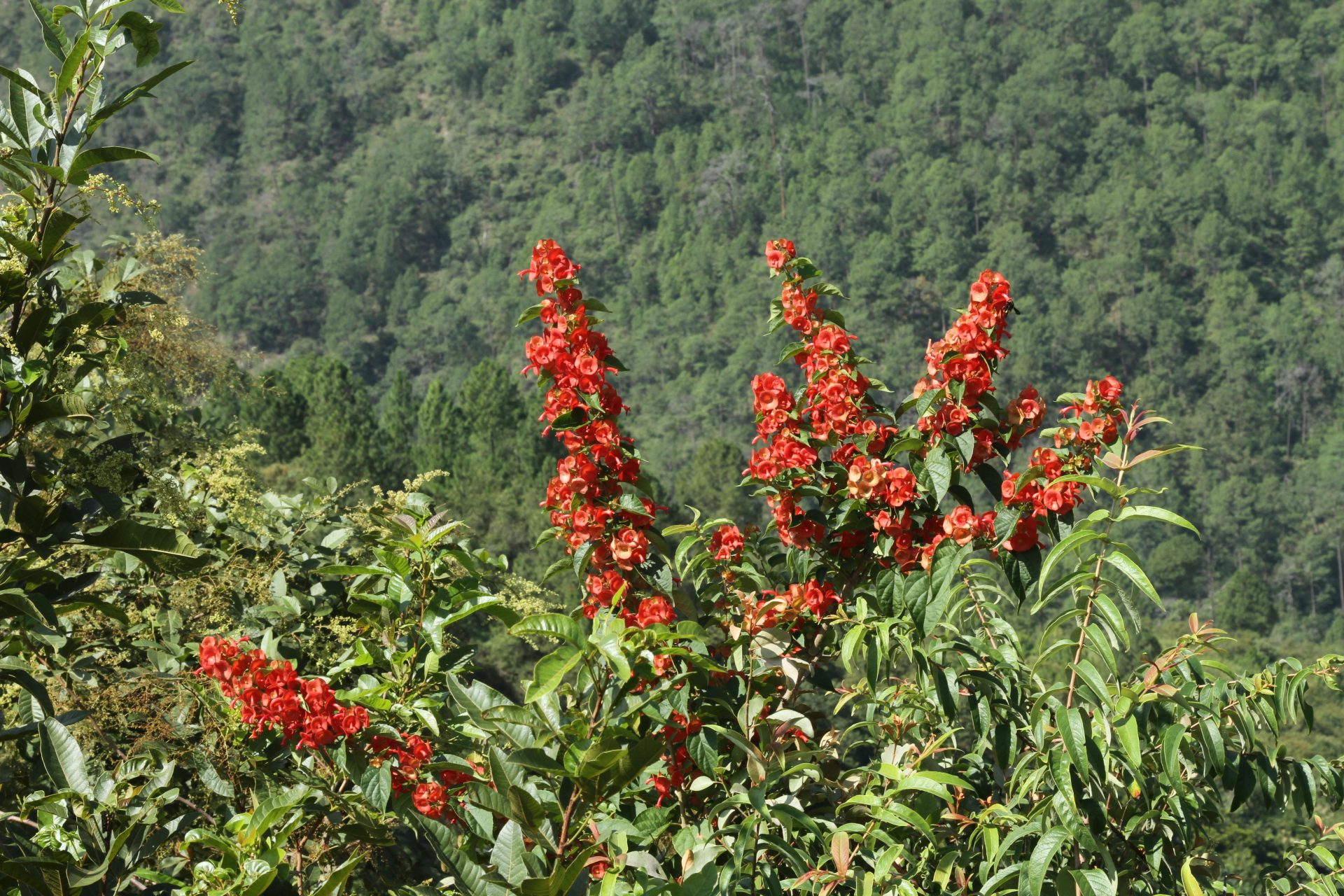
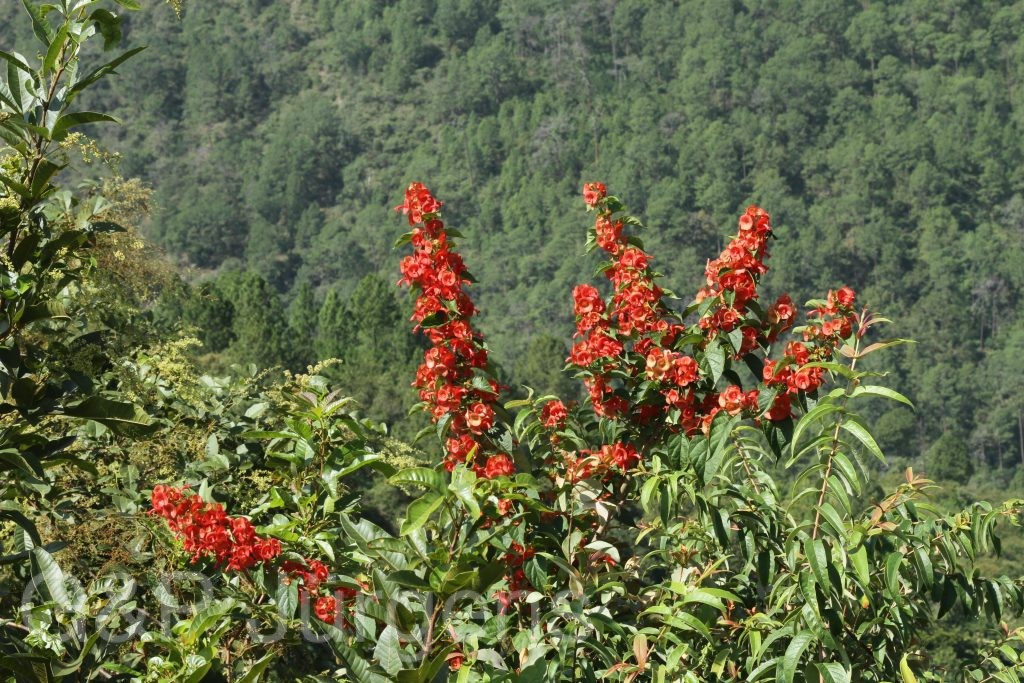
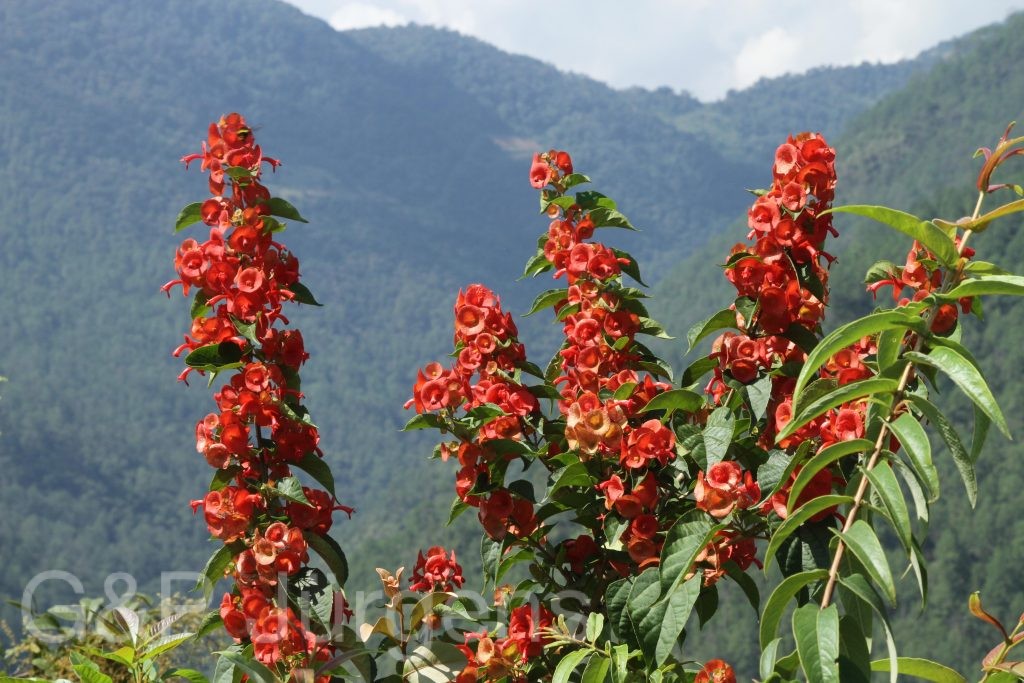
Holmskioldia sanguinea Retz., the Chinese hat plant or cup-and-saucer plant, is a subtropical shrub native to the foothills of the Himalaya in India, Nepal and Bhutan; GBIF lists nearly 1995 occurrences, the great majority from cultivation across the tropics, with records from the Americas, the Caribbean, the Philippines, Mauritius and Reunion attesting to its global ornamental dispersal. In its native range it grows along forest margins, ravines and warm valley slopes in the subtropical zone, generally below about 1500 m. The Bhutan records from Zhemgang at 1000 m and Trithangebe at 900 m, flowering in October, exemplify its occurrence in warm, low-elevation submontane habitats.
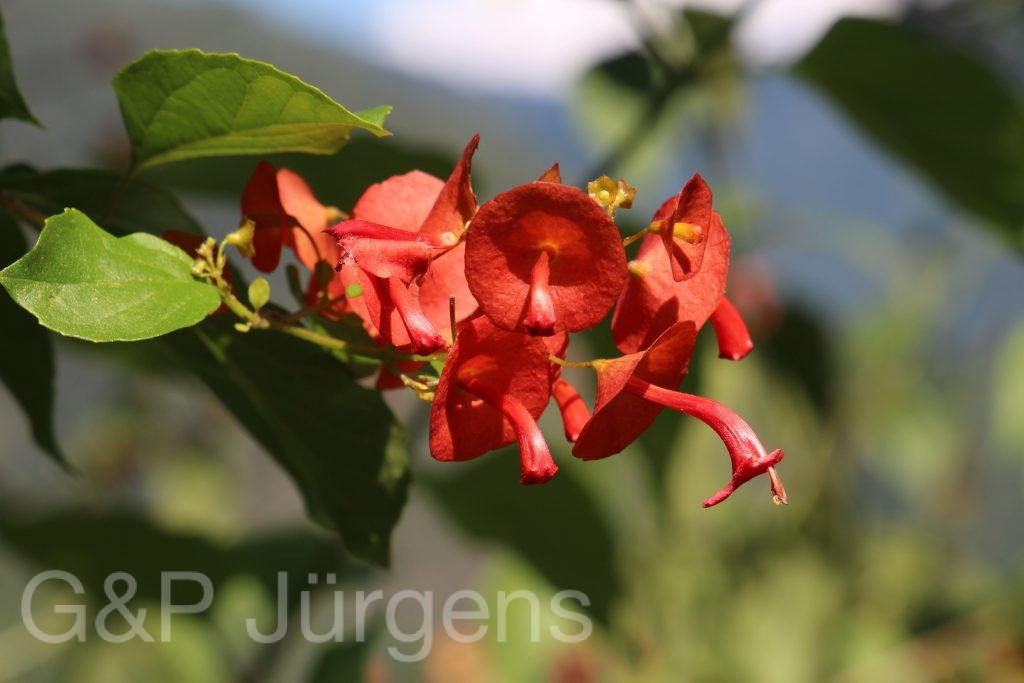
The species is a straggling to scandent evergreen shrub with quadrangular branches. The leaves are opposite, ovate, acuminate and serrate. The conspicuous flowers are borne in axillary cymes and are remarkable for the large, brick-red to orange, persistent, saucer-shaped calyx, from the centre of which the slender, curved, tubular corolla projects like a cup upon a saucer, with exserted stamens; this striking calyx accounts for both the common and specific names. The fruit is a small, four-lobed schizocarp seated within the persistent calyx.
Formerly placed in Verbenaceae, Holmskioldia is now classified in the Lamiaceae (subfamily Viticoideae) following molecular reappraisal of the verbenoid genera. Widely cultivated as a flowering ornamental in warm climates, it is of no conservation concern and occasionally naturalises beyond its native range.
Author: Retz. · Sources: POWO (Kew), GBIF, Flora of Bhutan, Flora of British India, Flora of China, Harley et al. Labiatae treatment in The Families and Genera of Vascular Plants