
Rehder

Description
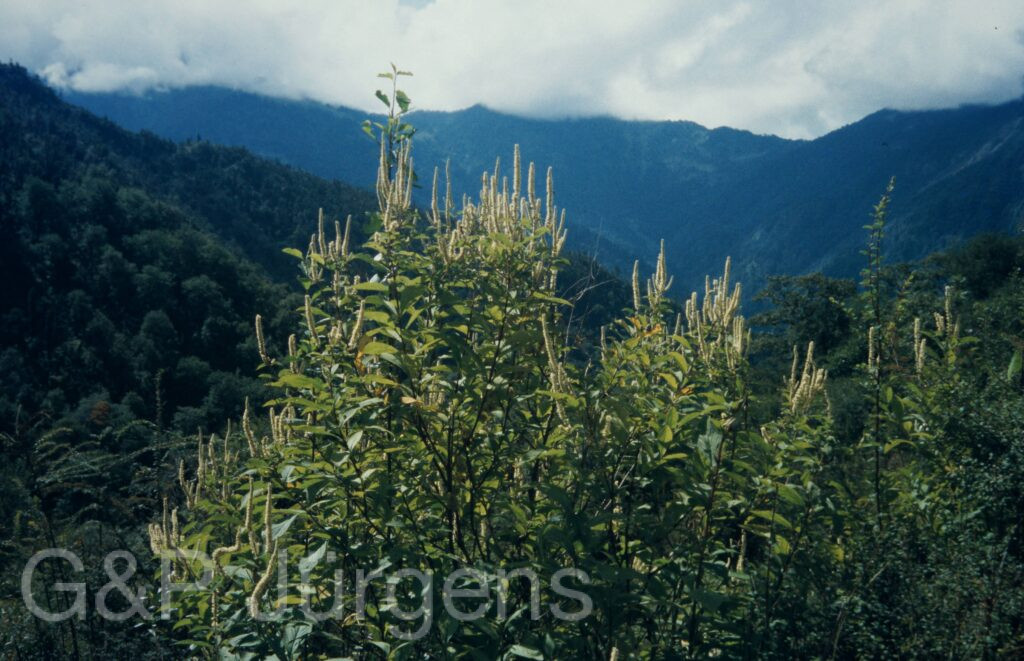
Elsholtzia fruticosa is a widespread shrubby mint of the Himalaya and south-western China, recorded by GBIF (1928 occurrences) from China, Nepal, India, Bhutan, Pakistan, Malaysia and Myanmar. It is a plant of open, disturbed and sunny situations, colonising forest margins, scrub, roadsides, terraced field edges, river banks and clearings, broadly between 1500 and 3600 m. The cited collections span a wide elevational and seasonal range, from Bhutan's Gasa (1950 m) and Jakar (2100 m), through Garhwal in India (Pana, 2750 m), up to the Shele-La pass at 3600 m, flowering from September into October, reflecting its autumn-blooming habit across the central and eastern Himalaya.
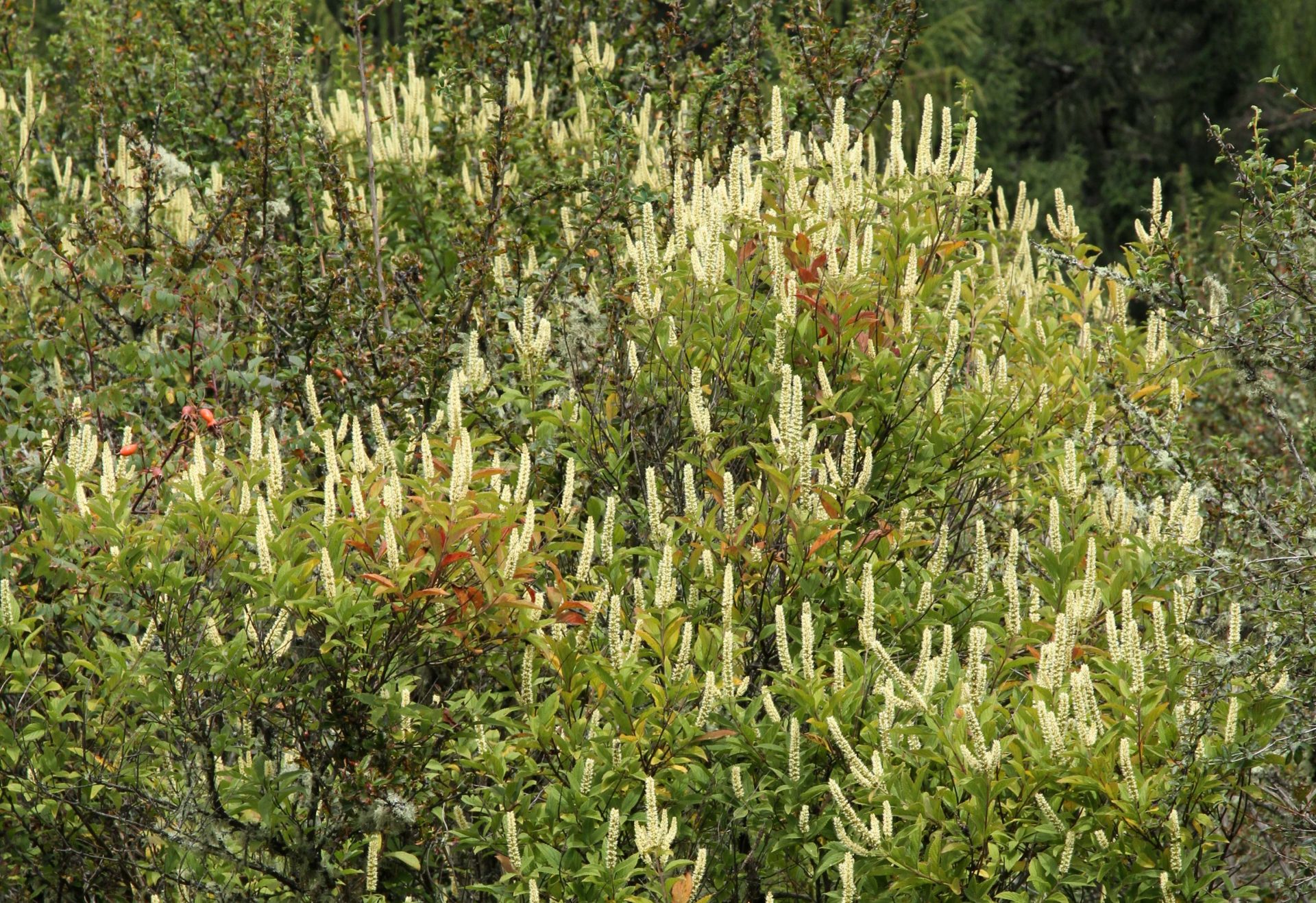
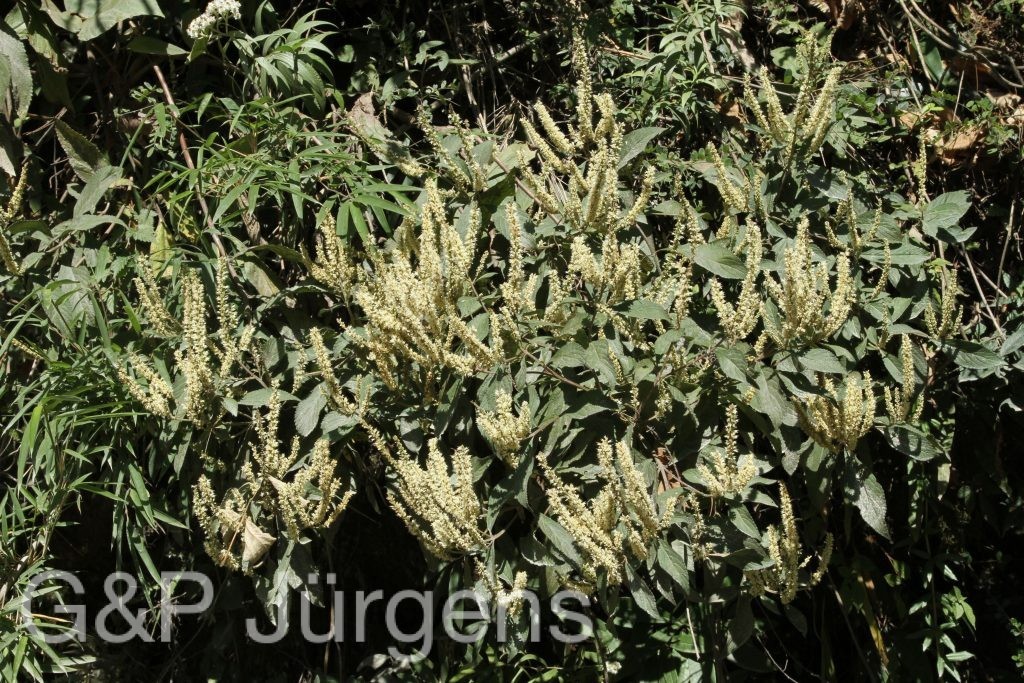
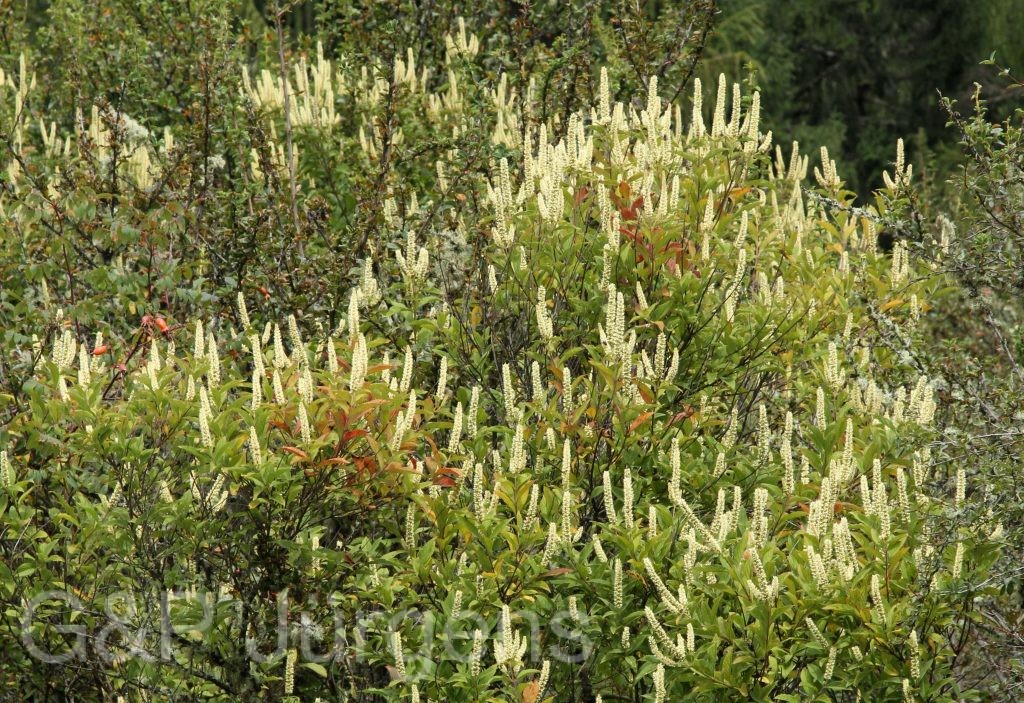
The species is an aromatic, much-branched shrub or subshrub reaching 1-3 m, with quadrangular, pubescent stems woody at the base. The opposite leaves are lanceolate to elliptic, serrate, pinnately veined, often greyish-tomentose beneath and dotted with aromatic glands. The small flowers are crowded into dense, cylindrical, spike-like terminal and axillary thyrses, frequently secund, with the whitish to pale-yellow flowers turned to one side of the axis. Each flower has a campanulate calyx and a bilabiate corolla; the four stamens are exserted, giving the inflorescence a feathery aspect. The fruit comprises four small, smooth nutlets (mericarps) enclosed within the persistent calyx.
Described under the combination by Rehder, the species belongs to genus Elsholtzia (subfamily Nepetoideae, tribe Elsholtzieae), a group of aromatic herbs and shrubs centred on temperate Asia. Its essential-oil-rich foliage is used in local traditional medicine and as a minor source of nectar for late-season pollinators. As a vigorous, pioneer-like colonist of disturbed ground with a very broad range, it is of least conservation concern and is locally abundant rather than rare.
Author: Rehder · Sources: POWO (Kew), GBIF, Flora of China, Flora of Bhutan, A Revision of the Genus Elsholtzia (Lamiaceae)