
Wall.
Description
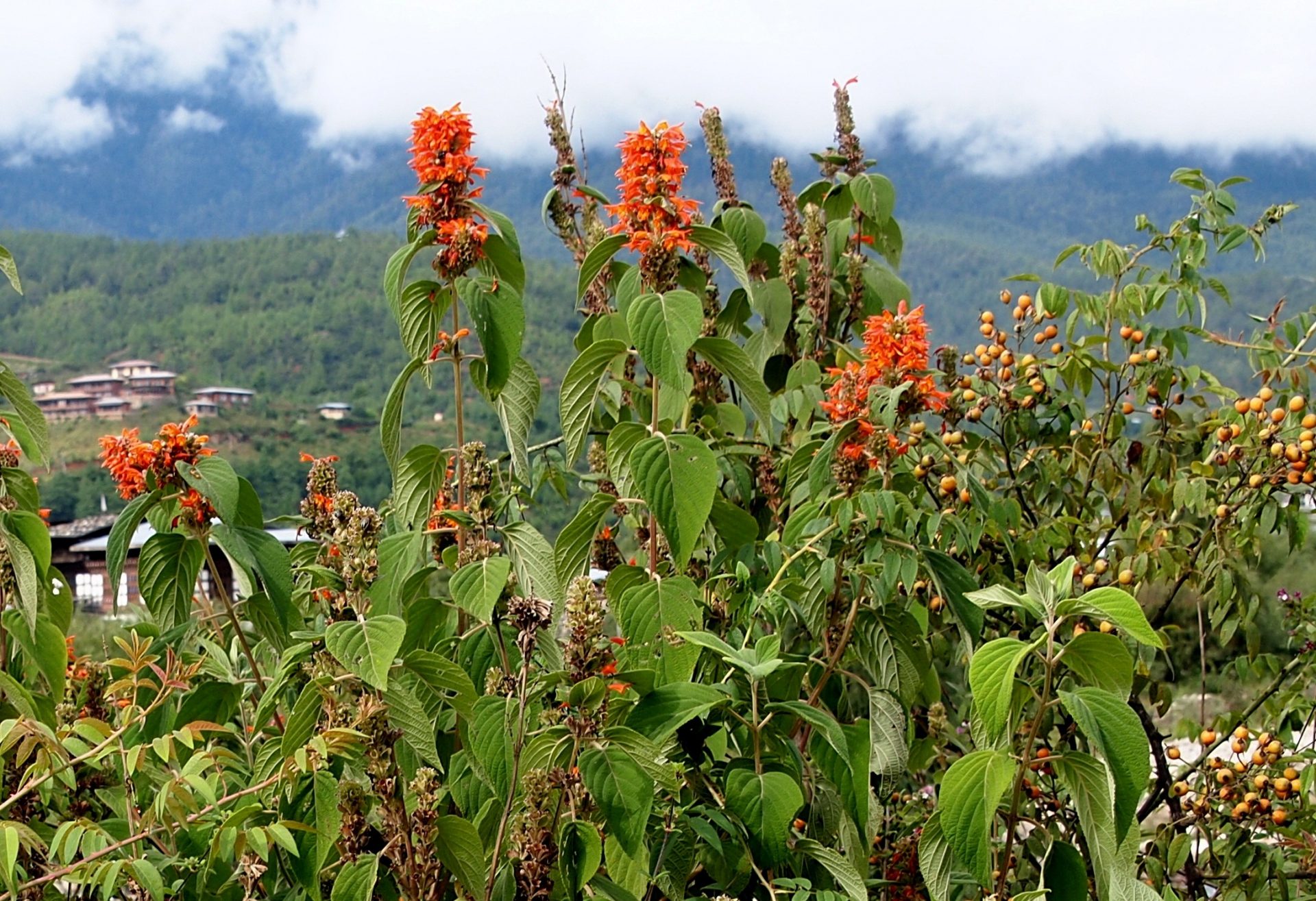
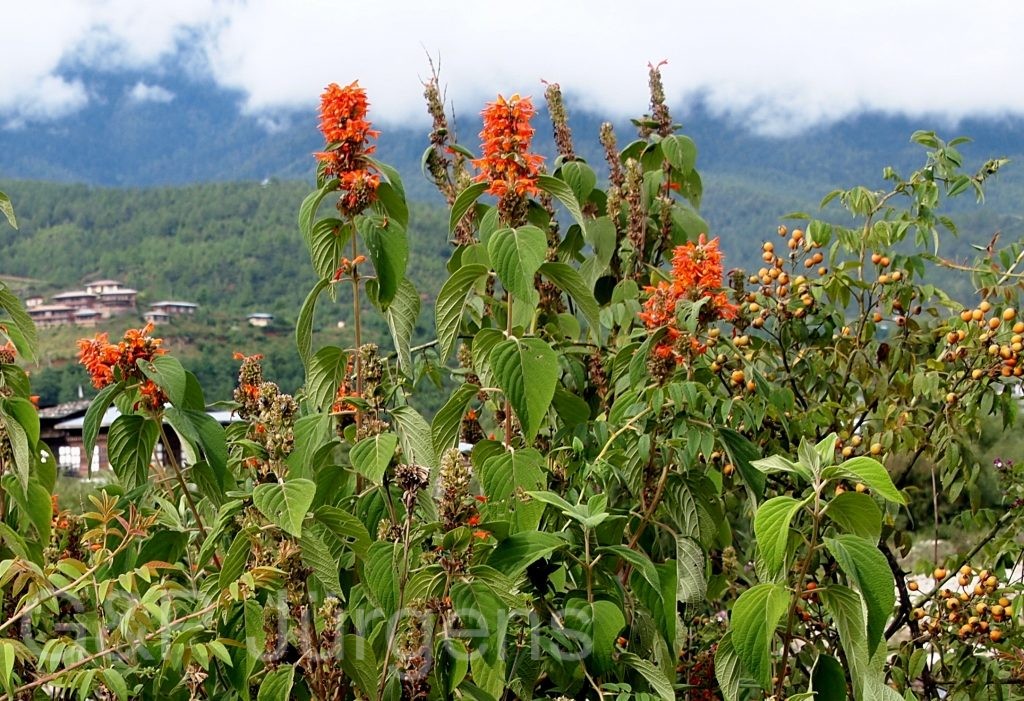
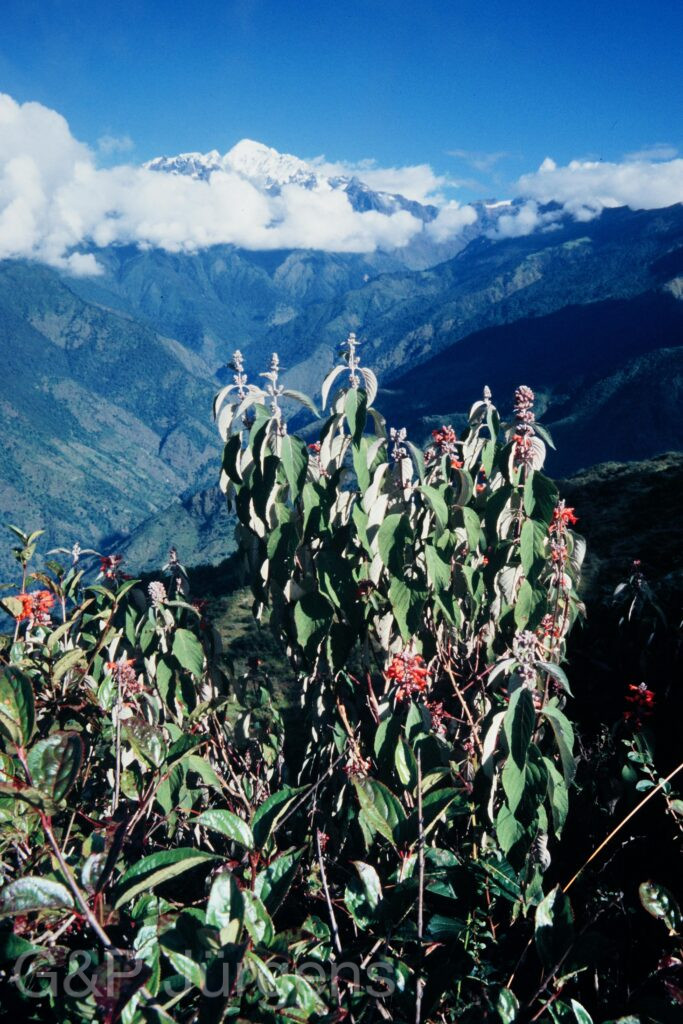
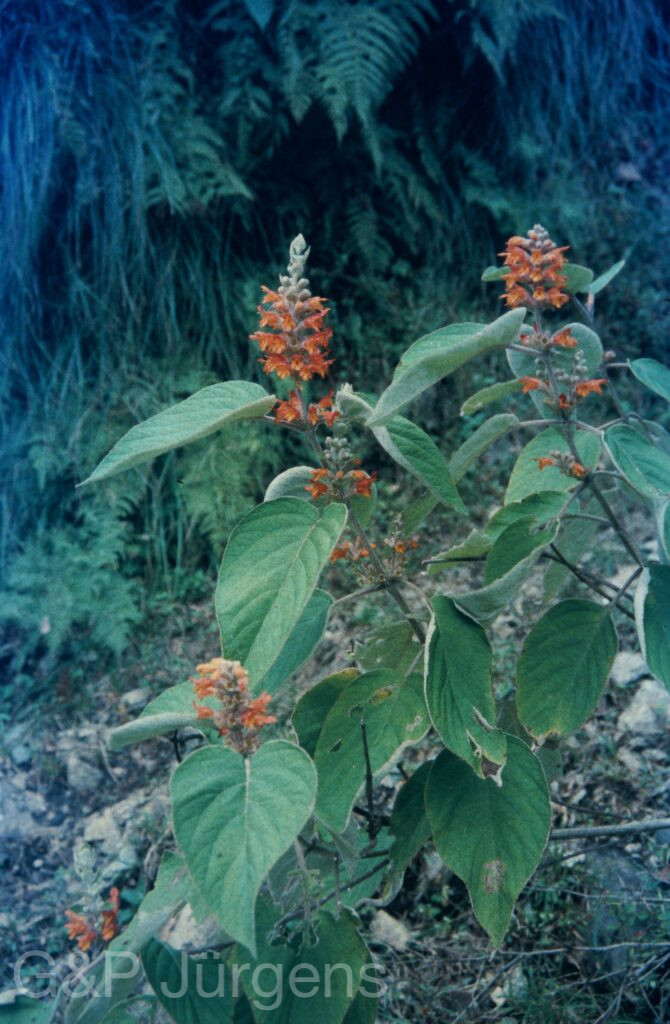
Colquhounia coccinea is a showy shrubby mint of the Himalaya and southwestern China. GBIF records it from China, Nepal, India, Bhutan, Thailand and Myanmar, with cultivated and introduced occurrences in Australia, Europe and North America, totalling around 670 records. It grows in open forest, scrub, thickets and along hill slopes and roadsides in the warm temperate zone, generally between 1500 and 3000 m. The populations illustrated were photographed at Paro in Bhutan (2300 m), Barphak in Nepal (2000 m) and Pana in Garhwal, India (2800 m), flowering in September and October, its characteristic autumn flowering season in the Himalayan foothills.
It is a robust, sprawling or semi-scandent shrub up to 2-3 m, the stems and foliage clothed in stellate or felted indumentum. The opposite leaves are ovate to lanceolate, acuminate, crenate-serrate and rugose, greyish-tomentose beneath. The flowers are borne in dense axillary cymose clusters; the curved, tubular, two-lipped corolla is brilliant scarlet to orange-red, well exserted from the calyx, with four didynamous stamens. The fruit is unusual among Lamiaceae in that the nutlets are winged, an adaptation favouring wind dispersal from the often steep slopes the plant occupies.
Colquhounia is a small Sino-Himalayan genus of subfamily Lamioideae, and the winged nutlets and tubular red corollas distinguish it within the family. The vivid scarlet, nectar-rich tubular flowers are adapted to bird pollination, notably by sunbirds, an uncommon strategy in the predominantly bee-pollinated mints. Long valued as an ornamental and frost-tender garden shrub, the species is widespread and locally common, and is not of conservation concern.
Author: Wall. · Sources: POWO (Kew), GBIF, Flora of China, Flora of Bhutan, Annotated Checklist of the Flowering Plants of Nepal, Phylogeny and classification of subfamily Lamioideae (Lamiaceae)