
(Bruehl) Dorosz.
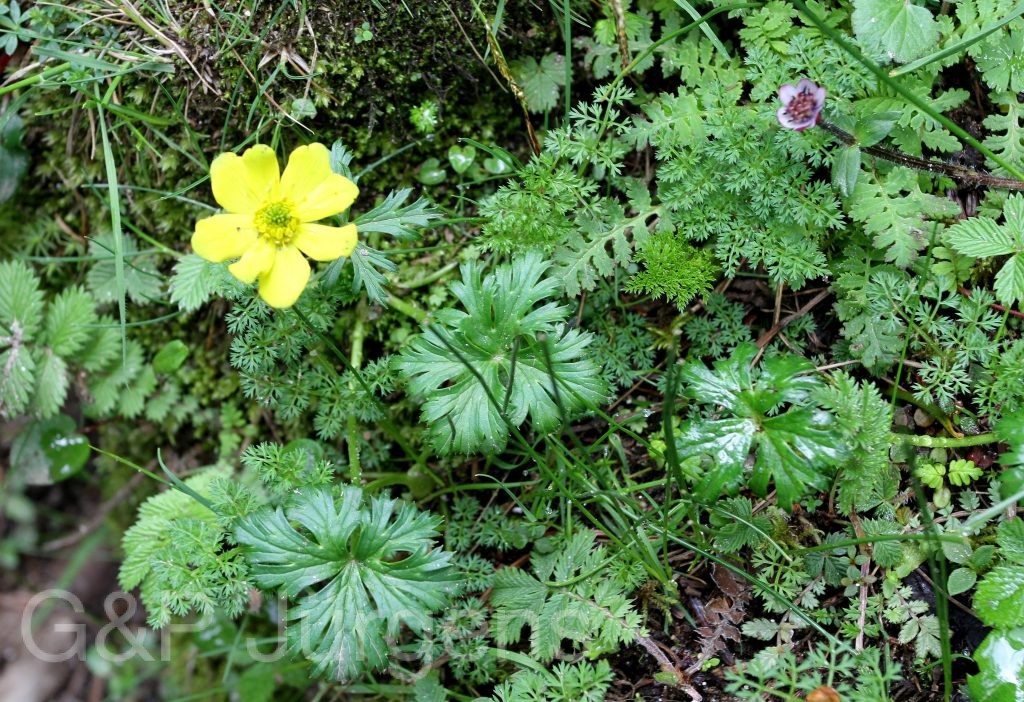
also included: Anemone rupestris Hook.f. & Thomson
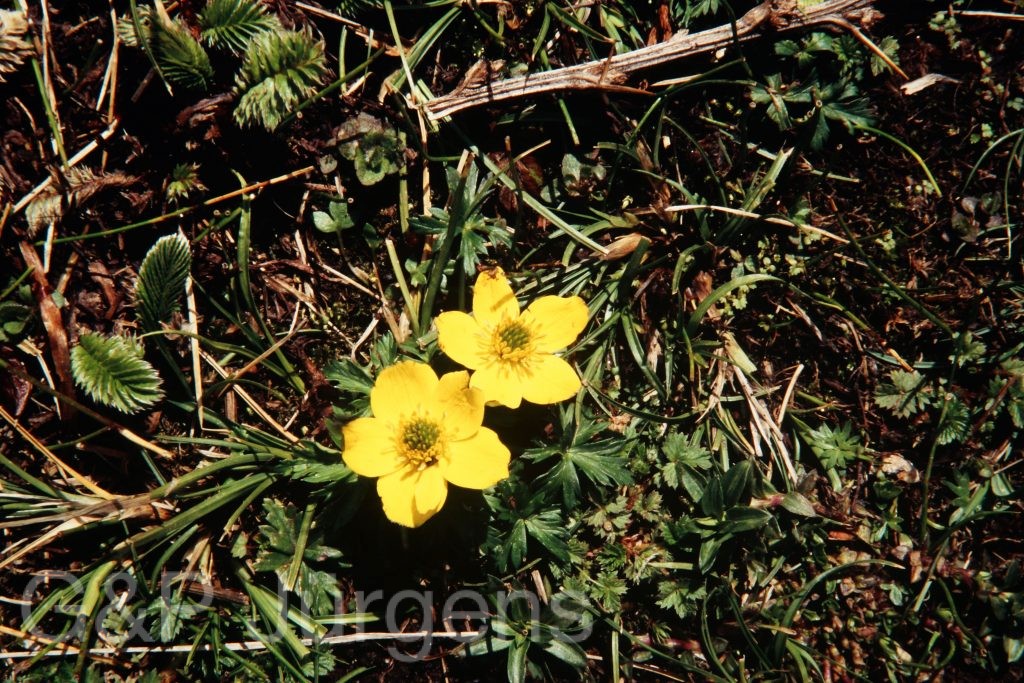
Description
Trollius sikkimensis is a high-alpine globeflower restricted to the eastern and central Himalaya, recorded from Nepal, China, Bhutan and India, with only about 31 georeferenced occurrences indicating a comparatively narrow and incompletely documented range. It inhabits moist alpine meadows, marshy turf, streamsides and the margins of glacial tarns between roughly 3500 and 4500 m. The photographed plants from Jimilangtso in Bhutan at 4000 m, flowering in June, exemplify its damp high-meadow habitat near alpine lakes, where it grows alongside other snowmelt herbs such as the Anemone rupestris noted from the same locality.
It is a glabrous perennial herb arising from a short rhizome, with erect, simple or sparingly branched stems. The basal leaves are long-petioled and palmately divided into deeply cut, toothed segments, the cauline leaves smaller and subsessile. The flowers are large and solitary or few, the showy part formed by several broad, spreading, golden-yellow petaloid sepals that open more widely than in the cupped European globeflowers; within are numerous narrow nectariferous petals and many stamens. The fruit is a head of many-seeded, beaked follicles.
Unlike the closed, globular flowers of Trollius europaeus, the open, saucer-shaped perianth of the Asian species facilitates access by a wider range of alpine pollinators. Trollius sikkimensis is closely allied to other Himalayan and Chinese globeflowers and is distinguished on perianth and follicle characters. Its restricted distribution and dependence on intact alpine wetlands make it potentially sensitive to grazing pressure and climatic warming.
Author: (Bruehl) Dorosz. · Sources: POWO (Kew), GBIF, Flora of Bhutan, Flora of China, Doroszewski's revision of Trollius