Ranunculaceae

(Buch.-Ham. ex DC.) Christenh. & Byng
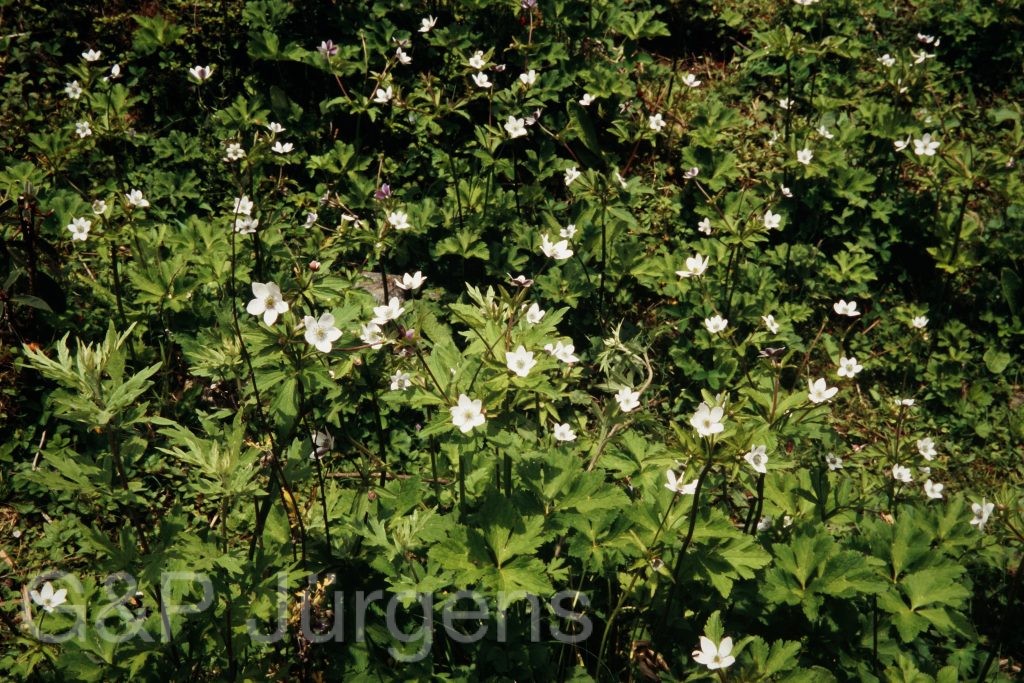
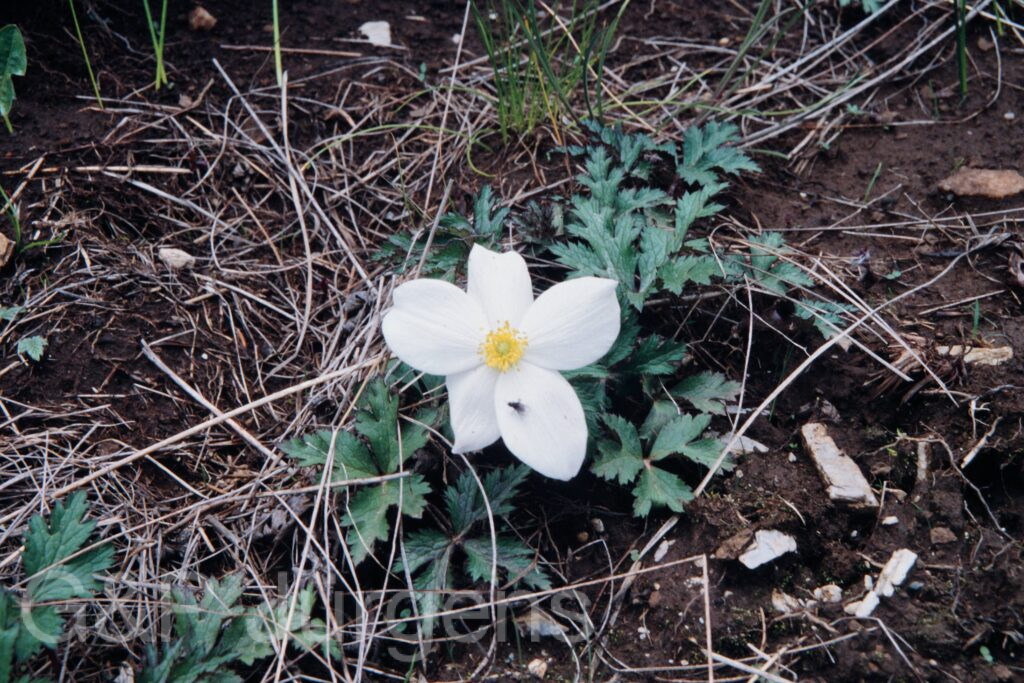
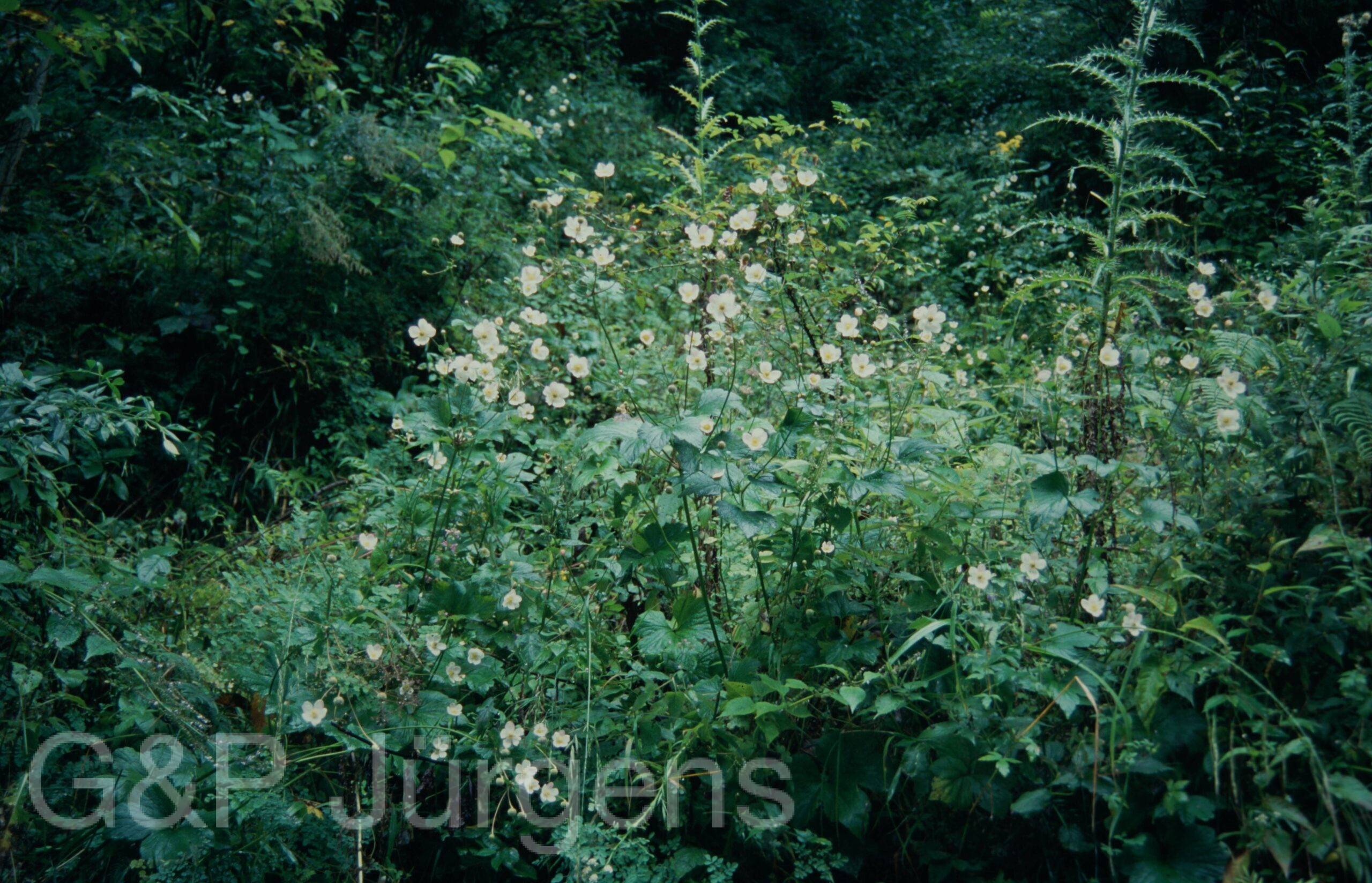
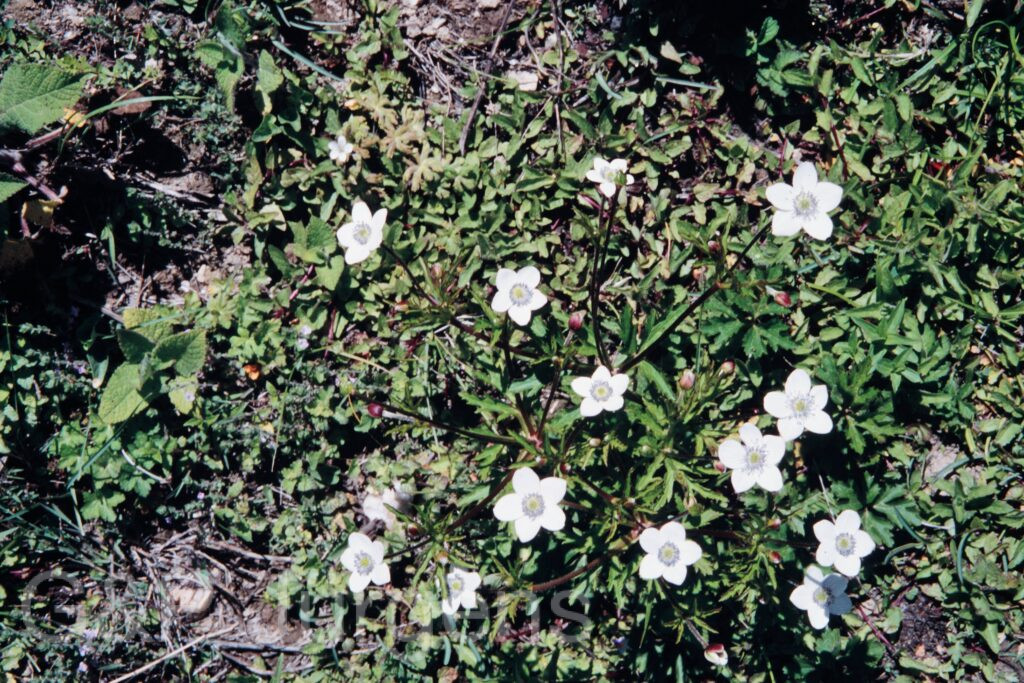
Bh09 197 P337
Bhutan above Thimphu, 3000m June
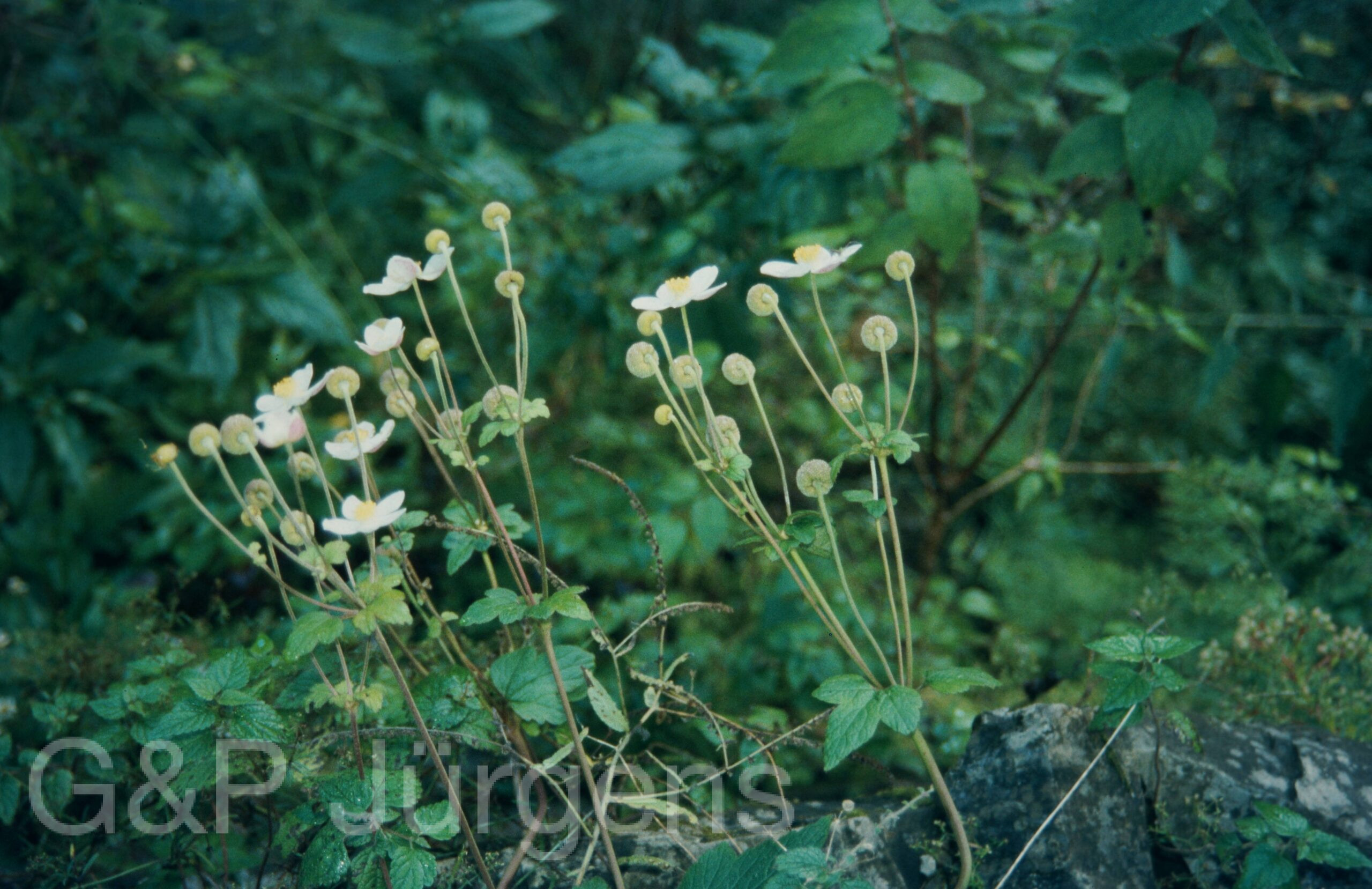
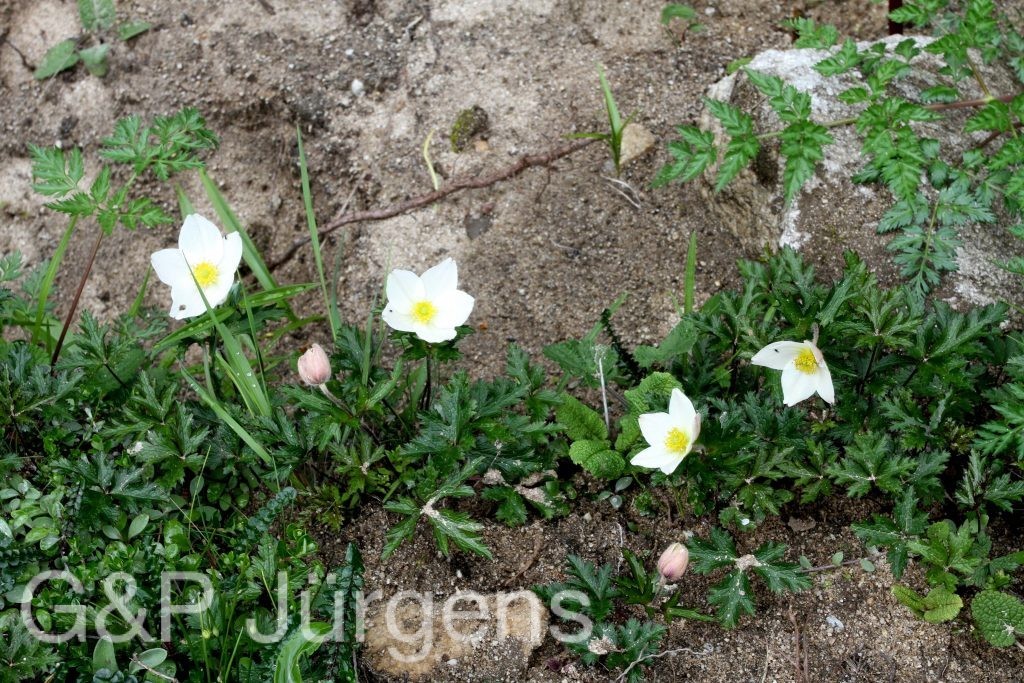
Bh09 68 P118
Bhutan above Thimphu, 3000m June
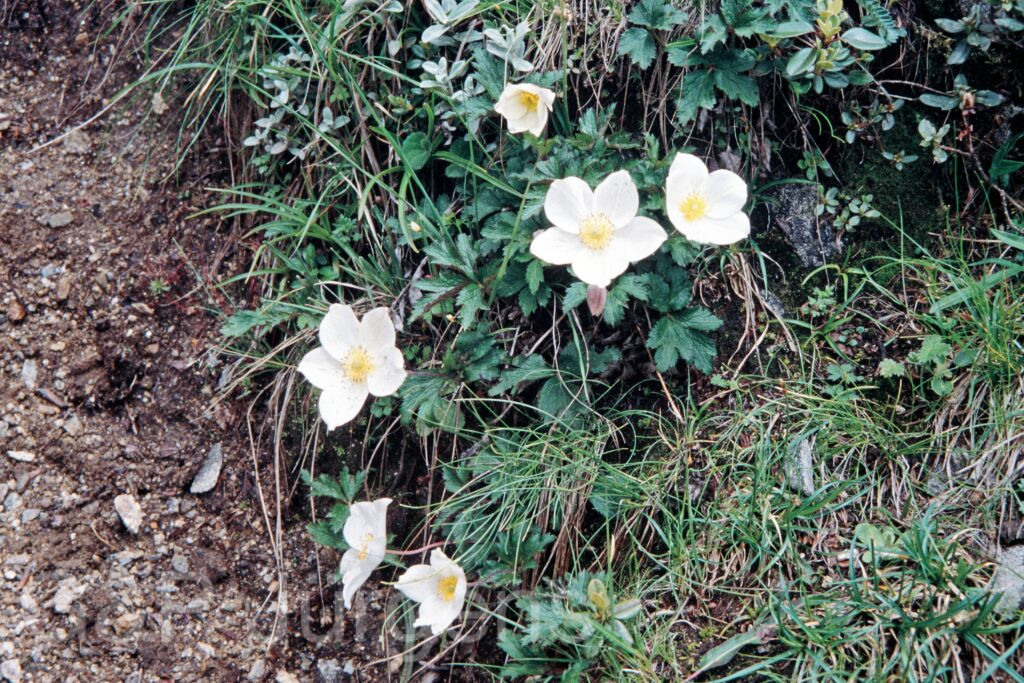
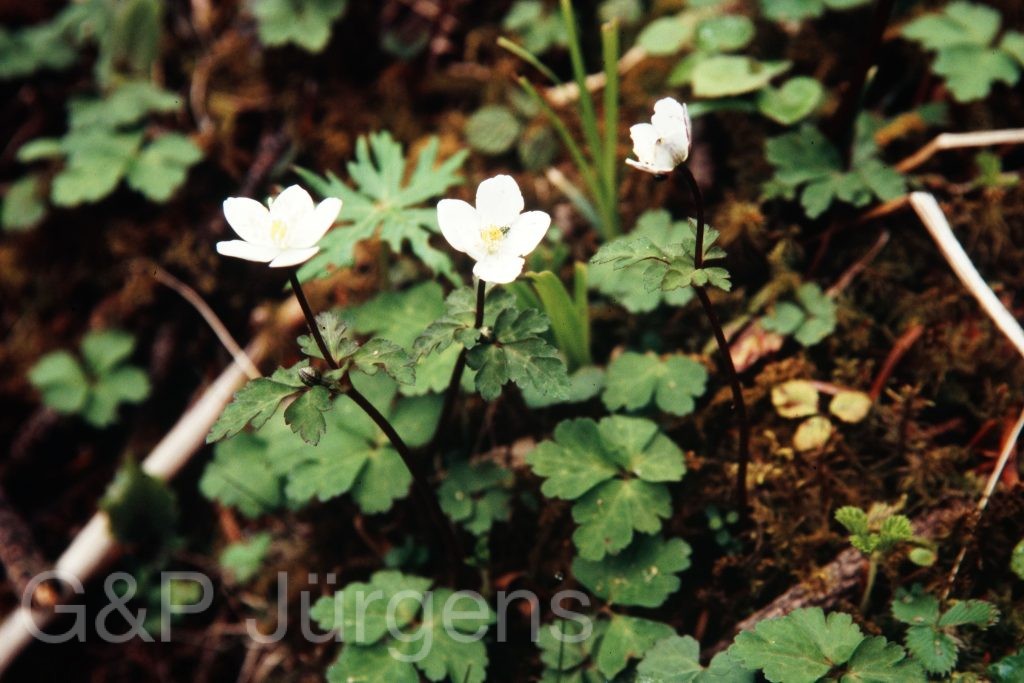
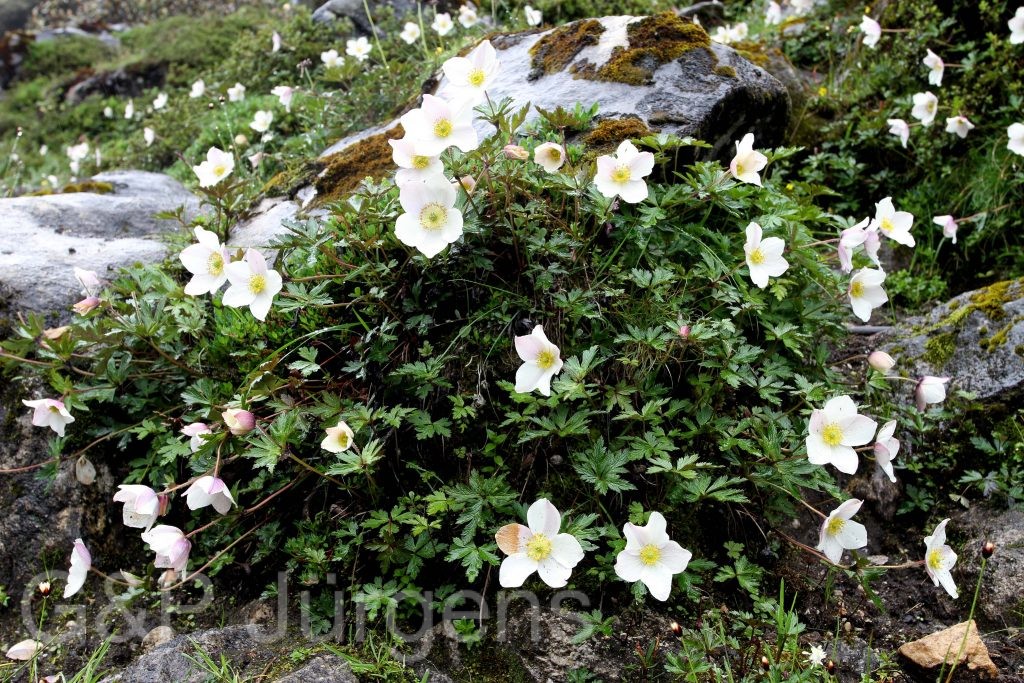
Nepal 99 169 ergebnis
West-Nepal South of Tara-Lake 3000m, June

Description

Eriocapitella rivularis (formerly Anemone rivularis) is a widely distributed montane herb of the Sino-Himalayan region. GBIF records span China, Nepal, India, Bhutan, Myanmar and Pakistan, extending to Sri Lanka, with introduced or cultivated occurrences in Europe, Japan and North America, totalling close to 2000 georeferenced collections. It favours moist alpine and subalpine meadows, stream banks, open slopes and forest margins, generally between 2000 and 4200 m. The populations illustrated here were photographed above Thimphu in Bhutan and south of Tara-Lake in West Nepal, both at around 3000 m and flowering in June, typical of its early-summer phenology in the central Himalaya.

It is an erect perennial 20-80 cm tall arising from a stout rootstock, the stems and petioles clothed in spreading white hairs. Basal leaves are long-petiolate and palmately 3-5-lobed, the segments coarsely toothed and bristly. The inflorescence is a lax cyme subtended by a leafy involucre of sessile bracts. Flowers are showy, with 5-6 white petaloid sepals often tinged bluish on the reverse and numerous stamens bearing conspicuous blue-violet anthers; true petals are absent. The fruit is an aggregate of flattened, narrowly winged achenes terminating in a slender hooked beak that aids epizoochorous dispersal.

The transfer to the segregate genus Eriocapitella reflects molecular work resolving the paraphyly of Anemone sensu lato. Pharmacologically it is notable as a source of triterpenoid saponins and is used in Himalayan folk medicine. Its broad ecological amplitude, abundant achene production and wind-aided dispersal render it locally common and of no conservation concern, a characteristic component of grazed Himalayan pasture.

Author: (Buch.-Ham. ex DC.) Christenh. & Byng · Sources: POWO (Kew), GBIF, Flora of China, Flora of Bhutan, Annotated Checklist of the Flowering Plants of Nepal, Monograph of the genus Anemone (Ranunculaceae)
(Cambess.) Christenh. & Byng

BhutanPG2011 207
Bhutan Tsochenchen, 3500m June
BhutanPG2011 586
Bhutan Ludlow-Sherriff-Trail Miluthang, 4450m July
Nepal 99 130 ergebnis
West-Nepal South of Rara-Lake 3800m, June
Nepal 99 529 ergebnis
West-Nepal South of Rara-Lake 3800m, June

Description

Eriocapitella rupicola, formerly Anemone rupicola, is a Himalayan and Sino-Himalayan herb distributed from Pakistan through Nepal, India and Bhutan into China, with around 507 GBIF occurrences. It grows in alpine and subalpine habitats, on rocky slopes, cliff ledges, open meadows, stony pastures and among boulders, often in well-drained sites in the upper subalpine to alpine zone. The images document it widely in the range: Bhutan at Tsochenchen around 3500 m in June and along the Ludlow-Sherriff Trail at Miluthang near 4450 m in July, and West Nepal south of Rara Lake at about 3800 m in June, where its white blooms open through the early summer.

It is a perennial herb arising from a stout rootstock, with basal leaves that are ternately to palmately divided into toothed, deeply cut segments, hairy on the surfaces. The flowering stems are erect and bear an involucre of stalked, leaf-like bracts below the flowers. The flowers are solitary or few, comparatively large and showy, with several (commonly five) petaloid white sepals, often flushed pink or bluish on the reverse, and numerous stamens surrounding a head of carpels. The fruit is a head of densely woolly, long-hairy achenes, the indumentum aiding wind dispersal.

The species has been transferred to Eriocapitella, a segregate genus carved from the broadly circumscribed Anemone on molecular and morphological grounds by Christenhusz and Byng; POWO accepts this placement, with Anemone rupicola as a synonym. The woolly achene heads (the basis of the generic name) are characteristic. The showy white flowers attract generalist alpine insect pollinators. Widespread across the Himalaya, it is common and of least conservation concern.

Author: (Cambess.) Christenh. & Byng · Sources: POWO (Kew), GBIF, Flora of China, Flora of Bhutan, Flora of Nepal, Christenhusz & Byng revision of Anemone s.l.

(Buch.-Ham. ex DC.) Nakai

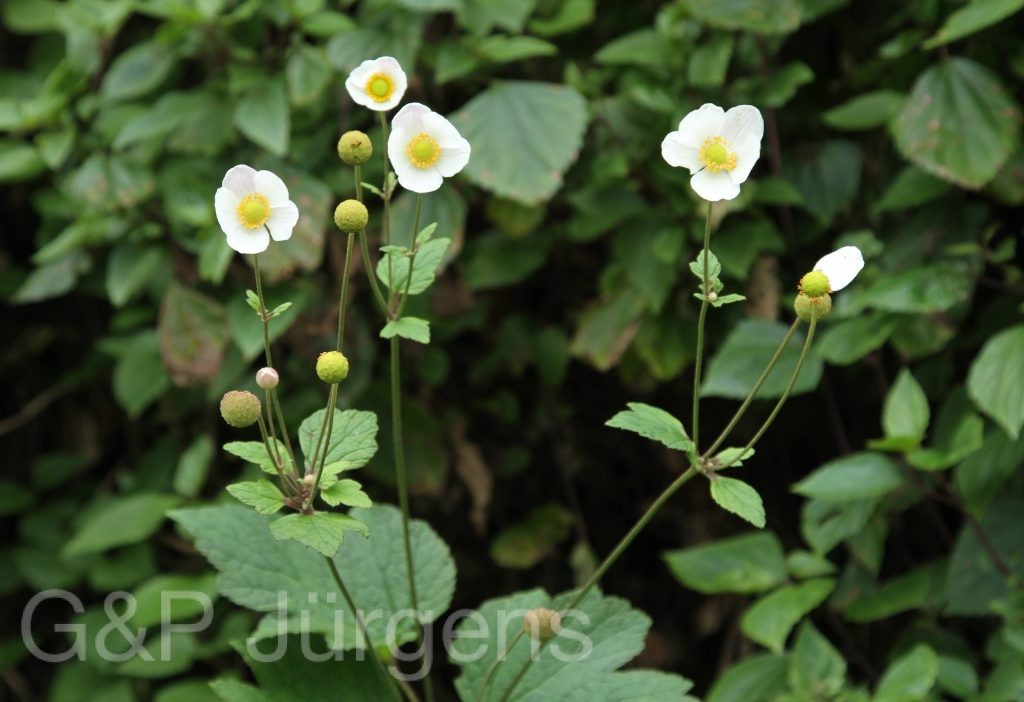
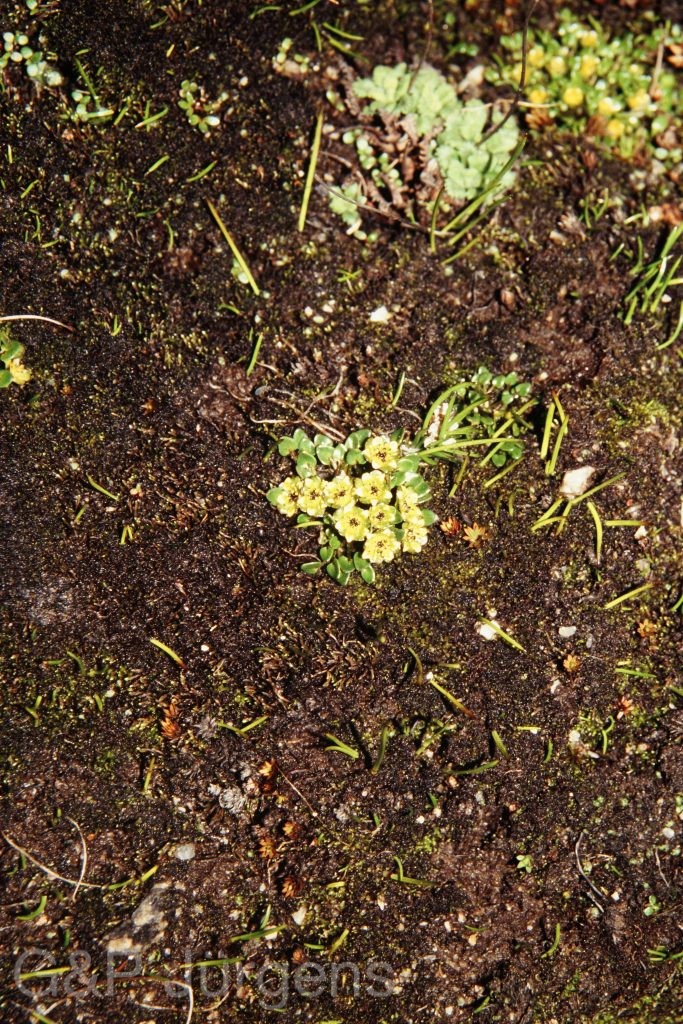
Bhutan2012 1325
Bhutan Pemagatse 1900m, October
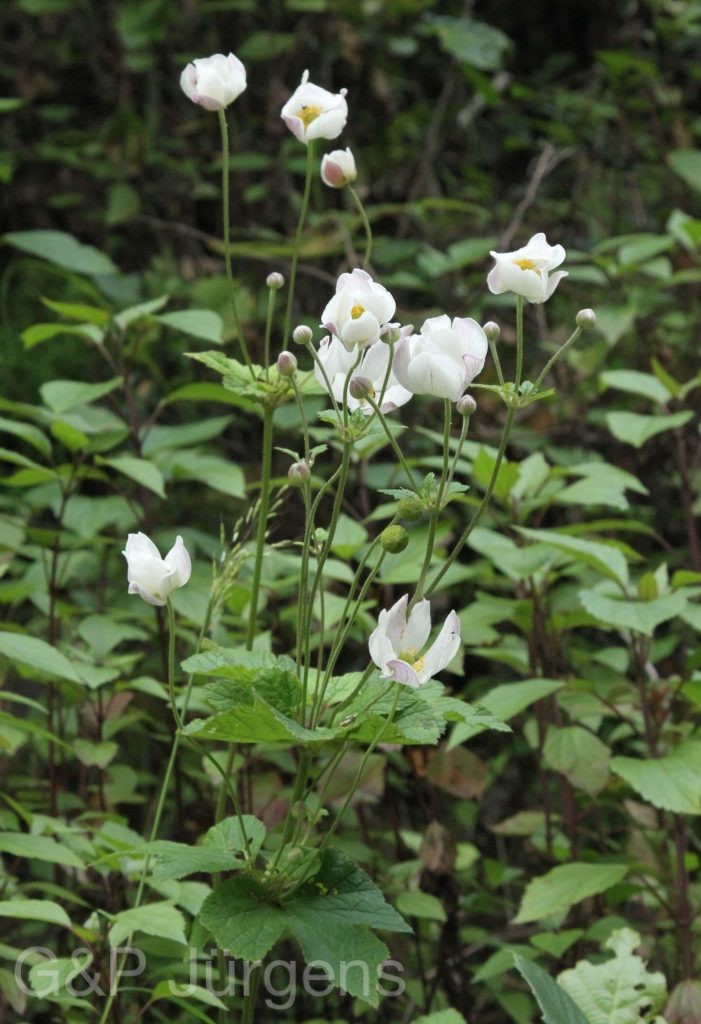
Bhutan2012 447
Bhutan Wangdi 2500m, September

Description

Eriocapitella vitifolia (formerly Anemone vitifolia) is a robust perennial herb widespread across the Himalaya and East Asia, recorded from China, Nepal, India, Bhutan, Taiwan, Myanmar, Pakistan and beyond, with nearly 2000 georeferenced occurrences in GBIF reflecting both its native range and ornamental cultivation. It favours forest margins, open slopes, shrubberies and disturbed banks, mainly in the warm- to cool-temperate belt between about 1500 and 3000 m. The plants illustrated were photographed in Bhutan at Pemagatse (1900 m) and Wangdi (2500 m) and in the Indian Garhwal at Sitel (1850 m), flowering from September into October.

The species arises from a stout, woody rootstock and produces long-petiolate basal leaves with broadly cordate-ovate, vine-like (vitifolia, grape-leaved) blades that are shallowly three- to five-lobed, toothed, and densely white-tomentose beneath. Tall, branching flowering scapes bear cymose clusters of showy flowers, each with five to many petaloid sepals (true petals absent) that are white to pale pink, surrounding a central mass of numerous yellow stamens and a domed cluster of carpels. The fruiting head is globose and conspicuously woolly, the densely hairy achenes being adapted for wind dispersal, a feature reflected in the generic name.

Eriocapitella was segregated from Anemone (Ranunculaceae) on molecular and morphological grounds, comprising the woolly-fruited Asian anemones, and E. vitifolia is one of its most familiar Himalayan representatives. It is widely grown in temperate gardens and is an ancestral parent of the cultivated Japanese anemones, explaining scattered records in Europe, North America and southern Africa. Containing acrid ranunculaceous compounds, it is avoided by grazers and, common and adaptable, is of no conservation concern.
Author: (Buch.-Ham. ex DC.) Nakai · Sources: POWO (Kew), GBIF, Flora of China, Flora of Bhutan, Annotated Checklist of the Flowering Plants of Nepal, Hoot et al. Phylogeny of Anemone and Allies

(Adams) Komarov

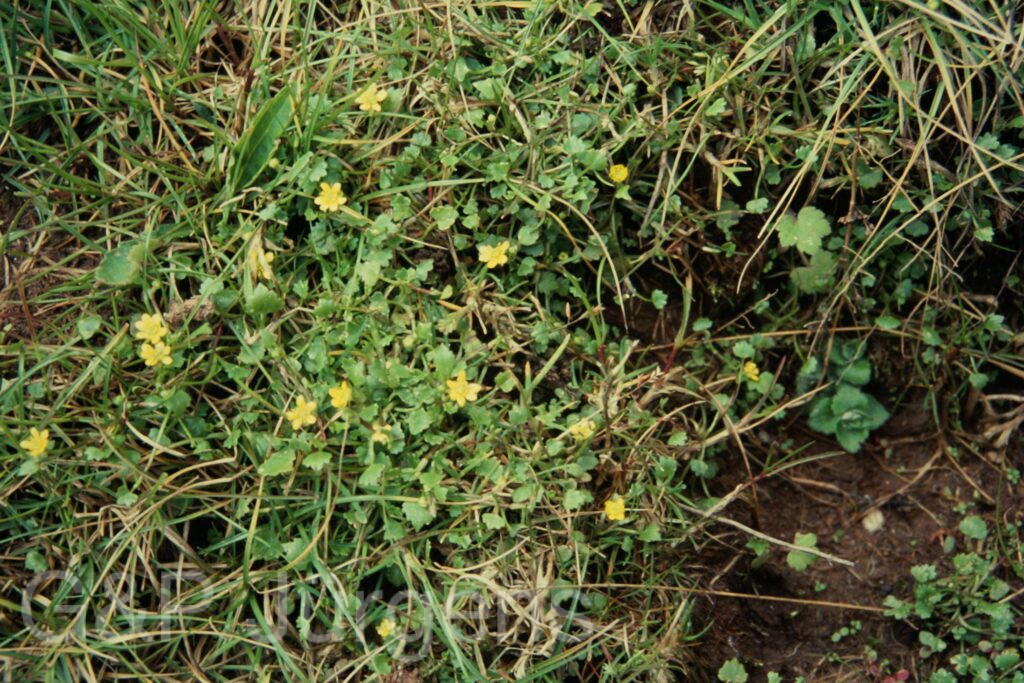
Sikkim2004 68 P119
Sikkim West-Bengal, Bersay 2800m April

Description

Halerpestes sarmentosa is a widely distributed stoloniferous perennial of saline and moist open ground across temperate Eurasia, documented from Russia, China, India, Mongolia, Kazakhstan, Afghanistan, Tajikistan, Pakistan, Kyrgyzstan, Nepal and Uzbekistan, with disjunct and partly introduced records in the Americas (the more than 2170 GBIF occurrences include adventive populations). It favours damp meadows, lake and stream margins, marshy depressions and alkaline flats, typically from the lowlands to around 4500 m. The plant photographed at Bersay (Sikkim, West Bengal) at about 2800 m in April reflects its occurrence in moist montane grassland during early flowering.

The species is a low, mat-forming herb spreading by slender rooting stolons (sarmentose runners), from which arise long-petiolate basal leaves. The leaf blades are simple, ovate to reniform or somewhat three-lobed, with crenate margins and a cordate to truncate base, rather thick and slightly fleshy. The leafless scapes bear one to a few small flowers; the five spreading sepals subtend five narrow, yellow, nectariferous petals each with a basal scale. Stamens and carpels are numerous, the latter densely aggregated on an elongating receptacle and maturing into a globose to ovoid head of small, flattened, faintly ribbed achenes with a short straight beak.

Halerpestes was segregated from Ranunculus on the basis of its stoloniferous halophytic habit, leathery entire leaves and distinctive achene structure, the genus being centred on the steppe and saline wetlands of Central Asia. The taxon is also catalogued under the orthographic variant Halerpestes sarmentosus. Ecologically it is a salt-tolerant wetland colonist of grazed and disturbed shores; its broad range and tolerance of human-modified habitats render it of least concern, and its near-cosmopolitan spread illustrates the biogeographic links between Eurasian and American cold-temperate floras.

Author: (Adams) Komarov · Sources: POWO (Kew), GBIF, Flora of China, Flora of Bhutan, Annotated Checklist of the Flowering Plants of Nepal, Tamura's monograph of Ranunculaceae

(Maxim.) Hand.-Mazz.

Sikkim2004 282 P494 ergebnis
Sikkim Dzongri 4000m, May

Description

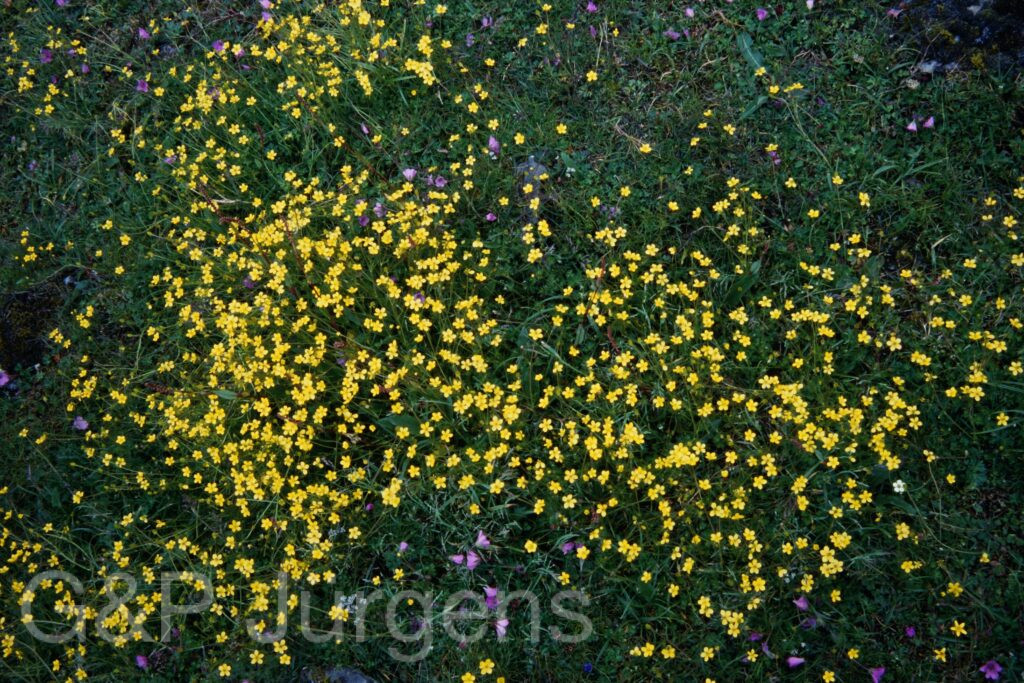
Halerpestes tricuspis is a small, stoloniferous perennial of the Ranunculaceae, distributed across the high mountains of Central Asia and the Himalaya. GBIF records (377 occurrences) document its presence in China, Nepal, India, Bhutan, Mongolia and Pakistan, where it occupies the alpine and subalpine zone. It is a characteristic plant of moist, often saline or marshy ground, the margins of glacial lakes, seepage flushes and streamsides, typically between 3,000 and 5,000 m. The photographed material from Dzongri in Sikkim at around 4,000 m in May exemplifies this preference for wet alpine meadows where snowmelt sustains permanently damp substrates.

The plant forms low mats by means of slender, rooting stolons. The leaves are basal, long-petiolate, with a small, fleshy, broadly cuneate to obovate blade that is characteristically three-toothed or shallowly three-lobed at the apex, the feature from which the epithet tricuspis derives. Flowering scapes are leafless and rise just above the foliage, each bearing one to few small, bright yellow flowers. The flowers have five sepals and five glossy petals each with a basal nectary scale; the numerous stamens surround a domed receptacle that develops into a globose to ovoid head of small, compressed, finely ridged achenes.

Formerly placed in Ranunculus, the genus Halerpestes is distinguished by its stoloniferous habit, the toothed leaf apices and the longitudinally ribbed achenes adapted to wetland dispersal. The species is an indicator of intact alpine wetland and flush communities, habitats sensitive to grazing pressure, trampling and hydrological change driven by glacial retreat. Though not currently of conservation concern owing to its wide range, its dependence on specialised wet microhabitats makes local populations vulnerable.

Author: (Maxim.) Hand.-Mazz. · Sources: POWO (Kew), Flora of China Vol. 6, Flora of Bhutan Vol. 1, GBIF, Tamura: Die natürlichen Pflanzenfamilien – Ranunculaceae (1995)

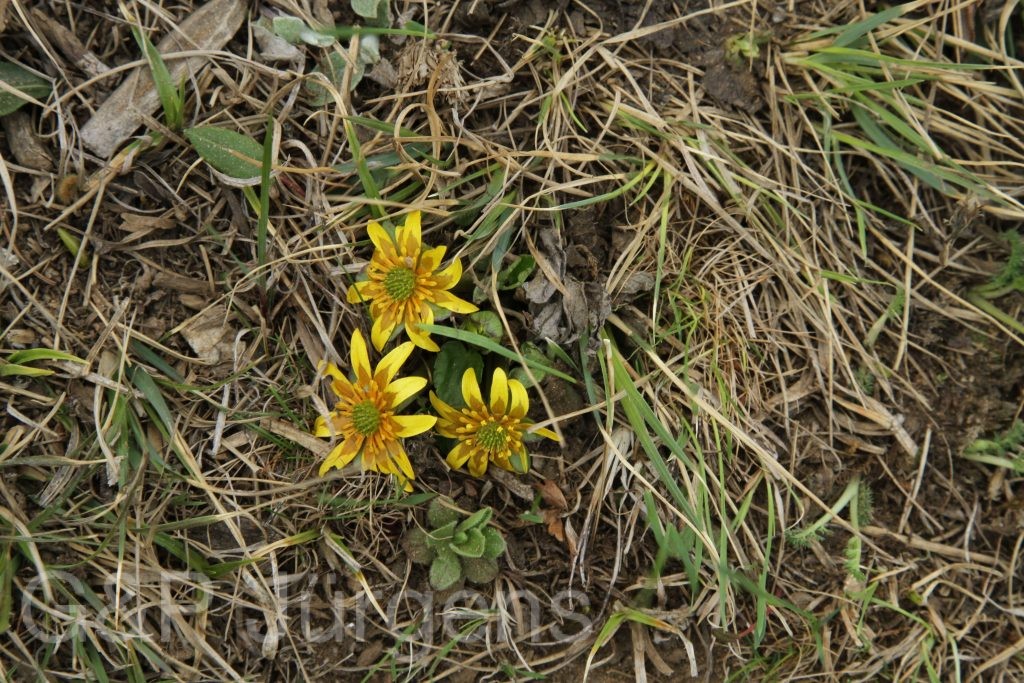
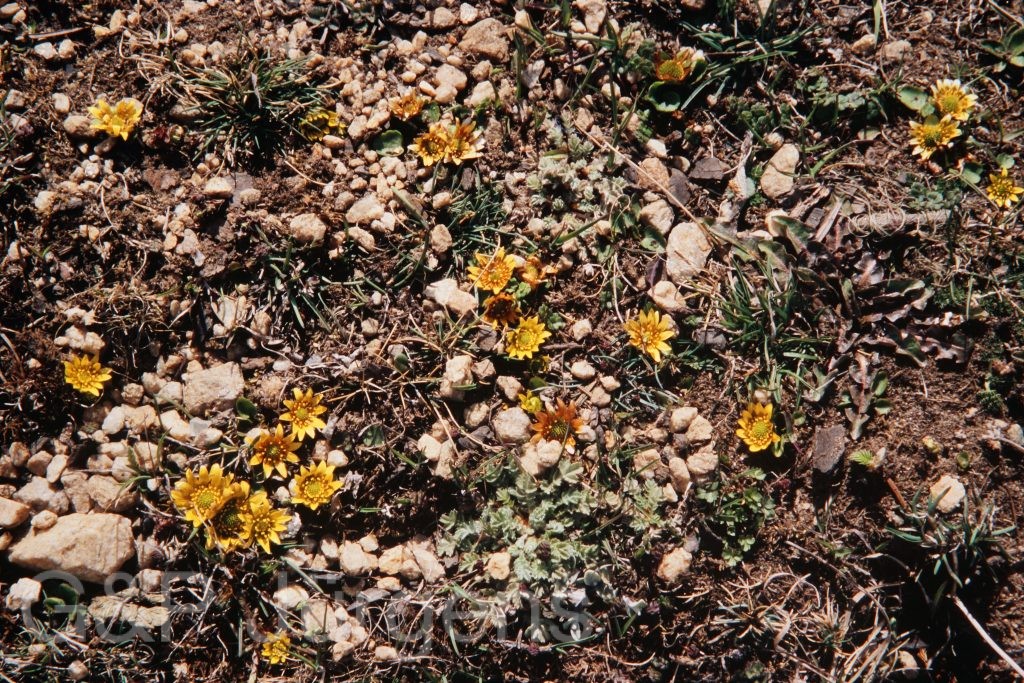
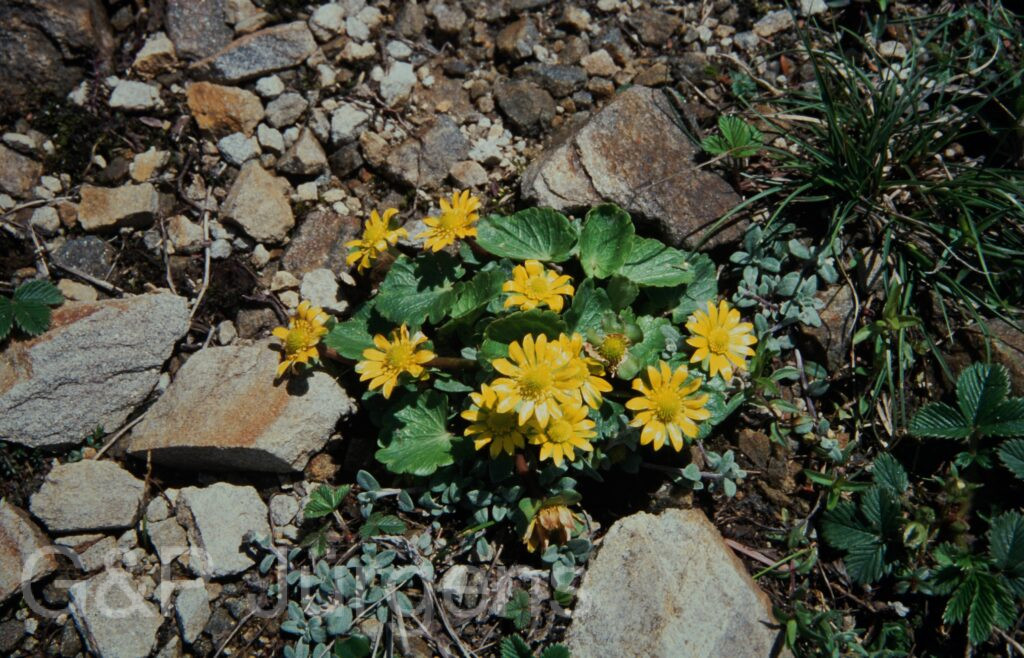
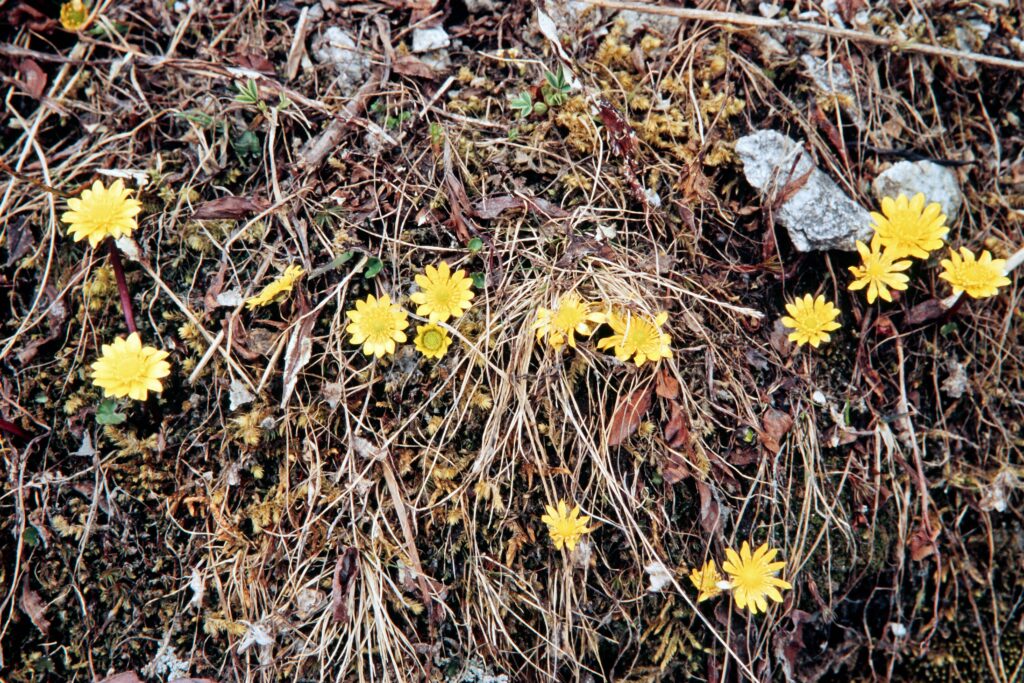
Hook.f. & Thomson

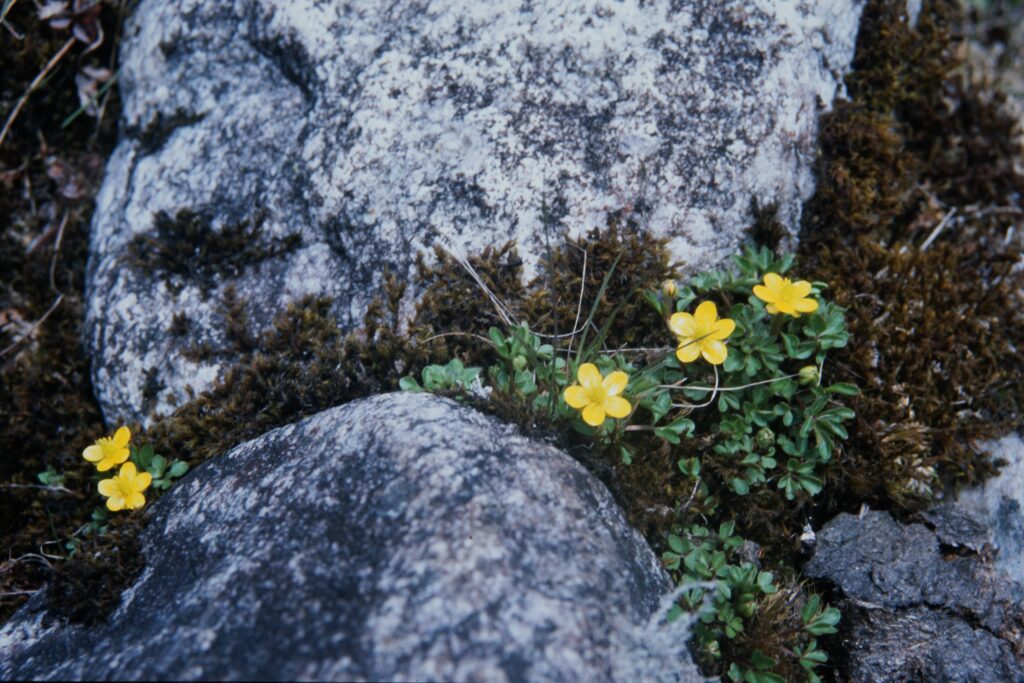
Bhutan2014 918
Bhutan Chele-La 4000m, May
Bh2008 568 P855
Bhutan Chele-La 3900m April
Nepal 2001 332 ergebnis ergebnis
Nepal (Gorkha) Rupina-La 3300m, May

Description

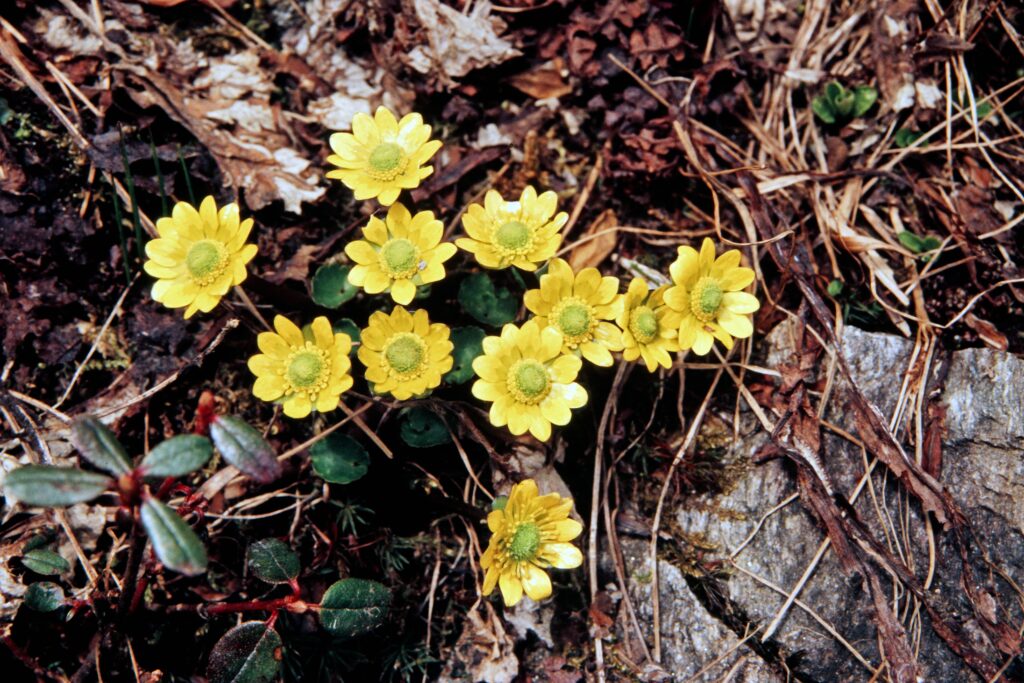
Oxygraphis polypetala is a high-alpine buttercup relative distributed across the Himalaya and Tibetan plateau, with records from India, Nepal, China, Russia, Bhutan and Pakistan and around 115 georeferenced occurrences. It is an early-flowering plant of damp alpine turf, snowmelt flushes, gravelly meadows and the margins of melting snow patches, generally between about 3300 and 4500 m. The illustrated collections—Chele-La in Bhutan at 3900–4000 m in April and May, Rupina-La in Gorkha, Nepal at 3300 m in May, and Khiar Kutti in Garhwal, India at 4100 m in June—capture its phenology of blooming almost immediately as the snow retreats.

It is a small, stemless perennial herb forming rosettes from a short rootstock. The leaves are all basal, long-petiolate, with an entire to obscurely crenate, ovate to elliptic, often somewhat fleshy blade. The flowers are solitary on leafless scapes; the perianth is conspicuous, with numerous (commonly ten or more, whence polypetala) narrow, glossy golden-yellow petaloid segments spreading star-like above a green calyx, surrounding many stamens and a domed head of carpels. The fruit is an aggregate of numerous small, beaked achenes borne on an elongating receptacle.

Oxygraphis is a small Asiatic genus segregated from Ranunculus on the basis of its persistent, leathery petals and achene structure; the name combination here, attributed to Hooker and Thomson, is treated as accepted despite synonym status in the source data. Its precocious flowering exemplifies the snowbed strategy of many high-Himalayan herbs that exploit the brief window of meltwater and warmth. Widely distributed and locally abundant, it is not regarded as threatened.

Author: Hook.f. & Thomson · Sources: POWO (Kew), GBIF, Flora of China (Ranunculaceae), Annotated Checklist of the Flowering Plants of Nepal, Grierson & Long Flora of Bhutan, Tamura's treatment of the Ranunculaceae

W.W.Sm.

Bh09 155 G277
Bhutan Jimilangtso, 4100m June

Description

Paroxygraphis sikkimensis is a rare alpine member of the buttercup family endemic to the Eastern Himalaya, recorded from Nepal, Sikkim and adjacent India, Bhutan and southern Tibet (China), with GBIF documenting only 24 occurrences across NP, IN, BT and CN. It inhabits open alpine turf, moist meadows and damp gravelly slopes near the upper limit of vegetation, generally between about 3800 and 4500 m. The photographed plant was found in Bhutan near Jimilangtso (Jimilang Tsho) at around 4100 m, flowering in June at the start of the brief alpine growing season.

The plant is a small, low perennial herb forming a basal rosette of leaves from a slender rootstock, with short, few-flowered stems. The leaves are simple, spathulate to obovate, entire or shallowly toothed toward the apex, and somewhat fleshy. The flowers are solitary or few, with a calyx of sepals and a corolla of small white to yellowish petals each bearing a basal nectary, surrounding numerous free stamens and an apocarpous gynoecium of many separate carpels. The fruit is a head of achenes, each tipped with a short style, in the manner of the closely allied genus Ranunculus.

Paroxygraphis is a small, segregate genus erected by W.W. Smith and traditionally placed near Oxygraphis and Ranunculus within the Ranunculeae; molecular studies have prompted discussion of its relationships and possible inclusion in a broadly circumscribed Ranunculus. Its very restricted range, low number of recorded occurrences and specialised high-alpine habitat make P. sikkimensis a taxon of biogeographic interest and potential conservation concern, though it has not been formally assessed.

Author: W.W.Sm. · Sources: POWO (Kew), GBIF, Flora of Bhutan, Annotated Checklist of the Flowering Plants of Nepal, Flora of China (Ranunculaceae)

Hand.-Mazz.

Nepal 2001 305 ergebnis ergebnis
Nepal (Gorkha) Kharka 3140m, May

Description

Ranunculus adoxifolius is a small buttercup of the Sino-Himalayan region, recorded from Nepal, India and Bhutan, with GBIF listing about 76 occurrences (the French record reflecting herbarium or cultivated provenance). It occupies moist subalpine to alpine habitats, including shaded forest margins, damp meadows, mossy banks and seepage slopes, generally between roughly 3000 and 4000 m. The photographed plant was found in the Gorkha district of Nepal at a kharka (high pasture) at 3140 m in May, flowering early in the season as snowmelt moistens the ground beneath open forest and on grassy slopes.

It is a delicate, low perennial herb with a short rhizome and fibrous roots. The basal leaves are long-petiolate with rounded, three-lobed to ternately divided blades whose segments are crenate-lobed, recalling the foliage of Adoxa, hence the epithet. The slender, few-leaved stems bear one to a few small flowers. Each flower has five (sometimes more) spreading, glossy yellow petals each with a basal nectary scale, numerous yellow stamens, and a domed receptacle of many free carpels. The fruiting head is a globose to ovoid cluster of small, glabrous, beaked achenes.

The species belongs to the cosmopolitan genus Ranunculus (Ranunculaceae), within the assemblage of small-flowered Asian alpine buttercups. Like its relatives it contains the acrid glycoside ranunculin, rendering the fresh plant unpalatable to grazing stock. With a restricted Himalayan range tied to undisturbed moist montane habitat, it is a useful indicator of intact subalpine vegetation; it has not been formally assessed, but its specialised habitat warrants attention where disturbance and grazing intensify.

Author: Hand.-Mazz. · Sources: POWO (Kew), GBIF, Flora of Nepal, Flora of China, Annotated Checklist of the Flowering Plants of Nepal, Ranunculus monographs (Tamura)

Freyn

Sikkim2011 55
Sikkim Vista-valley 3800m, June
Sikkim2003 300 P429
Sikkim Saniti-Lake 4300m August

Description

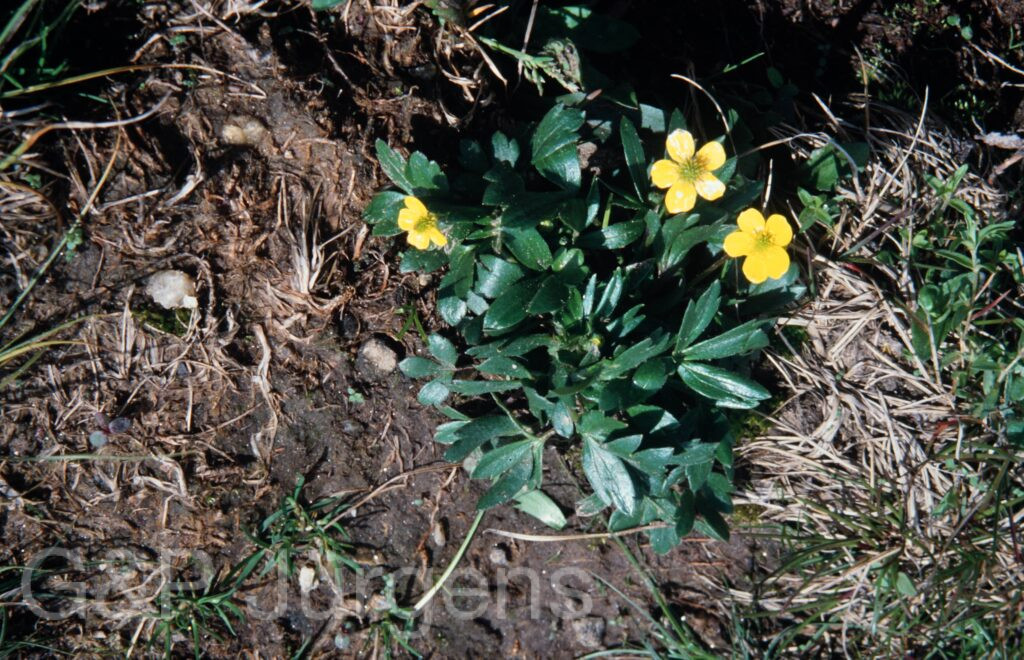
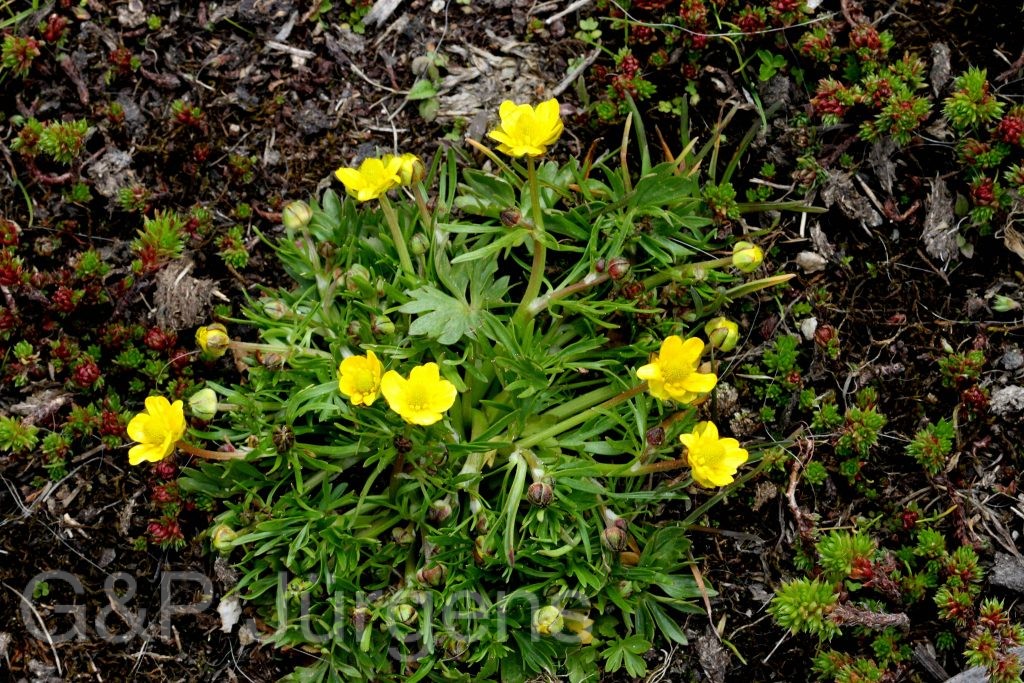
Ranunculus brotherusii is a widespread alpine buttercup of Central Asia and the Himalaya, recorded from China, Nepal, India, Bhutan, Pakistan, Mongolia, Russia and Kyrgyzstan, with additional collections in European herbaria. Its roughly 1756 georeferenced records reflect a common and broadly distributed high-mountain species. It grows in damp alpine meadows, marshy ground, streamsides and snow-flush hollows, typically at about 3000-5000 m. The Sikkim gatherings cited above, from the Vista valley at 3800 m in June and from Saniti Lake at 4300 m in August, are characteristic, the species flowering through the short alpine summer on moist, well-watered turf.

It is a small, tufted perennial herb arising from a fibrous root system, the stems erect to ascending and sparsely appressed-hairy. The basal leaves are long-petiolate with reniform to orbicular blades that are three-lobed or further divided into crenate segments, while the cauline leaves are smaller and more deeply cut, becoming sessile above. The flowers are solitary or few, with five greenish, often pubescent sepals and five glossy yellow obovate petals each bearing a small nectary scale. The numerous stamens surround a globose to ovoid head of carpels, the fruit an aggregate of small glabrous achenes with a short curved or hooked beak.

Ranunculus is a large, cosmopolitan genus particularly diverse in cold temperate and alpine regions, and R. brotherusii belongs to its assemblage of small-flowered Asian alpine buttercups. Like its relatives it contains acrid protoanemonin compounds rendering it unpalatable and toxic to livestock, which favours its persistence on grazed pasture. Pollination is by generalist alpine flies and bees. Its extensive transboundary range and ecological tolerance place it well outside any conservation concern.

Author: Freyn · Sources: POWO (Kew), GBIF, Flora of China, Flora of Pakistan, Ranunculus of Central Asia monograph

DC.

Nepal 97 611 P1182
Nepal Godawari 1350m May
Garh 07 47 ergebnis
India Garhwal Mandakini 2360m, June

Description

Ranunculus diffusus is a widely distributed buttercup of the Himalaya and montane Asia, recorded from India, Nepal, China, Pakistan, Bhutan, Myanmar, Vietnam, Malaysia, Indonesia, Sri Lanka and Taiwan, with some 618 occurrences in GBIF. It favours moist, shaded habitats such as forest floors, streamsides, damp banks and the margins of cultivation, ranging widely from the subtropical foothills into the temperate zone, roughly between 1000 and 3000 m. The photographs from Godawari in Nepal at about 1350 m in May and from the Mandakini valley in Garhwal at about 2360 m in June illustrate its broad ecological and altitudinal tolerance across the spring and early-monsoon flowering period.

The plant is a perennial herb with slender, diffusely spreading and often decumbent or rooting stems, the habit that gives the species its name. The basal and lower leaves are long-petioled and ternately divided into three lobed and toothed segments, more or less hairy. The flowers are small, solitary or few on slender pedicels, with usually five spreading, reflexed sepals and five glossy yellow petals each bearing a nectary scale at the base, surrounding numerous stamens and carpels. The fruiting head is a globose to ovoid cluster of small, compressed achenes tipped by a short curved or hooked beak.

Within the cosmopolitan genus Ranunculus, R. diffusus is a member of the diverse Asian assemblage of small-flowered, woodland and streamside buttercups and shows considerable variation in leaf division and pubescence across its wide range. Like most buttercups it contains the acrid glycoside ranunculin, rendering it unpalatable and somewhat toxic to livestock. Common and ecologically plastic, it is not of conservation concern and frequently behaves as a weed of moist disturbed ground.

Author: DC. · Sources: POWO (Kew), GBIF, Flora of China, Flora of Bhutan, Annotated Checklist of the Flowering Plants of Nepal, Tamura's treatment of Ranunculaceae