
DC.
Description
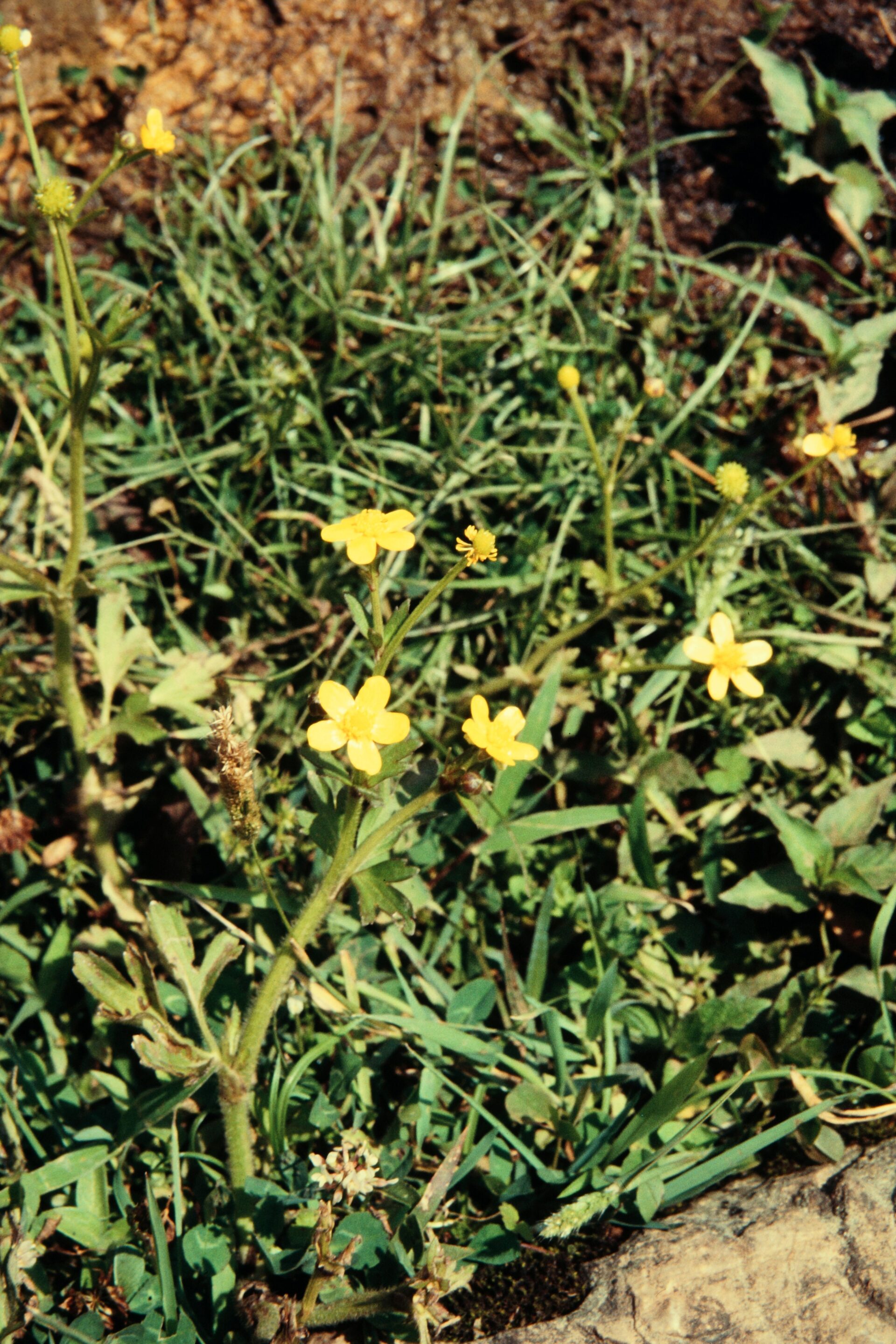
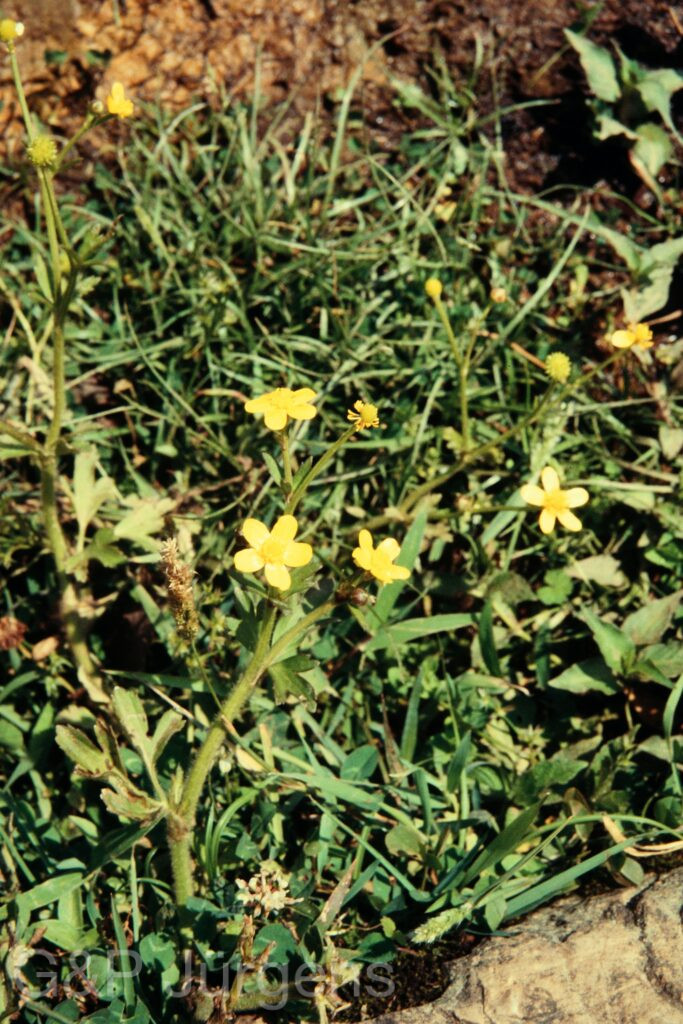
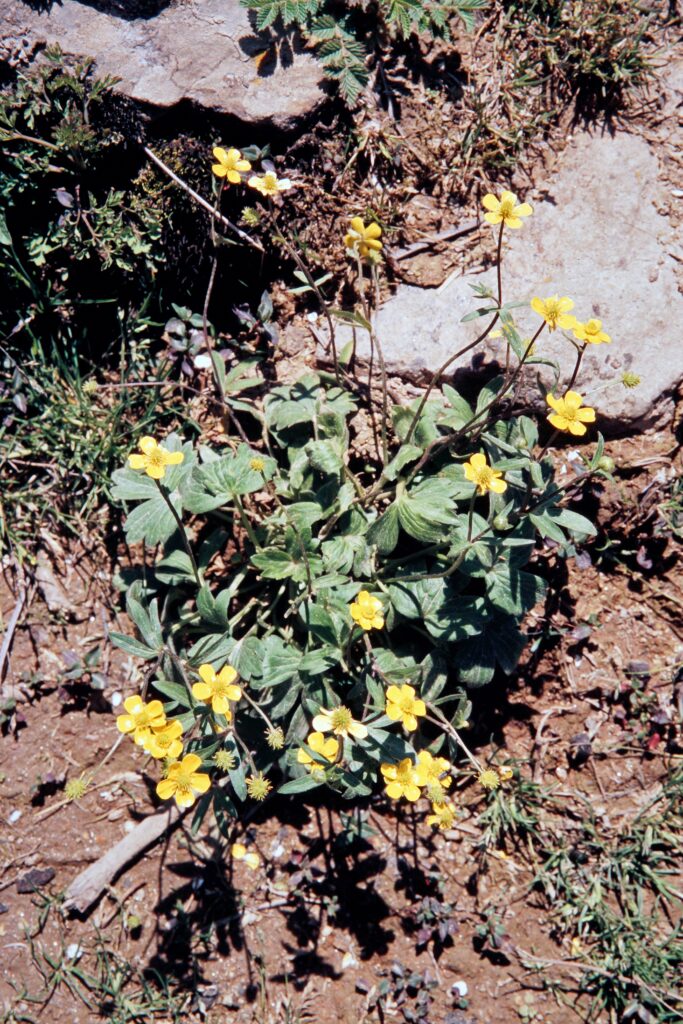
Ranunculus diffusus is a widely distributed buttercup of the Himalaya and montane Asia, recorded from India, Nepal, China, Pakistan, Bhutan, Myanmar, Vietnam, Malaysia, Indonesia, Sri Lanka and Taiwan, with some 618 occurrences in GBIF. It favours moist, shaded habitats such as forest floors, streamsides, damp banks and the margins of cultivation, ranging widely from the subtropical foothills into the temperate zone, roughly between 1000 and 3000 m. The photographs from Godawari in Nepal at about 1350 m in May and from the Mandakini valley in Garhwal at about 2360 m in June illustrate its broad ecological and altitudinal tolerance across the spring and early-monsoon flowering period.
The plant is a perennial herb with slender, diffusely spreading and often decumbent or rooting stems, the habit that gives the species its name. The basal and lower leaves are long-petioled and ternately divided into three lobed and toothed segments, more or less hairy. The flowers are small, solitary or few on slender pedicels, with usually five spreading, reflexed sepals and five glossy yellow petals each bearing a nectary scale at the base, surrounding numerous stamens and carpels. The fruiting head is a globose to ovoid cluster of small, compressed achenes tipped by a short curved or hooked beak.
Within the cosmopolitan genus Ranunculus, R. diffusus is a member of the diverse Asian assemblage of small-flowered, woodland and streamside buttercups and shows considerable variation in leaf division and pubescence across its wide range. Like most buttercups it contains the acrid glycoside ranunculin, rendering it unpalatable and somewhat toxic to livestock. Common and ecologically plastic, it is not of conservation concern and frequently behaves as a weed of moist disturbed ground.
Author: DC. · Sources: POWO (Kew), GBIF, Flora of China, Flora of Bhutan, Annotated Checklist of the Flowering Plants of Nepal, Tamura's treatment of Ranunculaceae