
(Cambess.) Christenh. & Byng
Description
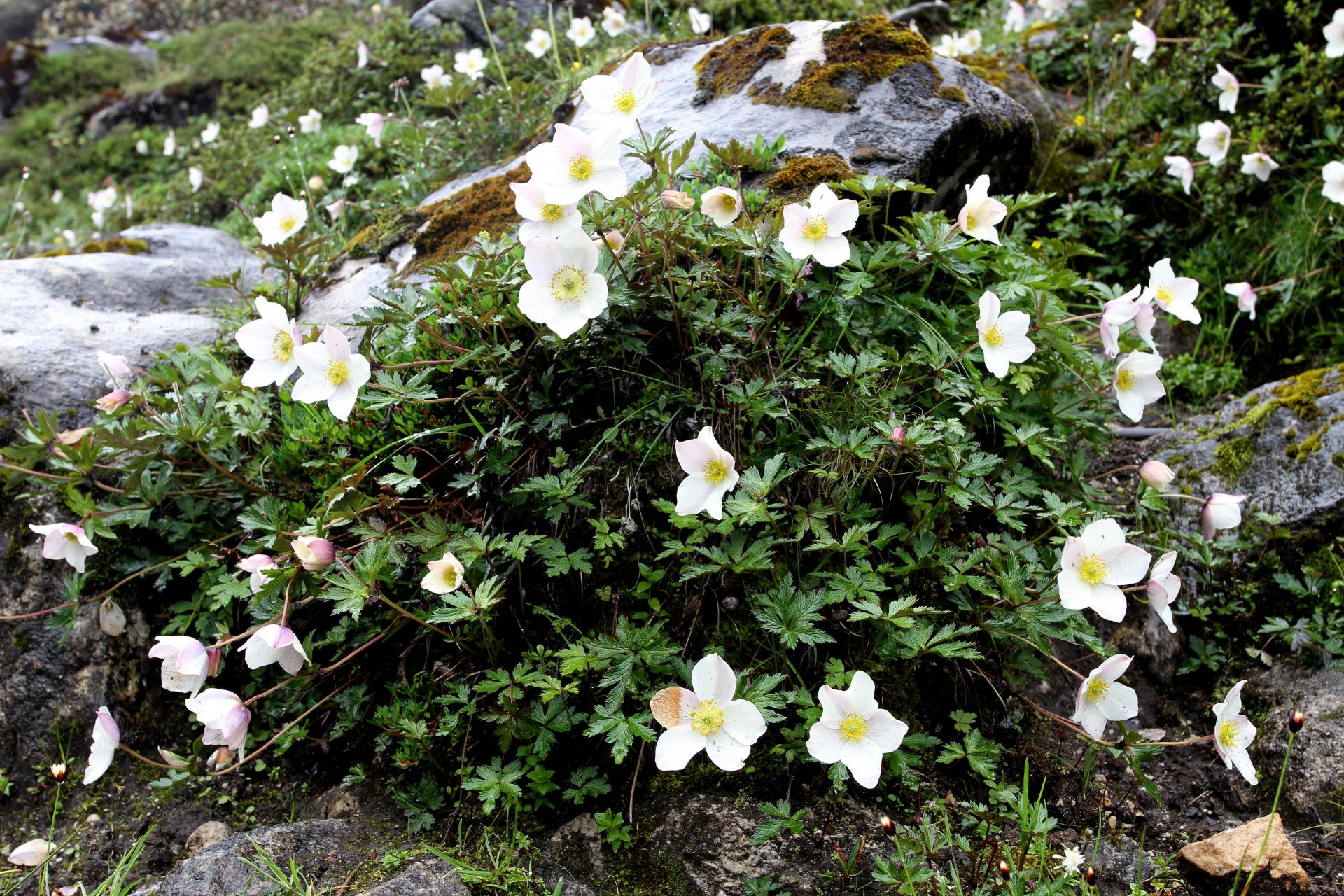
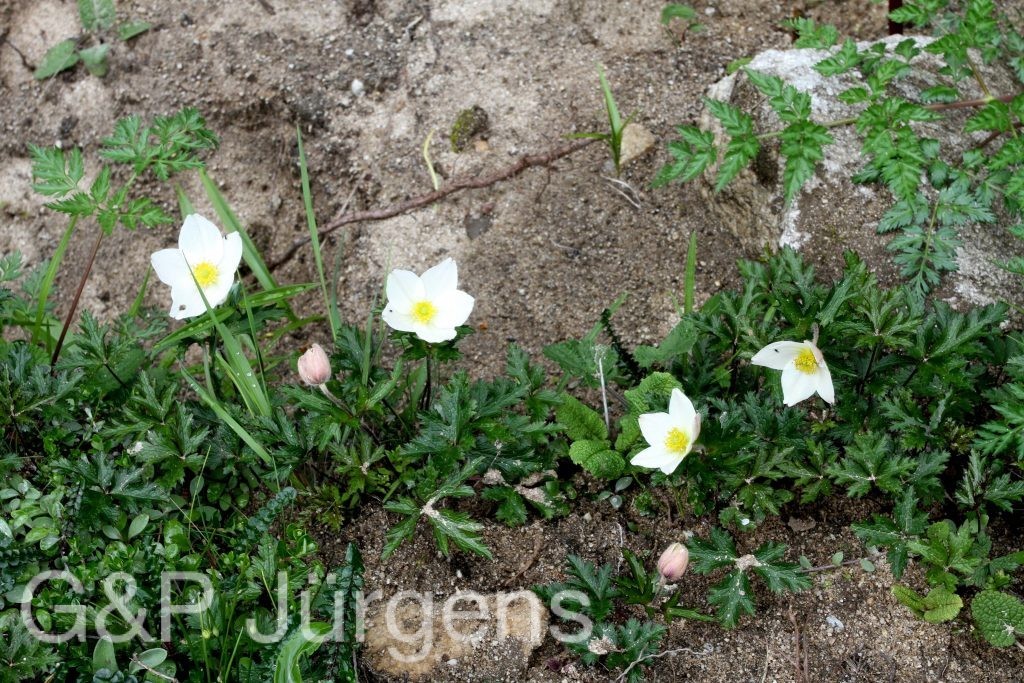
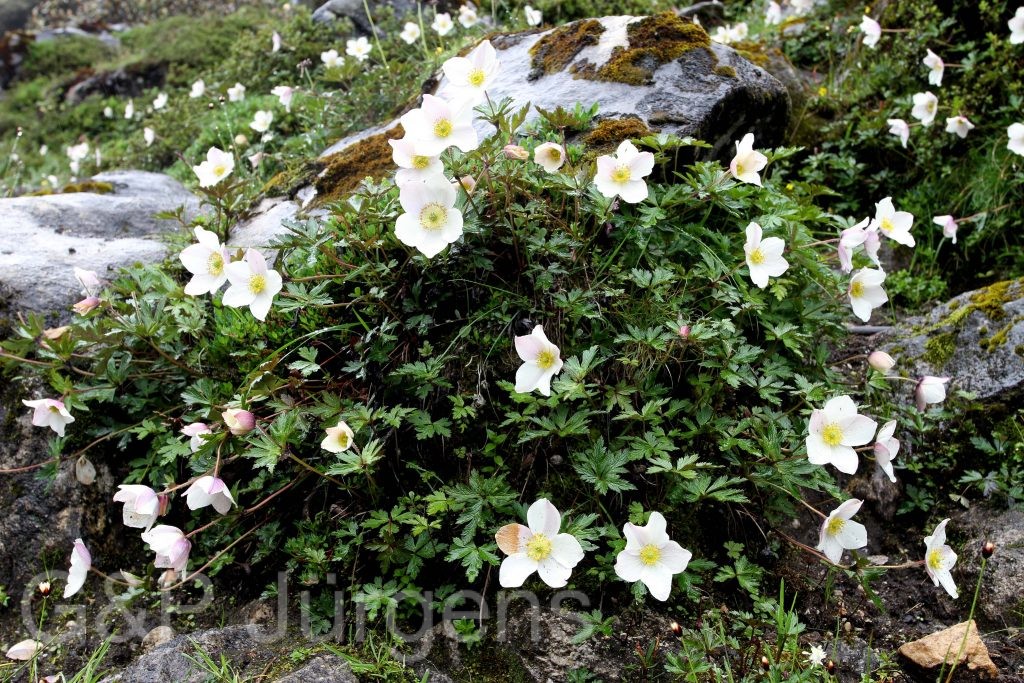
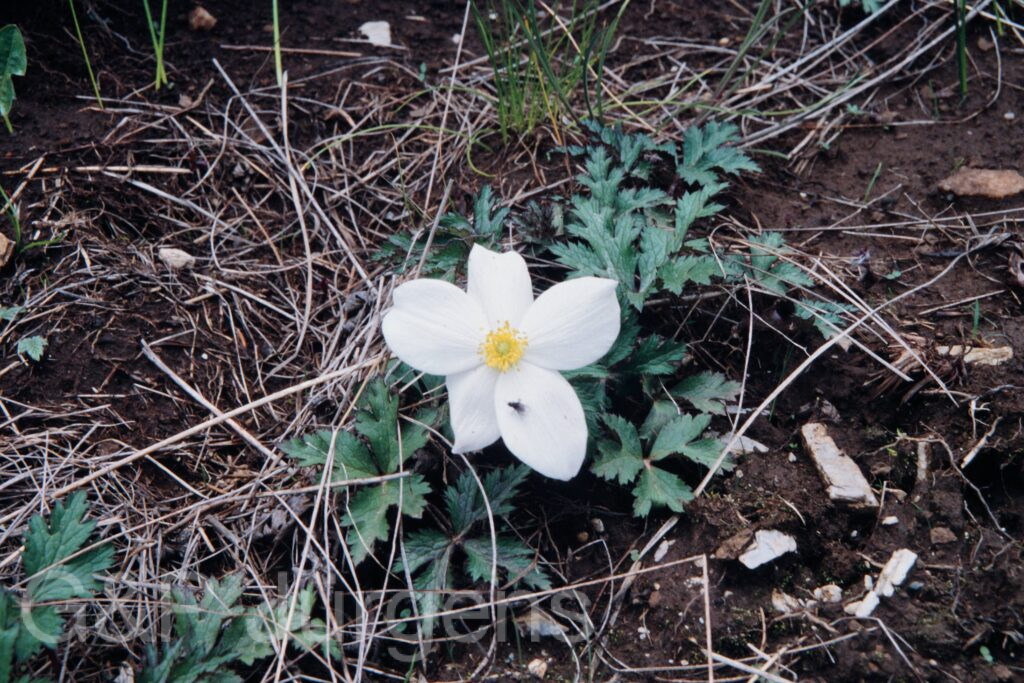
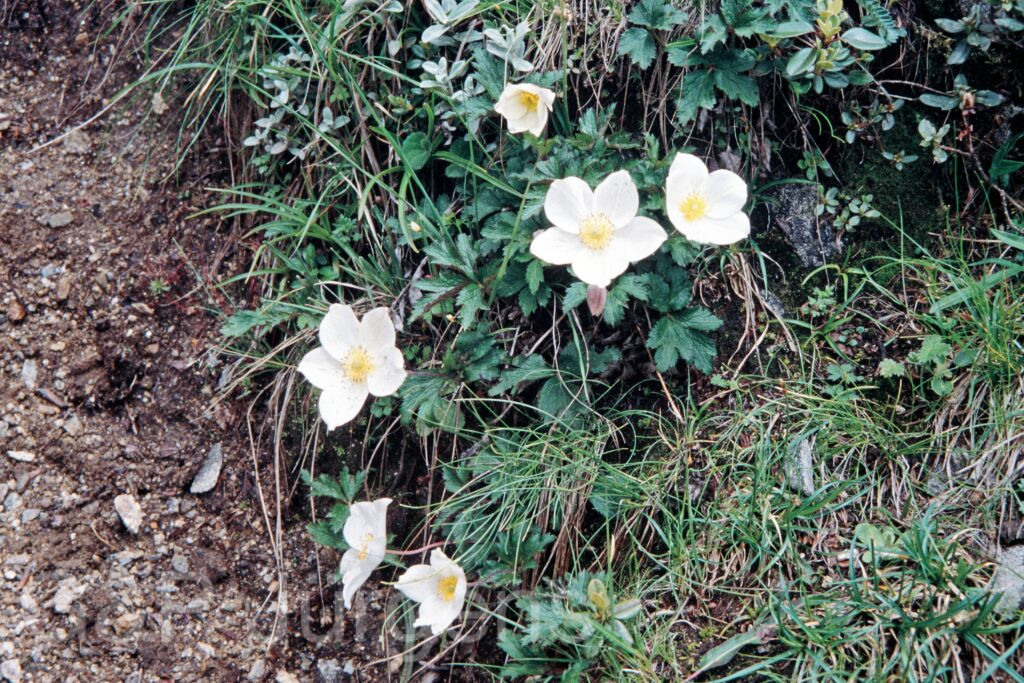
Eriocapitella rupicola, formerly Anemone rupicola, is a Himalayan and Sino-Himalayan herb distributed from Pakistan through Nepal, India and Bhutan into China, with around 507 GBIF occurrences. It grows in alpine and subalpine habitats, on rocky slopes, cliff ledges, open meadows, stony pastures and among boulders, often in well-drained sites in the upper subalpine to alpine zone. The images document it widely in the range: Bhutan at Tsochenchen around 3500 m in June and along the Ludlow-Sherriff Trail at Miluthang near 4450 m in July, and West Nepal south of Rara Lake at about 3800 m in June, where its white blooms open through the early summer.
It is a perennial herb arising from a stout rootstock, with basal leaves that are ternately to palmately divided into toothed, deeply cut segments, hairy on the surfaces. The flowering stems are erect and bear an involucre of stalked, leaf-like bracts below the flowers. The flowers are solitary or few, comparatively large and showy, with several (commonly five) petaloid white sepals, often flushed pink or bluish on the reverse, and numerous stamens surrounding a head of carpels. The fruit is a head of densely woolly, long-hairy achenes, the indumentum aiding wind dispersal.
The species has been transferred to Eriocapitella, a segregate genus carved from the broadly circumscribed Anemone on molecular and morphological grounds by Christenhusz and Byng; POWO accepts this placement, with Anemone rupicola as a synonym. The woolly achene heads (the basis of the generic name) are characteristic. The showy white flowers attract generalist alpine insect pollinators. Widespread across the Himalaya, it is common and of least conservation concern.
Author: (Cambess.) Christenh. & Byng · Sources: POWO (Kew), GBIF, Flora of China, Flora of Bhutan, Flora of Nepal, Christenhusz & Byng revision of Anemone s.l.