
Prantl
Description
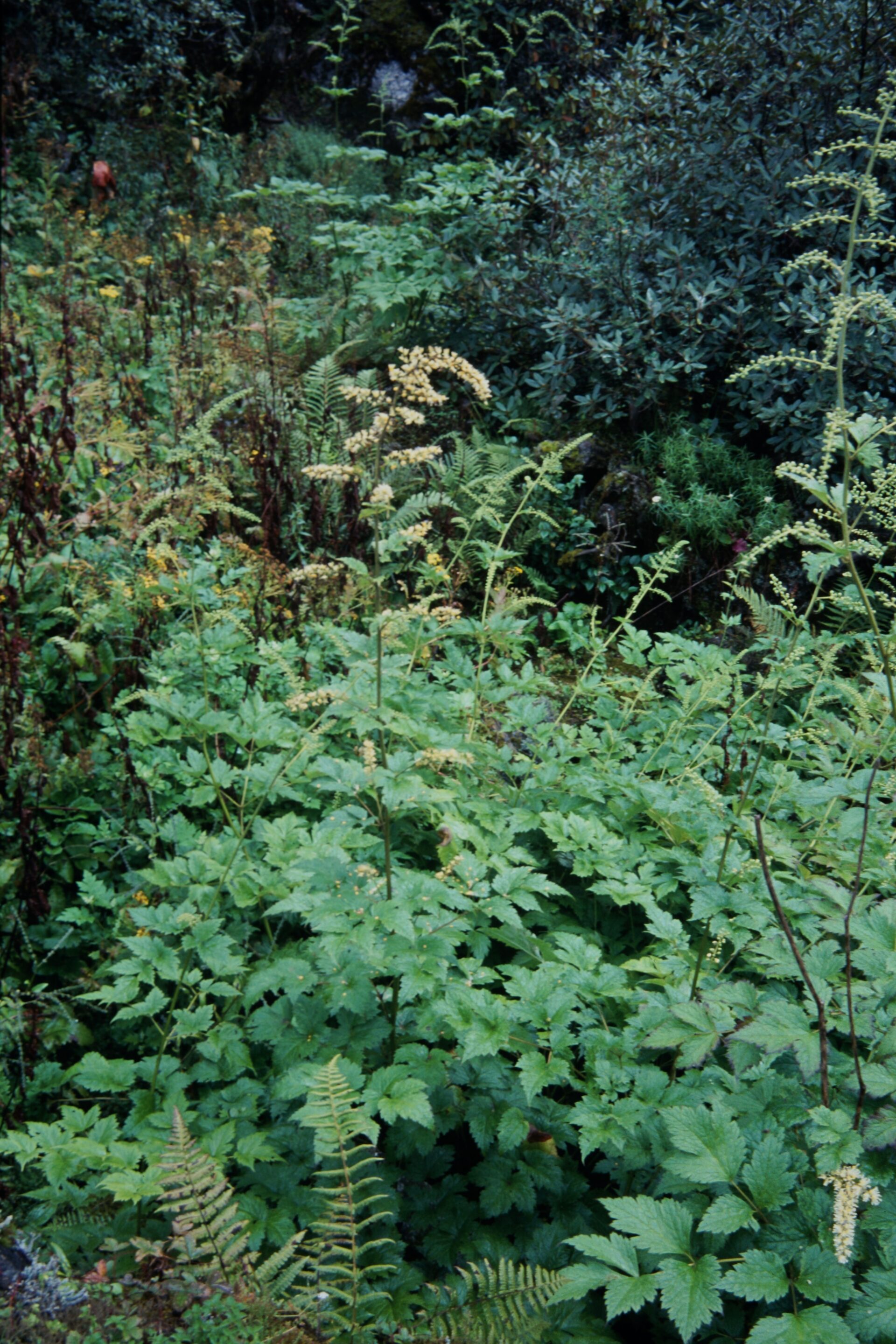
Actaea elata Prantl is a tall woodland perennial of cool-temperate forests. The GBIF record (CN, IN and several extralimital codes including US, CA, RU, CO and ZZ, totalling 844 occurrences) reflects a mixture of Asian native material and considerable confusion with the North American A. elata (Nutt.) Prantl, a name applied on both continents; in the Himalayan context the plant occupies shaded, humus-rich Abies–Betula and mixed broad-leaved forest, streamsides and tall-herb communities. The illustrated specimen from the Lachung Valley in northern Sikkim at 3300 m, in August, sits squarely within this moist montane forest zone, flowering and fruiting during the late monsoon.
The species grows from a stout rhizome, producing erect stems to well over a metre. The leaves are large, alternate and 2–3-ternately compound, the ultimate leaflets ovate, acuminate and sharply serrate to incised. Flowers are borne in elongate terminal and axillary racemes; they are small, white and apetalous in effect, the petaloid sepals soon caducous and the conspicuous part being the numerous slender white stamens, giving a fluffy aspect typical of baneberries. The pistils mature into several-seeded follicles or, in the strict baneberry sense, fleshy berries, the dispersal unit varying with the taxonomic circumscription applied.
Actaea, here treated to include the segregate Cimicifuga, belongs to subfamily Ranunculoideae; the inclusion of Cimicifuga within Actaea is supported by molecular phylogenetics. As in many Ranunculaceae the plants contain bioactive triterpene glycosides, conferring toxicity and underpinning medicinal use. The taxon is widespread and not threatened, though the transcontinental nomenclatural overlap means GBIF distributional data require critical evaluation.
Author: Prantl · Sources: POWO (Kew), GBIF, Flora of China (Ranunculaceae), Flora of Bhutan, Compton & Culham monograph of Actaea s.l. (incl. Cimicifuga)