
(Hook.f. & Thomson) Holub
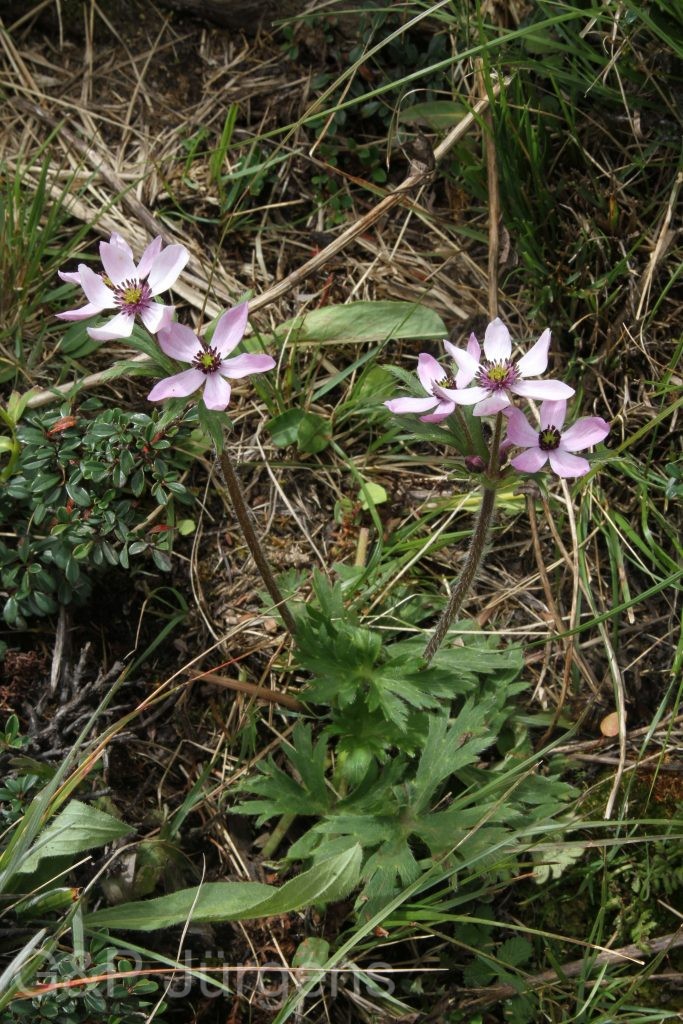
Description
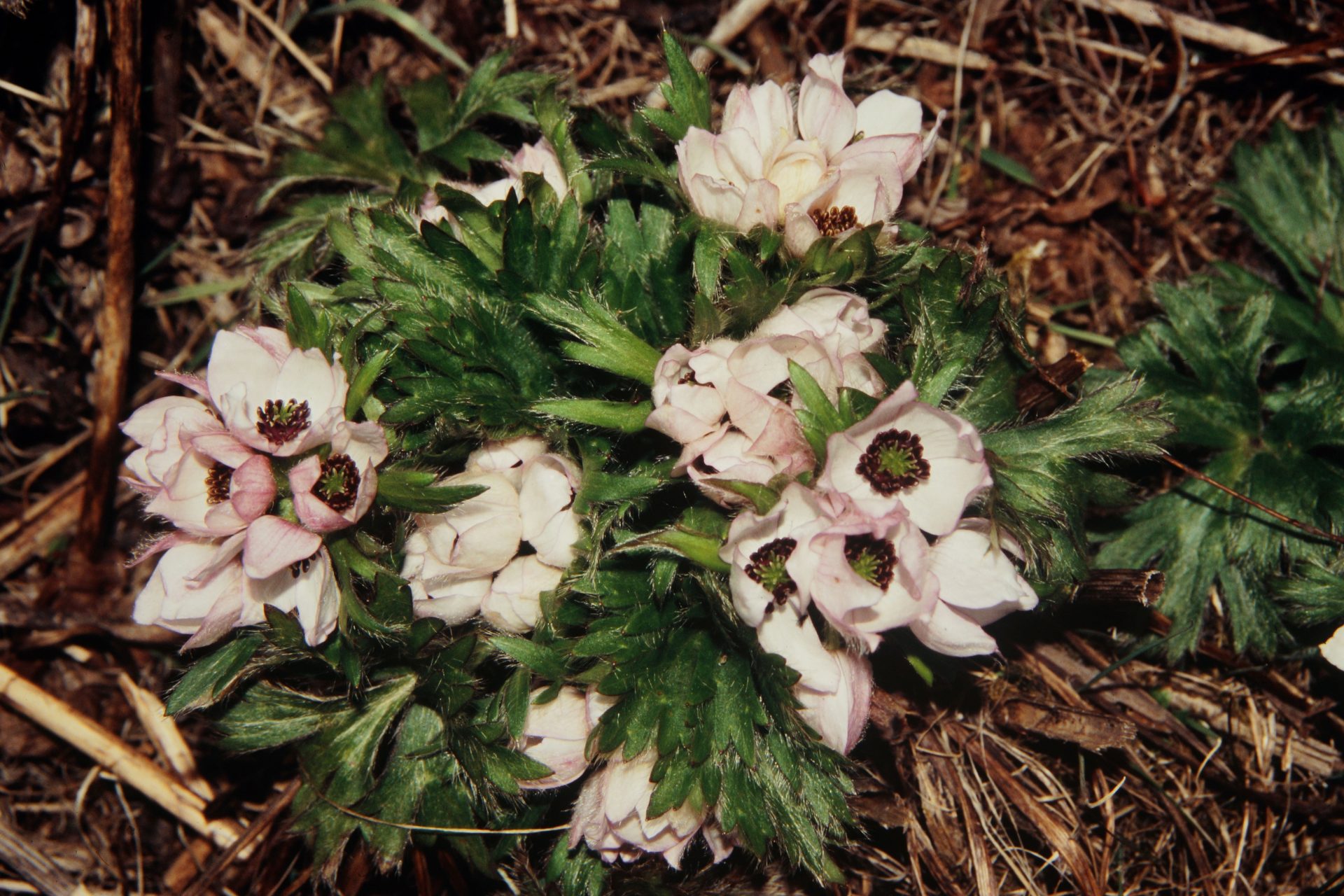
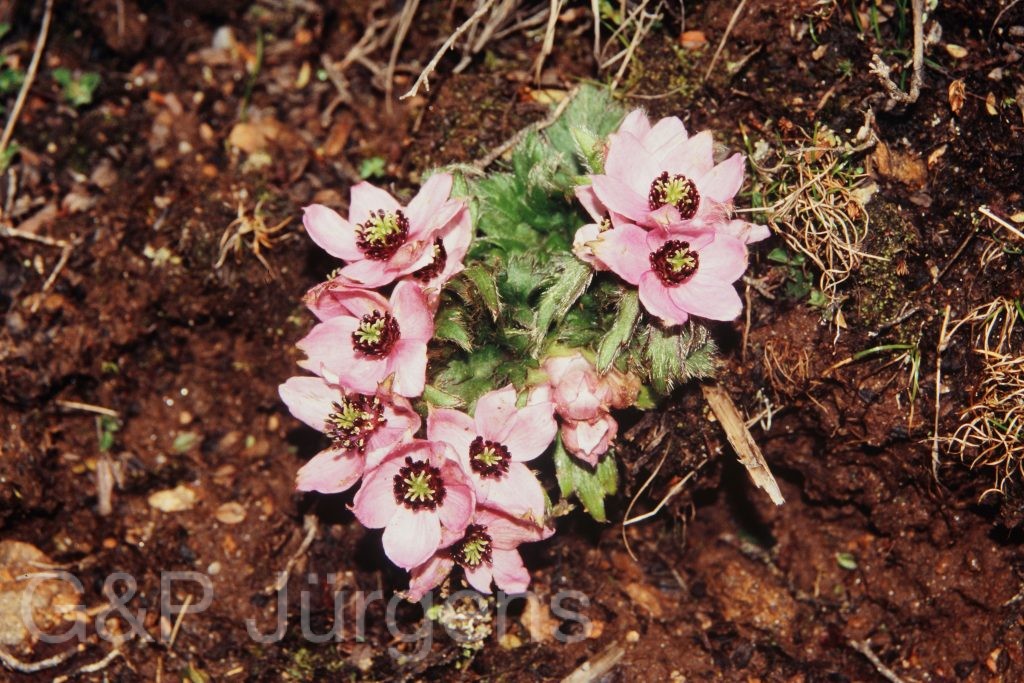
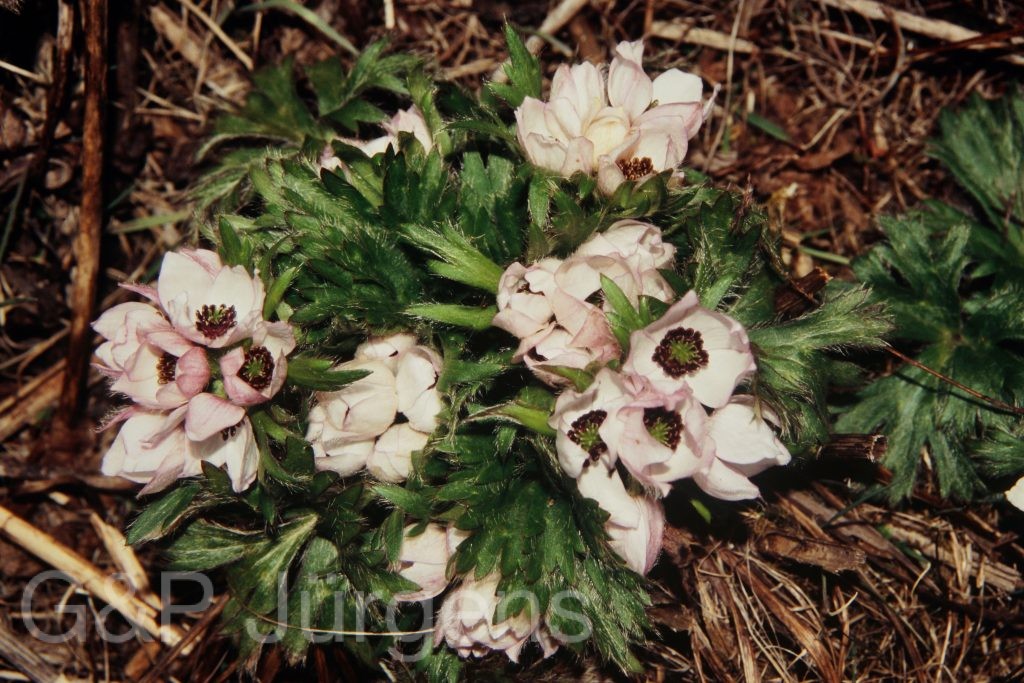
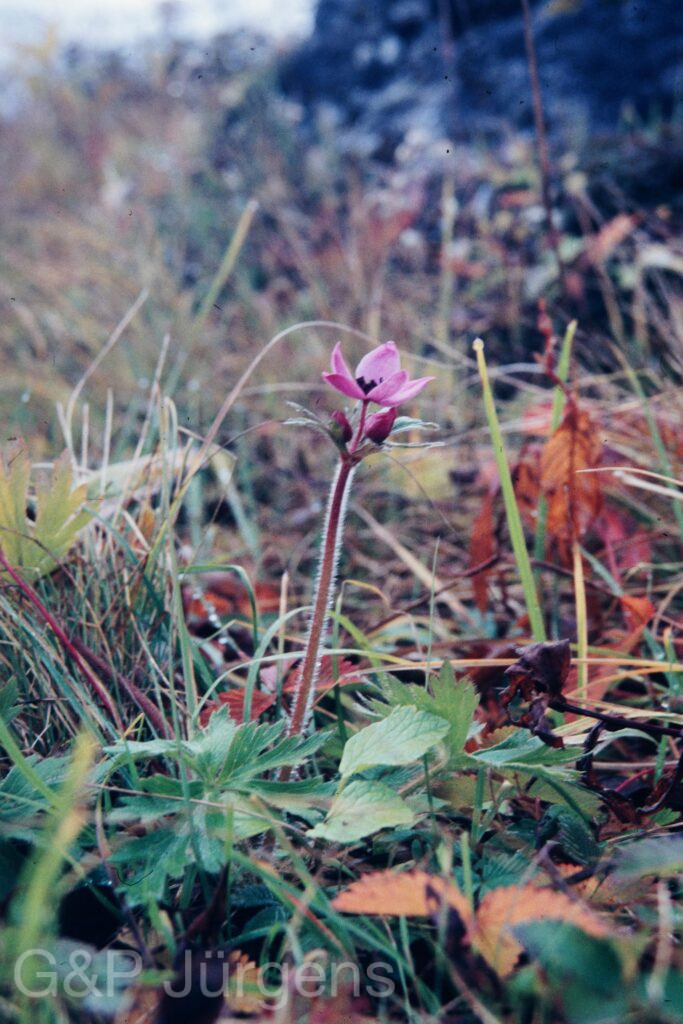
An alpine anemone of the Himalaya and the Tibetan Plateau, recorded from China, Myanmar, Nepal, Bhutan, India and Pakistan, with around 1600 GBIF occurrences. It is a plant of open alpine meadows, grassy slopes, rocky pastures and scrub margins, generally between about 3000 and 4500 m. The featured collections come from several high passes, including Bhutan's Chele-La at 3500 to 4000 m in June, the Dochu-La at 3500 m in September, and Nepal's Rupien La at 3850 m in October, illustrating a long flowering and fruiting season across windswept high-elevation habitats.
The species is a tufted perennial arising from a stout, often woody rootstock crowned with fibrous leaf remnants. The basal leaves are long-petiolate and palmately three- to five-divided, the segments further lobed and toothed and clothed, like the petioles, in spreading hairs. The scape bears a whorl of stalked, leaf-like involucral bracts beneath the inflorescence, which carries one to several flowers. Each flower lacks true petals; the showy perianth consists of five or more white, sometimes bluish- or pinkish-tinged tepals surrounding numerous stamens and a head of many free, hairy carpels. The fruit is an aggregate of compressed, beaked achenes adapted to wind and animal dispersal.
Formerly placed in Anemone, the species is now referred to the segregate genus Anemonastrum, accepted by POWO and GBIF, reflecting molecular and morphological re-circumscription of the windflowers; the basionym honours Hooker and Thomson. Ecologically it is a conspicuous element of summer-flowering alpine turf, offering pollen and nectar to high-altitude insects. Widespread and often locally abundant throughout the Himalaya, it is not of conservation concern, though its grassland habitats are subject to grazing and climatic shifts.
Author: (Hook.f. & Thomson) Holub · Sources: POWO (Kew), GBIF, Flora of Bhutan, Flora of China, Ziman et al. revision of Anemonastrum